
Electric heat that fits Howard County's mild winters.
No chimney, no gas line, no venting—just plug-in warmth for the zone-heating needs of a county where winter lows average around 32°F. Find the right unit and get matched with a trusted local dealer.
Every Project Starts From One of These Five Situations
The easiest hearth upgrade for a mild climate.
Howard County sits in the southwest Arkansas timber belt, in the foothills of the Ouachitas, with about 6,356 residents spread across Nashville, Dierks, Mineral Springs, Umpire, and a lot of rural county road. Climate zone 3A means winters here are genuinely mild by national standards—an average winter low around 32°F and only a short, mild heating season most years. Compare that to a place like Minneapolis, which has a long, brutal winter heating season, and it's clear Howard County isn't fighting the same battle. Most homes here don't need a full-time primary heat source; they need something that takes the edge off the handful of genuinely cold nights and adds a little ambiance the rest of the year.
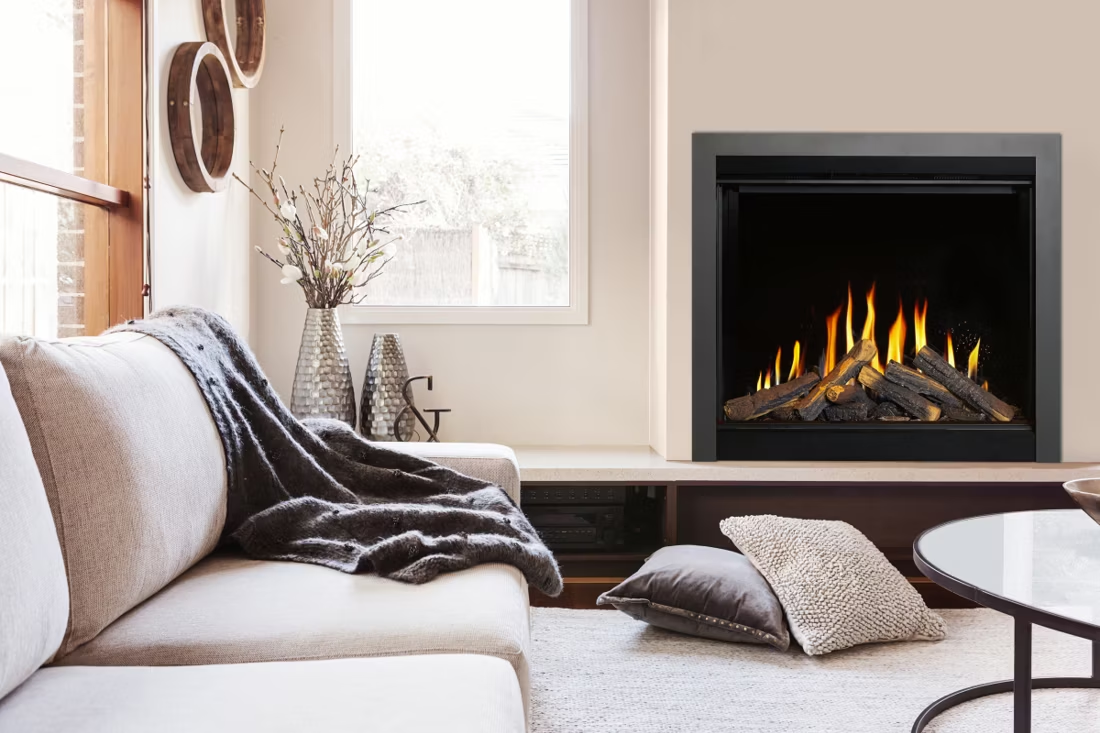
That's exactly the gap electric fireplaces fill. A large share of housing in Howard County is manufactured or site-built without an existing masonry chimney, which makes wood or gas retrofits more involved than most homeowners want. An electric insert, built-in, or freestanding stove sidesteps all of that—no venting, no gas line, no combustion byproducts to worry about, and no clearance-to-combustibles calculations that come with a real fire. For a lot of homes in Nashville and the surrounding towns, it's the fastest and least invasive way to get supplemental heat and a fireplace look in a room that never had either.
Three steps. No salesperson until you're ready.
Tell us about your project
Your zip code, your situation, and the fuel you're leaning toward—or let the answers point you to one.
See what's actually available
The brands dealers within 100 miles genuinely carry—real options, never a catalog mirage.
Get your dealer & Project Guide
A trusted local dealer, plus the free Project Guide & Parts List that names every component of the job.
Frequently Asked Questions
How much does an electric fireplace cost to install in Howard County?
Electric units are consistently the least expensive hearth option because there's no chimney, gas line, or venting to install. Nationally, electric inserts and wall-mount units typically run a few hundred dollars for a basic plug-in model up to $2,000-$2,500 installed for a built-in unit with custom trim or cabinetry work. Because Howard County doesn't have county-specific pricing data on file, a local dealer who's actually seen your fireplace opening or wall setup is the best source for a firm number—especially if you want it recessed into existing framing rather than surface-mounted.
Can an electric fireplace actually heat a room, or is it just for looks?
Most electric fireplaces include a built-in fan-forced heater rated for a single room—typically enough to comfortably heat 400 to 1,000 square feet depending on the model and your home's insulation. Given Howard County's mild winter averages (around 32°F overnight lows and a short, mild heating season most years), that's usually plenty for zone heating a living room, bonus room, or bedroom without running central heat harder than necessary. It's not designed to be your only heat source for the whole house, but for supplemental warmth on the county's colder nights, it does real work—not just visual effect.
Do I need a permit to install an electric fireplace in Howard County?
In most cases, no. Because electric units don't involve gas lines, chimneys, or new venting penetrations, they generally fall outside the permitting that applies to wood or gas hearth appliances. If your project involves reworking a wall, adding a new electrical circuit, or building out cabinetry around a built-in unit, it's worth a quick call to confirm whether any local electrical or building permit applies—but a straightforward insert or plug-in unit swap is typically permit-free. Your dealer can tell you definitively based on the specific model and scope of your project.
Are electric fireplaces a good fit for mobile or manufactured homes?
Yes, and it's one of the more common installs in rural Howard County given how much of the housing stock is manufactured or single-wide. Electric units avoid the structural and clearance issues that come with cutting a chimney through a manufactured home's roof for a wood stove, and they don't require the gas line work a propane fireplace would. A wall-mount or freestanding electric stove can be installed with minimal modification, which makes it a practical choice for renters and manufactured-home owners around Nashville, Dierks, and Mineral Springs alike.
Will my electric fireplace still work during a power outage?
No—this is the one honest tradeoff worth knowing upfront. Electric fireplaces run entirely on household power, so if the grid goes down, so does the unit. For most of Howard County's mild winters that's a minor inconvenience rather than a real risk, but if you're in a more remote part of the county where outages can run long after a storm, it's worth having a backup plan—many homeowners here pair an electric fireplace for everyday convenience with a wood stove or propane heater for true outage backup, since the region has easy access to oak, hickory, and pine through the Ouachita National Forest.
What's the difference between an electric fireplace, insert, and stove?
An electric fireplace is typically a built-in or wall-mount unit designed to look like a framed hearth—common in living rooms and bedrooms where there's no existing fireplace opening. An electric insert is sized to slide into an existing masonry or zero-clearance fireplace opening, giving an old, unused fireplace a heat source and a flame-effect display without any chimney work. An electric stove is a freestanding cabinet-style unit that sits on the floor, styled like a traditional wood stove, and can go almost anywhere there's an outlet. For Howard County homes with an existing fireplace that's sitting unused, an insert is usually the simplest upgrade; for rooms without one, a built-in or stove is the better fit.
How does electric compare to wood heat in Howard County?
Wood is still the primary or supplemental heat source for a lot of longtime Howard County households, and it makes sense—Forest Service cutting permits through the Ouachita National Forest run just $10 to $20 per cord during the May-to-October season, and local oak, hickory, and pine burn well and are easy to source. Wood also keeps working when the power's out, which electric can't do. Electric wins on convenience: no cutting, hauling, ash cleanup, or chimney maintenance, and it's a much simpler retrofit into a home without an existing chimney. Plenty of households here run both—wood for real cold-weather backup, electric for everyday, low-effort ambiance in a room that never had a fireplace.
How does electric compare to propane for supplemental heat here?
Propane fireplaces put out more real heat and can be sized to handle a larger space, which matters more in colder climates than Howard County typically sees. But propane requires a tank, a gas line, and periodic refill service, plus venting for most models—real installation cost and ongoing logistics. Electric skips all of that: plug it in and you're done. Given the county's mild average winter lows (around 32°F) and short, mild heating season, most homeowners here find electric heat output is sufficient for zone heating a room, which is why electric holds up well against propane for anyone not trying to heat a whole house on it.
What size electric fireplace do I need for my room?
Most manufacturers rate electric heaters by square footage, generally covering 400 to 1,000 square feet per unit depending on wattage and your room's insulation and ceiling height. A bedroom or den in a typical Howard County home usually only needs a smaller 1,500-watt unit; larger open living areas may need a wider insert or a model with a higher-output heater. Because manufactured homes often have thinner wall insulation than site-built homes, sizing up slightly is a reasonable move if you're relying on the unit for meaningful heat rather than ambiance alone. A local dealer can walk through your specific room and recommend a model that matches it.
Can I put a TV above my fireplace?
Yes—with an asterisk. Fireplaces are hot and TVs don't like heat. Either put a mantel between them to deflect rising warmth, or choose a fireplace with heat-management technology that creates a cool zone on the wall above—the wall stays around 125 degrees, barely warm, while the room still gets full heat. If you like clean lines and don't want a mantel, heat management is the answer.
Does an electric fireplace need a vent or chimney?
No—that's its superpower. An electric fireplace needs a wall and an outlet, period. No vent pipe, no gas line, no clearances to design around, which is why it works in bedrooms, offices, apartments, and walls where venting a gas or wood unit would be impractical or impossible. Installation is typically the simplest and least expensive of any fireplace type.
Can I install a fireplace myself?
If you're putting a fire in your house on purpose, it's best to work with an expert. Unless you're genuinely experienced in framing, gas line, vent pipe, and the national code on clearances to combustibles, have a professional do it—and ideally the same company that sells you the fireplace, so warranty, service, and liability all live under one roof.
Does a fireplace add value to my home?
On average, a fireplace adds back to the home about the same amount you spent installing it. Add the monthly savings from heating the rooms you actually use instead of the whole house—often hundreds of dollars a year—and the value case is strong before you even count what a fire does for how your family uses the room.
Find your electric fireplace in Howard County.
Tell us a bit about your home and we'll put together a free Project Guide & Parts List for your electric fireplace project—matched to your space, with a trusted local Howard County dealer who can install it right.
Find Your Fireplace →