
Wood, Gas, Pellet & Electric—Matched to Your Howard County Home.
From oak and hickory cordwood cut near the Ouachita National Forest to inserts and stoves, here's how homeowners across Howard County—Nashville, Dierks, Mineral Springs, Tollette, and Umpire—find the right fuel and a local dealer who can install it correctly.
Every Project Starts From One of These Five Situations
Mild winters, deep hardwood tradition in southwest Arkansas.
Howard County sits in the foothills of the Ouachita Mountains in southwest Arkansas, with roughly 6,356 residents spread across Nashville, Dierks, Mineral Springs, Tollette, and the surrounding rural farmland. This is climate zone 3A—mixed-humid, with average winter lows around 32°F and a light overall heating load for the year. That's a fraction of what a place like Duluth, Minnesota or Fargo, North Dakota logs in a season; most Howard County homes only need real heat output from November through February, and even then, mornings and evenings are the workload rather than round-the-clock burns. Oak, hickory, and pine are the dominant local firewood species, much of it cut on private timberland or under a permit from the Ouachita National Forest ranger district for those harvesting on public land.
This hub rolls up hearth retailers, service technicians, and fuel suppliers across the whole county—whether you're in town in Nashville or out toward Umpire and Center Point. Howard County doesn't see the wood-smoke air quality restrictions that plague basin or valley counties out West, so the decision here is mostly about fit for your home and budget rather than regulatory hoops. Pick your fuel below to see local dealers, typical installed costs, and recommended units for a Howard County home.
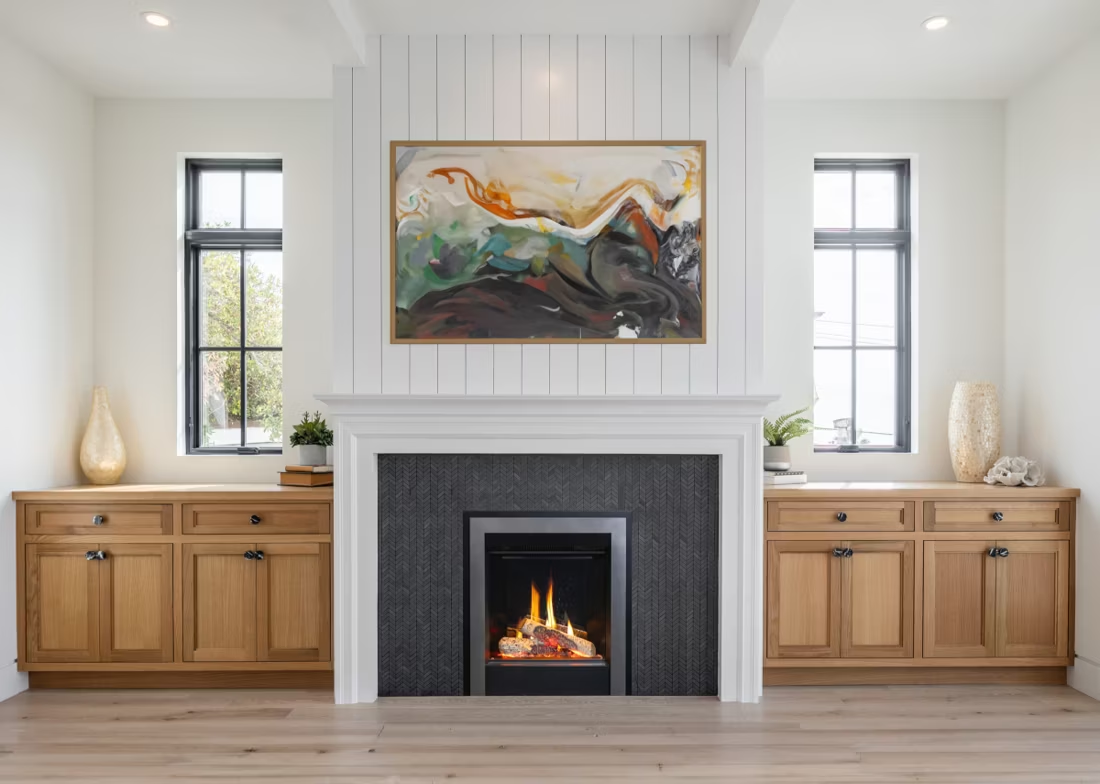
Four fuels. One honest answer for Howard County.
Three steps. No salesperson until you're ready.
Tell us about your project
Your zip code, your situation, and the fuel you're leaning toward—or let the answers point you to one.
See what's actually available
The brands dealers within 100 miles genuinely carry—real options, never a catalog mirage.
Get your dealer & Project Guide
A trusted local dealer, plus the free Project Guide & Parts List that names every component of the job.
Frequently Asked Questions
Which fuel works best in Howard County?
Given the mild winters here—average lows around 32°F and a fairly light overall heating load—most Howard County homes don't need a fuel that runs nonstop for months the way a home in Duluth or Bozeman would. Wood remains popular because oak and hickory are abundant locally and firewood permits are available through the Ouachita National Forest, but it's often a supplemental or evening-and-morning heater rather than the sole heat source. Propane is the practical choice for whole-home gas heat since natural gas mains don't reach most of the county outside Nashville. Pellet stoves (Lignetics and Indeck Energy Services pellets are both distributed regionally) offer wood-style ambiance with less daily labor. Electric fireplaces work well as supplemental heat in bedrooms or additions where running new gas or venting isn't practical. Many homes here end up with a wood or pellet unit for cool-season evenings and a furnace or propane system for the coldest stretches.
Do I need a permit to install a fireplace in Howard County?
It depends on where you are. Within Nashville, Dierks, or Mineral Springs city limits, check with city hall—most incorporated towns in this part of Arkansas require a building permit for new gas lines, chimney penetrations, or electrical work tied to a fireplace install. In unincorporated areas of Howard County, there generally isn't a countywide building code enforcing permits for stove or fireplace installs, though manufacturer installation instructions and NFPA 211 clearance requirements still apply for insurance and safety reasons. Gas work almost always requires a licensed gas-fitter regardless of jurisdiction. If you're unsure, a local dealer who's installed in your specific town before is the fastest way to find out what's actually required.
Are there any wood-burning restrictions in Howard County?
No. Howard County isn't in an EPA non-attainment area and doesn't have the winter inversion or wildfire-smoke issues that trigger burn advisories in places like the Klamath Basin or California's Central Valley. There's no local ordinance limiting when you can run a wood stove or fireplace here. That said, EPA 2020 NSPS certification still applies to any new wood stove sold and installed—it's a federal manufacturing standard, not a local air-quality restriction, so it applies here the same as anywhere else in the country.
Are there hearth dealers actually based in Howard County, or do I have to go out of town?
With a county population under 6,500, Howard County doesn't support a large standalone hearth showroom the way a bigger county might. Most homeowners in Nashville, Dierks, and Mineral Springs end up working with a retailer based in Hope, Texarkana, or Hot Springs that regularly services this part of southwest Arkansas—the drive is usually 30-60 minutes, and in-home consultations and installs are routine for these dealers. Farm-supply and hardware stores in town are good for firewood tools and basic parts but typically aren't set up to sell and install full hearth appliances.
How does fireplace or stove service work if I'm out toward Umpire or Tollette?
Service technicians covering Howard County are typically based out of Texarkana, Hope, or Hot Springs and drive out to rural addresses for chimney sweeps, gas inspections, and pellet stove cleaning. Expect a modest trip charge for the more remote parts of the county—out toward Umpire, Center Point, or the far edges near the Ouachita National Forest boundary. Scheduling in late summer or early fall, before the first cold snap, generally gets you on the calendar faster than waiting for a mid-winter breakdown.
What's the typical cost range for fireplace installation across all fuel types in Howard County?
Because most Howard County installs are moderate-sized units for supplemental or shoulder-season heat rather than full off-grid heating systems, costs tend to run toward the lower-to-middle end of national ranges. Wood stove or insert: roughly $3,500-$7,500 installed, more if new chimney work is needed. Propane fireplace, insert, or stove: roughly $4,000-$9,000 depending on tank setup and venting. Pellet stove or insert: roughly $4,000-$6,500. Electric fireplace: $200-$2,500 for the unit itself, with $300-$1,000 in labor for anything beyond a simple plug-in install. A local dealer who's worked in your specific town can tell you where your project actually lands within those ranges.
Does a fireplace add value to my home?
On average, a fireplace adds back to the home about the same amount you spent installing it. Add the monthly savings from heating the rooms you actually use instead of the whole house—often hundreds of dollars a year—and the value case is strong before you even count what a fire does for how your family uses the room.
How much should I budget for a fireplace?
For an average home—covering the fireplace, the vent pipe, and basic installation—a budget between $3,900 and $5,500 gives you a lot of options across wood, gas, and pellet. By the time you add finish work, gas line, and electrical, the average complete installation lands between $5,000 and $12,000 all-in. In a remodel or new build, a good rule is to put about 2.5% of the total project cost toward the fireplace.
Can a fireplace actually lower my heating bill?
Yes—by creating a comfort zone. A furnace heats every square foot of the house just to warm the one room you're in; a gas fireplace on low burns roughly a sixth of the gas a typical furnace does. Set the furnace around 55–60 degrees as a baseline, then heat the rooms your family actually uses. Families who heat this way commonly save $20–$60 a month.
Wood, gas, pellet, or electric—how do I choose?
Match the fuel to your life, not the other way around. Wood: lowest fuel cost and total power-outage independence, but you're hauling and stacking. Gas: press a button, set a thermostat, no maintenance to speak of. Pellet: wood economics with automatic feeding, in exchange for weekly cleaning and a need for electricity. Electric: plugs in anywhere with honest supplemental heat. Nobody regrets the fuel that fits how they actually live.
Stove and Fireplace Dealers in Howard County
Listings include WhyFire partner dealers, dealers we have verified as authorized for the brands we recommend, and established local businesses that carry hearth products. Every listing shows which one it is. The ones marked Preferred run on WhyFire's software, so they can show you real pricing and book your appointment right here. No manufacturer pays for placement. How we verify dealers →
LaGrone Williams Hardware
Plyer's Home Center
Thrash Propane
Red River Lumber & Design Center
Acme Brick Company
Find your fireplace in Howard County.
Tell us about your home and we'll match you with a trusted local dealer serving Howard County, plus a free Project Guide & Parts List—the exact parts, vent kit, and recommended dealer for your specific project.
Find Your Fireplace →