
Warm, low-maintenance heat for Clark County's mild winters.
With an average winter low of 31°F and a short, light heating season, Clark County doesn't need a wood-burning marathon to stay comfortable—it needs a clean, thermostat-controlled heat source you can load and forget. Find the right pellet stove or insert and get matched with a trusted local dealer.
Every Project Starts From One of These Five Situations
Modern, low-maintenance heat for a mild climate.
Clark County sits in the Climate Zone 3A belt of south-central Arkansas, home to Arkadelphia, Gurdon, and Caddo Valley, with roughly 14,346 residents spread across a landscape of oak, hickory, and pine woodland bordering the Ouachita National Forest. Wood heat has deep roots here—plenty of homeowners still cut their own from Forest Service land for $10 to $20 per cord during the May-through-October permit season. But with winters this mild (an average low around 31°F and a short, light heating season), a lot of households are choosing pellet stoves instead: same warm, radiant fire, without splitting rounds or feeding a firebox every few hours.
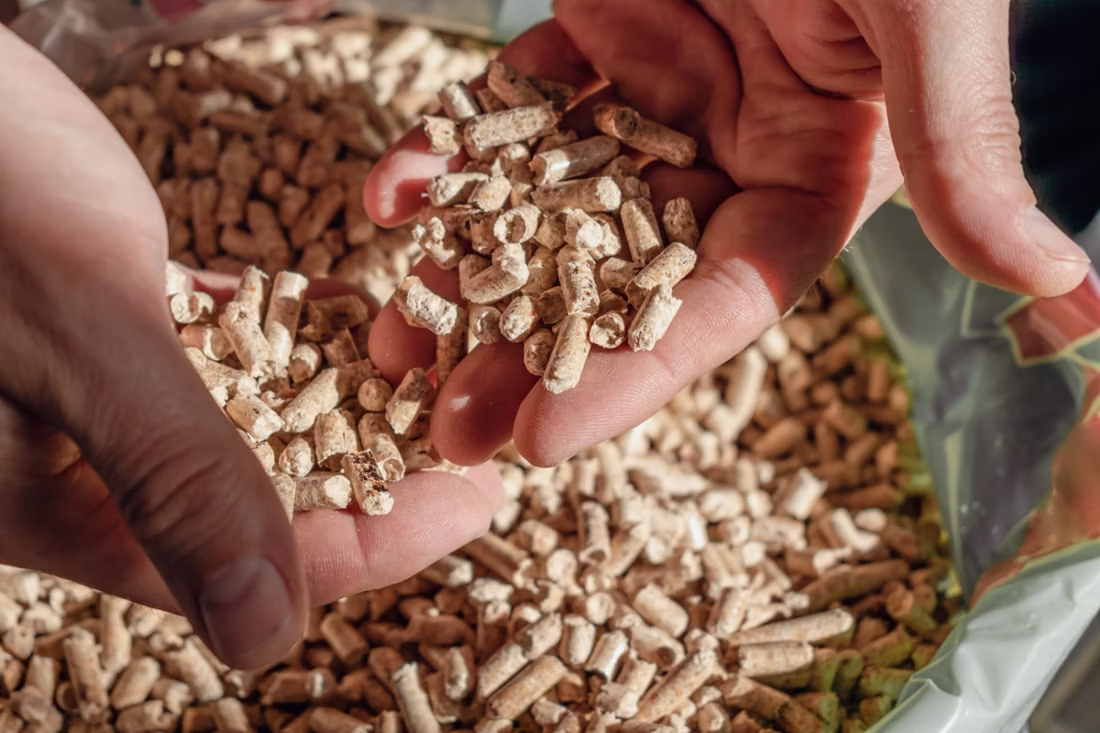
Clark County has no non-attainment or air-quality curtailment concerns, so there's no winter burning restriction to plan around—pellet stoves here run whenever you want them to, without the yellow-alert scheduling homeowners deal with in stricter counties out West. Regional pellet supply runs through brands like Lignetics and Indeck Energy Services, both distributed through south Arkansas retailers, so fuel is easy to keep stocked. For a county with a short, mild heating season, a pellet insert or freestanding stove often works best as efficient zone heat in the main living area—supplementing central HVAC on the coldest nights rather than replacing it outright.
Three steps. No salesperson until you're ready.
Tell us about your project
Your zip code, your situation, and the fuel you're leaning toward—or let the answers point you to one.
See what's actually available
The brands dealers within 100 miles genuinely carry—real options, never a catalog mirage.
Get your dealer & Project Guide
A trusted local dealer, plus the free Project Guide & Parts List that names every component of the job.
Frequently Asked Questions
How much does a pellet stove installation cost in Clark County?
Pellet stove and insert installations in Clark County typically run in the $3,000 to $6,500 range, with the spread driven by whether you're installing a freestanding stove versus a fireplace insert, the venting path (most pellet units use a simple 3- or 4-inch PL vent through an exterior wall rather than a full masonry chimney), and whether electrical work is needed for the hopper motor and blower. Because Clark County has no air-quality curtailment rules to design around, permitting and inspection tend to be straightforward compared to counties with non-attainment restrictions. A local dealer can give you a firm number after seeing your hearth or wall setup in person.
What size pellet stove do I need for my Clark County home?
With Clark County's relatively mild winters—a short, light heating season and an average low of 31°F, nowhere close to the demands of a place like Duluth or Fargo—most homes here don't need a heavyweight, all-night-burn unit. A small to mid-size pellet stove (rated for roughly 1,000 to 1,800 square feet) is enough to heat a main living area or an open-plan home in Arkadelphia or Gurdon as primary or near-primary heat. Larger, poorly insulated farmhouses or homes wanting whole-house pellet heat should size up, but oversizing in this climate mostly just means running the stove on its lowest setting most of the season—a local dealer can match hopper size and BTU output to your actual square footage.
Where can I find certified pellet stove installers near me?
Look for installers with NFI (National Fireplace Institute) pellet-specialty certification, since pellet stoves have their own electrical, venting, and auger-feed considerations that differ from wood or gas units. Local hearth dealers serving Clark County typically handle the venting, any needed electrical circuit for the hopper motor, and the county permit process together, which keeps warranty coverage intact. For homes outside Arkadelphia and Gurdon proper, ask about travel charges for rural service calls in outlying parts of the county.
What's the difference between a pellet stove and a pellet insert?
A pellet stove is a freestanding unit that sits on a hearth pad and vents through a wall or existing chimney chase—it can go almost anywhere with the right clearances. A pellet insert is built to slide into an existing masonry fireplace opening, turning an old wood-burning fireplace into a thermostat-controlled heat source while keeping the original look. For Clark County homes with an existing fireplace—common in the older housing stock around Arkadelphia—an insert is usually the simpler retrofit. Homes without an existing fireplace opening are better suited to a freestanding stove.
Do I need a permit to install a pellet stove in Clark County?
Yes—a building permit is required for a new pellet stove or insert installation through Clark County's building department, and most local dealers handle that paperwork as part of the install. Because Clark County has no air-quality non-attainment designation, there's no seasonal burn curtailment to navigate like in stricter Western counties—once your stove passes inspection, you can run it whenever you like. There's no separate permit required simply to burn pellets day to day.
What's the best pellet stove for Clark County's climate?
Given Clark County's mild climate and short, light heating season, homeowners here generally don't need the extreme-cold, 40+ hour hopper capacity that a Northern buyer would prioritize. Auto-ignition models with straightforward thermostat control—from brands like Harman or Englander—tend to be a good fit, since most households run the stove intermittently rather than around the clock. Look for a unit that modulates well at low output, since Clark County winters rarely demand a stove's top burn rate for long. Fuel is easy to source locally through regional suppliers carrying Lignetics and Indeck Energy Services pellets, so hopper capacity matters less here than it would in a colder market.
How often should a pellet stove be cleaned and serviced?
Pellet stoves need more frequent attention than wood stoves, but it's lighter-duty work: the burn pot and ash trap should be cleaned every few days during regular use, the hopper and auger system checked monthly, and a full professional service—including the venting and exhaust fan—done annually, ideally before the heating season starts each fall. Given Clark County's shorter, milder heating season, most homes here burn fewer pellets and see less ash buildup over a winter than colder-climate households, but the annual service is still worth scheduling.
Where can I buy pellets in Clark County?
Regional pellet brands including Lignetics and Indeck Energy Services distribute through south Arkansas retailers, and hearth dealers, farm supply stores, and home improvement stores around Arkadelphia and Gurdon typically stock 40-pound bags during the fall and winter months. Because Clark County's heating season is relatively short, it's worth buying enough pellets early in the season—supply at local stores can tighten up during the coldest stretches when demand across the region spikes.
Pellet stove vs. wood stove—which is right for my Clark County home?
Wood is the traditional choice here, and with oak, hickory, and pine available through Ouachita National Forest cutting permits ($10 to $20 per cord, May through October), it's an inexpensive fuel source for households willing to cut, split, and stack their own. A wood stove also works without electricity, which matters during the occasional ice storm. Pellet stoves trade that self-sufficiency for convenience: load the hopper, set the thermostat, and let the auger do the rest, with a cleaner burn and less daily tending. For Clark County's mild, short heating season, many homeowners find the lower-maintenance pellet option better matches how little the stove actually needs to run—while rural households who value a no-electricity backup often stick with wood or keep both.
How often does a pellet stove need cleaning?
A clean pellet stove is a happy pellet stove. Plan on cleaning the burn pot about once a week when you're burning regularly—ash and clinkers gum up the air holes just like a pellet barbecue. Most pellet stove problems trace back to skipped cleaning that nobody explained up front. Some designs make it easy with a trapdoor burn pot: pull a lever and the gunk drops into the ash pan.
Can a pellet stove heat a whole house?
It genuinely can. I burned a pellet stove as my only heat source for years after a furnace died, and it kept the entire house warm. Pellets feed automatically from a hopper, so you get wood-heat economics with thermostat-style control. Two honest caveats: it needs weekly cleaning during the season, and most models need electricity to run—ask about battery backup if outages are a concern.
How much should I budget for a fireplace?
For an average home—covering the fireplace, the vent pipe, and basic installation—a budget between $3,900 and $5,500 gives you a lot of options across wood, gas, and pellet. By the time you add finish work, gas line, and electrical, the average complete installation lands between $5,000 and $12,000 all-in. In a remodel or new build, a good rule is to put about 2.5% of the total project cost toward the fireplace.
Can I install a fireplace myself?
If you're putting a fire in your house on purpose, it's best to work with an expert. Unless you're genuinely experienced in framing, gas line, vent pipe, and the national code on clearances to combustibles, have a professional do it—and ideally the same company that sells you the fireplace, so warranty, service, and liability all live under one roof.
Pellet Brands Stocked Around Clark County
Manufacturers will point you to the nearest stocking dealer.
Find your pellet stove in Clark County.
Tell us a bit about your home in Clark County and we'll match you with a trusted local dealer and send over your free Project Guide & Parts List—a plan for your pellet stove or insert project, including the vent kit, sized for your space.
Find Your Fireplace →