
Keep Your Family Warm and Safe—No Matter What
Reliable wood heat for the mild-but-real winters of Lonoke County. Find the right stove or insert, and connect with a trusted local dealer.
Every Project Starts From One of These Five Situations
A supplemental fire that carries most of the season.
Austin sits in the flat, low-elevation heart of Lonoke County at just 246 feet, where winters are short and generally mild by national standards—average lows hover around 28°F and the area has a modest, light winter heating load, a fraction of what a place like Bismarck, ND or Duluth, MN sees. That doesn't make wood heat a novelty here. It's a longstanding, practical choice: oak, hickory, and pine grow throughout central Arkansas, and plenty of homes in and around Austin lean on a wood stove or insert for the bulk of a mild winter, saving central heat and electricity for the coldest snaps.
With no local air quality restrictions on wood burning and no winter inversion concerns, Austin homeowners don't face the curtailment periods or non-attainment rules that complicate wood heat in some parts of the country. A right-sized stove or insert here delivers real cost savings on Entergy Arkansas or First Electric Cooperative bills, backup heat if an ice storm knocks out power, and the kind of dry, radiant warmth that a small-town central Arkansas home benefits from most of the year.
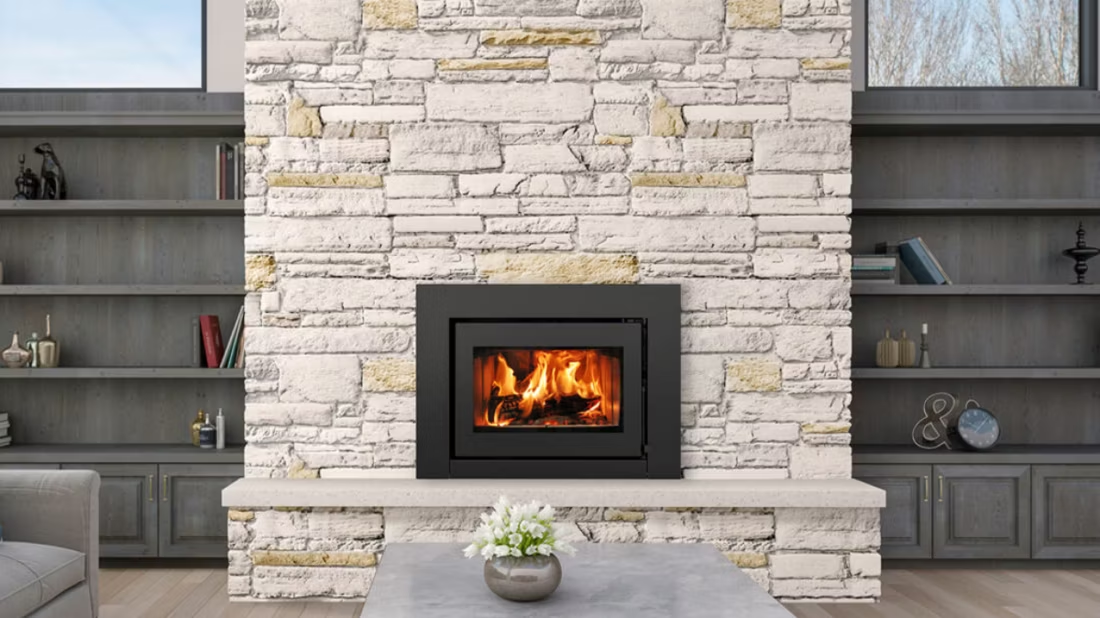
Firewood Cutting Permits Near Austin
Three steps. No salesperson until you're ready.
Tell us about your project
Your zip code, your situation, and the fuel you're leaning toward—or let the answers point you to one.
See what's actually available
The brands dealers within 100 miles genuinely carry—real options, never a catalog mirage.
Get your dealer & Project Guide
A trusted local dealer, plus the free Project Guide & Parts List that names every component of the job.
Frequently Asked Questions
How much does a wood stove installation cost in Austin?
Most wood stove or insert installations in the Austin area run roughly $3,500 to $8,000, with the final number driven by the stove itself, whether an existing chimney can be reused or a new Class A chimney system needs to be run through the roof, and any hearth pad work needed for code clearances. Homes with an existing masonry fireplace and flue are typically on the lower end since an insert can use that chimney; new stove installations in homes without any existing venting run higher. A local installer will give you a firm number after walking your home.
What size wood stove or insert do I need for my home?
Because Austin's winters are relatively mild—average lows around 28°F and a modest, light winter heating load overall—most homes here don't need the largest catalytic stoves built for sub-zero, 24-hour burns. A small to medium stove (rated for 1,000 to 1,800 square feet) is usually plenty to heat a living area or carry a whole modest ranch home through most of the season, with central heat handling the occasional harder freeze. Oversizing is the more common mistake locally: a stove sized for Minnesota winters will smolder and creosote up fast in a central Arkansas living room. A local dealer can size your space correctly with an in-home visit.
Where can I find certified wood stove installers near Austin?
Look for NFI (National Fireplace Institute) or CSIA (Chimney Safety Institute of America) certification—both indicate real training in wood-burning appliance installation, not just general contracting experience. Austin itself is a small town of under 4,000 people, so most homeowners here work with certified hearth retailers based in the greater Cabot or Little Rock area who service Lonoke County. Buying and installing through the same certified company simplifies warranty coverage and keeps you off the list of DIY chimney-fire causes tied to improper clearances and venting.
What's the difference between a wood stove and a wood insert?
A wood stove is a freestanding unit on a hearth pad that vents through its own chimney system—it can go almost anywhere in the house with the right clearances. A wood insert slides into an existing masonry fireplace opening and uses that fireplace's chimney (usually with a new stainless liner), turning a drafty open hearth into a sealed, efficient heat source. Central Arkansas homes with an older brick fireplace that barely throws heat are good insert candidates; homes without an existing fireplace, or new construction, usually go with a freestanding stove instead.
Do I need a permit to install a wood stove in Austin?
Yes—a building permit through the Lonoke County Building Department is generally required for new wood stove or insert installations, and the unit itself needs to meet current EPA emissions standards. Most certified local installers handle this paperwork as part of the job. The good news for Austin specifically: there are no winter air quality advisories or wood-burning curtailment periods to plan around here, unlike parts of the West or Pacific Northwest—once it's installed and permitted, you're free to burn as needed.
What's the best wood stove for Austin's climate?
Given how mild Austin's winters run—most nights don't get near single digits—a mid-size non-catalytic stove from a brand like Pacific Energy, Lopi, or Vermont Castings tends to be a better fit than a heavy-duty catalytic unit built for extreme, sustained cold. These models are easier to operate for shorter, intermittent burns, which matches how most Lonoke County homeowners actually use a stove: heavy in December and January, lighter the rest of the season. A local retailer can walk you through options based on whether you want primary or supplemental heat.
How often should my chimney be inspected and cleaned?
The CSIA recommends an annual inspection for any wood-burning appliance, and that holds true in Austin even though the burning season here is shorter than in colder states. Plan on a sweep and inspection once a year, ideally in late summer before the first cold front rolls through central Arkansas. Because pine is one of the common local species and burns with more resin and creosote buildup than oak or hickory, homes that burn a lot of pine should keep a closer eye on chimney condition rather than stretching inspections out.
Where can I get firewood or cut my own near Austin?
Oak, hickory, and pine are all common species in and around Lonoke County, and local firewood suppliers throughout central Arkansas sell seasoned cordwood, typically priced by the cord. For self-cutting, the nearest public land permit offices are the Ozark-St. Francis National Forests and the Ouachita National Forest, both a drive from Austin, where cutting permits run roughly $10 to $20 per cord during the May-to-October season. Given the distance, most Austin-area homeowners find it more practical to buy split, seasoned wood locally than to make the trip for a self-cut permit.
Wood stove vs. pellet stove—which is right for me?
Wood stoves burn cordwood, work without electricity, and pair well with the oak and hickory that's easy to source around Lonoke County—a real advantage during ice-storm outages, which do happen in central Arkansas. Pellet stoves burn bagged pellets from brands like Lignetics or Indeck Energy Services, are simpler to load and run, and burn cleaner, but they need electricity for the auger and blower, so they go dark in a power outage unless paired with a battery backup. With Entergy Arkansas and First Electric Cooperative rates running around $0.12–$0.13 per kWh, pellet stoves are also cheap to operate day-to-day. For Austin homes prioritizing storm-proof backup heat, wood usually wins; for convenience-focused households with reliable power, pellet is worth a look.
Why won't my new wood stove get going like my old one?
New wood stoves are 70%+ efficient, so far less heat goes up the flue—which also means less draft to get a fire established. The rule: build a genuinely hot fire for about 45 minutes before you choke it down. Skip that and you get smoke in the room, creosote in the chimney, and a fire that never takes off. Most performance complaints trace straight back to this.
What's the difference between an insert and a zero-clearance fireplace?
An insert is a fireplace that slides into a pre-existing wood-burning fireplace—if you don't have one, there's nothing to insert it into. A zero-clearance fireplace is built into a framed wall, which makes it the answer for remodels and new construction. Simple test: existing masonry fireplace means insert; blank or framed wall means zero-clearance.
How much should I budget for a fireplace?
For an average home—covering the fireplace, the vent pipe, and basic installation—a budget between $3,900 and $5,500 gives you a lot of options across wood, gas, and pellet. By the time you add finish work, gas line, and electrical, the average complete installation lands between $5,000 and $12,000 all-in. In a remodel or new build, a good rule is to put about 2.5% of the total project cost toward the fireplace.
What is an in-home preview and do I need one?
It's a visit where a hearth professional measures your space, confirms the model you picked actually works in your home, and walks the specs—framing, gas line, venting, finish work—before anything is ordered. Some details you just can't know until you see the house. Never make a down payment without one; it's the single most-skipped step that burns buyers.
Nearby Dealers
Hearth shops serving Austin and the surrounding area. Every listing shows whether it is a WhyFire partner, a dealer we have verified as authorized for the brands we recommend, or a local business carrying hearth products. No manufacturer pays for placement. How we verify dealers →
Synergy Gas
Garage Door Services
Get your free Project Guide & Parts List for Austin.
Tell us a bit about your home and we'll match you with a trusted local dealer and a free plan for your wood project—the exact parts, the right vent kit, and a recommended installer near Austin.
Find Your Fireplace →