
Real Warmth for Summit's Cool Desert Nights.
Gas fireplaces sized for Pima County's mild winters—instant heat for the 40-degree evenings without the upkeep of a woodpile. Find the right unit and connect with a trusted local dealer.
Every Project Starts From One of These Five Situations
Heat that turns on when the desert cools off.
Summit sits just south of Tucson in Pima County, at about 2,600 feet in a hot-dry climate zone (2B) where winter lows average 41°F and the whole heating season is short and mild—a fraction of what a place like Bismarck, ND deals with in a single January. Most Summit homes don't need a furnace running around the clock; they need a fireplace that can take the edge off a 40-degree evening in December and then sit unused most of the year.
That's exactly where gas fireplaces earn their keep. Summit is unincorporated Pima County, and piped natural gas doesn't reach every parcel out here the way it does inside Tucson city limits, so propane—delivered and stored in a tank on the property—is the practical fuel for a lot of local installs, alongside natural gas where lines already reach the house. Either way, a gas insert or fireplace gives you real flame and real heat at the flip of a switch, with none of the smoke that draws attention during the area's winter inversion advisories or wildfire-smoke air quality alerts.
Three steps. No salesperson until you're ready.
Tell us about your project
Your zip code, your situation, and the fuel you're leaning toward—or let the answers point you to one.
See what's actually available
The brands dealers within 100 miles genuinely carry—real options, never a catalog mirage.
Get your dealer & Project Guide
A trusted local dealer, plus the free Project Guide & Parts List that names every component of the job.
Frequently Asked Questions
How much does a gas fireplace installation cost in Summit?
Most gas fireplace or insert installations in the Summit area run $3,500 to $9,000, with the spread driven mostly by fuel setup rather than the unit itself. If your property already has a propane tank or natural gas service run to the house, a direct-vent insert or fireplace lands on the lower half of that range. If a new propane tank needs to be set and buried, or a gas line has to be extended from the meter, plan on the higher end. A local dealer will walk your property and give you a firm number before any work starts.
Is natural gas available in Summit, or do I need propane?
It depends on exactly where you are. Summit is unincorporated Pima County, and piped natural gas doesn't reach every parcel out here the way it does inside Tucson city limits. Plenty of homes run on propane instead, with a tank set on the property and refilled by a local supplier. If your street already has gas service for a water heater or range, a fireplace hookup is usually simple. If not, propane is a well-proven fallback—nearly every gas fireplace and insert sold today can be configured for either fuel, so the choice comes down to what's already at your house, not which model you pick.
Will a gas fireplace still work if the power goes out?
Most will, with the right ignition system. Units with a standing pilot or IPI (intermittent pilot ignition) run on a small battery backup and keep working even when Tucson Electric Power or a local provider has an outage. Valor fireplaces go a step further—the pilot's thermocouple generates its own current, so there's no battery to remember at all. Given that Summit's electric service runs through a mix of TEP, Ajo Improvement Co., and Tohono O'odham Utility Authority depending on the block, a fireplace that doesn't depend on grid power is a genuine advantage during a monsoon-season outage.
What's the difference between a gas fireplace, insert, and stove?
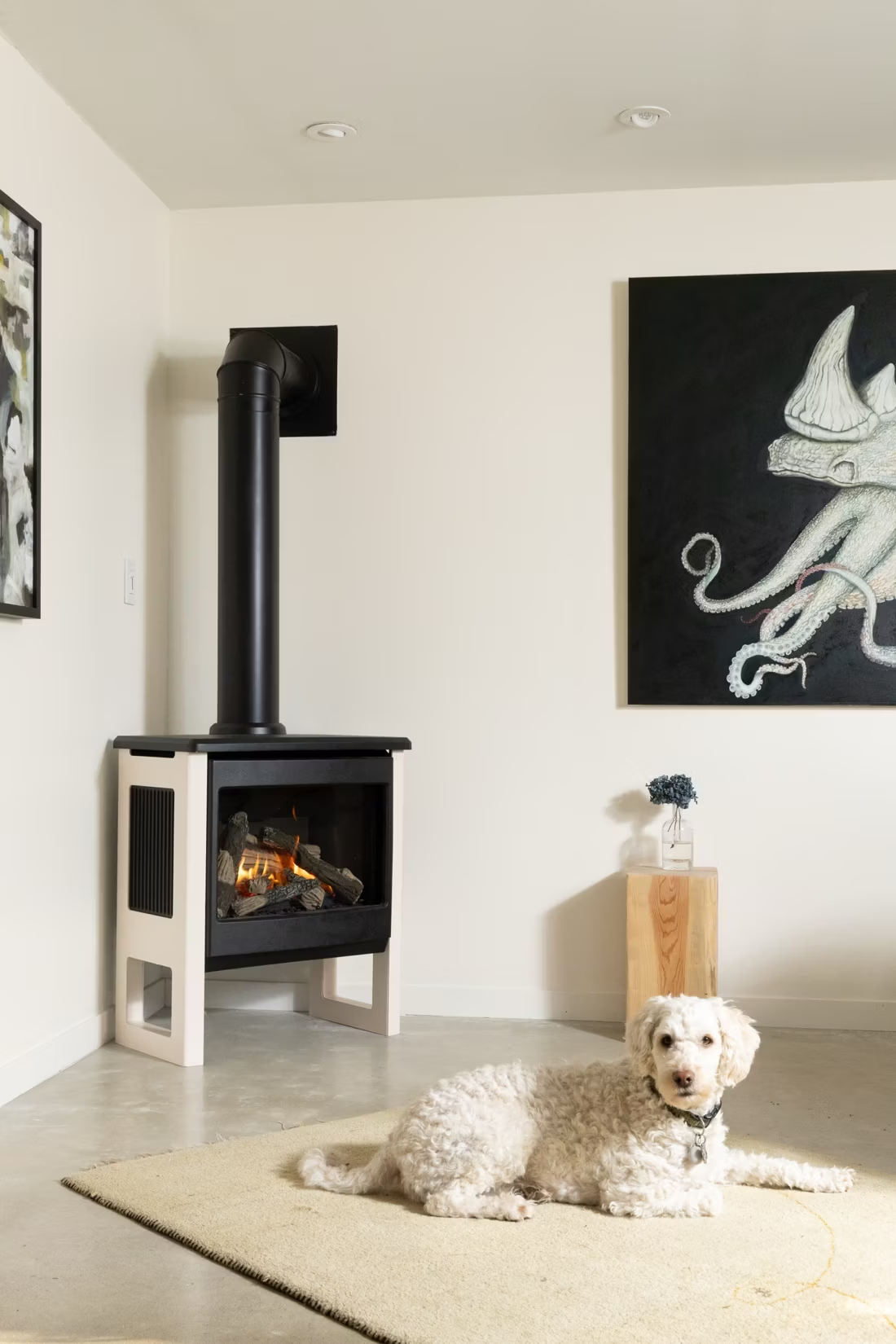
A gas fireplace is a built-in unit framed into a wall—the right call for new construction or a remodel. A gas insert drops into an existing masonry fireplace opening and uses the chimney, lined with a vent liner, to exhaust—the common upgrade for Summit's older block and adobe homes that already have a fireplace but rarely use it. A gas stove is a freestanding cabinet-style unit that vents through a wall or existing flue, often the easiest retrofit when there's no fireplace opening to work with at all. A local dealer can tell you which fits your existing structure without cutting into walls.
Do I need a permit to install a gas fireplace in Summit?
Yes. Summit falls under Pima County's jurisdiction rather than a city building department, so permitting for a new gas fireplace, insert, or any gas line work runs through Pima County Development Services. The gas line portion has to be pulled by a licensed gas fitter regardless of who installs the fireplace itself. Most hearth dealers coordinate the permit and inspection as part of the job, so it's rarely something you have to manage yourself.
Should I get a vented or vent-free gas fireplace?
Vented, direct-vent units draw combustion air from outside and exhaust it back outside through sealed pipe—they're the safer, more universally accepted choice and the one most Summit dealers will steer you toward. Vent-free units burn directly into the room and are legal in Arizona with the right room sizing and an oxygen-depletion sensor, but they add moisture and combustion byproducts to indoor air—a bigger concern in a tightly sealed desert home than in an old drafty one. Given how often this part of Pima County sits under winter inversion or wildfire-smoke air quality advisories, most homeowners here choose a sealed direct-vent unit and skip the indoor air trade-off entirely.
How often does a gas fireplace need to be serviced?
Plan on an annual check-up, ideally in early fall before the first cool evenings arrive. A technician cleans the burner and glass, checks the pilot and gas connections, and confirms the venting is clear—dust and pack-rat nesting near the exterior vent cap are a real issue on the edge of the Sonoran Desert, so that inspection matters more here than it might elsewhere. Expect to pay somewhere in the $150–$250 range for a standard annual service call.
Gas or wood—which makes more sense for a home in Summit?
Given how mild Summit's winters run—average lows in the low 40s and only a short, light heating season overall—neither fuel is doing heavy lifting for whole-house heat. Wood burners here typically run on mesquite, pinyon, or juniper cut under a Coronado National Forest permit ($5–$20 per cord, May-through-October season), and they deliver a real fire and backup heat during a power outage. Gas skips the wood handling and the ash, lights with a switch or remote, and doesn't add smoke to the air during winter inversion or wildfire-smoke advisories that hit this part of Pima County. For most Summit homeowners who want occasional evening warmth without tending a fire, gas is the simpler fit; for those who value self-sufficiency and already have a wood source, a stove is still a solid option.
How big a gas fireplace do I actually need in Summit?
Smaller than you'd think. With winter lows averaging around 41°F and only a short, mild heating season each year, most Summit homes are looking for supplemental warmth in one or two rooms during the coolest evenings of December and January, not a furnace replacement. A small to mid-size direct-vent insert, typically in the 20,000–30,000 BTU range, is plenty for a living room or great room in this climate; oversizing tends to just mean you're running it on low most nights. A local dealer can size it to your actual room, not a generic climate chart.
Can I put a TV above my fireplace?
Yes—with an asterisk. Fireplaces are hot and TVs don't like heat. Either put a mantel between them to deflect rising warmth, or choose a fireplace with heat-management technology that creates a cool zone on the wall above—the wall stays around 125 degrees, barely warm, while the room still gets full heat. If you like clean lines and don't want a mantel, heat management is the answer.
Does a gas fireplace work when the power is out?
Yes—modern gas fireplaces have a battery backup for the ignition system that lasts for weeks, so no power equals no problem. Your furnace can't say that: no electricity, no blower, no heat. It's one of the most common reasons families add a fireplace, and worth confirming on any model you're considering.
Can I install a fireplace myself?
If you're putting a fire in your house on purpose, it's best to work with an expert. Unless you're genuinely experienced in framing, gas line, vent pipe, and the national code on clearances to combustibles, have a professional do it—and ideally the same company that sells you the fireplace, so warranty, service, and liability all live under one roof.
Does a fireplace add value to my home?
On average, a fireplace adds back to the home about the same amount you spent installing it. Add the monthly savings from heating the rooms you actually use instead of the whole house—often hundreds of dollars a year—and the value case is strong before you even count what a fire does for how your family uses the room.
Nearby Dealers
Hearth shops serving Summit and the surrounding area. Every listing shows whether it is a WhyFire partner, a dealer we have verified as authorized for the brands we recommend, or a local business carrying hearth products. No manufacturer pays for placement. How we verify dealers →
Earth Energy's Hearth & Patio
Find your gas fireplace in Summit.
Tell us about your home and we'll match you with the right gas fireplace or insert, plus a free Project Guide & Parts List—including the vent kit—and a trusted local dealer to install it.
Find Your Fireplace →