
Instant heat for Snowflake's high-desert winters, no chimney required.
Zone heat for a bedroom, office, or manufactured home near the Apache-Sitgreaves National Forest—no venting, no permit hassle. Find the right unit and connect with a trusted local dealer.
Every Project Starts From One of These Five Situations
Electric heat pulls its weight in Snowflake's high-desert cold.
Snowflake sits at 5,677 feet on the edge of the Apache-Sitgreaves National Forest, where ponderosa pine, pinyon, and juniper stands surround town and winter lows average 20°F. The cold season here is real but far shorter than a place like Bozeman, MT, which has a much longer, colder winter most years—Snowflake's cold bites hard overnight because of elevation, but the season itself doesn't drag on nearly as long.
Most homes in this part of Navajo County lean on wood heat as a matter of course, thanks to cheap Forest Service cutting permits ($5 to $20 per cord through the Apache-Sitgreaves National Forests, May through October) and abundant ponderosa and juniper close at hand. Electric fireplaces fill a different role: they're the fastest, lowest-hassle way to add real supplemental heat to a bedroom, sunroom, or manufactured home without cutting into a wall or running a flue. Arizona Public Service is the utility here, billing residential power at roughly 16.45 cents per kWh—not the cheapest rate in the state, but for warming one room instead of running central heat, an electric insert or built-in unit still pencils out well.
Three steps. No salesperson until you're ready.
Tell us about your project
Your zip code, your situation, and the fuel you're leaning toward—or let the answers point you to one.
See what's actually available
The brands dealers within 100 miles genuinely carry—real options, never a catalog mirage.
Get your dealer & Project Guide
A trusted local dealer, plus the free Project Guide & Parts List that names every component of the job.
Frequently Asked Questions
How much does it cost to install an electric fireplace in Snowflake?
Plug-in electric fireplace inserts and mantel units are the least expensive route—typically $150 to $600 for the unit itself, with no electrical or building permit required since they run off a standard 120-volt outlet. Built-in electric fireplaces or larger wall units that need a dedicated 20-amp circuit run higher, usually $800 to $2,500 once an electrician runs new wiring and a carpenter frames the surround. If you're converting an old masonry fireplace opening into a built-in electric unit, expect the higher end of that range plus any surround or mantel finish work.
How big of an electric fireplace do I need for my home?
Electric fireplaces are rated in watts, not BTUs, and most units top out around 1,500 watts of actual heater output plus a separate flame effect. That's enough to comfortably heat a single room of 400 to 1,000 square feet, depending on insulation and ceiling height. In Snowflake's older homes with less insulation, or in a larger great room, plan on supplementing rather than relying on one unit for the whole house—electric fireplaces are built for zone heating, not whole-home heat like a wood stove or a furnace.
Who installs electric fireplaces near Snowflake?
For plug-in units, most homeowners handle the install themselves—no licensed trade required. For built-ins that need a new circuit, you'll want a licensed electrician; several serve the Snowflake–Taylor–Show Low corridor and are familiar with Navajo County's residential wiring requirements. If you're also having a custom surround or mantel built, a local hearth dealer can usually coordinate the electrician and the finish work as one project rather than you managing two separate trades.
What's the difference between an electric insert, a built-in, and a freestanding electric fireplace?
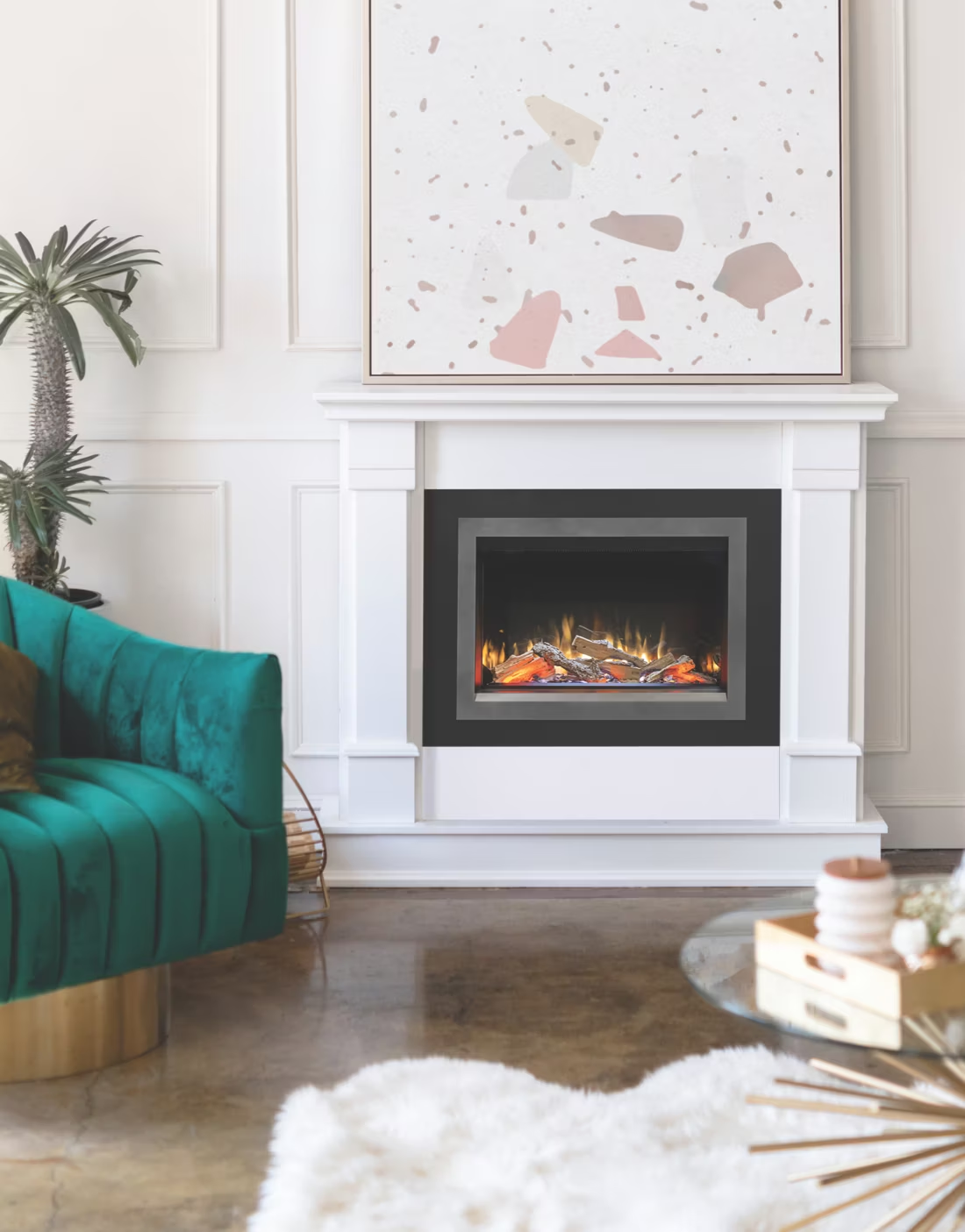
An electric insert is sized to slot into an existing fireplace opening—masonry or zero-clearance—and is the easiest upgrade if you already have a fireplace you no longer burn wood in. A built-in electric fireplace is framed into a wall like new construction, giving a flush, linear look but requiring dedicated wiring and finish carpentry. A freestanding or mantel unit is furniture-style—no installation beyond plugging it in—and it's the right call for renters, manufactured homes, or anyone who wants supplemental heat without permanent changes to the house.
Do I need a permit to install an electric fireplace in Snowflake?
A plug-in unit needs no permit at all—it's treated like any other appliance you plug into the wall. If you're having an electrician install a dedicated circuit for a built-in unit, that electrical work typically requires a permit through Navajo County's building department, since Snowflake itself doesn't run a separate residential electrical permitting office. Your electrician will usually pull that permit as part of the job, so it's rarely something you have to handle yourself.
What's the best electric fireplace for Snowflake's climate?
Look for a unit with a true 1,500-watt heater core and a thermostat, not just a decorative flame effect—at 5,677 feet with winter lows averaging 20°F, you want real supplemental heat on the coldest nights, not ambiance alone. Infrared quartz models tend to feel warmer faster in a single room, which suits the way most Snowflake homes use electric fireplaces: as a boost in a bedroom or home office rather than the primary heat source. Given Arizona Public Service's 16.45 cents per kWh residential rate, running one unit a few hours a night for zone heat stays inexpensive next to heating the whole house.
How much does it cost to run an electric fireplace in Snowflake?
At Arizona Public Service's residential rate of about 16.45 cents per kWh, a typical 1,500-watt heater setting costs roughly 25 cents per hour to run. Used a few hours a night through the cold season, that's a modest addition to a power bill—usually far less than heating an entire home electrically, since you're only warming the room you're actually in. Most units also let you run the flame effect alone, with the heater off, for near-zero operating cost when you just want the look without the warmth.
Electric vs. wood—which makes more sense for a Snowflake home?
Wood is still the backbone of heating for a lot of homes in this part of Navajo County—ponderosa pine, pinyon, and juniper are all available nearby, and a Forest Service cutting permit through the Apache-Sitgreaves National Forests runs just $5 to $20 per cord during the May-to-October season. That makes wood the cheaper fuel by far if you're willing to cut, split, and stack it, and it keeps your home warm if the power goes out. Electric fireplaces can't do either of those things, but they win on convenience and cleanliness—no ash, no chimney, no permit, and instant on-off heat for a single room. Many households here use both: wood or a wood stove for real winter heat, electric for a spare room, office, or as backup when nobody wants to deal with a fire for one evening.
Electric vs. pellet stove—which fits my home better?
Pellet stoves, using bagged fuel from brands like Forest Energy or Lignetics that are common in this region, burn hotter and can genuinely heat a whole house—but they need a vent through an exterior wall or roof, an electrical outlet to run the auger and blower, and a more involved install than an electric fireplace. Electric fireplaces need no venting at all and can go anywhere there's an outlet or a new circuit, but they're a zone-heating tool, not a whole-home solution. If you're looking to meaningfully cut a heating bill in a home without existing gas or wood-stove infrastructure, pellet is usually the stronger long-term choice; if you want low-commitment supplemental warmth in one room with zero venting work, electric is the simpler path.
Can I put a TV above my fireplace?
Yes—with an asterisk. Fireplaces are hot and TVs don't like heat. Either put a mantel between them to deflect rising warmth, or choose a fireplace with heat-management technology that creates a cool zone on the wall above—the wall stays around 125 degrees, barely warm, while the room still gets full heat. If you like clean lines and don't want a mantel, heat management is the answer.
Do electric fireplaces actually produce heat?
Yes—most put out around 4,800–5,000 BTUs from a standard outlet, which comfortably warms a bedroom, office, or den as a comfort-zone heater. What they won't do is carry a whole house the way wood, gas, or pellet can. Think of electric as ambiance-first with honest supplemental heat: flames on with no heat in July, flames plus warmth in January.
What is an in-home preview and do I need one?
It's a visit where a hearth professional measures your space, confirms the model you picked actually works in your home, and walks the specs—framing, gas line, venting, finish work—before anything is ordered. Some details you just can't know until you see the house. Never make a down payment without one; it's the single most-skipped step that burns buyers.
How much should I budget for a fireplace?
For an average home—covering the fireplace, the vent pipe, and basic installation—a budget between $3,900 and $5,500 gives you a lot of options across wood, gas, and pellet. By the time you add finish work, gas line, and electrical, the average complete installation lands between $5,000 and $12,000 all-in. In a remodel or new build, a good rule is to put about 2.5% of the total project cost toward the fireplace.
Nearby Dealers
Hearth shops serving Snowflake and the surrounding area. Every listing shows whether it is a WhyFire partner, a dealer we have verified as authorized for the brands we recommend, or a local business carrying hearth products. No manufacturer pays for placement. How we verify dealers →
We’ve paused dealer listings for this connection today. Enter your zip or postal code above to find dealers near you, or come back tomorrow.
Popular Electric Brands
Where each brand came from, what's inside it today, and every current model. No brand pays to be here. Not every dealer carries every brand, so enter your zip code to see what's sold near Snowflake.
Fireplace Xtrordinair
Fireplace Xtrordinair, now often called FireplaceX, is the fireplace brand of Travis Industries, Inc., of Mukilteo, Washington.
5 electric models →DaVinci
DaVinci Custom Fireplaces is a brand of Travis Industries, Inc., of Mukilteo, Washington, the company behind Lopi and Fireplace Xtrordinair.
5 electric models →Kozy Heat
Kozy Heat was founded in 1976 by Dudley Hussong in Lakefield, Minnesota, and incorporated as Hussong Manufacturing Co., Inc. in 1978.
3 electric models →Forge & Flame
Forge & Flame is the stove brand Hearth & Home Technologies introduced in August 2023 to bring Vermont Castings, Harman, and Quadra-Fire under one name.
1 electric model →Electric Service in Snowflake
An electric fireplace's heater draws about 1,500 watts—pennies per hour at local rates.
Arizona Public Service Co
Find your electric fireplace in Snowflake.
Tell us about your room and we'll help you find a trusted local dealer and hand you a free Project Guide & Parts List—the exact unit, circuit requirements, and surround parts for your electric fireplace project in Snowflake.
Find Your Fireplace →