
Fireplace Solutions for Navajo County's High Desert and Pine Country.
Wood, gas, pellet, and electric fireplace resources for every city and community in Navajo County—from the ponderosa pine forests around Show Low and Pinetop-Lakeside to the high desert plateau at Holbrook and Winslow. Find the right unit for your elevation and climate, and connect with a trusted local hearth retailer.
Every Project Starts From One of These Five Situations
Two Climates, One County: From the White Mountains to the Colorado Plateau.
Navajo County spans two very different heating climates. In the White Mountains around Show Low and Pinetop-Lakeside, elevations climb past 6,500 feet through dense ponderosa pine, pinyon, and juniper forest, and winter nights regularly drop into the teens and 20s. Down on the Colorado Plateau around Holbrook and Winslow, elevation drops to roughly 5,000 feet and the landscape opens into high desert grassland—still cold at night (winter lows average 24°F county-wide) but drier and shorter on snow than the mountain communities. With a winter heating season that runs about five to six months, Navajo County falls well short of the brutal winters of somewhere like Bismarck, ND, but it's still cold enough, long enough, that a working fireplace or stove matters five to six months of the year. Firewood cut under Apache-Sitgreaves National Forest permits has heated homes here for generations, and wildfire smoke—not winter inversion—is the air quality issue locals watch, especially during dry summer and fall stretches.
This hub covers hearth retailers, service technicians, and fuel suppliers across the whole county—the incorporated towns of Show Low, Pinetop-Lakeside, Holbrook, Winslow, Snowflake, and Taylor, plus the unincorporated communities and the portions of the Navajo Nation and Hopi Reservation that lie within county boundaries. Pick your fuel below to see local dealers, typical installation costs, and recommendations suited to your elevation—a cabin near Show Low and a house in Holbrook are heating very different homes, even though they're in the same county.
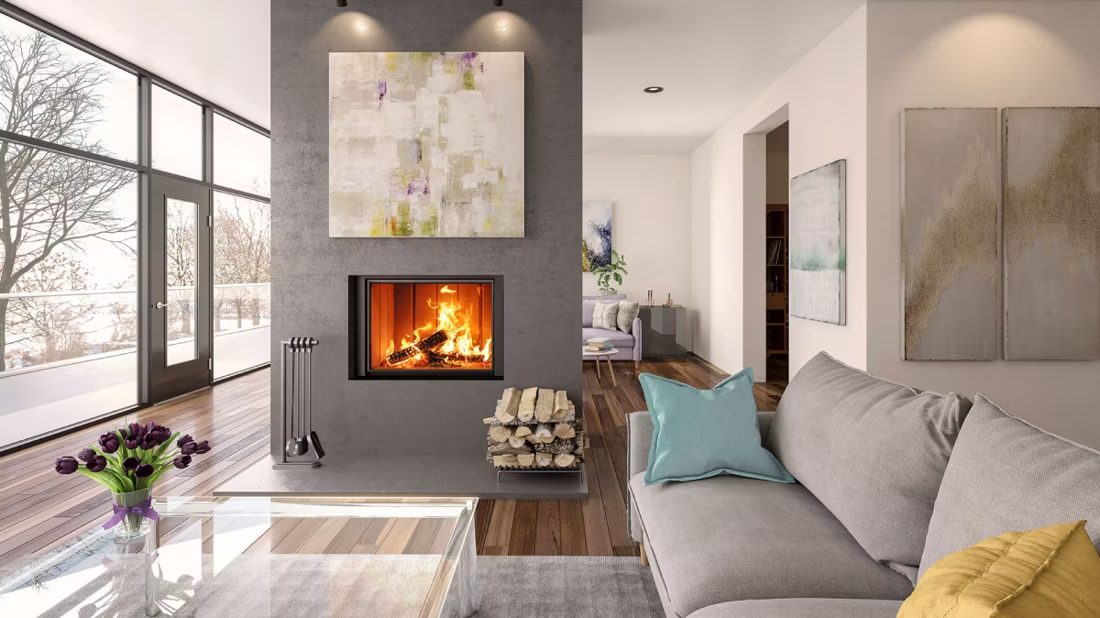
Four fuels. One honest answer for Navajo County.
Three steps. No salesperson until you're ready.
Tell us about your project
Your zip code, your situation, and the fuel you're leaning toward—or let the answers point you to one.
See what's actually available
The brands dealers within 100 miles genuinely carry—real options, never a catalog mirage.
Get your dealer & Project Guide
A trusted local dealer, plus the free Project Guide & Parts List that names every component of the job.
Frequently Asked Questions
Which fuel works best in Navajo County?
It depends heavily on where in the county you sit. Wood is the traditional heating fuel in the pine country around Show Low and Pinetop-Lakeside—ponderosa pine, pinyon, and juniper are all locally cut, often under Apache-Sitgreaves National Forest permits, and catalytic stoves handle the cold mountain nights well. Down on the plateau near Holbrook and Winslow, propane tends to fill the gas role since piped natural gas service is limited to the larger towns; propane gives instant, no-labor heat without needing a woodpile. Pellet stoves are a solid middle ground countywide—Forest Energy and Lignetics bags are both regionally available, and pellet appliances don't require the elevation-dependent wood supply that mountain homes rely on. Electric fireplaces work well as supplemental heat in bedrooms or apartments in either climate but aren't a primary heat source through Navajo County's cold months. Many households mix fuels—wood or pellet as the main heater, propane or electric for secondary rooms.
Do I need a permit to install a fireplace in Navajo County?
In most cases, yes. New wood stoves, inserts, gas appliances, and pellet stoves generally require a building permit, and gas installations need a separate gas-line permit handled by a licensed installer. Within incorporated cities—Show Low, Pinetop-Lakeside, Holbrook, Winslow, Snowflake, and Taylor—permits are issued through the city itself. In unincorporated Navajo County, permits go through the county's development services office. If your property falls within the Navajo Nation or Hopi Reservation, building approval runs through the tribe's own building authority rather than the county, so it's worth confirming jurisdiction before starting a project. Electric fireplaces usually don't need a permit unless the install involves new wiring or a dedicated circuit. Most local hearth retailers handle the permitting process as part of the installation.
Are there air quality restrictions on wood burning in Navajo County?
Navajo County's main air quality concern is wildfire smoke, not winter inversion—the county sits within Apache-Sitgreaves National Forest country, and dry summer and fall stretches can bring extended smoke events from regional wildfires. That affects the forest more directly than home heating: during periods of high fire danger, the Forest Service may restrict or suspend firewood cutting permits, and outdoor burning bans can go into effect. There's no routine winter burn-curtailment program tied to home wood stoves the way there is in inversion-prone basins. New wood stove installations are still expected to meet current EPA emissions standards. If you cut your own firewood on National Forest land, check current fire restrictions before heading out—cutting permits get suspended during red-flag conditions.
Can one local hearth retailer handle all four fuel types across Navajo County's terrain?
Some can, but coverage often splits along the county's two climates. A retailer based near Show Low or Pinetop-Lakeside typically has deep experience with wood stoves and inserts built for cold mountain nights and heavy annual burn hours, plus pellet and gas lines. A retailer based near Holbrook or Winslow is more likely to lean on propane gas units and pellet stoves, since piped natural gas is limited on the plateau side and wood supply is less abundant than up in the pines. If your project sits near the elevation transition—Snowflake or Taylor, for instance—it's worth asking a retailer directly which fuel types they install most often in your specific area rather than assuming countywide uniformity.
How does service work in the more remote parts of Navajo County, including tribal lands?
Most service technicians are based out of Show Low or Holbrook and drive out to surrounding communities, including areas within the Navajo Nation and Hopi Reservation. Given the distances—Show Low to Winslow is roughly 60 miles, and reservation communities can be farther still—expect a modest travel fee for calls outside the main towns, and expect scheduling to run tighter during peak heating season (October through February). Pre-season service appointments in late summer or early fall are typically easier to book than mid-winter emergency calls. If you're in an outlying area, scheduling your annual chimney sweep or gas inspection early, and keeping basic backup supplies (extra pellets, dry firewood, spare IPI batteries for gas units) on hand, is the practical approach.
What's the typical cost range for fireplace installation across all fuel types in Navajo County?
Costs vary by fuel and by which side of the county you're on, since propane line work and mountain-grade venting both add expense. Wood stove or insert installation: roughly $4,000–$8,500 for a typical retrofit, more if new chimney construction is needed for a mountain cabin. Gas fireplace, insert, or stove: roughly $4,000–$10,000, with propane tank setup or line work pushing toward the higher end for rural desert-side properties. Pellet stove or insert: roughly $4,000–$7,000 for most installs. Electric fireplace: $200–$3,000 for the unit itself, plus $300–$1,000 in labor unless it's a simple plug-and-play wall unit. See the county + fuel pages above for cost detail tied to your specific project.
How much should I budget for a fireplace?
For an average home—covering the fireplace, the vent pipe, and basic installation—a budget between $3,900 and $5,500 gives you a lot of options across wood, gas, and pellet. By the time you add finish work, gas line, and electrical, the average complete installation lands between $5,000 and $12,000 all-in. In a remodel or new build, a good rule is to put about 2.5% of the total project cost toward the fireplace.
Does a fireplace add value to my home?
On average, a fireplace adds back to the home about the same amount you spent installing it. Add the monthly savings from heating the rooms you actually use instead of the whole house—often hundreds of dollars a year—and the value case is strong before you even count what a fire does for how your family uses the room.
Wood, gas, pellet, or electric—how do I choose?
Match the fuel to your life, not the other way around. Wood: lowest fuel cost and total power-outage independence, but you're hauling and stacking. Gas: press a button, set a thermostat, no maintenance to speak of. Pellet: wood economics with automatic feeding, in exchange for weekly cleaning and a need for electricity. Electric: plugs in anywhere with honest supplemental heat. Nobody regrets the fuel that fits how they actually live.
Can I install a fireplace myself?
If you're putting a fire in your house on purpose, it's best to work with an expert. Unless you're genuinely experienced in framing, gas line, vent pipe, and the national code on clearances to combustibles, have a professional do it—and ideally the same company that sells you the fireplace, so warranty, service, and liability all live under one roof.
Stove and Fireplace Dealers in Navajo County
Listings include WhyFire partner dealers, dealers we have verified as authorized for the brands we recommend, and established local businesses that carry hearth products. Every listing shows which one it is. The ones marked Preferred run on WhyFire's software, so they can show you real pricing and book your appointment right here. No manufacturer pays for placement. How we verify dealers →
U.s. Insulation & Stove
Home Center Supply
Wizards -Show Low (White Mountain Fireplace & Stove)
Wizard's Hearth & Home
Banker Insulation
Mountain Leisure
Find Your Fireplace in Navajo County.
Tell us your fuel, your town, and your project, and we'll match you with a trusted local dealer and send a free Project Guide & Parts List—the exact parts, including the vent kit, sized for your elevation in Navajo County.
Find Your Fireplace →