
Pellet Heat Is Rare in San Luis—Here's What Actually Fits Your Home.
With winter lows averaging 48°F, San Luis rarely needs supplemental heat at all. If you still want a pellet stove for ambiance, a cool snap, or a cabin up north, we'll connect you with a dealer who can tell you straight whether it makes sense.
Every Project Starts From One of These Five Situations
San Luis winters rarely call for a wood pellet stove.
San Luis sits at just 158 feet elevation on the Colorado River floodplain along the US-Mexico border, deep in the Sonoran Desert. The numbers tell the story: San Luis logs roughly 679 heating degree days a year, compared to 8,000-plus in a cold-climate city like Fargo, ND. Winter lows here average 48°F, and a hard freeze is a rare event rather than a winter fixture. That's the honest starting point for anyone searching for a pellet stove in this zip code—the appliance category exists mostly to solve a problem this climate doesn't have.
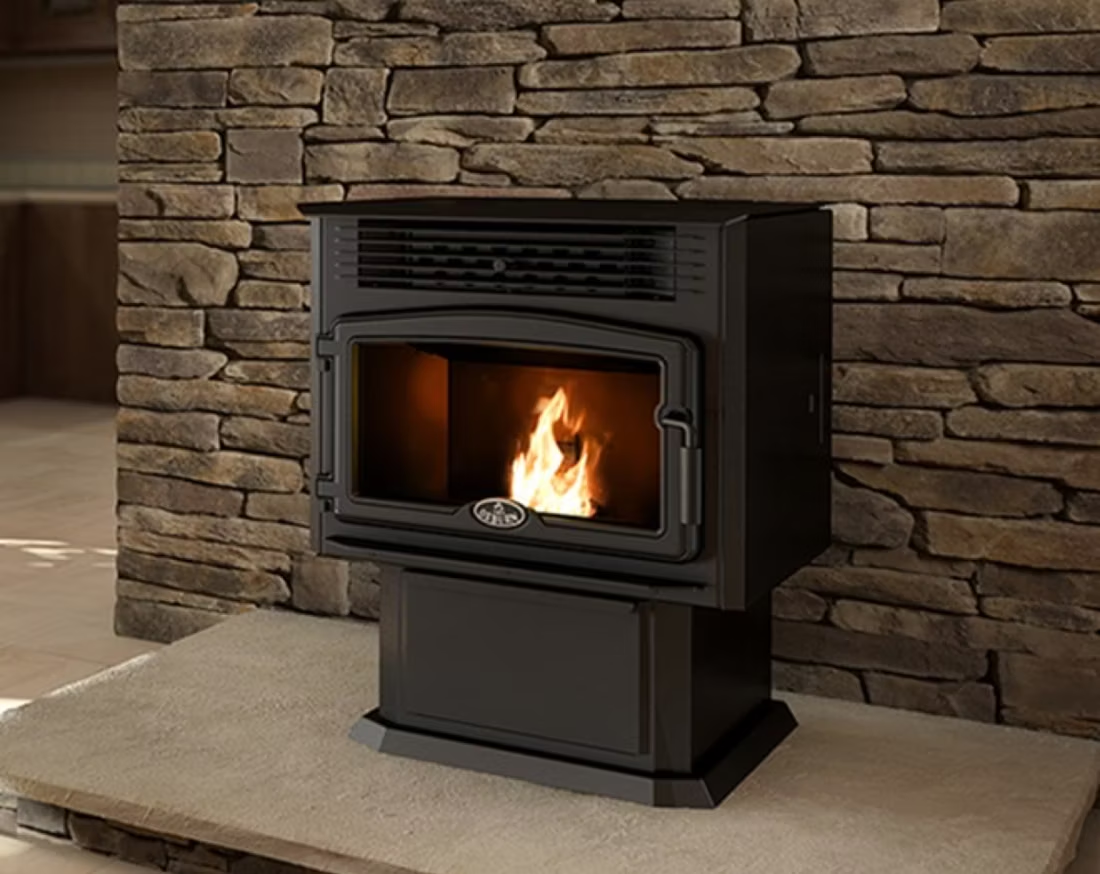
That said, a small number of San Luis and greater Yuma County homeowners do install pellet stoves—usually for the look and ambiance of a real flame, for the rare January cold snap, or because they split time between San Luis and a cooler property in northern Arizona or out of state. Regional pellet brands like Forest Energy and Lignetics are available through hearth dealers serving the Yuma corridor, though selection is thinner here than in mountain or northern markets simply because demand is lower. For most San Luis homes, natural gas and electric appliances remain the standard heating and ambiance choice—both fuels are well served locally, with Arizona Public Service and the Wellton-Mohawk Irrigation & Drainage District providing electric service at a residential rate around 16.45 cents per kWh.
Three steps. No salesperson until you're ready.
Tell us about your project
Your zip code, your situation, and the fuel you're leaning toward—or let the answers point you to one.
See what's actually available
The brands dealers within 100 miles genuinely carry—real options, never a catalog mirage.
Get your dealer & Project Guide
A trusted local dealer, plus the free Project Guide & Parts List that names every component of the job.
Frequently Asked Questions
Does a pellet stove actually make sense for a home in San Luis?
For most homes, no—not as a primary or even meaningful supplemental heat source. With only 679 heating degree days a year and winter lows averaging 48°F, San Luis simply doesn't generate the sustained cold that pellet appliances are built to offset. Where pellet stoves do make sense locally: homeowners who want the visual and ambiance of a real fire in a great room, mobile or manufactured homes that get genuinely chilly on the rare 30-degree night, or families who also own a cabin or second home in a cooler part of Arizona or another state and want a matching unit. If your goal is heating your San Luis home efficiently, a local dealer will likely steer you toward gas or electric instead—and a good one will tell you that upfront rather than sell you a stove you don't need.
What would a pellet stove installation cost in San Luis if I still want one?
Because so few installers in the Yuma-San Luis corridor handle pellet work regularly, pricing tends to run toward the higher end of the national range: roughly $3,500 to $6,500 installed, depending on the unit, whether venting can run through an exterior wall versus requiring roof penetration, and electrical work for the hopper auger and blower. Freestanding units on an exterior wall are the most economical configuration here. Get a firm quote from a dealer who's actually installed pellet appliances in the region—not just a big-box estimate—since local install experience is limited.
Where can I actually buy pellet fuel near San Luis?
Pellet fuel isn't stocked heavily in San Luis itself given how few households burn it. Forest Energy and Lignetics are the regional brands most likely to show up at farm-supply and hardware retailers in greater Yuma, but availability can be seasonal and inconsistent. Many San Luis pellet-stove owners order by the pallet (roughly 50 forty-pound bags) ahead of the cooler months and store it themselves rather than relying on walk-in stock, since local demand doesn't support the kind of year-round pellet aisle you'd see in a place like Flagstaff or Prescott.
Do I need a permit to install a pellet stove in San Luis?
Yes—a solid-fuel or biomass appliance installation, including pellet stoves, still requires a building permit through the City of San Luis or Yuma County building department depending on your address, along with the electrical work for the auger and blower circuit. Because pellet installs are uncommon here, it's worth confirming with the permitting office directly rather than assuming the process mirrors gas fireplace permitting, which is far more routine in this area.
San Luis is a non-attainment area for air quality—does that affect pellet stove installs?
Yuma County's border region deals with PM10 non-attainment status tied largely to dust and, seasonally, wildfire smoke drifting up from Mexico and Southern California. EPA-certified pellet stoves are among the cleanest-burning solid-fuel appliances available and generally aren't targeted by the same curtailment rules that affect wood stoves in other non-attainment areas. Still, confirm current requirements with the Arizona Department of Environmental Quality or Yuma County Air Quality Division before installing, since border-region air rules can shift with wildfire season.
What size pellet stove would I even need in this climate?
Smaller than you'd think, and often smaller than the entry-level units sold nationally. Even the smallest production pellet stoves are typically rated for 1,000 to 1,500 square feet in a cold climate—in San Luis, that same stove will likely feel oversized for anything beyond a single room used a handful of nights a year. Most local buyers end up choosing pellet stoves for the ambiance and controllable flame rather than for heat output, running them on low settings during the brief December-to-February cool stretch. A dealer familiar with desert-climate installs can help you avoid buying more stove than you'll ever use.
Would gas or electric make more sense than pellet for my San Luis home?
For most homes here, yes. Natural gas fireplaces and inserts are a standard, well-supported option in San Luis, offering instant heat and flame with none of the pellet hopper, ash, or fuel-storage upkeep. Electric fireplaces are also a strong fit for a climate this mild—they run on the local Arizona Public Service or Wellton-Mohawk Irrigation & Drainage District grid at roughly 16.45 cents per kWh, require no venting, and deliver ambiance-focused heat that matches San Luis's actual needs. Pellet remains the right call mainly for the ambiance-first buyer or someone splitting time with a colder property; for everyday heating value in this climate, gas or electric is usually the smarter first conversation with a local dealer.
Are there rebates or tax credits for installing a pellet stove in Arizona?
Arizona doesn't offer a state-level biomass appliance rebate program the way some colder states do. However, the federal 25(D) residential energy credit still applies nationwide to qualifying wood and pellet stoves with a thermal efficiency rating of 75% or higher (measured by HHV), currently covering 30% of the equipment and installation cost with no cap through 2032. That federal credit applies the same in San Luis as it would in a high-HDD state—it's just less commonly claimed here because fewer households install pellet appliances at all.
How much maintenance does a pellet stove need if I'm only burning it occasionally?
Less than a stove running all winter in a cold climate, but occasional use brings its own quirks. Dust and heat in the Sonoran Desert can affect gasket seals and electronic components over time even when the stove isn't running, so an annual inspection before the cool season—checking the auger, hopper, gaskets, and exhaust fan—is worth doing even on a lightly used unit. On the plus side, San Luis's dry climate is actually good for pellet storage, as long as bags are kept off concrete floors and out of direct sun to avoid moisture wicking or heat degradation. Plan on a professional cleaning every year or two rather than the every-season schedule a high-HDD household would need.
What's the difference between an insert and a zero-clearance fireplace?
An insert is a fireplace that slides into a pre-existing wood-burning fireplace—if you don't have one, there's nothing to insert it into. A zero-clearance fireplace is built into a framed wall, which makes it the answer for remodels and new construction. Simple test: existing masonry fireplace means insert; blank or framed wall means zero-clearance.
Why is a fireplace insert so efficient?
An insert does two things: it seals the chimney completely, so you stop losing air you already paid to heat, and it radiates warmth into the room through the firebox and glass. Most add a heat-exchange fan that pulls cool room air underneath, wraps it around the hot firebox, and pushes it back out warm. Your home is more efficient before you've even lit the first fire.
Does a fireplace add value to my home?
On average, a fireplace adds back to the home about the same amount you spent installing it. Add the monthly savings from heating the rooms you actually use instead of the whole house—often hundreds of dollars a year—and the value case is strong before you even count what a fire does for how your family uses the room.
Can a fireplace actually lower my heating bill?
Yes—by creating a comfort zone. A furnace heats every square foot of the house just to warm the one room you're in; a gas fireplace on low burns roughly a sixth of the gas a typical furnace does. Set the furnace around 55–60 degrees as a baseline, then heat the rooms your family actually uses. Families who heat this way commonly save $20–$60 a month.
Nearby Dealers
Hearth shops serving San Luis and the surrounding area.
Pellet Brands Stocked Around San Luis
Manufacturers will point you to the nearest stocking dealer.
Get matched with a San Luis dealer for your pellet project.
Tell us about your home and what you're actually trying to solve—ambiance, a rare cold snap, or a match for a cabin elsewhere—and we'll connect you with a trusted local dealer along with a free Project Guide & Parts List, including the exact parts and vent kit your install needs.
Find Your Fireplace →