
Clean, flip-a-switch warmth for Prescott Valley's high-desert winters.
At 5,054 feet with winter lows averaging 24°F and a moderate winter heating season, Prescott Valley doesn't need a full wood or gas system in every room. I'll match you with a trusted local dealer who can size and install an electric unit that actually fits your home.
Every Project Starts From One of These Five Situations
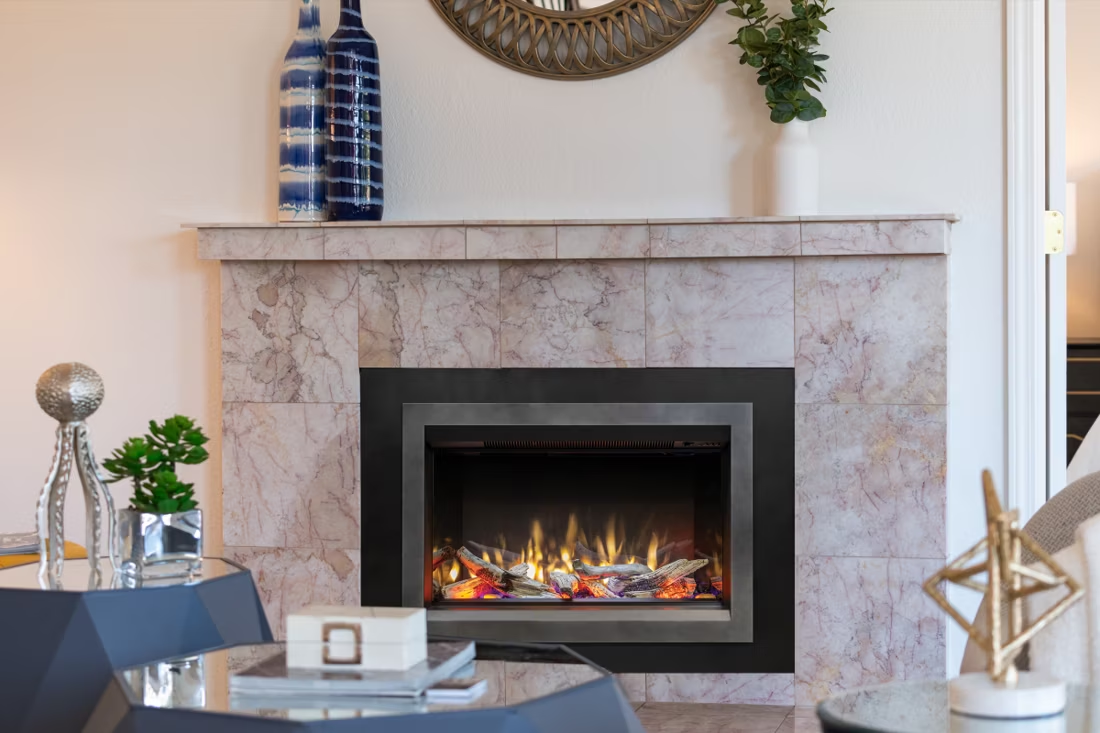
Supplemental heat without a woodpile or a flue.
Prescott Valley sits in climate zone 4B, a mixed-dry high-desert zone that's genuinely cold in the mornings but nowhere near the sustained deep-freeze of a place like Bismarck or Duluth. With a moderate winter heating season and winter lows averaging in the mid-20s, most homes here are already carrying a central HVAC system that handles the bulk of the load—what people actually want is targeted, no-fuss warmth in the room they're sitting in, plus the visual of a fire without adding smoke or a chimney to maintain.
That fits how a lot of Prescott Valley is built. The town has a large share of active-adult and manufactured-home communities where covenants or existing construction make running a new gas line or masonry chimney impractical, and an electric insert or wall unit sidesteps that entirely—no venting, no permit for a simple plug-in model. It also matters during fire season: Prescott Valley sits between the Prescott, Kaibab, and Coconino National Forests, and wildfire smoke is a recognized regional air quality concern, so a growing number of households prefer a heat source that doesn't add anything to the air regardless of what's happening with local burn restrictions. Arizona Public Service is the utility here, currently billing residential customers around $0.1645 per kWh, which keeps an electric fireplace cheap to run for zone heating even if it's not meant to replace your furnace.
Three steps. No salesperson until you're ready.
Tell us about your project
Your zip code, your situation, and the fuel you're leaning toward—or let the answers point you to one.
See what's actually available
The brands dealers within 100 miles genuinely carry—real options, never a catalog mirage.
Get your dealer & Project Guide
A trusted local dealer, plus the free Project Guide & Parts List that names every component of the job.
Frequently Asked Questions
How much does it cost to install an electric fireplace in Prescott Valley?
A basic plug-in electric insert or wall-mount unit typically runs $250 to $1,200 installed, since there's no venting or chimney work involved—the main cost is the unit itself and any carpentry to frame it into a wall or existing firebox. A built-in electric fireplace with a dedicated 20-amp circuit, which many Prescott Valley homeowners choose for a cleaner look in a great room or main living area, runs higher, generally $1,500 to $3,000, mostly for the electrician's time. Either way, it's a fraction of what a vented gas or wood install costs in this area, since there's no Class A chimney or gas line to run.
Do I need a permit to install an electric fireplace in Prescott Valley?
Usually not for a standard plug-in insert or freestanding unit—those just need a grounded outlet and don't trigger a permit review. If you're adding a new dedicated circuit or doing any wall modification for a built-in unit, that electrical work typically does need to go through the Town of Prescott Valley Building Safety Division (or Yavapai County if you're outside town limits), and most licensed electricians pull that permit as part of the job. It's worth confirming with your installer up front, since it's a much lighter process than the gas or wood permitting that applies elsewhere in the region.
What size electric fireplace do I actually need?
Since electric units here are almost always supplemental rather than a home's primary heat source, size to the room, not the house. A 1,500-watt unit—the standard output for most electric inserts and stoves—comfortably heats 400 to 1,000 square feet, which covers a typical Prescott Valley living room or den. Given the average winter low of 24°F, that's plenty to take the edge off a cold morning in the room you're using; it's not meant to carry the whole home through a cold snap the way central HVAC does.
How much does it cost to run an electric fireplace with APS rates?
At Arizona Public Service's residential rate of about $0.1645 per kWh, a typical 1,500-watt electric fireplace costs roughly $0.25 an hour to run on high heat, or about $2 for an 8-hour evening. That's inexpensive for ambiance and zone heating in one room, but it's worth knowing that electric resistance heat costs more per BTU than gas or wood—so while running a fireplace in your living room a few hours a night is cheap, using electric heaters to warm an entire home through a Prescott Valley winter adds up fast on an APS bill.
Electric vs. wood—which makes more sense for a Prescott Valley home?
Wood has a real cost advantage here—cutting permits from the Prescott, Kaibab, and Coconino National Forests run just $5 to $20 per cord, and ponderosa pine, pinyon, and juniper are all locally abundant. But wood requires a chimney, annual sweeps, and stacked fuel, and during dry-season fire restrictions on nearby National Forest land, outdoor burning and sometimes even wood stove use can be curtailed. Electric has none of those limitations—it runs the same on a red flag warning day as any other day—which is why a lot of homeowners here choose electric for daily convenience and keep wood, if they have it, as a separate backup option.
What type of electric fireplace fits best in a Prescott Valley home?
For the area's many manufactured homes and HOA-governed active-adult communities where adding venting isn't an option, a wall-mounted or built-in electric insert is the most common fit—it drops into an existing niche or new framing without touching the roofline. Freestanding electric stoves work well in homes wanting a portable, no-installation option that can move between rooms. For a masonry fireplace shell that's sitting unused, an electric insert that slides into the existing firebox opening is often the simplest upgrade, giving you flame visual and heat without ever cutting a wood stack or running a gas line.
How much maintenance does an electric fireplace need?
Very little, which is a big part of the appeal here. There's no chimney to sweep, no gas line to inspect, and no ash to clean out. Basic upkeep is wiping down the glass front, occasionally cleaning dust out of the blower fan, and replacing the LED ember bed light eventually—most units are rated for years of daily use before that's even needed. For a homeowner comparing options, that's a meaningful difference from the annual chimney inspections wood systems need or the yearly burner service gas units call for.
Does wildfire smoke affect the case for electric heat in Prescott Valley?
It's part of why interest in electric has grown here. Prescott Valley sits close to the Prescott, Kaibab, and Coconino National Forests, and wildfire smoke is a recognized regional air quality concern through the dry summer and fall months. While that mainly affects outdoor burning and forest access rather than indoor wood stoves directly, plenty of local homeowners simply prefer not adding any combustion byproducts indoors during a season when the outside air is already compromised. An electric fireplace gives you the fire's visual warmth with zero emissions, indoors or out.
Can an electric fireplace replace my central heating system?
No, and most local dealers will tell you that upfront. With a moderate winter heating season and winter lows averaging 24°F, Prescott Valley has a real heating season, and electric resistance heat costs more per BTU than the gas or heat-pump systems most homes here already rely on for whole-house heating. Where an electric fireplace earns its keep is as a zone heater—taking the chill off a living room or bedroom so you can turn the thermostat down elsewhere—plus the ambiance of a fire without any fuel storage or venting to manage.
Can I put a TV above my fireplace?
Yes—with an asterisk. Fireplaces are hot and TVs don't like heat. Either put a mantel between them to deflect rising warmth, or choose a fireplace with heat-management technology that creates a cool zone on the wall above—the wall stays around 125 degrees, barely warm, while the room still gets full heat. If you like clean lines and don't want a mantel, heat management is the answer.
Do electric fireplaces actually produce heat?
Yes—most put out around 4,800–5,000 BTUs from a standard outlet, which comfortably warms a bedroom, office, or den as a comfort-zone heater. What they won't do is carry a whole house the way wood, gas, or pellet can. Think of electric as ambiance-first with honest supplemental heat: flames on with no heat in July, flames plus warmth in January.
How much should I budget for a fireplace?
For an average home—covering the fireplace, the vent pipe, and basic installation—a budget between $3,900 and $5,500 gives you a lot of options across wood, gas, and pellet. By the time you add finish work, gas line, and electrical, the average complete installation lands between $5,000 and $12,000 all-in. In a remodel or new build, a good rule is to put about 2.5% of the total project cost toward the fireplace.
What is an in-home preview and do I need one?
It's a visit where a hearth professional measures your space, confirms the model you picked actually works in your home, and walks the specs—framing, gas line, venting, finish work—before anything is ordered. Some details you just can't know until you see the house. Never make a down payment without one; it's the single most-skipped step that burns buyers.
Nearby Dealers
Hearth shops serving Prescott Valley and the surrounding area.
Aaron's Chimney Sweeping
Electric Service in Prescott Valley
An electric fireplace's heater draws about 1,500 watts—pennies per hour at local rates.
Arizona Public Service Co
Get your free Project Guide & Parts List for an electric fireplace in Prescott Valley.
Tell me about your room, your wall setup, and whether you need new electrical work, and I'll match you with a trusted local dealer and send a free Project Guide & Parts List sized for your space—no chimney, no gas line, just the right unit and parts.
Find Your Fireplace →