
Keep Your Family Warm and Safe—No Matter What
With such a light winter heating season and lows averaging 41°F, Mesa homes rarely need wood heat for survival—but some still want the fire. Here's what's realistic, and who can install it right.
Every Project Starts From One of These Five Situations
Mesa's desert winters make wood heat optional, not essential.
Mesa sits at 1,325 feet in the Sonoran Desert, where the average winter low is 41°F and the city has one of the lightest winter heating needs in the country. For comparison, a city like Duluth, MN faces a winter heating load many times heavier—homes there depend on wood heat to survive January. In Mesa, a furnace or heat pump covers the handful of genuinely cold nights each winter, so wood-burning fireplaces and stoves never became part of the region's building culture the way gas and electric fireplaces did.
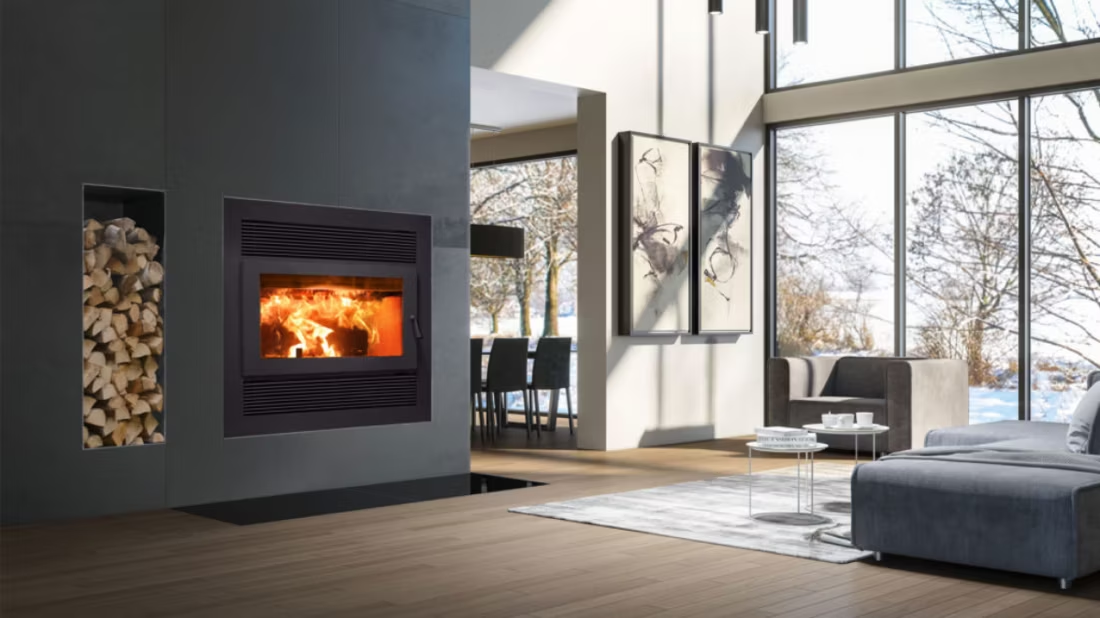
There's also a real regulatory factor: Maricopa County is a federal non-attainment area for particulate matter, and the Maricopa County Air Quality Department runs a Regional No-Burn program during winter inversion months (roughly November through February). On No-Burn Day advisories, wood-burning fireplaces and stoves are restricted regardless of age or certification unless the appliance is a household's sole source of heat—which is almost never the case in Mesa. When homeowners here do install a wood-burning unit, it's typically for ambiance in a great room or a custom desert home, not for heat, and local mesquite, pinyon, and juniper are the woods most commonly burned when conditions allow it.
Firewood Cutting Permits Near Mesa
Three steps. No salesperson until you're ready.
Tell us about your project
Your zip code, your situation, and the fuel you're leaning toward—or let the answers point you to one.
See what's actually available
The brands dealers within 100 miles genuinely carry—real options, never a catalog mirage.
Get your dealer & Project Guide
A trusted local dealer, plus the free Project Guide & Parts List that names every component of the job.
Frequently Asked Questions
Does a wood fireplace even make sense in Mesa's climate?
For heat, not really—Mesa has such a light winter heating need, with a winter low around 41°F, that there's rarely a night cold enough to need supplemental wood heat. Where a wood fireplace does make sense is ambiance: a real masonry fireplace or wood-burning insert in a great room, used a handful of evenings each winter. If you're weighing wood against gas or electric for a Mesa home, most local dealers will tell you straight that gas gives you the same visual with none of the Maricopa County No-Burn Day restrictions.
What does a wood fireplace installation cost in Mesa?
There isn't a well-established local price benchmark because wood installs are uncommon in the Phoenix metro compared to gas and electric—most hearth retailers here focus their inventory on gas inserts and electric units. Expect the same underlying cost drivers as anywhere: Class A chimney pipe if you don't have existing masonry, a code-compliant hearth pad, and whether the unit needs to meet EPA 2020 NSPS standards. Because demand is lower, fewer Mesa-area dealers stock wood units on the showroom floor, so plan on a special order and get a firm in-home quote before committing.
What are Maricopa County's No-Burn Day restrictions, and do they apply to my fireplace?
The Maricopa County Air Quality Department issues No-Burn Day advisories during winter months when particulate levels spike, usually tied to temperature inversions that trap smoke and dust over the Valley. On advisory days, burning wood in a fireplace or wood stove is prohibited unless it is your home's only source of heat—a category almost no Mesa home falls into, since central HVAC is standard. This is one of the biggest practical reasons wood fireplaces stay rare here: even homeowners who install one for ambiance can't count on being able to use it on any given winter evening.
What wood species are actually available near Mesa?
Mesquite, pinyon pine, and juniper are the woods most commonly sold and burned in the Phoenix metro. Mesquite is prized locally more for grilling and smoking than fireplace heat—it burns extremely hot and pops more than softer woods, so it needs a well-screened hearth. Pinyon and juniper, both harvested from higher-elevation forests north of the Valley, burn cleaner and are more typical for indoor fireplace use. Most Mesa-area firewood comes from commercial suppliers rather than backyard cutting, given the desert's sparse tree cover.
Can I get a permit to cut my own firewood near Mesa?
Yes, but you'll need to head north—Mesa itself sits in the desert floor with no commercial timber nearby. The Tonto National Forest and Prescott National Forest both issue personal-use cutting permits, typically running $5 to $20 per cord, with a cutting season of May through October. Most permits are for standing dead or downed pinyon and juniper at higher elevation. It's a full day trip from Mesa each way, which is part of why most local homeowners simply buy split, seasoned wood from a Valley supplier instead.
Why do some Mesa homeowners still install a wood-burning fireplace?
Mostly for the experience, not the heat. A crackling wood fire has a different feel than gas—the sound, the smell, the ritual of tending it—and some custom homes and larger great rooms in Mesa are built around a masonry fireplace as a design centerpiece. It's also common among households who split time between Mesa and a cabin or second home at higher elevation near Payson, Show Low, or Flagstaff, where wood heat is genuinely practical, and they want the same fireplace style in both places.
Is a gas fireplace a better fit for a Mesa home than wood?
For most Mesa households, yes. Gas fireplaces don't trigger Maricopa County No-Burn Day restrictions, run on a switch or remote with no ash or smoke, and are widely stocked and installed by local dealers since gas is the standard fireplace fuel in this market. If the appeal of wood is really about ambiance and occasional cool-evening use—which is the case for most people asking about wood in a 41°F-average-low climate—a gas insert or fireplace typically delivers that experience with far fewer restrictions and a much easier local installation.
What permits does a wood fireplace installation need in Mesa?
New wood-burning appliance installations in Mesa go through the City of Mesa building permit process, and the unit itself must meet current EPA 2020 NSPS emissions standards to be legally installed and sold. Beyond the one-time construction permit, you also take on the ongoing Maricopa County Air Quality Department No-Burn Day restrictions every winter, which don't apply to gas or electric units. A local hearth dealer familiar with both the city's permitting process and the county's air-quality rules can walk you through what's realistic before you commit to a wood installation.
Wood vs. electric fireplace—which makes more sense in Mesa?
For a climate this mild, electric often wins on practicality. Electric fireplaces need no venting, no chimney, and no permit for most plug-in or built-in models, and they're unaffected by Maricopa County's No-Burn Day program since there's no combustion involved. Running costs are modest too—Mesa-area utilities including City of Mesa Electric and Electrical District No. 8 charge roughly $0.14 to $0.17 per kWh, and an electric fireplace used a few hours an evening costs only pennies. Wood still wins on authenticity if that's what you're after, but for supplemental ambiance in a desert home, electric is the lower-friction choice.
Why is my open fireplace making my house colder?
Open fireplaces suck—literally. As the fire burns, it consumes air your furnace already paid to heat and pulls it out through the chimney, so the house is actually colder after the fire goes out than before you lit it. An insert fixes this: it seals the chimney, puts fixed glass across the front, and turns that hole in your house into a real heat source.
Can a wood stove burn all night?
The right one can. If waking up to a warm house and live coals matters to you, say exactly that when you're shopping—firebox size and burn-rate control determine overnight performance far more than any number on a spec sheet. It's a much more useful question than asking about BTUs.
Can I install a fireplace myself?
If you're putting a fire in your house on purpose, it's best to work with an expert. Unless you're genuinely experienced in framing, gas line, vent pipe, and the national code on clearances to combustibles, have a professional do it—and ideally the same company that sells you the fireplace, so warranty, service, and liability all live under one roof.
Can a fireplace actually lower my heating bill?
Yes—by creating a comfort zone. A furnace heats every square foot of the house just to warm the one room you're in; a gas fireplace on low burns roughly a sixth of the gas a typical furnace does. Set the furnace around 55–60 degrees as a baseline, then heat the rooms your family actually uses. Families who heat this way commonly save $20–$60 a month.
Nearby Dealers
Hearth shops serving Mesa and the surrounding area. Every listing shows whether it is a WhyFire partner, a dealer we have verified as authorized for the brands we recommend, or a local business carrying hearth products. No manufacturer pays for placement. How we verify dealers →
Gilbert Fireplaces & BBQ’s
Valley Stone
Diversified Builder Supply
Brooksies Propane
All American Outdoor Living
Bbq Island
Fire By James
Southwest Builders & Design, LLC
Best BBQ’s & Islands
Green Goddess
Arizona Fire Features
Apache Stone - Phoenix
EarthCore Industries
Carefree Outdoor Living
All American Outdoor Living
Find the right fireplace fit for your Mesa home.
Tell us about your home and how you'd actually use a fireplace, and we'll help you find a trusted local Mesa-area dealer and send over a free Project Guide & Parts List—whether that ends up being wood, gas, or electric.
Find Your Fireplace →