
Pellet heat is the exception, not the rule in Mesa.
With an average winter low of 41°F and only a short, mild heating season each year, most Mesa homes never need a dedicated heat source. If you still want a pellet stove—for a mountain cabin tie-in, a rare cold snap, or the look of a real flame—we'll help you find a trusted local dealer who can tell you honestly whether it fits your home.
Every Project Starts From One of These Five Situations
Mesa doesn't need whole-house heat—most days it needs none at all.
At 1,325 feet in the Sonoran Desert, Mesa logs a mild, short heating season—a fraction of what a place like Bozeman or Duluth racks up, and low even by Arizona standards. Winter lows average 41°F, and the handful of nights that dip near freezing typically last a few hours, not a season. That's why gas fireplaces are the standard supplemental option here and electric units cover the rest: a pellet stove's slow-burning, high-output design is built for climates that need it to run for months, not for the occasional January cold snap.
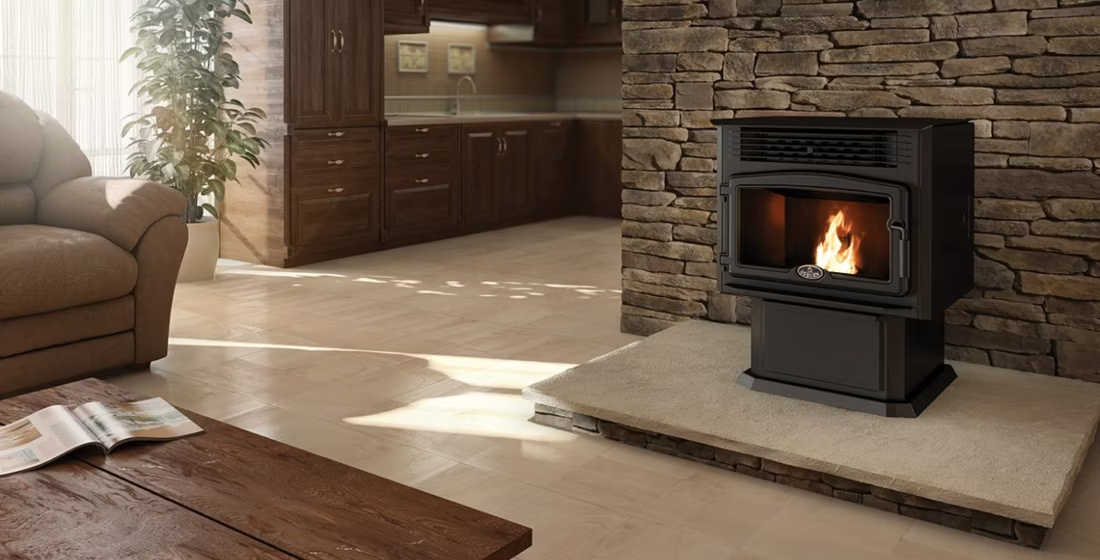
The demand that exists is real but narrow. Some Mesa homeowners want a pellet stove for a second home or cabin up toward the Mogollon Rim or the White Mountains, where the same appliance actually earns its keep. Others simply want the visual of a real flame without the hassle of a wood-burning fireplace—and pellet units, unlike open wood fires, are often treated more leniently on the High Pollution Advisory days Maricopa County's Air Quality Department calls during winter inversions in this non-attainment area (confirm current rules before you buy). Regional brands like Forest Energy and Lignetics do reach hearth and farm-supply dealers in the Phoenix-Mesa area, but because full-time pellet heating isn't common locally, stock and installer experience are thinner here than in a place that actually needs the BTUs.
Three steps. No salesperson until you're ready.
Tell us about your project
Your zip code, your situation, and the fuel you're leaning toward—or let the answers point you to one.
See what's actually available
The brands dealers within 100 miles genuinely carry—real options, never a catalog mirage.
Get your dealer & Project Guide
A trusted local dealer, plus the free Project Guide & Parts List that names every component of the job.
Frequently Asked Questions
Why don't more homes in Mesa have pellet stoves?
The math doesn't favor it. Mesa has a mild winter with lows around 41°F and only a short, light heating season, so there simply aren't enough cold hours to justify a heating appliance designed to run continuously through a long season. Gas fireplaces and electric units—both standard here—cover the occasional evening chill without the venting, hopper-loading, and ash cleanup that a pellet stove requires. Pellet heat earns its cost in places like Flagstaff or the White Mountains; in central Maricopa County it's mostly a lifestyle choice rather than a heating necessity.
Does a pellet stove make sense for my Mesa home at all?
It can, but usually for reasons other than warmth. Some owners want a pellet insert for the ambiance of a real flame with less mess than a wood-burning fireplace using mesquite or pinyon. Others split time between Mesa and a cooler property in the high country and want a unit at both. If you're heating a casita or workshop that gets genuinely cold on winter nights, a small pellet stove can work too. What we'd steer you away from is expecting one to meaningfully cut your winter heating bill—with such a short, mild heating season, there isn't enough heating load to recoup the investment the way there would be in a colder climate.
What does a pellet stove installation cost in Mesa?
Nationally, pellet stove and insert installs typically run in the $4,000 to $7,000 range depending on venting complexity and whether you're retrofitting an existing chimney chase or starting fresh. Mesa doesn't have the volume of pellet installers that a Flagstaff or Prescott does, so getting two or three quotes matters more here—pricing can vary more between dealers when a given company only does a handful of these installs a year. Finding a local dealer through Find My Fireplace will give you a number specific to your home rather than a national average.
Do I need a permit to install a pellet stove in Mesa?
Yes, a building permit is required, either through the City of Mesa's Building Safety division if you're inside city limits or through Maricopa County if your address falls outside them. Because pellet installs are less common locally, it's worth confirming with your installer that they've pulled permits for this specific appliance type before—venting and clearance requirements for pellet units differ from the gas fireplace permits Mesa inspectors handle far more routinely.
What size pellet stove do I actually need in Mesa?
Small. Given winter lows averaging 41°F, most Mesa installs are sized for a single room or a casita rather than whole-house heating—a unit rated for 800 to 1,200 square feet is plenty for the handful of cold nights you'll actually use it. Sizing up to a large-capacity stove built for sustained sub-freezing climates is usually wasted capacity here, and it costs more to run on top of that.
Where can I buy pellet fuel in the Mesa area?
Regional brands like Forest Energy and Lignetics show up at hearth shops and farm-and-feed retailers around the Phoenix-Mesa metro, but because heating-season demand is so much lower here than in Arizona's high country, stock can be thinner and less predictable than at a dealer in Flagstaff or Payson. If you're running a pellet stove regularly, it's worth buying a season's supply in the fall rather than counting on restocks showing up mid-winter.
Are there wood-burning restrictions in Mesa that affect pellet stoves?
Maricopa County is a designated non-attainment area, and the county's Air Quality Department issues High Pollution Advisory (No-Burn) days during winter inversions that restrict fireplace and wood stove use. Many jurisdictions around the country exempt EPA-certified pellet appliances from these restrictions since they burn cleaner than open wood fires, but rules and exemptions vary by county and can change—confirm current status with Maricopa County Air Quality before you buy if avoiding burn-day restrictions is a factor in your decision.
Will a pellet stove work during a power outage in Mesa?
No—pellet stoves need continuous electricity to run the auger and blower, and that's worth knowing regardless of climate. In Mesa, served by City of Mesa Electric, Electrical District No. 8, or GRICUA depending on your exact location, outages are more likely to come from summer monsoon storms than winter weather, so this rarely lines up with the handful of cold nights you'd actually want the stove running. If backup heat during an outage matters to you, a battery-free gas fireplace is generally a more dependable choice in this climate.
Since pellets aren't cut like firewood, do the local forest permits matter for me?
Not directly. The $5 to $20 per cord cutting permits through Tonto National Forest and Prescott National Forest apply to raw firewood—mesquite, pinyon, and juniper that Mesa-area residents split for grills and the occasional backyard fire pit—not to bagged pellet fuel, which comes from manufactured mills like Forest Energy or Lignetics rather than a permit-holder's truck. If you're weighing wood versus pellet for a property here, know that wood is the cheaper fuel source locally thanks to those permits, while pellets offer more consistent, cleaner burning with none of the splitting and stacking.
How often does a pellet stove need cleaning?
A clean pellet stove is a happy pellet stove. Plan on cleaning the burn pot about once a week when you're burning regularly—ash and clinkers gum up the air holes just like a pellet barbecue. Most pellet stove problems trace back to skipped cleaning that nobody explained up front. Some designs make it easy with a trapdoor burn pot: pull a lever and the gunk drops into the ash pan.
Can a pellet stove heat a whole house?
It genuinely can. I burned a pellet stove as my only heat source for years after a furnace died, and it kept the entire house warm. Pellets feed automatically from a hopper, so you get wood-heat economics with thermostat-style control. Two honest caveats: it needs weekly cleaning during the season, and most models need electricity to run—ask about battery backup if outages are a concern.
Does a fireplace add value to my home?
On average, a fireplace adds back to the home about the same amount you spent installing it. Add the monthly savings from heating the rooms you actually use instead of the whole house—often hundreds of dollars a year—and the value case is strong before you even count what a fire does for how your family uses the room.
How much should I budget for a fireplace?
For an average home—covering the fireplace, the vent pipe, and basic installation—a budget between $3,900 and $5,500 gives you a lot of options across wood, gas, and pellet. By the time you add finish work, gas line, and electrical, the average complete installation lands between $5,000 and $12,000 all-in. In a remodel or new build, a good rule is to put about 2.5% of the total project cost toward the fireplace.
Nearby Dealers
Hearth shops serving Mesa and the surrounding area. Every listing shows whether it is a WhyFire partner, a dealer we have verified as authorized for the brands we recommend, or a local business carrying hearth products. No manufacturer pays for placement. How we verify dealers →
Gilbert Fireplaces & BBQ’s
Valley Stone
Diversified Builder Supply
Brooksies Propane
All American Outdoor Living
Bbq Island
Fire By James
Southwest Builders & Design, LLC
Best BBQ’s & Islands
Green Goddess
Arizona Fire Features
Apache Stone - Phoenix
EarthCore Industries
Carefree Outdoor Living
All American Outdoor Living
Pellet Brands Stocked Around Mesa
Manufacturers will point you to the nearest stocking dealer.
Get your free Project Guide & Parts List for a Mesa pellet project.
Tell us about your home, whether it's a primary residence or a second property up in the high country, and we'll help you find a trusted local dealer and send a free Project Guide & Parts List with the exact venting and parts your project needs.
Find Your Fireplace →