
Keep Your Family Warm and Safe—No Matter What
Guadalupe's mild Sonoran Desert winters mean almost nobody needs wood heat to survive January. A small number of homeowners still want the look and feel of a real wood fire—here's how to do it right.
Every Project Starts From One of These Five Situations
A desert town built for mild winters, not wood heat.
Guadalupe sits at 1,249 feet in the Salt River Valley, wedged between Tempe and South Phoenix, where the average winter low is a mild 38°F and the town has a very light overall heating need for the year. Compare that to Fargo, ND, which faces a heating season roughly eight times heavier, and it's clear why wood stoves never became a fixture of daily life here—most homes don't need supplemental heat at all, let alone a primary wood-burning appliance.
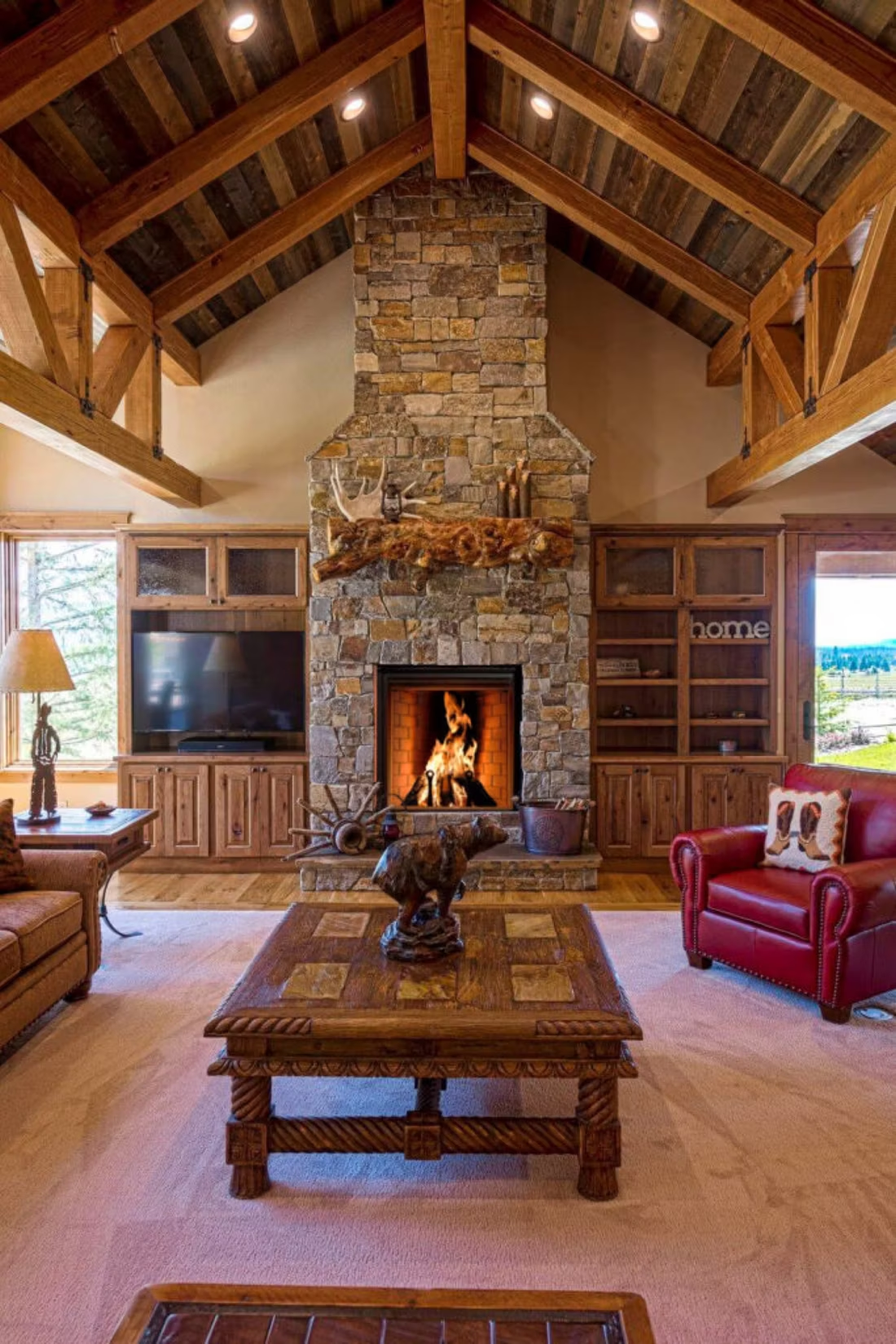
That said, a handful of Guadalupe homeowners do install a wood-burning fireplace or stove—usually for the ambiance on the occasional cold desert night, for a rustic aesthetic, or because they grew up with one somewhere else. Mesquite, pinyon, and juniper all grow regionally and burn well, though mesquite is more commonly split for grilling and smoking than for home heating. If you do want a wood fireplace here, it's a deliberate lifestyle choice rather than a heating necessity, and it's worth understanding the local air quality rules before you commit.
Firewood Cutting Permits Near Guadalupe
Three steps. No salesperson until you're ready.
Tell us about your project
Your zip code, your situation, and the fuel you're leaning toward—or let the answers point you to one.
See what's actually available
The brands dealers within 100 miles genuinely carry—real options, never a catalog mirage.
Get your dealer & Project Guide
A trusted local dealer, plus the free Project Guide & Parts List that names every component of the job.
Frequently Asked Questions
Does wood heat actually make sense in Guadalupe's climate?
Rarely as a primary heat source. Guadalupe averages winter lows around 38°F and has a very light overall heating need for the year—a fraction of what a cold-climate town like Fargo, ND sees. Central HVAC and gas or electric supplemental heat cover nearly all of Guadalupe's actual heating needs. A wood stove or fireplace here is almost always installed for ambiance, entertaining, or the aesthetic of a real fire rather than to keep a home warm through winter.
Can I still install a wood-burning fireplace or stove in Guadalupe if I want one?
Yes. It's uncommon, not prohibited. Homeowners in Guadalupe who want a wood-burning fireplace typically go with a freestanding stove or a masonry fireplace insert used a handful of nights a year during the cooler stretch from December through February. Because installers rarely get wood stove calls in this part of the Salt River Valley, expect to work with a Phoenix-metro hearth dealer who also serves gas and electric customers—ask specifically about their EPA-certified wood stove experience rather than assuming every local dealer stocks one.
Are there air quality restrictions on wood burning near Guadalupe?
Yes, and they matter more here than the mild winters might suggest. Maricopa County is a federal non-attainment area for particulate matter, and the Maricopa County Air Quality Department issues No Burn advisories on high-pollution winter days—typically during winter inversions when smoke and particulates get trapped close to the valley floor. If you install a wood-burning appliance in Guadalupe, plan to check daily burn status during inversion season, since burning on a No Burn day can carry a fine even from a hearth-only fireplace.
What permits do I need to install a wood stove in Guadalupe?
Guadalupe is a small town without its own building department, so permitting for a new wood-burning appliance runs through the Maricopa County Planning and Development Department. Any new stove or insert needs to meet current EPA New Source Performance Standards, and your installer will typically pull the permit and schedule inspection as part of the job. Given how infrequently wood installs happen in this area, confirm with your installer that they've handled a Maricopa County wood-appliance permit before, not just gas or electric.
Where can I get firewood or a cutting permit near Guadalupe?
The nearest public land options are Tonto National Forest, roughly an hour northeast of Guadalupe, and Prescott National Forest, about two hours north. Both issue personal-use cutting permits during the May-through-October season for $5 to $20 per cord. Mesquite, pinyon, and juniper are the common regional species—mesquite in particular is prized locally for its dense, long-burning coals, though most of what's harvested around the valley ends up in a smoker or grill rather than a living room fireplace.
What wood species burn best if I do install a fireplace in Guadalupe?
Mesquite is the standout regional hardwood—dense, high-BTU, and slow-burning, though it pops and sparks more than milder woods, so a well-screened hearth matters. Pinyon and juniper, both available through Tonto and Prescott National Forest permits, burn cleaner and are easier to manage in an occasional-use fireplace. Because none of these species are typically sold at scale for home heating in the Phoenix metro area, expect to source firewood from specialty suppliers or cut your own rather than finding a dedicated cordwood delivery service like you would in a cold-climate market.
How much does it cost to install a wood stove in Guadalupe?
Because wood stove installs are infrequent this far into the Sonoran Desert, pricing tends to track general Southwest hearth-industry norms rather than a deep local dataset: figure roughly $4,500 to $9,000 for a stove or insert with a UL-listed chimney system, depending on the unit and whether new venting is required through a stucco or tile roofline. Get quotes from at least two Phoenix-metro dealers, since venting a wood stove through a desert-style roof assembly is a different job than what most local crews do day to day on gas fireplace installs.
Should I get a wood fireplace or just stick with gas in Guadalupe?
For most Guadalupe homes, gas is the more practical choice—natural gas and propane fireplaces are common in this market, turn on instantly, and don't require sourcing or storing cordwood in a desert town with limited firewood suppliers. Wood makes sense mainly if you specifically want the smell, sound, and ritual of a real fire, or you're building a rustic or Southwestern-style home where a mesquite-burning fireplace fits the aesthetic. Many homeowners who want both end up with gas for regular use and reserve wood strictly for special-occasion fires.
Does an occasional-use wood fireplace still need annual inspection?
Yes—even a fireplace that only burns a handful of nights each winter should get a CSIA-standard annual inspection before the cooler months. Creosote can still build up from infrequent, cooler-burning fires, and desert dust common around Guadalupe can also affect chimney draft and cap function over the off-season. An annual check catches both issues before you light the first fire of the year.
Why is a fireplace insert so efficient?
An insert does two things: it seals the chimney completely, so you stop losing air you already paid to heat, and it radiates warmth into the room through the firebox and glass. Most add a heat-exchange fan that pulls cool room air underneath, wraps it around the hot firebox, and pushes it back out warm. Your home is more efficient before you've even lit the first fire.
Why won't my new wood stove get going like my old one?
New wood stoves are 70%+ efficient, so far less heat goes up the flue—which also means less draft to get a fire established. The rule: build a genuinely hot fire for about 45 minutes before you choke it down. Skip that and you get smoke in the room, creosote in the chimney, and a fire that never takes off. Most performance complaints trace straight back to this.
Does a fireplace add value to my home?
On average, a fireplace adds back to the home about the same amount you spent installing it. Add the monthly savings from heating the rooms you actually use instead of the whole house—often hundreds of dollars a year—and the value case is strong before you even count what a fire does for how your family uses the room.
How much should I budget for a fireplace?
For an average home—covering the fireplace, the vent pipe, and basic installation—a budget between $3,900 and $5,500 gives you a lot of options across wood, gas, and pellet. By the time you add finish work, gas line, and electrical, the average complete installation lands between $5,000 and $12,000 all-in. In a remodel or new build, a good rule is to put about 2.5% of the total project cost toward the fireplace.
Nearby Dealers
Hearth shops serving Guadalupe and the surrounding area. Every listing shows whether it is a WhyFire partner, a dealer we have verified as authorized for the brands we recommend, or a local business carrying hearth products. No manufacturer pays for placement. How we verify dealers →
Bbq Island
Fire By James
All American Outdoor Living
Valley Stone
Diversified Builder Supply
Brooksies Propane
Gilbert Fireplaces & BBQ’s
Arizona Fire Features
Southwest Builders & Design, LLC
Best BBQ’s & Islands
Green Goddess
Apache Stone - Phoenix
EarthCore Industries
All American Outdoor Living
Carefree Outdoor Living
Find your wood fireplace in Guadalupe.
Tell us about your home and how you'd actually use a wood fireplace, and we'll match you with a trusted local dealer and send over a free Project Guide & Parts List—sized, vented, and permitted correctly for a Guadalupe installation.
Find Your Fireplace →