
Reliable Heat for Fort Defiance's Long Cold Season.
At 6,797 feet on the Navajo Nation, winter lows average 14°F and the heating season runs long. A pellet stove gives you thermostatic, low-smoke heat without the daily wood handling—find the right unit and a trusted local dealer.
Every Project Starts From One of These Five Situations
Consistent warmth without the smoke.
Fort Defiance sits at nearly 6,800 feet in the high desert of Apache County, on the Navajo Nation near Window Rock. With a long, cold winter season and winter lows that regularly sit near 14°F, this area's heating load is comparable to Helena, Montana or Bozeman—a real cold-climate season, not a mild-winter afterthought. The ponderosa pine, pinyon, and juniper forests surrounding the community are the traditional wood source for the area, but they also mean wildfire smoke is a recognized air-quality concern in dry seasons, which pushes some households toward cleaner-burning alternatives.
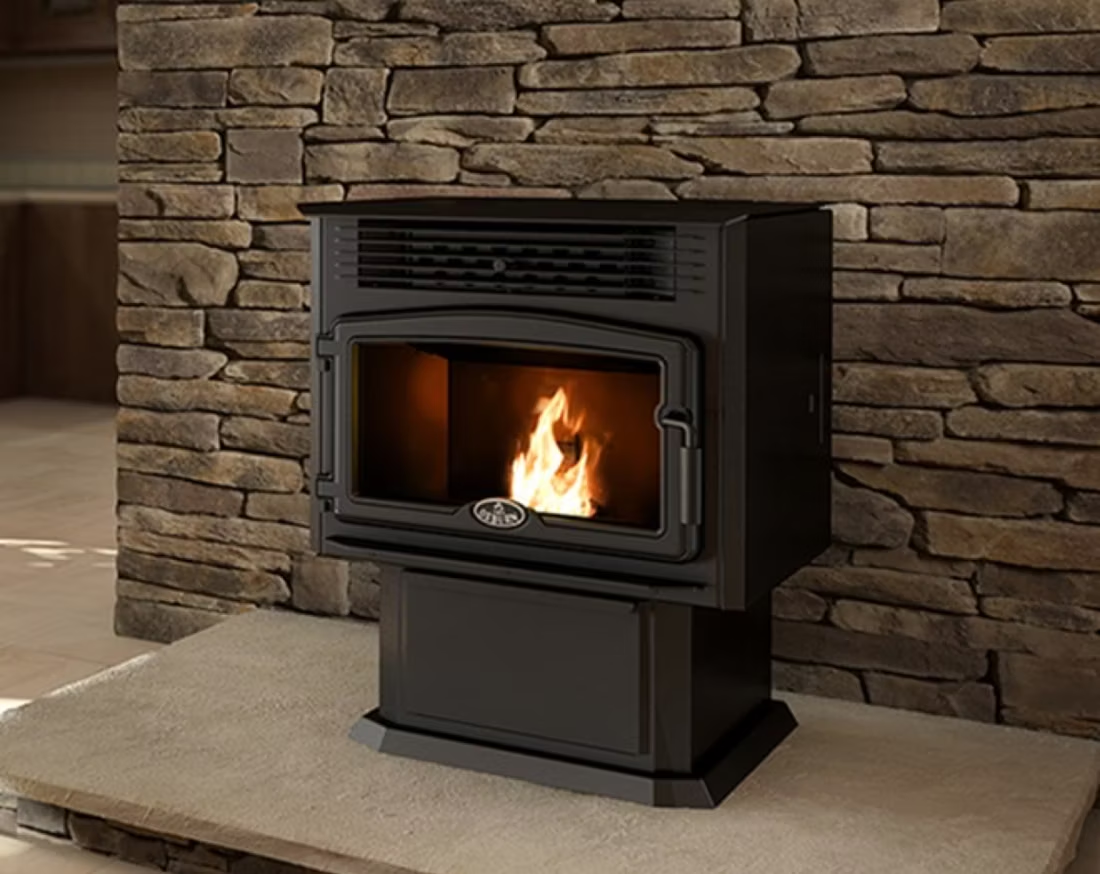
That's where pellet heat fits in. A pellet stove burns compressed hardwood or softwood pellets—regionally available from brands like Forest Energy and Lignetics—far more completely than cordwood, producing less visible smoke and less ash to manage. Pellet appliances need electricity to run the auger and blower, and with Navajo Tribal Utility Authority billing residential power at roughly 16.6 cents per kWh and winter storm outages a real possibility out here, most local installers will walk you through battery backup or generator options alongside the stove itself.
Three steps. No salesperson until you're ready.
Tell us about your project
Your zip code, your situation, and the fuel you're leaning toward—or let the answers point you to one.
See what's actually available
The brands dealers within 100 miles genuinely carry—real options, never a catalog mirage.
Get your dealer & Project Guide
A trusted local dealer, plus the free Project Guide & Parts List that names every component of the job.
Frequently Asked Questions
How much does a pellet stove installation cost in Fort Defiance?
Pellet stove and insert installations in this part of Arizona typically run $3,000 to $6,000, depending on whether you're installing a freestanding stove with a simple through-wall vent kit or a full insert into an existing masonry fireplace with a stainless liner. Hopper size, hearth pad requirements, and any electrical work for a dedicated outlet also affect the final number. Because Fort Defiance is on Navajo Nation trust land rather than incorporated county jurisdiction, get a firm quote from a local dealer who's installed on the reservation before—they'll know what's actually involved for your specific chapter area.
Do I need a permit to install a pellet stove in Fort Defiance?
Standard county building permits don't apply on Navajo Nation trust land, but that doesn't mean anything goes. Work through the Fort Defiance Chapter house or the Navajo Nation's building and land-use offices before installation, especially if you're modifying an exterior wall for venting or adding new electrical circuits. A hearth retailer who's done installs in Apache County and on the Navajo Nation will typically know the right office to contact and can walk you through it—this is one area where local experience matters more than a generic permit checklist.
Where can I buy pellet fuel near Fort Defiance?
Forest Energy and Lignetics are the two regional pellet brands most commonly stocked by dealers serving this part of Arizona and New Mexico. Given Fort Defiance's small population, expect to do some pellet runs into Gallup or Window Rock where hearth and hardware retailers stock bagged pellets by the ton, especially heading into the fall. Buying a season's supply early—before the first cold snap in October or November—is standard practice out here, since demand can outpace local stock once winter sets in.
Will my pellet stove work if the power goes out?
Not without help. Pellet stoves depend on an electric auger and blower to feed fuel and circulate heat, so a power outage stops the stove even with a full hopper. Navajo Tribal Utility Authority service in this area can see extended outages during winter storms, so most local dealers will talk to you about a battery backup unit (many pellet stoves accept a small UPS or dedicated battery system) or a generator sized to run the stove's low-draw motor. If backup heat during outages is a top priority, some households pair a pellet stove for daily convenience with a wood stove for true off-grid backup.
What size pellet stove do I need for my home in Fort Defiance?
With a long, cold winter season and elevation over 6,700 feet, this isn't a mild climate—size for real cold, not just supplemental warmth. Small pellet stoves (under 1,500 sq ft rated) work for single-wide or modest homes and rooms used as primary living space; medium units (1,500–2,200 sq ft) cover most standard homes in the area; larger units make sense for bigger or poorly insulated homes where the stove needs to carry more of the heating load through January nights. A local dealer will size based on your square footage, insulation, and ceiling height during an in-home visit.
Pellet stove vs. wood stove—which makes more sense here?
Wood is deeply rooted in this area—ponderosa pine, pinyon, and juniper are all locally available, and Apache-Sitgreaves National Forest permits run $5 to $20 per cord during the May-to-October cutting season, making self-cut firewood cheap. Wood stoves also work without electricity, which matters given occasional NTUA outages. Pellet stoves trade that fuel independence for convenience and cleaner combustion—less smoke, less ash, and a steadier burn without tending. Given the wildfire-smoke concerns that show up here in dry seasons, some households choose pellet specifically to cut down on their own household smoke output. If backup heat during outages is the priority, wood wins; if daily convenience and lower emissions matter more, pellet is usually the better fit.
How is a pellet stove vented, and does it need a chimney?
No masonry chimney required. Pellet stoves vent through a small-diameter pipe (typically 3 or 4 inches) that can run horizontally through an exterior wall or vertically through the roof—a simpler, less expensive venting job than a full wood-stove chimney system. For a pellet insert going into an existing fireplace, the vent pipe runs up through the existing flue with a liner. Either way, a local installer will confirm clearances and termination point placement relative to windows, doors, and grade—details that matter for both safety and long-term performance at this elevation.
Are pellet stoves a good fit given wildfire smoke concerns in this area?
Yes—this is one of the clearer reasons pellet heat makes sense here. Pellet stoves burn more completely than cordwood, producing a fraction of the visible smoke and particulate output of an open wood stove, which matters both for your own household air quality and for the broader smoke burden during dry, fire-prone stretches. That said, pellet stoves aren't a wildfire-preparedness tool by themselves—keeping defensible space around the home and the exterior vent termination clear of debris still matters, especially with dry pinyon and juniper duff common in this landscape.
How often does a pellet stove need maintenance?
Plan on emptying and cleaning the ash pot every few days during regular heating-season use, and a deeper cleaning of the burn pot, glass, and exhaust passages every one to two weeks depending on how many bags you're running through. Once a year, have the venting and auger system professionally inspected—this is a lighter lift than annual wood-chimney sweeping but still important, particularly at this elevation where stoves often run near their rated capacity for months at a stretch. Local dealers carrying Forest Energy or Lignetics pellets can also handle this service or point you to someone who does.
What's the difference between an insert and a zero-clearance fireplace?
An insert is a fireplace that slides into a pre-existing wood-burning fireplace—if you don't have one, there's nothing to insert it into. A zero-clearance fireplace is built into a framed wall, which makes it the answer for remodels and new construction. Simple test: existing masonry fireplace means insert; blank or framed wall means zero-clearance.
How often does a pellet stove need cleaning?
A clean pellet stove is a happy pellet stove. Plan on cleaning the burn pot about once a week when you're burning regularly—ash and clinkers gum up the air holes just like a pellet barbecue. Most pellet stove problems trace back to skipped cleaning that nobody explained up front. Some designs make it easy with a trapdoor burn pot: pull a lever and the gunk drops into the ash pan.
How much should I budget for a fireplace?
For an average home—covering the fireplace, the vent pipe, and basic installation—a budget between $3,900 and $5,500 gives you a lot of options across wood, gas, and pellet. By the time you add finish work, gas line, and electrical, the average complete installation lands between $5,000 and $12,000 all-in. In a remodel or new build, a good rule is to put about 2.5% of the total project cost toward the fireplace.
Does a fireplace add value to my home?
On average, a fireplace adds back to the home about the same amount you spent installing it. Add the monthly savings from heating the rooms you actually use instead of the whole house—often hundreds of dollars a year—and the value case is strong before you even count what a fire does for how your family uses the room.
Nearby Dealers
Hearth shops serving Fort Defiance and the surrounding area. Every listing shows whether it is a WhyFire partner, a dealer we have verified as authorized for the brands we recommend, or a local business carrying hearth products. No manufacturer pays for placement. How we verify dealers →
Navajo Tractor Sales Inc
Castle Furniture
Bob's Fireplace
Woodland Building Center
Pellet Brands Stocked Around Fort Defiance
Manufacturers will point you to the nearest stocking dealer.
Find your pellet stove in Fort Defiance.
Tell us about your home and heating goals, and we'll match you with a trusted local dealer plus a free Project Guide & Parts List—the exact stove, vent kit, and parts recommended for your Fort Defiance install.
Find Your Fireplace →