
Keep Your Family Warm and Safe—No Matter What
With winter lows averaging 37°F, most Blackwater homes never need a dedicated wood heat source. For the homeowners who still want one, here's what's realistic—and who can install it.
Every Project Starts From One of These Five Situations
A desert climate that rarely calls for wood heat.
Blackwater sits within the Gila River Indian Community in Pinal County, at 1,365 feet in the Sonoran Desert. Winter lows average 37°F, and the area logs roughly 1,452 heating degree days a year—a fraction of what a cold-climate town like Duluth, MN racks up in a single winter month. That climate reality is the honest starting point: for the overwhelming majority of homes here, a wood-burning fireplace or stove isn't a practical heat source. It's an occasional-use amenity at best.
Pinal County also sits in a non-attainment area for particulate matter, with periodic winter inversions and summer wildfire smoke already straining local air quality—factors that make county and tribal authorities cautious about new wood-burning installations. Most Blackwater homes heat with electric service from GRICUA, Electrical District No. 2, or Electrical District No. 3, at residential rates around 13 to 14 cents per kWh. Where a wood fireplace still shows up, it's usually for the ambiance of a real fire on a cool desert evening, a rural property without reliable grid power, or a second home in Arizona's higher, colder country—and mesquite, pinyon, and juniper are the local species people actually burn when they do.
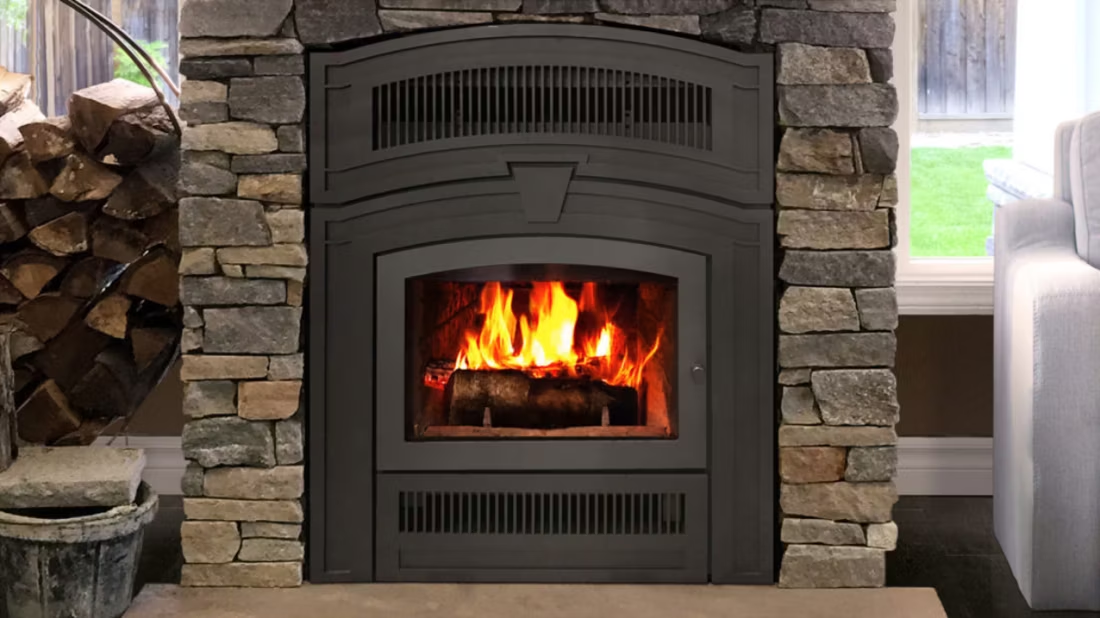
Firewood Cutting Permits Near Blackwater
Three steps. No salesperson until you're ready.
Tell us about your project
Your zip code, your situation, and the fuel you're leaning toward—or let the answers point you to one.
See what's actually available
The brands dealers within 100 miles genuinely carry—real options, never a catalog mirage.
Get your dealer & Project Guide
A trusted local dealer, plus the free Project Guide & Parts List that names every component of the job.
Frequently Asked Questions
Is a wood-burning fireplace practical for heating a home in Blackwater?
Generally, no. With winter lows averaging 37°F and only about 1,452 heating degree days per year, Blackwater's Sonoran Desert climate rarely calls for sustained supplemental heat, let alone a dedicated wood-burning system. Compare that to a place like Bozeman, MT, which sees well over 7,000 heating degree days—wood heat there is a genuine necessity; here it isn't. Most Blackwater homes rely on standard electric heating and cooling through GRICUA or the Pinal County electrical districts, and a wood fireplace functions more as an occasional-use feature than a primary or backup heat plan.
Why would someone install a wood stove in a place this warm?
A small number of Blackwater homeowners still choose one—usually for the ambiance of a real fire on the handful of nights each winter that dip into the 30s, for a rural or off-grid property where electric service is less reliable, or for a second property in cooler high-country Arizona. If that describes your situation, a local dealer can size a stove for occasional, ambiance-first use rather than sustained heating load, which changes the recommendation considerably from what you'd see in a cold-climate market.
What kind of firewood is available locally?
Mesquite, pinyon, and juniper are the species most commonly available around Blackwater and the broader Pinal County area. Mesquite is dense, burns long and hot, and is prized locally as much for grilling as for fireplace use. Pinyon and juniper are more commonly sourced from higher-elevation areas like the Tonto or Coronado National Forests rather than the desert floor around Blackwater itself, so supply can mean a drive rather than a local yard delivery.
Are there air quality restrictions on wood burning near Blackwater?
Pinal County, like much of the greater Phoenix basin, carries non-attainment status for particulate matter and experiences periodic winter inversions that trap smoke near the ground, plus wildfire smoke concerns in the drier months. That combination makes local and tribal air quality authorities cautious about new wood-burning installations, and it's a real factor in why gas and electric options dominate new construction in Blackwater rather than wood.
What does it cost to install a wood stove in Blackwater?
Because wood installations are uncommon here, pricing is less standardized than in a cold-climate market with dozens of installers competing for the work. Expect a range roughly in line with national small-stove installs—commonly $3,500 to $8,000 depending on the unit, chimney or venting needs, and hearth pad requirements. Given the small number of local specialists, some Blackwater homeowners end up working with installers based in the Phoenix or Tucson metro areas who travel out for the job.
Can I cut my own firewood near Blackwater?
Yes—the Tonto National Forest and Coronado National Forest both issue personal-use cutting permits, typically $5 to $20 per cord, during a May-through-October season. Neither forest sits directly in Blackwater's low desert; both require a drive up into higher-elevation pine and juniper country, so this is more of an option for people who camp or have a cabin nearby than a source of everyday heating wood.
Should I choose gas, electric, or wood for a fireplace in Blackwater?
For most Blackwater homes, gas or electric is the more sensible choice. Gas fireplaces are a common ambiance feature in newer construction and give instant, clean heat without smoke concerns in a non-attainment area. Electric fireplaces and heat pumps pair naturally with the area's relatively low residential electric rates—around 13 to 14 cents per kWh through GRICUA or the Pinal County electrical districts—and require no venting, chimney, or fuel storage at all. Wood remains an option mainly for homeowners who specifically want the experience of a real fire rather than a practical heat source.
Do I need a permit to install a wood-burning fireplace in Blackwater?
It depends on where your parcel sits. Properties within the Gila River Indian Community typically go through tribal building authorities rather than standard county channels, while properties in the 85147 and 85128 zip codes outside the reservation follow the Pinal County Building Safety Division process. Either way, a licensed installer will confirm clearances and, given the county's air quality non-attainment status, should confirm the unit meets current EPA emissions standards before installation.
Wood vs. gas vs. electric—which fireplace actually makes sense in Blackwater?
Wood is the outlier here: it delivers real ambiance and works without grid power, but the climate almost never demands the heat output, and air quality concerns in Pinal County add friction. Gas offers instant, clean heat with none of the smoke or wood-handling downsides, and it's well suited to the occasional cool evening. Electric is the simplest and most common route in new Blackwater construction, requiring no venting and pairing with the area's moderate kWh rates. If you want a wood fireplace anyway—for the look, the ritual, or a cooler second property—it's still available, just less common and worth sizing correctly with a local pro rather than treating it as your main heat source.
Why won't my new wood stove get going like my old one?
New wood stoves are 70%+ efficient, so far less heat goes up the flue—which also means less draft to get a fire established. The rule: build a genuinely hot fire for about 45 minutes before you choke it down. Skip that and you get smoke in the room, creosote in the chimney, and a fire that never takes off. Most performance complaints trace straight back to this.
Why is a fireplace insert so efficient?
An insert does two things: it seals the chimney completely, so you stop losing air you already paid to heat, and it radiates warmth into the room through the firebox and glass. Most add a heat-exchange fan that pulls cool room air underneath, wraps it around the hot firebox, and pushes it back out warm. Your home is more efficient before you've even lit the first fire.
What is an in-home preview and do I need one?
It's a visit where a hearth professional measures your space, confirms the model you picked actually works in your home, and walks the specs—framing, gas line, venting, finish work—before anything is ordered. Some details you just can't know until you see the house. Never make a down payment without one; it's the single most-skipped step that burns buyers.
Can I install a fireplace myself?
If you're putting a fire in your house on purpose, it's best to work with an expert. Unless you're genuinely experienced in framing, gas line, vent pipe, and the national code on clearances to combustibles, have a professional do it—and ideally the same company that sells you the fireplace, so warranty, service, and liability all live under one roof.
Nearby Dealers
Hearth shops serving Blackwater and the surrounding area. Every listing shows whether it is a WhyFire partner, a dealer we have verified as authorized for the brands we recommend, or a local business carrying hearth products. No manufacturer pays for placement. How we verify dealers →
Brooksies Propane
Gilbert Fireplaces & BBQ’s
All American Outdoor Living
Diversified Builder Supply
Valley Stone
Bbq Island
Fire By James
Find your wood fireplace option in Blackwater.
Tell us about your home and how you'd actually use a wood fireplace, and we'll put together a free Project Guide & Parts List—the right unit, the exact parts including venting, and a trusted local dealer who can install it correctly for Blackwater's climate.
Find Your Fireplace →