
Keep Your Family Warm and Safe—No Matter What
With winter lows averaging 43°F and barely any real winter heating season, most Apache Junction homes don't need wood heat to stay warm—but if you want the real thing for ambiance or a mountain cabin, I'll match you with a local dealer who installs it correctly.
Every Project Starts From One of These Five Situations
A desert climate that rarely calls for a wood fire.
Apache Junction sits at 1,701 feet at the foot of the Superstition Mountains in the Sonoran Desert, climate zone 2B, where the average winter low is 43°F and the city logs only a light, short winter heating season each year. Compare that to Duluth, MN, which racks up a long, brutal heating season nearly eight times as demanding—and it's clear why wood stoves and wood-burning inserts are not the default heating appliance here. Furnaces and heat pumps handle the handful of genuinely cold nights, and most of the year there's no heating load to speak of at all.
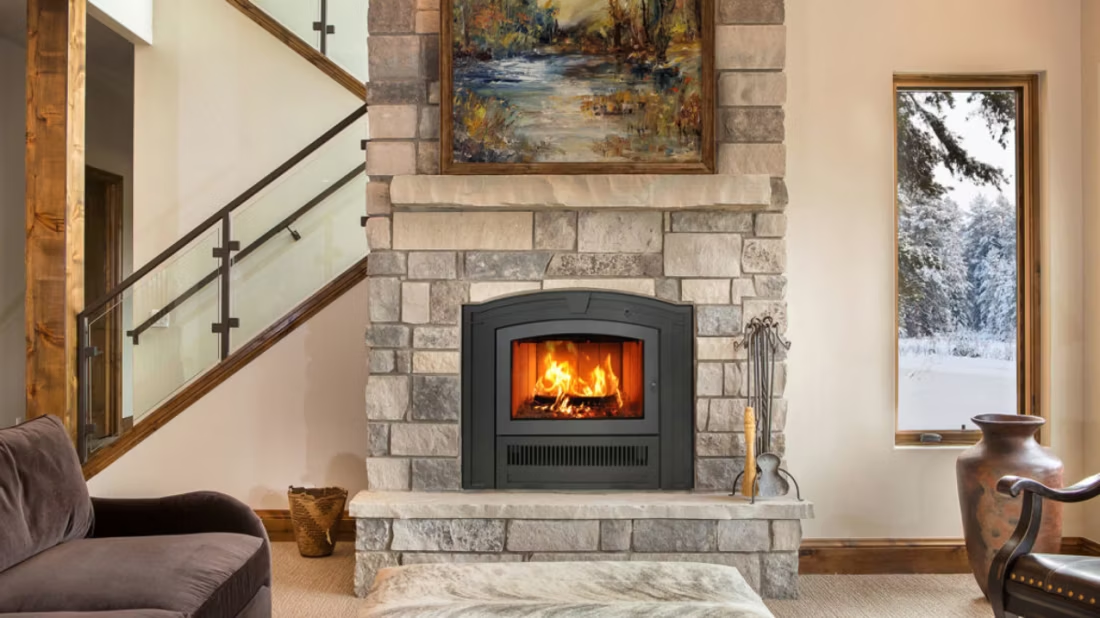
That doesn't mean wood is off the table entirely. Some Apache Junction homeowners still want a real masonry fireplace or a factory-built wood-burning unit for the look and feel of a fire on the cooler desert evenings from December through February, and a smaller number maintain higher-elevation cabins toward Tonto National Forest or the Superstitions where nights run noticeably colder and wood heat is more functional. Pinal County is also a designated non-attainment area for particulate matter, with winter inversion pockets and summer wildfire smoke already a concern, so any wood-burning appliance here—decorative or not—gets more scrutiny than it would in a colder market. If your goal is dependable heat rather than fire-watching, a gas or electric unit will almost always serve an Apache Junction home better; if you specifically want wood, I can still connect you with a dealer who installs it right.
Firewood Cutting Permits Near Apache Junction
Three steps. No salesperson until you're ready.
Tell us about your project
Your zip code, your situation, and the fuel you're leaning toward—or let the answers point you to one.
See what's actually available
The brands dealers within 100 miles genuinely carry—real options, never a catalog mirage.
Get your dealer & Project Guide
A trusted local dealer, plus the free Project Guide & Parts List that names every component of the job.
Frequently Asked Questions
Is a wood-burning fireplace even practical in Apache Junction?
Practical in the sense of primary heat, not really—with only a light, short winter heating season and winter lows averaging 43°F, a wood stove will sit unused most of the year in an Apache Junction home. Where it does make sense is ambiance: a real fire on the handful of nights that dip into the 30s, or a masonry fireplace as a focal point in a great room. If year-round warmth is the goal, gas or electric units handle that far more efficiently in this climate.
What do Apache Junction homeowners actually use wood-burning appliances for?
Mostly ambiance and outdoor living. Think mesquite in a backyard fire pit or chimenea during a January evening, or a decorative masonry firebox in a golf-course home near the Superstitions that gets used a dozen nights a season. Very few homes here run a wood stove as a daily heat source the way you'd see in a cold-winter market—the appliance is chosen for the experience of a fire, not the BTUs.
Can I still get a permit to cut my own firewood near Apache Junction?
Yes. Tonto National Forest and Coronado National Forest both issue personal-use cutting permits, typically running $5 to $20 per cord, with the cutting season open May through October. Mesquite, pinyon, and juniper are the common species available, and most of what gets cut locally ends up in fire pits, chimineas, or smokers rather than indoor wood stoves—mesquite in particular is prized more for grilling and BBQ smoke flavor than for home heating.
Are there air quality restrictions on wood burning in Pinal County?
Pinal County, including Apache Junction, sits in a designated non-attainment area for particulate matter, and the region deals with winter inversion pockets and wildfire smoke in summer. While wood-smoke burn bans here are less frequent and less severe than in the Phoenix metro core, high-pollution advisories can still restrict open burning, and it's worth checking current air quality status before lighting even a decorative fire on a stagnant winter night.
What wood species are available locally, and are they good for heating?
Mesquite, pinyon, and juniper are the woods most commonly available around Apache Junction, largely through Tonto and Coronado National Forest permits. Mesquite burns extremely hot and dense—it's the wood of choice for local grilling and smoking—but it's not typically sold as bulk heating cordwood the way it would be in a market with real winter heating demand. Pinyon and juniper are more associated with higher-elevation cabin country than valley-floor homes.
Why do most Apache Junction homeowners choose gas or electric instead of wood?
With winter lows averaging 43°F and a winter heating season that's barely there, a gas fireplace or an electric unit delivers all the ambiance most homeowners want without the smoke, ash, or air-quality concerns of wood in a non-attainment county. Natural gas service is available through much of the city, and electric options are backed by GRICUA, City of Mesa, or Electrical District No. 2 depending on your address, with residential rates roughly $0.13 to $0.17 per kWh—cheap enough that a zone-heating electric fireplace easily covers the rare cold snap.
Does my HOA or the city restrict wood-burning fireplace installations?
Many of the newer subdivisions around Apache Junction, particularly the golf-course and master-planned communities near the Superstitions, have HOA guidelines that restrict or require approval for exterior wood smoke and appliance venting. Indoor masonry or factory-built wood fireplaces still require a building permit through the city or Pinal County even though demand for them is low—a trusted local dealer will handle that paperwork as part of the install rather than leaving you to sort it out.
If I have a cabin near Tonto National Forest, is wood heat more worthwhile there?
Yes—higher-elevation cabins toward the Superstitions or deeper into Tonto National Forest see meaningfully colder nights and more real heating load than the Apache Junction valley floor, and a genuine wood stove earns its keep there. The same Tonto and Coronado cutting permits apply ($5–$20 per cord, May through October season), and mesquite, pinyon, and juniper are all viable for a cabin stove even though they're mostly ornamental fuel choices down in the valley.
What should I think about before installing any wood-burning unit in Apache Junction?
Because demand is low here, pricing and stove selection aren't as standardized as in a cold-climate market, so getting a firm, local quote matters more than chasing a national price average. You'll also want to factor in Pinal County's non-attainment status and summer wildfire smoke season, HOA rules if you're in a planned community, and whether an EPA-certified unit is required for occasional use. A trusted local dealer can walk through clearances, venting, and code requirements for your specific property before you commit.
What's the difference between an insert and a zero-clearance fireplace?
An insert is a fireplace that slides into a pre-existing wood-burning fireplace—if you don't have one, there's nothing to insert it into. A zero-clearance fireplace is built into a framed wall, which makes it the answer for remodels and new construction. Simple test: existing masonry fireplace means insert; blank or framed wall means zero-clearance.
Why is a fireplace insert so efficient?
An insert does two things: it seals the chimney completely, so you stop losing air you already paid to heat, and it radiates warmth into the room through the firebox and glass. Most add a heat-exchange fan that pulls cool room air underneath, wraps it around the hot firebox, and pushes it back out warm. Your home is more efficient before you've even lit the first fire.
Can I install a fireplace myself?
If you're putting a fire in your house on purpose, it's best to work with an expert. Unless you're genuinely experienced in framing, gas line, vent pipe, and the national code on clearances to combustibles, have a professional do it—and ideally the same company that sells you the fireplace, so warranty, service, and liability all live under one roof.
What is an in-home preview and do I need one?
It's a visit where a hearth professional measures your space, confirms the model you picked actually works in your home, and walks the specs—framing, gas line, venting, finish work—before anything is ordered. Some details you just can't know until you see the house. Never make a down payment without one; it's the single most-skipped step that burns buyers.
Nearby Dealers
Hearth shops serving Apache Junction and the surrounding area. Every listing shows whether it is a WhyFire partner, a dealer we have verified as authorized for the brands we recommend, or a local business carrying hearth products. No manufacturer pays for placement. How we verify dealers →
Gilbert Fireplaces & BBQ’s
Diversified Builder Supply
Valley Stone
Brooksies Propane
All American Outdoor Living
Find your wood fireplace in Apache Junction.
Tell us about your home—whether it's a desert-valley property for occasional ambiance or a cabin up toward Tonto National Forest—and I'll match you with a trusted local dealer and send over a free Project Guide & Parts List with the exact parts, vent kit, and recommended installer for your project.
Find Your Fireplace →