
Add electric fireplace warmth to homes across Yukon-Koyukuk.
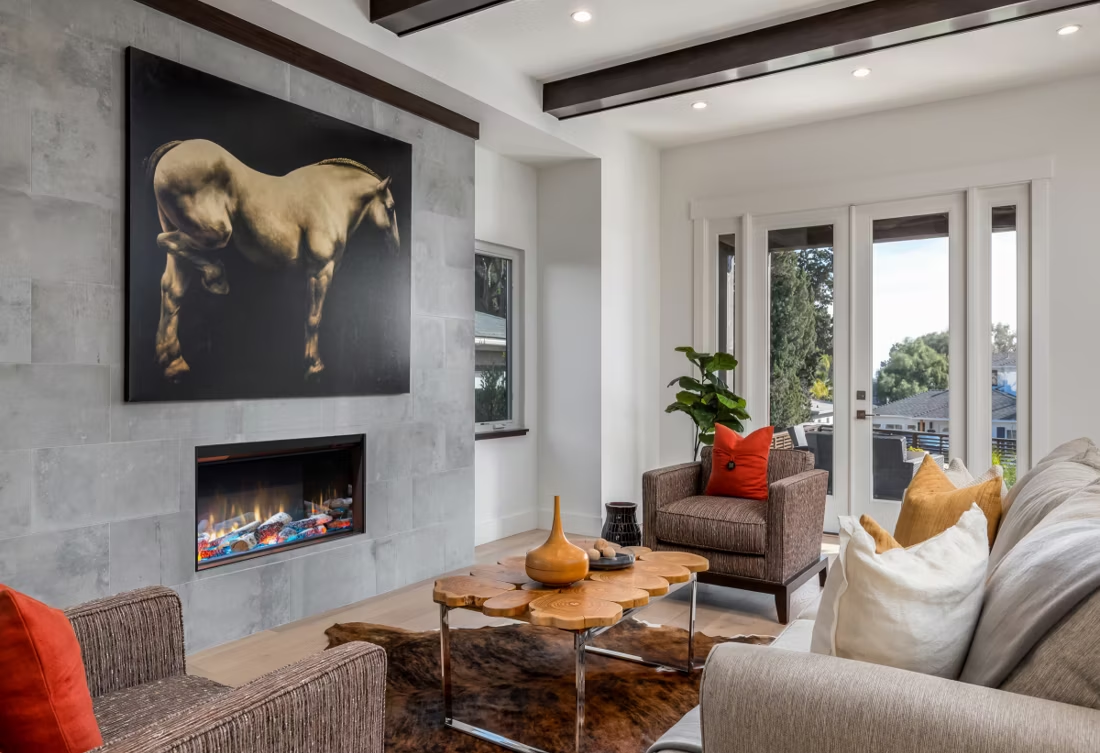
From Galena to Tanana to Huslia, most homes here run on birch, spruce, and cottonwood. An electric fireplace won't replace that—but it adds no-vent warmth and ambiance to a room, a rental, or a new addition without touching your chimney.
Every Project Starts From One of These Five Situations
A no-vent option for Alaska's most remote census area.
Yukon-Koyukuk is one of the largest census areas in the country—roughly 145,000 square miles of interior Alaska, most of it accessible only by river, small aircraft, or winter ice road. Its 5,179 residents are spread across villages like Galena, Tanana, Huslia, Nulato, Ruby, Kaltag, Allakaket, and Hughes, none connected to each other by a road network and most several hundred miles from Fairbanks. Climate zone 8 is the coldest classification in the country, and interior winters here regularly hold at -40°F or colder for stretches at a time. Wood—birch, spruce, and cottonwood cut from the river corridors—has heated homes in this region for generations, and it still does.
Most villages in the census area run on isolated diesel microgrids operated by cooperatives like Alaska Village Electric Cooperative (AVEC), and even with the state's Power Cost Equalization subsidy that offsets residential rates, electricity here costs far more than in the Lower 48. That math means an electric fireplace isn't a realistic whole-home heat source in Yukon-Koyukuk—but it's a genuinely good fit as a supplemental unit. Plug-in and built-in electric inserts need no chimney, no combustion air, and no venting run, which matters in a region where flue work means flying in materials. They're a practical way to add heat and glow to a new addition, a rental unit, a tribal or borough office, or any room where running a wood stove isn't the goal but a wood-free heat source still helps.
Three steps. No salesperson until you're ready.
Tell us about your project
Your zip code, your situation, and the fuel you're leaning toward—or let the answers point you to one.
See what's actually available
The brands dealers within 100 miles genuinely carry—real options, never a catalog mirage.
Get your dealer & Project Guide
A trusted local dealer, plus the free Project Guide & Parts List that names every component of the job.
Frequently Asked Questions
How much does an electric fireplace cost to install in Yukon-Koyukuk?
Most electric fireplaces sold and installed regionally are either plug-in inserts (no electrician needed, just a standard 120V outlet) or built-in units that require a dedicated 240V circuit run by a licensed electrician. Equipment costs generally track national pricing, but freight adds real cost here—nearly everything reaches villages like Galena, Huslia, or Nulato by barge in summer or small aircraft the rest of the year, and that shipping cost gets added to whatever a dealer quotes. Expect installed pricing to run higher than a comparable job in Fairbanks or Anchorage once freight and any electrician travel time from a hub community are factored in. A local dealer can give you a firm number once they know your village and whether you need new wiring.
Can an electric fireplace serve as my home's main heat source in Yukon-Koyukuk?
No—and any honest dealer in the region will tell you the same. Electric fireplaces are built for supplemental heat and ambiance, not for carrying a home through a zone-8 winter where lows can sit at -40°F for weeks. Even with the state's Power Cost Equalization program helping offset rural electric rates, running electric resistance heat as a primary source on a diesel-generated village grid is expensive compared to the wood most homes already burn. Think of an electric unit as a way to warm one room or add a glow to a living space—your birch, spruce, or cottonwood stove stays the main heat source.
What happens to my electric fireplace during a power outage?
It shuts off, same as everything else on the circuit. Most villages in Yukon-Koyukuk run on a single diesel generator plant, and outages happen—from fuel delivery delays, mechanical issues, or winter storms. An electric fireplace has no battery backup and no independent flame, so it's entirely dependent on the local grid staying up. This is exactly why most homes in the region keep a wood stove as their real backup heat: it works with no power at all. Plan on the electric unit for convenience and ambiance, and keep your wood heat as the system you can actually count on when the lights go out.
Do I need a permit to install an electric fireplace in Yukon-Koyukuk?
Most of Yukon-Koyukuk sits in Alaska's Unorganized Borough, meaning there's no local building department issuing residential permits the way there would be in Fairbanks or Anchorage. A simple plug-in electric fireplace generally needs no permit at all. If you're having an electrician run a new 240V circuit for a built-in unit, that work should still meet National Electrical Code standards even without a local inspector signing off—hire a licensed electrician, not a handyman, for any hardwired install. Commercial buildings and some tribal or borough-owned facilities may fall under Alaska's State Fire Marshal code, which is worth checking if you're outfitting an office or public space rather than a private home.
What type of electric fireplace works best for a home in the villages?
Plug-in inserts and freestanding electric stoves are the simplest option for river villages—no electrician, no wiring, and easy to bring in on the same barge or plane as the rest of your household goods. Wall-mounted linear units and built-in inserts look more finished but require a dedicated circuit, which means budgeting for an electrician's travel if you're not in a hub community with one already on-site. For most homes in Galena, Tanana, Huslia, or similar villages, a plug-in unit is the lower-friction choice; built-ins make more sense during a larger remodel when an electrician is already on the job.
Electric fireplace vs. wood stove—which makes sense for my home?
Wood—birch, spruce, and cottonwood cut and hauled locally—remains the backbone of home heating across Yukon-Koyukuk, and for good reason: it works without the grid, it's the fuel most families already know how to source and burn, and it carries a home through a zone-8 winter that an electric unit simply isn't built for. An electric fireplace fits in as a second heat source—for a room the wood stove doesn't reach well, for ambiance in a living area, or for a rental or office where nobody wants to manage a woodpile. Very few homes in the region run electric as their only heat, and that's the right call given how the grid and the climate actually work here.
Electric fireplace vs. pellet stove—which is more practical here?
Both need electricity to run—a pellet stove's auger and blower draw power just like an electric fireplace's fan and heating element, so neither one keeps working through a village power outage. The real difference is fuel logistics: pellet stoves burn bagged pellets from brands like Superior Pellet Fuels or Lignetics, which still have to be freighted in by barge or air just like firewood or fireplace equipment, while an electric fireplace has no fuel to store or haul at all beyond the power bill. For most Yukon-Koyukuk homes, wood stays the practical outage-proof choice, with either pellet or electric as a lower-maintenance supplement depending on whether you'd rather manage a hopper or just flip a switch.
Where can I buy and install an electric fireplace if I live in a river village?
There's no big-box hearth store within the census area, and the nearest hub with electrical and hearth contractors is typically Fairbanks, several hundred miles away by air or river. The practical path is working with a dealer who's used to shipping and coordinating installs into villages without road access—freighting the unit in by barge during summer river season or by small aircraft the rest of the year, and either sending a technician out or coordinating with a local electrician already living in your community. Ask any dealer directly how they've handled installs in your specific village before—freight timing and local electrician availability vary a lot from Galena to Huslia to Ruby.
Are there rebates or programs that help cover electric heating costs in Yukon-Koyukuk?
Alaska's Power Cost Equalization (PCE) program subsidizes a portion of residential electric rates in eligible rural communities, which helps make running any electric appliance—including a fireplace—somewhat more affordable than the raw diesel-generation cost would suggest. That said, PCE is a rate subsidy, not a rebate toward buying or installing hearth equipment, and there's no dedicated incentive program specific to electric fireplaces in the region. If cost is the deciding factor, weigh the lower operating cost of a wood stove using locally cut birch or spruce against the electric bill, even with PCE applied.
Can I put a TV above my fireplace?
Yes—with an asterisk. Fireplaces are hot and TVs don't like heat. Either put a mantel between them to deflect rising warmth, or choose a fireplace with heat-management technology that creates a cool zone on the wall above—the wall stays around 125 degrees, barely warm, while the room still gets full heat. If you like clean lines and don't want a mantel, heat management is the answer.
Does an electric fireplace need a vent or chimney?
No—that's its superpower. An electric fireplace needs a wall and an outlet, period. No vent pipe, no gas line, no clearances to design around, which is why it works in bedrooms, offices, apartments, and walls where venting a gas or wood unit would be impractical or impossible. Installation is typically the simplest and least expensive of any fireplace type.
Can I install a fireplace myself?
If you're putting a fire in your house on purpose, it's best to work with an expert. Unless you're genuinely experienced in framing, gas line, vent pipe, and the national code on clearances to combustibles, have a professional do it—and ideally the same company that sells you the fireplace, so warranty, service, and liability all live under one roof.
Can a fireplace actually lower my heating bill?
Yes—by creating a comfort zone. A furnace heats every square foot of the house just to warm the one room you're in; a gas fireplace on low burns roughly a sixth of the gas a typical furnace does. Set the furnace around 55–60 degrees as a baseline, then heat the rooms your family actually uses. Families who heat this way commonly save $20–$60 a month.
Find your electric fireplace in Yukon-Koyukuk.
Tell us about your village, your home, and what you're trying to heat, and we'll match you with a dealer who knows how to get equipment to river communities and put together a free Project Guide & Parts List for your electric fireplace project.
Find Your Fireplace →