
Fireplace and stove help for Yukon-Koyukuk's river villages.
Wood, gas, pellet, and electric fireplace resources for Galena, Tanana, Huslia, Nulato, Fort Yukon, and every other community strung along the Yukon and Koyukuk Rivers. We match you with a trusted dealer who understands freight, freeze-up, and what actually holds heat at 40 below.
Every Project Starts From One of These Five Situations
Subarctic heating across Yukon-Koyukuk, Alaska.
Yukon-Koyukuk is an unorganized census area the size of several New England states, with a population of just over 5,100 spread across river villages with no connecting road system—Galena, Tanana, Huslia, Nulato, Fort Yukon, and a dozen others reachable only by small plane, or by barge and skiff when the rivers are open. This is Climate Zone 8, the coldest classification in the IECC code—winter lows routinely drop below -40°F along the Yukon and Koyukuk River valleys, colder on an average January night than International Falls, Minnesota. Birch, spruce, and cottonwood cut from riverbank stands and village land are the backbone fuel here, the way they have been for generations, split and stacked ahead of freeze-up because once the ice locks in, resupply gets a lot harder.
This hub rolls up hearth retailers, service technicians, and fuel suppliers across the entire census area—but the honest version of that story in Yukon-Koyukuk involves freight. Most dealers are based out of Fairbanks and reach these villages by air cargo or summer barge, not a delivery truck. Pick your fuel below and we'll walk you through what's realistic to get installed in your specific village, on a timeline that accounts for the last barge of the season or the next scheduled flight.
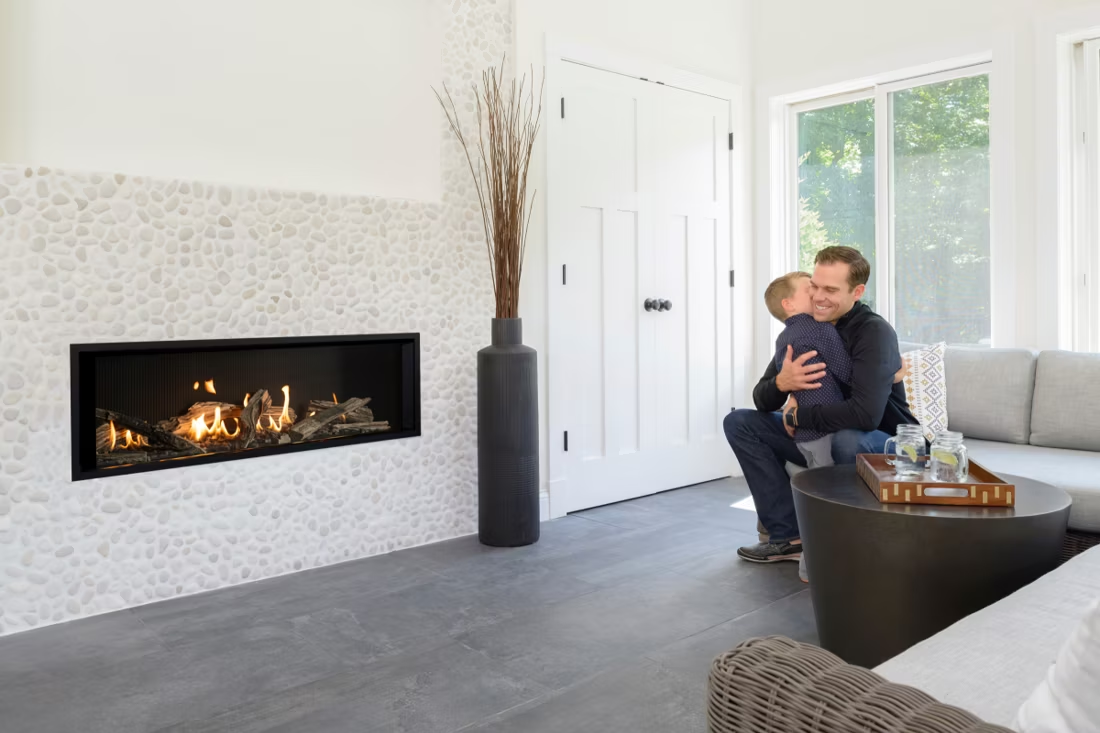
Four fuels. One honest answer for Yukon-Koyukuk County.
Wood
See what's available near Yukon-Koyukuk County.
Find your wood stove →Gas
See what's available near Yukon-Koyukuk County.
Find your gas fireplace →Pellet
See what's available near Yukon-Koyukuk County.
Find your pellet stove →Electric
See what's available near Yukon-Koyukuk County.
Find your electric fireplace →Three steps. No salesperson until you're ready.
Tell us about your project
Your zip code, your situation, and the fuel you're leaning toward—or let the answers point you to one.
See what's actually available
The brands dealers within 100 miles genuinely carry—real options, never a catalog mirage.
Get your dealer & Project Guide
A trusted local dealer, plus the free Project Guide & Parts List that names every component of the job.
Frequently Asked Questions
Which fuel works best for a home in Yukon-Koyukuk?
Wood is the working answer for most households—birch and spruce cut locally hold up well in a catalytic stove through the long subarctic winter, and it doesn't depend on the next flight or barge showing up. Propane is common as a backup or convenience fuel, delivered by barge in summer or flown in the rest of the year, and it's what a lot of village homes use for cooking and shoulder-season heat. Pellet stoves work fine mechanically, but Superior Pellet Fuels and Lignetics product has to be freighted in like everything else, so pellet supply is something to plan around rather than assume. Electric fireplaces show up mostly as supplemental, ambiance-focused units—village power comes off small diesel microgrids, and per-kWh electricity here is expensive enough that electric resistance heat as a primary source rarely makes financial sense. Most homes end up running wood as primary heat with propane as backup.
Do I need a building permit to install a stove or fireplace in Yukon-Koyukuk?
In most of the census area, no—this is unorganized borough land, and there's no county-level building department issuing residential permits the way there is in Fairbanks or Anchorage. A few incorporated communities like Galena or Tanana may have their own local code requirements, so it's worth a quick check with the village or city office before you install. Regardless of permitting, any new electrical circuit work still has to be done by an Alaska-licensed electrician under state law, and most dealers will install wood and pellet appliances to the manufacturer's listed clearances even without a formal inspection, because that's what keeps insurance and resale intact.
Are there air quality restrictions on wood burning in Yukon-Koyukuk?
No—unlike Fairbanks, which sits in an EPA nonattainment area with mandatory curtailment periods, Yukon-Koyukuk villages have no formal wood smoke regulations. That said, many village houses sit close together, and a smoking chimney affects the whole block in a small community, so a well-seasoned birch or spruce split and a properly sized stovepipe matter for your neighbors even without a rule requiring it.
Can one dealer really handle wood, gas, pellet, and electric for a village that's fly-in only?
That's usually the practical requirement, not just a convenience. Because Fairbanks-based dealers reach Yukon-Koyukuk villages on scheduled barge or air freight runs rather than daily trucks, it makes sense to work with a retailer who can scope your whole project—stove, hearth pad, vent kit, and any gas line work—in a single visit or shipment rather than making separate trips for each fuel type. We match you with a dealer who covers your specific village and can bundle what you need into one freight run.
How does service and repair actually work in a village with no road access?
Technicians serving Yukon-Koyukuk villages travel by small aircraft, and sometimes by riverboat when the water's open, usually on a circuit that covers several communities per trip rather than a single house call. That means scheduling matters a lot—book annual chimney sweeps or gas inspections well before freeze-up in the fall or breakup in the spring, when river travel stops entirely for a few weeks and flights get harder to plan around weather. If something breaks mid-winter, expect it to take longer to fix than it would in Fairbanks, so keeping basic spare parts (igniters, batteries, gaskets) on hand is worth the extra freight cost.
What does fireplace or stove installation typically cost in Yukon-Koyukuk compared to elsewhere in Alaska?
Add freight to whatever the base Fairbanks price is. Wood stove or insert installations that might run $4,500–$8,000 in Fairbanks often land closer to $6,000–$11,000 once air cargo or barge freight, and technician travel time, are factored in. Propane fireplace or stove installs follow a similar pattern—$5,000–$12,000 depending on gas line work and how far the parts have to travel. Pellet stoves are the most freight-sensitive fuel, since both the appliance and every bag of pellets after it have to come in by plane or barge—budget accordingly for ongoing fuel cost, not just the install. Electric fireplaces are the cheapest to ship and install, generally $200–$2,500 for the unit plus modest labor, which is part of why they're common as a secondary, ambiance-focused heat source in village homes.
Can I install a fireplace myself?
If you're putting a fire in your house on purpose, it's best to work with an expert. Unless you're genuinely experienced in framing, gas line, vent pipe, and the national code on clearances to combustibles, have a professional do it—and ideally the same company that sells you the fireplace, so warranty, service, and liability all live under one roof.
Can a fireplace actually lower my heating bill?
Yes—by creating a comfort zone. A furnace heats every square foot of the house just to warm the one room you're in; a gas fireplace on low burns roughly a sixth of the gas a typical furnace does. Set the furnace around 55–60 degrees as a baseline, then heat the rooms your family actually uses. Families who heat this way commonly save $20–$60 a month.
How much should I budget for a fireplace?
For an average home—covering the fireplace, the vent pipe, and basic installation—a budget between $3,900 and $5,500 gives you a lot of options across wood, gas, and pellet. By the time you add finish work, gas line, and electrical, the average complete installation lands between $5,000 and $12,000 all-in. In a remodel or new build, a good rule is to put about 2.5% of the total project cost toward the fireplace.
What is an in-home preview and do I need one?
It's a visit where a hearth professional measures your space, confirms the model you picked actually works in your home, and walks the specs—framing, gas line, venting, finish work—before anything is ordered. Some details you just can't know until you see the house. Never make a down payment without one; it's the single most-skipped step that burns buyers.
Find your fireplace or stove for Yukon-Koyukuk.
Tell us your village and fuel, and we'll match you with a trusted local dealer and send you a free Project Guide & Parts List—the exact parts, including the vent kit, sized for your home and timed around the next barge or flight.
Find Your Fireplace →