
Add ambiance and zone heat to Interior Alaska's coldest nights.
From Tok to Delta Junction to Northway, electric fireplaces bring instant, no-venting warmth to a single room—while your wood stove or oil furnace does the real work of getting through a 13,718-HDD winter. Find the right unit and connect with a trusted local dealer.
Every Project Starts From One of These Five Situations
Zone heat and ambiance where wood does the heavy lifting.
Southeast Fairbanks Census Area is unorganized borough territory strung along roughly 200 miles of the Alaska Highway—Tok, Tanacross, Dot Lake, Northway, and Delta Junction, with about 6,440 residents spread across some of the emptiest country in the state. Climate zone 8 is the harshest heating classification the building code recognizes, and this area earns it: 13,718 heating degree days a year, a winter average low of -13°F, and cold snaps that regularly push well past -40°F for days at a time. Birch, spruce, and cottonwood cover the region, and most households here still lean on a wood stove—sometimes backed by oil—as primary heat, the way homes in this part of the Interior have for generations.
Electric fireplaces fit into that picture as supplemental heat and ambiance, not as a standalone furnace replacement. Delta Junction draws power through Golden Valley Electric Association's Northern Intertie, while Tok and the more remote Alaska Highway communities are typically served by Alaska Power & Telephone on smaller, diesel-backed grids—either way, resistance-heat electricity costs more per BTU here than in the Lower 48, and outages during ice events or generator maintenance aren't rare. What electric fireplaces do well: zero-clearance installs with no chimney or venting, safe supplemental warmth for a bedroom or living room, and a real flame look for cabins and seasonal properties where running a full wood-burning chimney doesn't make sense. Most local homeowners pair one with their existing wood stove rather than using it in place of one.
Three steps. No salesperson until you're ready.
Tell us about your project
Your zip code, your situation, and the fuel you're leaning toward—or let the answers point you to one.
See what's actually available
The brands dealers within 100 miles genuinely carry—real options, never a catalog mirage.
Get your dealer & Project Guide
A trusted local dealer, plus the free Project Guide & Parts List that names every component of the job.
Frequently Asked Questions
How much does an electric fireplace installation cost in Southeast Fairbanks Census Area?
A plug-in electric insert or freestanding unit runs $300 to $900 and needs nothing more than a standard outlet—a good fit for a cabin in Tok or a rental in Delta Junction. A built-in wall unit or a larger insert that needs its own dedicated 240V circuit typically runs $1,200 to $2,500 once a licensed electrician is involved, and that number can run higher here than in Fairbanks proper simply because of travel time along the Alaska Highway to reach Northway, Tanacross, or Dot Lake. There's no venting, chimney, or gas line to price in, which is the main reason electric costs so much less than a wood or gas install in this climate.
Can an electric fireplace be my primary heat source here?
Not realistically. With 13,718 heating degree days and winters that regularly drop past -40°F, resistance electric heat can't keep up with the whole-house heat loss of a typical home in this census area, and running enough electric wattage to try would be extremely expensive on a Golden Valley or AP&T bill. Electric fireplaces here are almost always installed as zone heat for one room—a den, a bedroom, an addition without ductwork—while a wood stove burning local birch or spruce, or an oil furnace, handles the rest of the house.
What size electric fireplace do I need?
Most electric fireplace heaters are rated around 1,500 watts, which covers roughly 400 square feet in a well-insulated room—but insulation quality matters more here than the square footage number alone. Older cabins along the highway corridor with minimal wall insulation will feel the difference much less than a newer, tightly built home in Delta Junction. If you're trying to meaningfully warm a room rather than just add a glow, ask your local dealer to size against your actual wall and window construction, not just floor area.
Do I need a permit to install an electric fireplace in Southeast Fairbanks Census Area?
Southeast Fairbanks is an unorganized census area, so there's no borough-wide building department issuing residential permits the way an incorporated city would. A simple plug-in unit needs no permit at all. A hardwired unit that requires a new dedicated circuit should still be run by a licensed electrician to meet National Electrical Code requirements and to keep your homeowner's insurance intact—that's a code and safety matter separate from local permitting, and it's worth doing right regardless of whether anyone checks paperwork.
Will my electric fireplace work during a power outage?
No—electric fireplaces have no battery backup or standalone ignition; if the grid or the local generator goes down, the unit goes cold immediately. That's a real consideration in this area, where ice on the lines or diesel generation issues can knock out power for hours or longer. It's the main reason nearly every household here keeps a wood stove or oil heat as the backup—or primary—system, with the electric fireplace reserved for convenience and ambiance when the power is on.
What's a good electric fireplace option for a remote cabin off the Alaska Highway?
For seasonal or off-grid-adjacent cabins around Northway, Tanacross, or Dot Lake, a lower-wattage plug-in insert or wall-mount unit is the practical choice—it draws modest current, can often run off a generator without issue, and doesn't require any chimney or exterior venting work in a structure that may not be winterized for major construction. Skip anything requiring a dedicated high-amp circuit unless the cabin already has adequate electrical service; a local dealer can tell you quickly whether your panel and generator setup can support it.
Electric vs. wood—which makes more sense for my home?
Wood—burning local birch, spruce, or cottonwood—remains the practical primary heat choice in Southeast Fairbanks Census Area: it works without grid power, produces far more usable heat per dollar in a 13,718-HDD climate, and doesn't strain an already-stretched rural electric bill. Electric wins on convenience: no wood handling, no chimney maintenance, instant on-off, and it's the easiest way to add a warm focal point to a room that doesn't have a flue. Most local homes that run electric fireplaces do so alongside wood heat rather than instead of it.
Where do people typically install electric fireplaces around here?
The most common installs are in living rooms and bedrooms in homes that already rely on a wood stove in the main living space—the electric unit adds a second heat zone and a fireplace look to a room the wood stove doesn't reach well. They're also popular in additions, garages converted to living space, and rental units in Tok and Delta Junction where landlords want a fireplace amenity without the liability and maintenance of a wood-burning chimney.
Electric vs. pellet stove—which is the better supplemental option?
Pellet stoves burning brands like Superior Pellet Fuels or Lignetics put out real, sustained heat and can supplement or even carry primary heating duty in a well-insulated home, but they still need electricity to run the auger and blower—so they go down in an outage just like an electric fireplace does. Electric fireplaces are simpler, cheaper to install, and better suited purely for ambiance and light zone heat rather than serious BTU output. If you want backup heat that survives a power outage in this area, a wood stove is still the more dependable answer; if you just want a clean, low-maintenance flame in a room that already has adequate heat, electric is the easier install.
Can I put a TV above my fireplace?
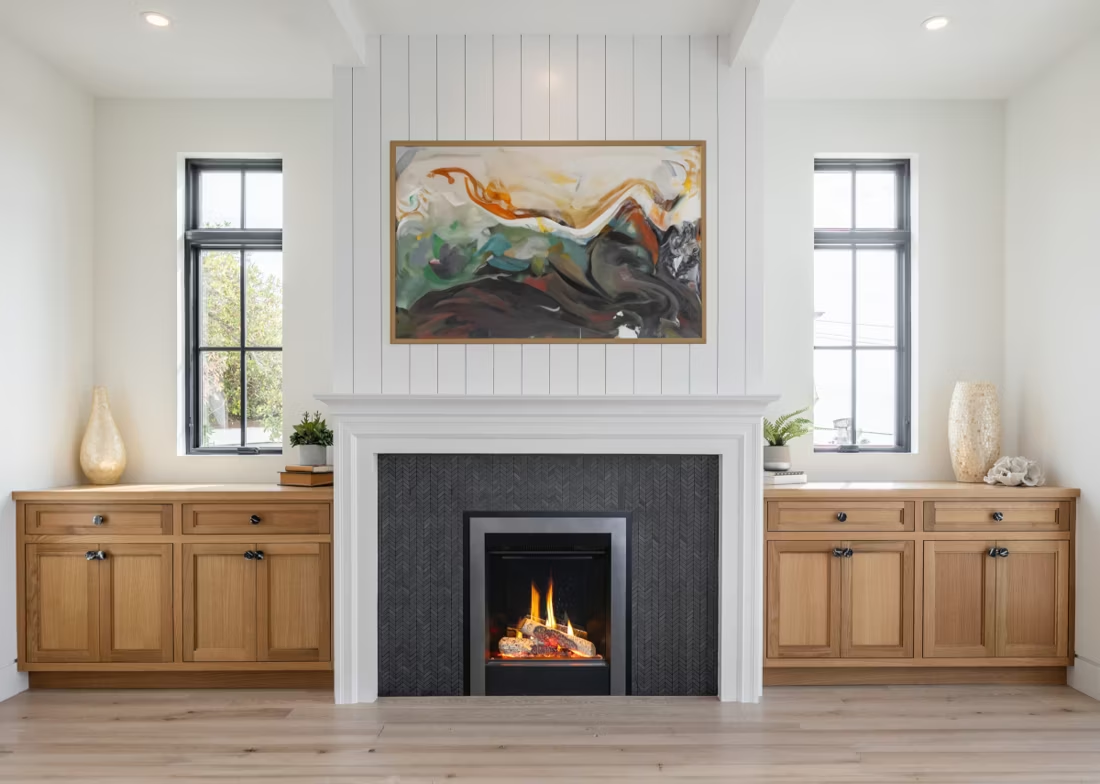
Yes—with an asterisk. Fireplaces are hot and TVs don't like heat. Either put a mantel between them to deflect rising warmth, or choose a fireplace with heat-management technology that creates a cool zone on the wall above—the wall stays around 125 degrees, barely warm, while the room still gets full heat. If you like clean lines and don't want a mantel, heat management is the answer.
Does an electric fireplace need a vent or chimney?
No—that's its superpower. An electric fireplace needs a wall and an outlet, period. No vent pipe, no gas line, no clearances to design around, which is why it works in bedrooms, offices, apartments, and walls where venting a gas or wood unit would be impractical or impossible. Installation is typically the simplest and least expensive of any fireplace type.
Does a fireplace add value to my home?
On average, a fireplace adds back to the home about the same amount you spent installing it. Add the monthly savings from heating the rooms you actually use instead of the whole house—often hundreds of dollars a year—and the value case is strong before you even count what a fire does for how your family uses the room.
Can a fireplace actually lower my heating bill?
Yes—by creating a comfort zone. A furnace heats every square foot of the house just to warm the one room you're in; a gas fireplace on low burns roughly a sixth of the gas a typical furnace does. Set the furnace around 55–60 degrees as a baseline, then heat the rooms your family actually uses. Families who heat this way commonly save $20–$60 a month.
Find your electric fireplace in Southeast Fairbanks Census Area.
Tell us about your home along the Alaska Highway and we'll match you with a trusted local dealer and send over a free Project Guide & Parts List—a plan for your electric fireplace project with the exact parts and a recommended installer near you.
Find Your Fireplace →