
Steady heat that outlasts Skagway's outflow winds.
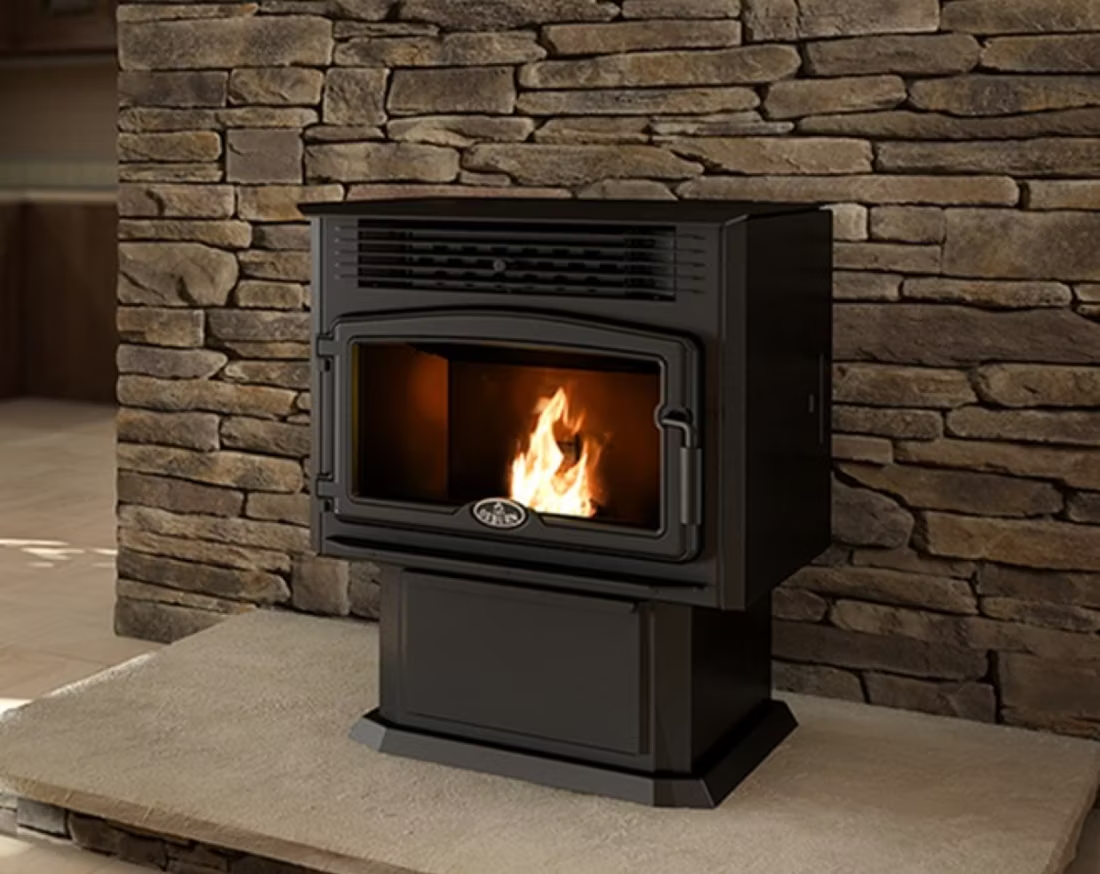
A hopper-fed pellet stove gives Skagway homes consistent, thermostat-controlled heat without a woodpile out back—even when the katabatic wind is howling down the valley. Find the right unit and get matched with a trusted local dealer.
Every Project Starts From One of These Five Situations
Consistent heat without a woodpile at the end of the road.
Skagway sits at the head of the Taiya Inlet, a town of roughly 1,179 people squeezed into a narrow glacial valley between steep granite walls. It's IECC climate zone 7—a long, cold heating season that runs well into spring—and the surrounding valley funnels strong outflow winds down from the ice fields above town, the kind of wind event locals just call 'the wind.' Birch, spruce, and cottonwood grow in the surrounding forest and plenty of households still burn cordwood, but Skagway's tight in-town lots and its historic Gold Rush-era buildings make a hopper-fed pellet stove an easier fit for a lot of homeowners than a full wood setup with seasoned rounds stacked outside.
There's no natural gas line into Skagway, so heating choices here really come down to wood, pellet, or electric off Alaska Power & Telephone's Goat Lake hydro system. Pellets themselves have to come in by truck down the South Klondike Highway from Whitehorse or by barge and the Alaska Marine Highway ferry from Haines and Juneau—regional brands like Superior Pellet Fuels and Lignetics are the ones local dealers typically stock and can get delivered reliably. Skagway also has no non-attainment designation for air quality, unlike interior communities such as Fairbanks, so a pellet stove installation here isn't running into the winter burn-ban restrictions that shape hearth choices further north.
Three steps. No salesperson until you're ready.
Tell us about your project
Your zip code, your situation, and the fuel you're leaning toward—or let the answers point you to one.
See what's actually available
The brands dealers within 100 miles genuinely carry—real options, never a catalog mirage.
Get your dealer & Project Guide
A trusted local dealer, plus the free Project Guide & Parts List that names every component of the job.
Frequently Asked Questions
How much does a pellet stove installation cost in Skagway?
Expect the unit and labor to land in a similar range to anywhere else in coastal Alaska—roughly $3,500 to $6,500 for a straightforward install with an existing chimney chase or a simple through-wall vent—but budget extra on top of that for freight. Because every stove, vent kit, and pallet of pellets has to travel down the South Klondike Highway or come off the ferry, delivered pricing in Skagway typically runs several hundred dollars higher than the same job in Juneau or Whitehorse. A local dealer can give you a firm number once they know whether you're venting through an existing masonry chimney or need a new through-wall pellet vent run through a historic-district exterior wall.
How do pellets actually get to Skagway, and will I run out mid-winter?
Most pellets sold locally arrive either by truck down the South Klondike Highway from Whitehorse, Yukon, or by barge and the Alaska Marine Highway ferry from Haines or Juneau. Superior Pellet Fuels and Lignetics are the two brands local dealers most reliably stock, and both hold up well through that transit if bags stay dry and off the ground. Because deliveries are scheduled around highway conditions and ferry sailings rather than a daily truck route, the practical move for Skagway households is to buy a full winter's supply—typically two to three tons for a stove used as a primary heat source—in the fall rather than restocking a few bags at a time once passes ice up.
Do I need a permit to install a pellet stove in Skagway?
Yes—a new pellet stove installation needs a building permit through the Municipality of Skagway, and if you're adding a new through-wall vent on a building within the historic Skagway district, exterior venting placement may also need a look from the historic preservation review process. Most local installers handle the permit application as part of the job, and coordinating that review is one of the real advantages of hiring someone who already knows which downtown buildings fall under historic guidelines versus which don't.
What happens to my pellet stove during a power outage?
This is worth thinking through carefully in Skagway. AP&T's Goat Lake hydro system is generally reliable, but outflow wind events can knock down lines and cause outages that last hours rather than minutes. A pellet stove's auger, igniter, and combustion blower all run on standard household electricity, so a stove with no backup power simply stops feeding pellets when the grid drops. Many Skagway homeowners pair their pellet stove with a small battery backup unit or a portable generator sized to keep the stove's control board and auger running, specifically for wind-driven outages. If backup heat during outages matters more to you than convenience, a wood stove burning local birch or spruce is worth comparing side by side.
Pellet stove vs. wood stove—which makes more sense for a Skagway home?
Wood is genuinely abundant here—birch, spruce, and cottonwood are all common in the surrounding valley, and plenty of Skagway households still buck and split their own. A wood stove also keeps working with the power out, which matters when outflow winds take down a line. A pellet stove trades that off for real convenience: no splitting, no stacking, a thermostat instead of a damper, and a cleaner burn with far less ash and creosote buildup in a tight in-town chimney chase. For a small downtown lot or a historic building where cordwood storage isn't practical, pellet usually wins; for a place with room to stack wood and a priority on power-outage backup, wood still makes a strong case.
Where do I store a winter's worth of pellets in a town this small?
Most Skagway homeowners buy their full season's pellets in the fall—often two to three tons for a stove used as primary heat—and store bagged pellets on pallets in a garage, shed, or crawlspace, kept up off concrete and away from damp exterior walls. The Taiya Inlet's marine climate means humidity and condensation are a bigger risk to bagged pellets here than in drier interior Alaska towns, so a dry, ventilated storage spot matters more than square footage. Local dealers selling Superior Pellet Fuels or Lignetics can usually advise on stacking and cover recommendations specific to a coastal storage setup.
What size pellet stove do I need for a Skagway home?
Sizing depends heavily on what kind of building you're heating—a lot of Skagway's housing stock is older, Gold Rush-era construction with thinner walls and less insulation than newer builds outside the historic district, which pushes sizing up for the same square footage. As a rough guide, smaller units (up to around 1,000 sq ft) suit a cabin or a single-story historic home, while medium units (1,000–2,000 sq ft) cover most standalone houses in town. Because the valley's outflow winds drive real infiltration through older windows and doors, a local dealer sizing your stove in person—accounting for your home's age, insulation, and exposure to the wind funnel—will get you closer than a generic square-footage chart.
Does Skagway have any wood-smoke or air quality restrictions that affect pellet stoves?
No—Skagway carries no non-attainment designation for particulate air quality, unlike interior Alaska communities such as Fairbanks and North Pole, which impose winter burn curfews during temperature inversions. That means a pellet stove installation here isn't operating under any curtailment schedule. Pellet stoves already burn cleaner than cordwood in terms of visible smoke and ash, so most Skagway installations proceed without any air-quality-driven restrictions on when or how often you can run the stove.
How often does a pellet stove need service in Skagway's coastal climate?
Plan on an annual inspection and full cleaning before the heating season starts, along with a hopper and burn-pot cleaning every couple of weeks during heavy winter use—standard for any pellet stove. What's worth flagging for Skagway specifically is the marine air: the salt-laden humidity off the Taiya Inlet can accelerate corrosion on some exterior venting components and blower housings faster than it would in a drier interior Alaska town. Ask your local dealer about stainless steel vent kits and hardware when you're selecting a unit—the modest upcharge up front tends to pay for itself in fewer parts replacements a few winters in.
How often does a pellet stove need cleaning?
A clean pellet stove is a happy pellet stove. Plan on cleaning the burn pot about once a week when you're burning regularly—ash and clinkers gum up the air holes just like a pellet barbecue. Most pellet stove problems trace back to skipped cleaning that nobody explained up front. Some designs make it easy with a trapdoor burn pot: pull a lever and the gunk drops into the ash pan.
What's the difference between an insert and a zero-clearance fireplace?
An insert is a fireplace that slides into a pre-existing wood-burning fireplace—if you don't have one, there's nothing to insert it into. A zero-clearance fireplace is built into a framed wall, which makes it the answer for remodels and new construction. Simple test: existing masonry fireplace means insert; blank or framed wall means zero-clearance.
Can I install a fireplace myself?
If you're putting a fire in your house on purpose, it's best to work with an expert. Unless you're genuinely experienced in framing, gas line, vent pipe, and the national code on clearances to combustibles, have a professional do it—and ideally the same company that sells you the fireplace, so warranty, service, and liability all live under one roof.
How much should I budget for a fireplace?
For an average home—covering the fireplace, the vent pipe, and basic installation—a budget between $3,900 and $5,500 gives you a lot of options across wood, gas, and pellet. By the time you add finish work, gas line, and electrical, the average complete installation lands between $5,000 and $12,000 all-in. In a remodel or new build, a good rule is to put about 2.5% of the total project cost toward the fireplace.
Stove and Fireplace Dealers in Skagway County
Listings include WhyFire partner dealers, dealers we have verified as authorized for the brands we recommend, and established local businesses that carry hearth products. Every listing shows which one it is. The ones marked Preferred run on WhyFire's software, so they can show you real pricing and book your appointment right here. No manufacturer pays for placement. How we verify dealers →
Nc Chimneys LLC
Pellet Brands Stocked Around Skagway County
Manufacturers will point you to the nearest stocking dealer.
Find your pellet stove in Skagway.
Tell us about your home and how it's heated now, and we'll match you with a trusted local dealer and send over a free Project Guide & Parts List—the stove, the vent kit, and the exact parts your Skagway installation needs.
Find Your Fireplace →