
Electric heat that clicks on the moment the cold hits.
No venting, no wood to split, no chimney to maintain—just instant zone heat and a real-looking flame for Kenai Peninsula homes. Find the right unit and connect with a trusted local dealer.
Every Project Starts From One of These Five Situations
Instant heat, zero mess, real limits.
Ridgeway sits low on the Kenai Peninsula near Kenai and Soldotna, at just 234 feet of elevation, but the climate here doesn't care about elevation—this is Climate Zone 7 territory, with a heavy winter heating load and an average winter low around 8°F. That puts Ridgeway in the same cold-climate tier as International Falls, Minnesota, with a heating season that stretches from September into May.
Homer Electric Association serves most of the western Kenai Peninsula, including Ridgeway, with Chugach Electric Association tied into the regional grid—and at roughly $0.21 to $0.30 per kWh, electricity here runs well above the national average, a reality of Alaska's isolated hydro-diesel grid. That's why electric fireplaces in Ridgeway are almost never installed as a home's primary heat source; most houses lean on wood (birch and spruce are the local staples) or oil for that job. Where electric fireplaces earn their keep is everywhere else: zone heat for a bonus room, ambiance without a chimney, a safe supplemental heater for renters, or a simple plug-in upgrade for a cabin or converted garage that doesn't justify running new gas or wood venting.
Three steps. No salesperson until you're ready.
Tell us about your project
Your zip code, your situation, and the fuel you're leaning toward—or let the answers point you to one.
See what's actually available
The brands dealers within 100 miles genuinely carry—real options, never a catalog mirage.
Get your dealer & Project Guide
A trusted local dealer, plus the free Project Guide & Parts List that names every component of the job.
Frequently Asked Questions
How much does an electric fireplace cost to install in Ridgeway?
A plug-in electric insert or freestanding electric stove typically runs $300 to $900 installed, since most units simply plug into a standard outlet with no electrician required. Built-in wall units or larger electric fireplaces that need a dedicated 240V circuit run higher, often $1,200 to $2,500, once you factor in a licensed electrician to run new wiring—worth budgeting for given how many older Ridgeway homes were wired for baseboard heat rather than a dedicated hearth circuit. Local dealers can tell you within minutes which category your chosen unit falls into.
Can an electric fireplace actually heat my Ridgeway home?
Not as a primary heat source, and any honest local dealer will tell you the same. With a heavy winter heating load and winter lows regularly near 8°F, resistance electric heat at Homer Electric's rates would be an expensive way to heat a whole house. Most electric fireplaces top out around 5,000 to 9,000 BTU (roughly 1,500 watts), which is enough to noticeably warm a single room but not a Kenai Peninsula home through a February cold snap. Think of it as supplemental heat and ambiance for a living room or bonus space, with wood, oil, or a Toyostove doing the heavy lifting elsewhere in the house.
What's the difference between an electric insert, electric stove, and wall-mounted electric fireplace?
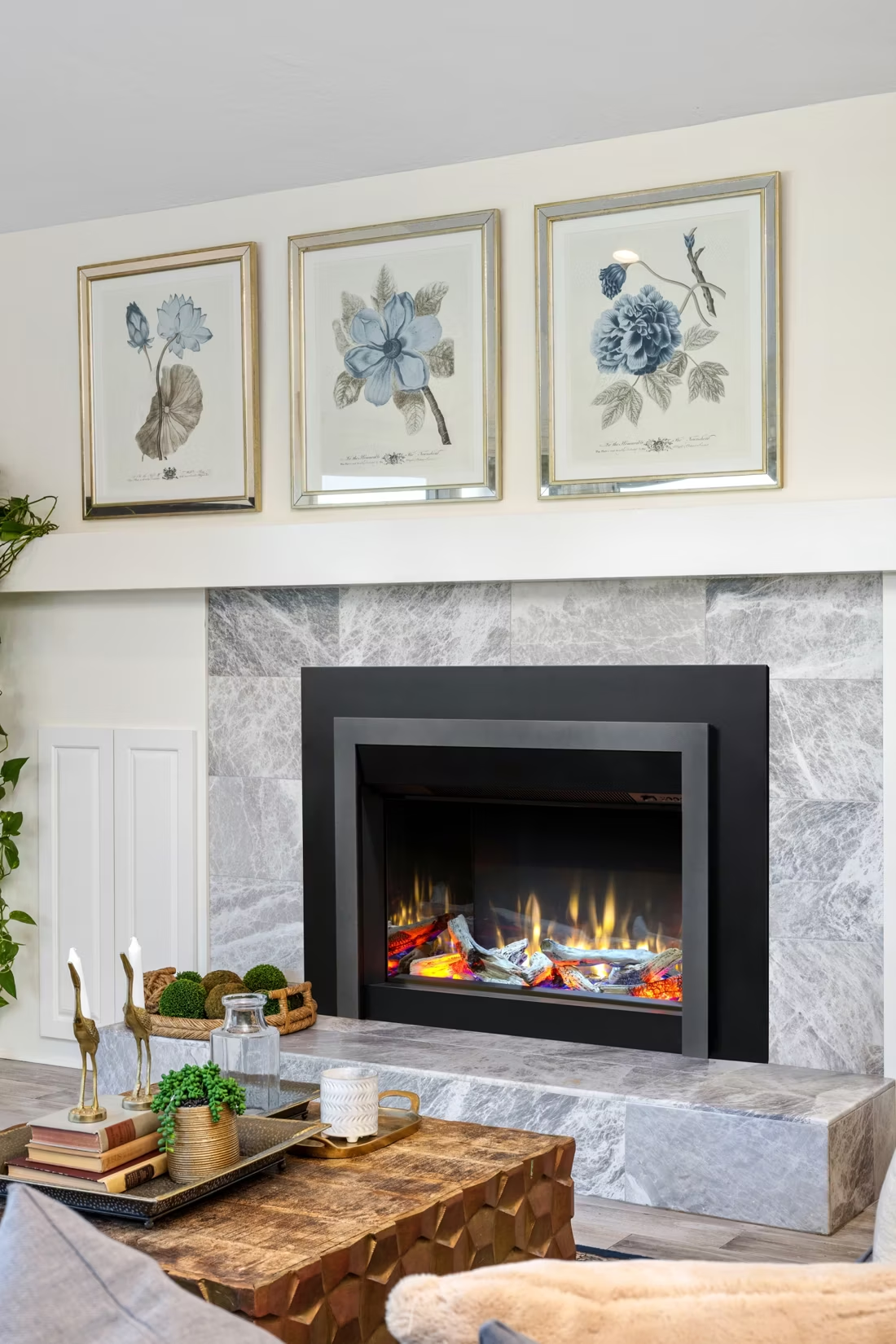
An electric insert is built to slide into an existing masonry or zero-clearance fireplace opening, giving an old wood-burning firebox a flame effect and heat without any venting work. An electric stove is a freestanding cabinet styled like a wood stove, useful anywhere you want a stand-alone heat source and don't have an existing fireplace. A wall-mounted or built-in electric fireplace is designed into new construction or a remodel, often as a linear unit under a TV or in a custom surround. All three plug into standard household current or a simple 240V line—none of them need a chimney, flue, or gas line, which is part of why they're a common secondary-heat add-on in Ridgeway homes that already rely on wood or oil for primary heat.
Do I need a permit to install an electric fireplace in Ridgeway?
For a standard plug-in electric fireplace or insert, no—it's treated like any other appliance you plug into an outlet. If you're installing a built-in unit that requires a new dedicated circuit or a 240V line, that electrical work should be done by a licensed electrician, and depending on the scope, an electrical permit may be required through the Kenai Peninsula Borough. Local dealers who handle installation can tell you up front whether your specific unit and home wiring trigger that requirement.
What will it actually cost to run an electric fireplace here?
At Homer Electric Association's residential rate of about $0.2979 per kWh, a typical 1,500-watt electric fireplace running 5 hours a day costs roughly $2.25 a day, or about $65-$70 a month of steady evening use—noticeably more than the same appliance would cost in a Lower 48 city on a $0.13-$0.15 rate. If your service happens to run through Chugach Electric's lower $0.2124 rate, that same usage drops closer to $45-$50 a month. Either way, most owners in Ridgeway run their electric fireplace a few hours a day for ambiance and spot heat rather than leaving it on continuously, which keeps the operating cost modest.
Which electric fireplace models hold up well in an Alaska climate?
Cold, dry interior air during the heating season is tougher on trim and finishes than most people expect, so look for units with metal or powder-coated steel housings rather than cheap plastic surrounds. Dimplex and Napoleon both make inserts and linear units with realistic LED flame effects and simple 1,500-watt heaters that hold up well in year-round use. Since Ridgeway homes run these units mostly for supplemental heat and ambiance rather than as a workhorse appliance, a mid-range model with a good flame effect and a quiet fan is usually a better fit than the highest-output unit on the shelf.
Will my electric fireplace still work if the power goes out?
No—and this is worth planning around. Electric fireplaces need grid power to run the heater and flame effect, so during a winter outage they go dark along with everything else. Kenai Peninsula storms do occasionally knock out power for hours at a stretch, which is exactly why most Ridgeway homes that install an electric fireplace for ambiance or supplemental heat still keep a wood stove, oil furnace, or other non-electric heat source as their real backup plan. An electric fireplace should be considered a comfort upgrade, not an emergency heat source.
Electric vs. wood—which makes more sense for my Ridgeway home?
Wood is still the backbone of home heating for a lot of Kenai Peninsula households, and for good reason: birch, spruce, and cottonwood are all available locally, and a Chugach National Forest personal-use cutting permit runs free for the May-through-September season. A wood stove keeps running with zero grid dependence during an outage and produces far more usable heat per dollar than resistance electric at Homer Electric's rates. An electric fireplace can't compete on raw heat output or outage resilience, but it wins on convenience—no splitting, stacking, hauling ash, or chimney maintenance, and it can go anywhere you have an outlet. Many Ridgeway homes run both: wood for real heat, electric for the room where a wood stove isn't practical.
Electric vs. pellet stove—which is the better supplemental option?
Pellet stoves burn compressed wood pellets—regional brands like Superior Pellet Fuels and Lignetics are both available in the area—and put out considerably more heat than an electric fireplace, making them a viable secondary or even primary heat source in a Ridgeway home. The tradeoff is that pellet stoves need venting, a hopper to refill, and electricity to run the auger and blower, so they're not fully outage-proof either. Electric fireplaces are simpler still: plug them in, no venting, no fuel to store, and no moving parts to maintain—but at a fraction of the heat output. If you want real supplemental heat with manageable complexity, pellet is usually the stronger choice; if you want low-maintenance ambiance and light spot heat, electric wins.
Can I put a TV above my fireplace?
Yes—with an asterisk. Fireplaces are hot and TVs don't like heat. Either put a mantel between them to deflect rising warmth, or choose a fireplace with heat-management technology that creates a cool zone on the wall above—the wall stays around 125 degrees, barely warm, while the room still gets full heat. If you like clean lines and don't want a mantel, heat management is the answer.
Does an electric fireplace need a vent or chimney?
No—that's its superpower. An electric fireplace needs a wall and an outlet, period. No vent pipe, no gas line, no clearances to design around, which is why it works in bedrooms, offices, apartments, and walls where venting a gas or wood unit would be impractical or impossible. Installation is typically the simplest and least expensive of any fireplace type.
Does a fireplace add value to my home?
On average, a fireplace adds back to the home about the same amount you spent installing it. Add the monthly savings from heating the rooms you actually use instead of the whole house—often hundreds of dollars a year—and the value case is strong before you even count what a fire does for how your family uses the room.
What is an in-home preview and do I need one?
It's a visit where a hearth professional measures your space, confirms the model you picked actually works in your home, and walks the specs—framing, gas line, venting, finish work—before anything is ordered. Some details you just can't know until you see the house. Never make a down payment without one; it's the single most-skipped step that burns buyers.
Nearby Dealers
Hearth shops serving Ridgeway and the surrounding area. Every listing shows whether it is a WhyFire partner, a dealer we have verified as authorized for the brands we recommend, or a local business carrying hearth products. No manufacturer pays for placement. How we verify dealers →
Electric Service in Ridgeway
An electric fireplace's heater draws about 1,500 watts—pennies per hour at local rates.
Homer Electric Assn Inc
Chugach Electric Assn Inc
Find your electric fireplace in Ridgeway.
Tell us a bit about your home and heating setup, and we'll match you with a trusted local dealer and send over a free Project Guide & Parts List—a clear plan for your electric fireplace project in Ridgeway, right down to the wiring and mounting parts you'll need.
Find Your Fireplace →