
Add real heat without new venting on Prince of Wales Island.
Clean, no-chimney heat for island communities from Craig to Thorne Bay to Hyder—plug-in or hardwired, no cutting permits or chimney sweeps required. Find the right unit and connect with a trusted local dealer.
Every Project Starts From One of These Five Situations
Hydro power makes electric heat make sense here.
Prince of Wales-Hyder is a scattered island borough of roughly 5,300 people reachable only by ferry or floatplane—Craig, Klawock, Thorne Bay, Coffman Cove, Whale Pass, Kasaan, and Hydaburg sit on Prince of Wales Island itself, while Hyder sits alone on the Alaska-British Columbia border, 700 miles away by water. With a long, damp heating season that runs nearly nine months of the year, wood—cut for free from birch, spruce, and cottonwood stands under a Tongass National Forest permit—remains the backbone of home heating here. But electric fireplaces and stoves have carved out a real role as clean, mess-free supplemental heat, especially in additions, bedrooms, and homes where running a second wood stove isn't practical.
What makes electric heat viable on an island this remote is Alaska Power & Telephone Company's hydroelectric system—Black Bear Lake and South Fork Sarkar feed the Craig-Klawock-Thorne Bay-Coffman Cove-Whale Pass-Kasaan grid, which keeps electric rates meaningfully lower and more stable than the diesel-generated power common elsewhere in rural Alaska. Hyder is its own case entirely: it draws power from BC Hydro across the border in Stewart, British Columbia, rather than from any Alaska utility. Either way, an electric fireplace plugs into an existing outlet or a dedicated 240V circuit, needs no chimney and no venting, and gives you real supplemental warmth—with the understanding that, on an island grid where winter storms do knock out power, it won't be your heat source when the lights go out.
Three steps. No salesperson until you're ready.
Tell us about your project
Your zip code, your situation, and the fuel you're leaning toward—or let the answers point you to one.
See what's actually available
The brands dealers within 100 miles genuinely carry—real options, never a catalog mirage.
Get your dealer & Project Guide
A trusted local dealer, plus the free Project Guide & Parts List that names every component of the job.
Frequently Asked Questions
How much does an electric fireplace installation cost in Prince of Wales-Hyder?
Most electric fireplace installations here run $300 to $1,500. A plug-in freestanding unit or a wall-mount model that uses a standard 120V outlet is on the low end and can often be self-installed. A built-in electric insert or a unit that needs a dedicated 240V circuit run by a local electrician costs more, and that electrician time is the main variable on an island where trades are limited and travel between communities like Craig, Klawock, and Thorne Bay adds time to any job. Unlike wood or gas units, there's no chimney, no venting, and no combustion air to plan for, which keeps the install itself simple even when logistics aren't.
Does an electric fireplace actually put out usable heat, or is it just for looks?
A good electric fireplace or stove puts out real, usable heat—most units are rated around 5,000 BTU (roughly 1,500 watts), enough to comfortably heat a single room of 400 to 1,000 square feet depending on insulation. That makes them a solid match for supplemental heat in a bedroom, addition, or den on Prince of Wales Island, where AP&T's hydro-based rates make running one through a damp shoulder-season week more affordable than in diesel-powered parts of rural Alaska. They're not sized to be the sole heat source for a whole home given the area's long, nearly nine-month heating season—most households here pair one with a wood stove that carries the bulk of the load.
Will my electric fireplace work during a power outage?
No—and this is the single most important thing to plan around on an island grid like this one. Electric fireplaces and stoves have no battery backup and go dark the moment power drops, which matters in Prince of Wales-Hyder where winter storms off the Gulf of Alaska regularly interrupt service to Craig, Klawock, Thorne Bay, and the smaller outlying communities. Nearly every household we talk to in this borough pairs an electric unit for everyday convenience with a wood stove—burning free-permit birch, spruce, or cottonwood from the Tongass—as the heat source that keeps working when the grid doesn't.
What's the difference between an electric fireplace, insert, and stove?
An electric fireplace is typically a built-in or wall-mounted unit designed to look like a framed hearth—popular in remodels and additions around Klawock and Thorne Bay where residents want the visual of a fireplace without adding a chimney. An electric insert is sized to slide into an existing masonry or wood-stove opening, useful if you have an old fireplace you no longer want to feed with cordwood. An electric stove is a freestanding cabinet-style unit that mimics a wood stove's look and can be moved between rooms or even taken to a seasonal cabin. All three plug in or hardwire with no venting, so the choice comes down to the look you want and whether you're filling an existing opening.
Do I need a permit to install an electric fireplace in Prince of Wales-Hyder?
For the unincorporated parts of the borough, there's no county-level building code requiring a permit for a plug-in or hardwired electric fireplace, since Prince of Wales-Hyder is an unorganized borough with no general building permit authority. Incorporated communities including Craig, Klawock, and Thorne Bay may have their own local electrical permit requirements if the installation involves a new dedicated circuit—check with the city office before hardwiring a 240V unit. A licensed electrician handling that wiring will know which of the island's communities require sign-off.
What's the best electric fireplace for a damp, mild-winter island climate like this?
Look for units rated for the moisture this climate produces—Prince of Wales Island's marine air keeps winter lows around 31°F on average but stays damp for most of the nine-month heating season, so a fireplace with sealed electronics and corrosion-resistant components holds up better long-term than a bargain unit. Infrared electric heaters produce a more even, penetrating warmth that some residents prefer over the fan-forced convection style for all-day supplemental heat in a den or bedroom. Since these units aren't carrying the whole heat load, most households prioritize a clean look and reliable operation over raw output, and any local dealer serving the island can walk you through which models hold up best to the humidity here.
Electric vs. wood—which should be my primary heat source?
Wood wins for primary heat in Prince of Wales-Hyder, and it's not close: birch, spruce, and cottonwood are cut under a free Tongass National Forest permit during the May-to-September season, the fuel keeps working through the power outages that come with island storms, and it's sized to handle the borough's long, nearly nine-month heating season on its own. Electric fireplaces and stoves are the better fit for supplemental heat—a bedroom, an addition, a room where running a second wood stove doesn't make sense—and they're clean, low-maintenance, and made more affordable here than in much of rural Alaska by AP&T's hydroelectric rates. Most homes on the island run both: wood as the workhorse, electric for convenience and backup-free rooms.
What does it cost to run an electric fireplace on Prince of Wales Island's electric rates?
AP&T's hydroelectric system, fed by Black Bear Lake and South Fork Sarkar, keeps rates in Craig, Klawock, Thorne Bay, Coffman Cove, Whale Pass, and Kasaan lower and steadier than the diesel-generated power common in much of rural Alaska, and many households also qualify for the state's Power Cost Equalization subsidy on residential usage. Running a typical 1,500-watt electric fireplace for several hours an evening adds a modest amount to a monthly bill—nowhere near what it would cost on a diesel-only grid. Hyder residents, who buy power from BC Hydro across the border in Stewart, B.C., should check current cross-border rates with their utility, since pricing there follows a different structure entirely.
Who installs electric fireplaces on the island, and how does shipping work?
Units typically arrive by barge or the Alaska Marine Highway ferry into Hollis or Coffman Cove, then get trucked to their final destination on the island's road system connecting Craig, Klawock, and Thorne Bay. A local electrician handles any dedicated circuit work, and a hearth or appliance dealer serving the borough can advise on sizing and placement before you order, which avoids a costly re-ship if a unit doesn't fit the space. Because freight adds real cost and lead time out here, getting the sizing and model right the first time matters more than it would in a place with same-day big-box options.
Can I put a TV above my fireplace?
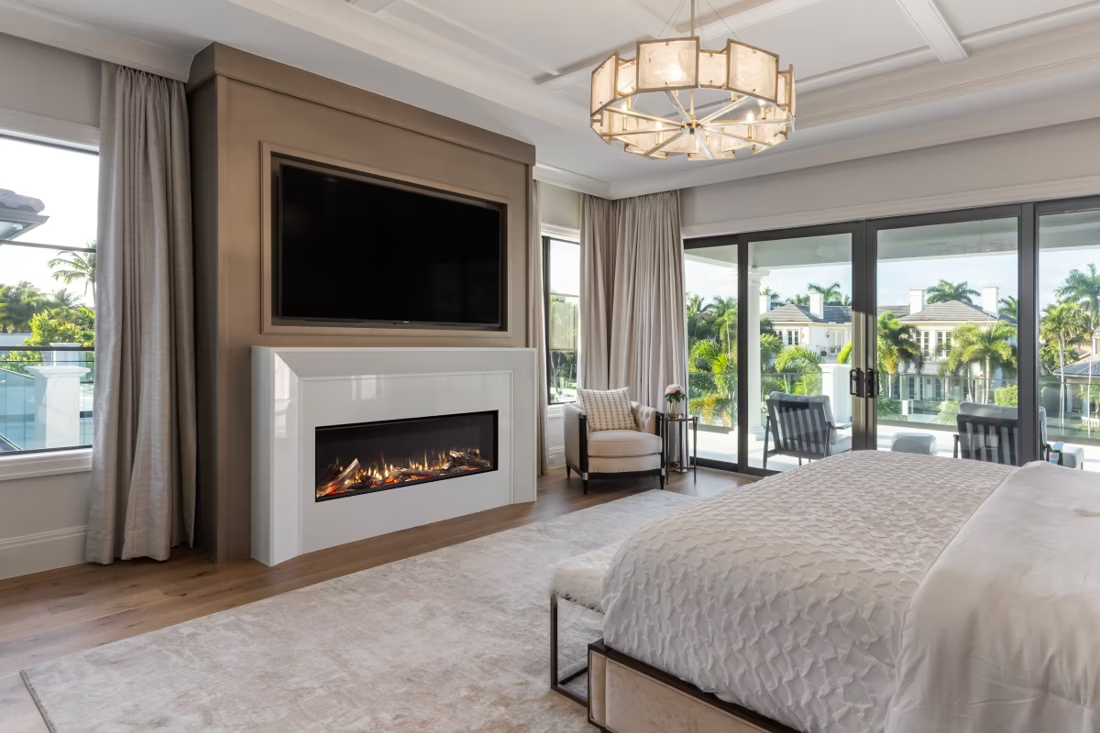
Yes—with an asterisk. Fireplaces are hot and TVs don't like heat. Either put a mantel between them to deflect rising warmth, or choose a fireplace with heat-management technology that creates a cool zone on the wall above—the wall stays around 125 degrees, barely warm, while the room still gets full heat. If you like clean lines and don't want a mantel, heat management is the answer.
Does an electric fireplace need a vent or chimney?
No—that's its superpower. An electric fireplace needs a wall and an outlet, period. No vent pipe, no gas line, no clearances to design around, which is why it works in bedrooms, offices, apartments, and walls where venting a gas or wood unit would be impractical or impossible. Installation is typically the simplest and least expensive of any fireplace type.
Does a fireplace add value to my home?
On average, a fireplace adds back to the home about the same amount you spent installing it. Add the monthly savings from heating the rooms you actually use instead of the whole house—often hundreds of dollars a year—and the value case is strong before you even count what a fire does for how your family uses the room.
How much should I budget for a fireplace?
For an average home—covering the fireplace, the vent pipe, and basic installation—a budget between $3,900 and $5,500 gives you a lot of options across wood, gas, and pellet. By the time you add finish work, gas line, and electrical, the average complete installation lands between $5,000 and $12,000 all-in. In a remodel or new build, a good rule is to put about 2.5% of the total project cost toward the fireplace.
Stove and Fireplace Dealers in Prince of Wales-Hyder County
Listings include WhyFire partner dealers, dealers we have verified as authorized for the brands we recommend, and established local businesses that carry hearth products. Every listing shows which one it is. The ones marked Preferred run on WhyFire's software, so they can show you real pricing and book your appointment right here. No manufacturer pays for placement. How we verify dealers →
Bernie's Sales
Tyee Building Supplies Ltd
Find your electric fireplace in Prince of Wales-Hyder.
Tell us a bit about your home and heating goals, and we'll match you with the right electric fireplace, insert, or stove—plus a free Project Guide & Parts List and a trusted local dealer to get it installed.
Find Your Fireplace →