
Built for Point MacKenzie's Long, Dark Winters.
With average winter lows near 8°F and a heating season that runs most of the year, Point MacKenzie needs heat that keeps up. Find the right pellet stove and get matched with a dealer who actually serves the Mat-Su Valley.
Every Project Starts From One of These Five Situations
Steady, thermostat-controlled heat for a subarctic climate.
Point MacKenzie sits across the Knik Arm from Anchorage in Climate Zone 7—the harshest heating zone on the map, on par with International Falls, Minnesota for sheer winter heating load. With average winter lows around 8°F and a heating season that stretches through most of the year, this is a rural, spread-out community where cold weather isn't a few weeks—it's the norm. Birch, spruce, and cottonwood grow abundantly here, and a lot of homes still burn cordwood cut under free Chugach National Forest permits between May and September.
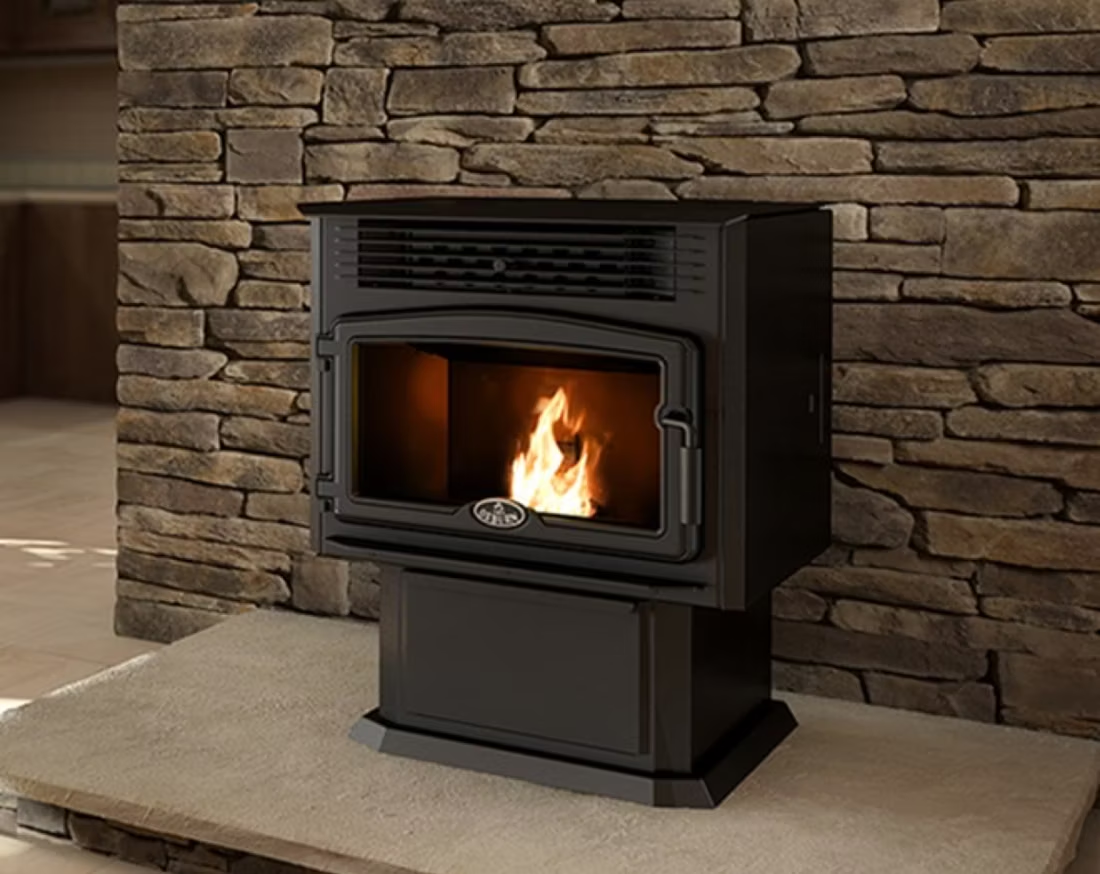
Pellet stoves have found a real foothold alongside wood in this part of the Mat-Su Borough because they trade the labor of felling, hauling, splitting, and stacking cordwood for a hopper you fill every day or two and a thermostat that holds a set temperature overnight. Regional pellet brands like Superior Pellet Fuels and Lignetics supply the area, though freight from mill to homestead is a real factor in what you'll pay per ton out here. For homes without the time or physical capacity to process several cords of birch every winter, a pellet stove is often the more sustainable long-term choice—even in a place this cold and this remote.
Three steps. No salesperson until you're ready.
Tell us about your project
Your zip code, your situation, and the fuel you're leaning toward—or let the answers point you to one.
See what's actually available
The brands dealers within 100 miles genuinely carry—real options, never a catalog mirage.
Get your dealer & Project Guide
A trusted local dealer, plus the free Project Guide & Parts List that names every component of the job.
Frequently Asked Questions
How much does a pellet stove installation cost in Point MacKenzie?
There's no city building department pricing schedule to point to here—Point MacKenzie is unincorporated, and the handful of hearth dealers who serve the Mat-Su Valley quote each job individually. As a general range, a fully installed pellet stove or insert typically runs $3,500 to $7,500, with the top end covering venting through a log or timber-frame wall, hearth pad work, and the extra dealer travel time that comes with serving a spread-out rural area like this. Get a dealer out to walk the actual house—freight on the unit and the specifics of your wall or existing fireplace opening move the number more than anything else.
Does a pellet stove make sense here when firewood is basically free?
It depends on how much labor you want to put into heat. With free Chugach National Forest cutting permits running May through September and birch, spruce, and cottonwood all growing locally, plenty of Point MacKenzie households heat primarily with cordwood. But processing enough wood to cover such a long, brutal heating season is real physical work every single year. A pellet stove trades that labor for a 40-pound bag you load into a hopper, plus a thermostat that holds a steady temperature through the night without you getting up to reload a firebox at 3 a.m. Many homes here run both—wood for backup and ambiance, pellet for the daily grind of a long winter.
Will my pellet stove keep running if the power goes out?
No—this is the honest answer and it matters a lot in a place like Point MacKenzie. Pellet stoves rely on an electric auger to feed fuel and a blower to move heat, so when Matanuska Electric Association service drops during a storm, the stove stops. A wood stove will keep burning through an outage; a pellet stove won't unless you have a generator or battery backup sized to run it. Given how isolated this area is and how long an outage can realistically last in a big Southcentral storm, most pellet-stove households here also keep a generator on hand or a backup wood-burning appliance for exactly this scenario.
Where do I source pellets in Point MacKenzie?
Regional brands like Superior Pellet Fuels and Lignetics supply the Mat-Su area, but because Point MacKenzie is off the main road system compared to Anchorage or Wasilla, freight adds real cost to the per-ton price. Most households here buy in bulk during the summer and fall when road and barge logistics are easiest, rather than restocking bag by bag mid-winter when a supply run means a longer drive. Ask your dealer about seasonal bulk pricing—buying a full winter's supply at once is standard practice out here.
Do I need a permit to install a pellet stove in Point MacKenzie?
Because Point MacKenzie is unincorporated, building permits for a new pellet stove installation go through the Matanuska-Susitna Borough rather than a city building department. Most hearth dealers who regularly work this area handle that paperwork as part of the install. There's no wood-smoke curtailment program here the way there is in some Lower 48 non-attainment areas—Point MacKenzie has no listed air quality concerns—so the permit is about safe installation and code compliance, not emissions restrictions.
What size pellet stove do I need for a Point MacKenzie home?
With average winter lows around 8°F and stretches that go well below that, undersizing is the real risk here—a stove that's marginal on a mild Anchorage winter day will struggle on a hard Mat-Su cold snap. Look at larger-hopper units with strong BTU output and a long minimum burn setting so the stove can run low and steady overnight without you babysitting it. A dealer familiar with Climate Zone 7 heating loads will size the stove to your square footage and insulation rather than a rule of thumb built for a milder climate.
How much maintenance does a pellet stove need compared to a wood stove?
Pellet stoves vent through a simpler PL-rated pipe rather than a full masonry or Class A chimney, so there's no annual chimney sweep the way there is with a wood stove. What they do need is regular ash pan emptying, a burn-pot cleaning every few days during heavy use, and an annual professional service to check the auger motor, blower, and exhaust fan—the moving parts that do the work a wood stove doesn't need. For a household running the stove hard through a long Point MacKenzie winter, that annual service is worth scheduling in early fall before the season starts.
Pellet stove vs. wood stove—which is right for my Point MacKenzie home?
Wood is free to cut under a Chugach National Forest permit, works with zero electricity, and is deeply practical in a region where outages happen—but it means processing several cords of birch, spruce, or cottonwood every year to cover such a long, demanding heating season. Pellet stoves cut that labor way down and hold a more consistent temperature, but they need electricity to run and go cold the moment the power does. Given how remote this area is, most households either run a wood stove as primary heat with a pellet stove for daily convenience, or the reverse with a generator as backup—very few rely on pellet alone with no fallback plan.
Why would I choose pellet over electric heat here?
Electric heat isn't really a serious option for a Point MacKenzie home, which is why it's flagged as not applicable for this area. Matanuska Electric Association's residential rate runs about 23.4 cents per kWh—roughly double the national average—and running electric resistance heat against a Climate Zone 7 winter this long and cold would be prohibitively expensive as a primary source. Pellet stoves use a small amount of electricity just to run the auger and blower, but the heat itself comes from burned fuel, not the grid, which is a much better economic fit for this climate.
Why is a fireplace insert so efficient?
An insert does two things: it seals the chimney completely, so you stop losing air you already paid to heat, and it radiates warmth into the room through the firebox and glass. Most add a heat-exchange fan that pulls cool room air underneath, wraps it around the hot firebox, and pushes it back out warm. Your home is more efficient before you've even lit the first fire.
How often does a pellet stove need cleaning?
A clean pellet stove is a happy pellet stove. Plan on cleaning the burn pot about once a week when you're burning regularly—ash and clinkers gum up the air holes just like a pellet barbecue. Most pellet stove problems trace back to skipped cleaning that nobody explained up front. Some designs make it easy with a trapdoor burn pot: pull a lever and the gunk drops into the ash pan.
Does a fireplace add value to my home?
On average, a fireplace adds back to the home about the same amount you spent installing it. Add the monthly savings from heating the rooms you actually use instead of the whole house—often hundreds of dollars a year—and the value case is strong before you even count what a fire does for how your family uses the room.
How much should I budget for a fireplace?
For an average home—covering the fireplace, the vent pipe, and basic installation—a budget between $3,900 and $5,500 gives you a lot of options across wood, gas, and pellet. By the time you add finish work, gas line, and electrical, the average complete installation lands between $5,000 and $12,000 all-in. In a remodel or new build, a good rule is to put about 2.5% of the total project cost toward the fireplace.
Nearby Dealers
Hearth shops serving Point MacKenzie and the surrounding area. Every listing shows whether it is a WhyFire partner, a dealer we have verified as authorized for the brands we recommend, or a local business carrying hearth products. No manufacturer pays for placement. How we verify dealers →
Central Plumbing & Htng - Ak
Alaska Stove & Fireplace
Moore Heating & Air Cond
Pellet Brands Stocked Around Point MacKenzie
Manufacturers will point you to the nearest stocking dealer.
Find your pellet stove in Point MacKenzie.
Tell us about your home and heating needs, and we'll put together a free Project Guide & Parts List—the exact parts, including the vent kit, for your pellet project in Point MacKenzie—and match you with a trusted local dealer who actually serves the Mat-Su Valley.
Find Your Fireplace →