
Reliable heat for Nome County's brutal winters.
With one of the longest, coldest heating seasons in the country and winter lows that regularly sit near -2°F before Bering Sea wind chill, Nome County runs some of the harshest heating math in the country. Find the right electric fireplace or zone heater for your home, and connect with a trusted local dealer.
Every Project Starts From One of These Five Situations
Supplemental warmth for an isolated grid.
Nome County sits at the edge of the Bering Strait with no road connection to the rest of Alaska—lumber, appliances, and fuel all arrive by air or summer barge. Winters here are long and severe: the heating season is far more demanding than the interior cold of a place like International Falls, Minnesota, and average winter lows hover around -2°F before wind off the Bering Sea makes it feel far colder. Most homes in Nome and the surrounding villages—Teller, Brevig Mission, Shishmaref, Elim, Golovin, White Mountain—lean on heating oil or wood (birch, spruce, cottonwood) as primary heat, with electric filling a supplemental role.
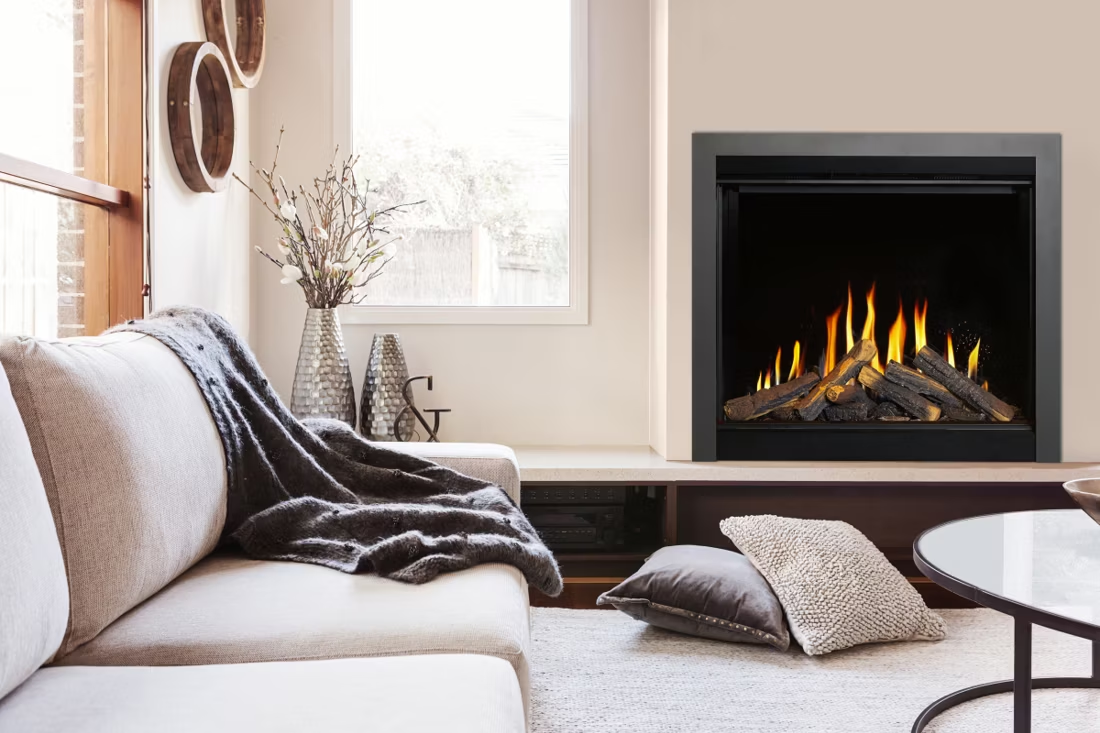
That's because electricity here isn't cheap. Nome Joint Utility System generates power locally from diesel and wind, and outlying villages draw power through Alaska Village Electric Cooperative—residential rates commonly run $0.45 to $0.65 per kWh before the state's Power Cost Equalization subsidy softens the bill for qualifying usage. An electric fireplace or wall unit makes sense in Nome County as targeted zone heat for a bedroom, addition, or living room—instant, thermostat-controlled warmth with no venting, no chimney, and none of the ash or smoke of a wood stove—but it's rarely asked to carry a whole house through a Bering Strait winter on its own.
Three steps. No salesperson until you're ready.
Tell us about your project
Your zip code, your situation, and the fuel you're leaning toward—or let the answers point you to one.
See what's actually available
The brands dealers within 100 miles genuinely carry—real options, never a catalog mirage.
Get your dealer & Project Guide
A trusted local dealer, plus the free Project Guide & Parts List that names every component of the job.
Frequently Asked Questions
How much does an electric fireplace installation cost in Nome County?
A basic plug-in electric fireplace or insert, freight included, typically runs $800 to $1,800 installed in Nome—most of that cost is the unit and shipping via barge (May through October) or air freight the rest of the year, since there's no road access to the Lower 48 supply chain. A hardwired 240V unit with a dedicated circuit run by a licensed electrician pushes the total closer to $1,800 to $3,000, depending on how far the electrical panel is from the install location. Barge-season shipping is significantly cheaper than winter air freight, so timing a larger order to arrive before freeze-up can save real money.
What size electric fireplace or heater do I need for my home?
In Nome County, electric fireplaces are almost always sized as zone heat rather than whole-home heat, given how expensive it is to run electric resistance heat at local kWh rates. A single unit rated for 1,000 to 1,500 square feet will comfortably heat a bedroom, addition, or open living area, but it's meant to supplement—not replace—an oil furnace or wood stove burning local birch, spruce, or cottonwood. If you're trying to cover more square footage, most homeowners install two smaller zone units rather than one large one, so each room can be controlled independently and only heated when occupied.
Where can I find someone to install an electric fireplace in Nome?
Nome has a small number of licensed electrical contractors who handle both city work and jobs out in the villages, and most electric fireplace installs go through them rather than a big-box installer, since there isn't one within hundreds of miles. Plug-in units require no electrician at all, but hardwired 240V fireplaces need a permitted circuit run, and scheduling matters—contractors often batch village trips around barge deliveries, so ordering early and coordinating shipping with your installer saves both time and freight cost. For Teller, Brevig Mission, Shishmaref, and the other outlying communities, expect a travel charge on top of the install price.
What's the difference between an electric fireplace, insert, and wall heater?
An electric fireplace is a freestanding or built-in unit with a flame-effect display, usually plugged into a standard outlet or hardwired for higher output. An electric insert is designed to slide into an existing fireplace opening, but that's less common in Nome County since most homes here are stick-built on pilings or permafrost-safe foundations without a masonry firebox to convert. A wall-mounted panel heater skips the flame visual entirely and focuses purely on efficient zone heat, which is often the more practical choice for supplemental warmth in a bedroom or mudroom. Local dealers can walk through which fits your framing and electrical service.
Do I need a permit to install an electric fireplace in Nome?
A plug-in electric fireplace on a standard 120V outlet generally doesn't require a permit anywhere in Nome County. A hardwired 240V unit is different: within Nome city limits, an electrical permit is required through the City of Nome, and the work must be done by a licensed electrician. Outside city limits, in the unorganized borough villages, there's no local permitting authority, but National Electrical Code compliance still matters for safety and for homeowner's insurance—most reputable installers follow code whether or not a permit is technically required.
Will an electric fireplace work during a power outage?
No—an electric fireplace or heater goes dark the moment the grid drops, and that matters in Nome County, where Bering Sea storms can knock out power for hours at a time. Nome Joint Utility System keeps the city grid fairly stable with diesel and wind generation, but outlying villages served through Alaska Village Electric Cooperative can see longer outages during severe weather. For that reason, most homes here keep a wood stove or oil-fired heater as the backup heat source, with the electric fireplace handling everyday convenience and supplemental warmth rather than emergency heat.
How much does it cost to run an electric fireplace in Nome?
A typical 1,500-watt electric fireplace running at full output costs roughly $0.65 to $0.90 per hour at Nome's residential rates, which commonly run $0.45 to $0.65 per kWh before the state's Power Cost Equalization credit is applied to a portion of monthly usage. Run several hours a day through a long Bering Strait winter and that adds up quickly, which is exactly why most homeowners here treat electric fireplaces as targeted, thermostat-controlled zone heat rather than a full-time furnace replacement.
Electric heat vs. wood or oil—which should be my primary heat source in Nome County?
For whole-home heating through a brutally long, demanding winter, oil-fired furnaces and wood stoves burning local birch, spruce, and cottonwood remain the more economical primary choice in Nome County, given how high local electric rates run. Electric heat earns its place as supplemental warmth—a fireplace in the living room, a panel heater in a back bedroom—where the convenience of instant, no-mess heat outweighs the running cost for a few hours a day. Very few households here use electric resistance heat as their sole heat source; it's almost always paired with oil or wood.
Electric vs. pellet stove—which is right for my home in Nome County?
Pellet stoves burning bagged fuel from brands like Superior Pellet Fuels or Lignetics can offer a cheaper per-BTU cost than electric resistance heat, but pellets have to be shipped in by barge or air just like everything else, and running low mid-winter after barge season ends is a real risk in Nome County. Electric heat sidesteps that supply problem entirely—it runs on the local grid rather than a stockpile you have to plan around—but it comes with a higher per-hour running cost given local kWh rates. Many households split the difference: pellets or wood for steady background heat, electric for quick supplemental warmth where running a stove isn't practical.
Can I put a TV above my fireplace?
Yes—with an asterisk. Fireplaces are hot and TVs don't like heat. Either put a mantel between them to deflect rising warmth, or choose a fireplace with heat-management technology that creates a cool zone on the wall above—the wall stays around 125 degrees, barely warm, while the room still gets full heat. If you like clean lines and don't want a mantel, heat management is the answer.
Do electric fireplaces actually produce heat?
Yes—most put out around 4,800–5,000 BTUs from a standard outlet, which comfortably warms a bedroom, office, or den as a comfort-zone heater. What they won't do is carry a whole house the way wood, gas, or pellet can. Think of electric as ambiance-first with honest supplemental heat: flames on with no heat in July, flames plus warmth in January.
Does a fireplace add value to my home?
On average, a fireplace adds back to the home about the same amount you spent installing it. Add the monthly savings from heating the rooms you actually use instead of the whole house—often hundreds of dollars a year—and the value case is strong before you even count what a fire does for how your family uses the room.
Should the dealer who sells my fireplace also install it?
Ideally, yes. A fireplace project involves vent pipe, gas line, electrical, and often tile or stone. Hire three or four separate trades and you own the liability and the game of telephone between them. One company selling and installing means one accountable party, start to finish—ask about factory training, on-time completion records, and what happens if an inspection fails.
Stove and Fireplace Dealers in Nome County
Listings include WhyFire partner dealers, dealers we have verified as authorized for the brands we recommend, and established local businesses that carry hearth products. Every listing shows which one it is. The ones marked Preferred run on WhyFire's software, so they can show you real pricing and book your appointment right here. No manufacturer pays for placement. How we verify dealers →
Find your electric fireplace in Nome County.
Tell us about your home and heating setup, and we'll match you with a trusted local dealer plus a free Project Guide & Parts List—sized right for a Bering Strait winter.
Find Your Fireplace →