
Find the right fireplace for Nome County's arctic winters.
Wood, propane, pellet, and electric fireplace resources for Nome and the villages scattered across the Bering Strait region—from Teller to Unalakleet. Find the right unit for a roadless climate and connect with a trusted local hearth retailer.
Every Project Starts From One of These Five Situations
Arctic heat with no road to the outside world.
Nome County sits on the Bering Strait coast of the Seward Peninsula, in climate zone 8—the coldest zone in the U.S. building code system. Average winter lows hover around -2°F, but the heating season is what really sets this county apart: an extreme, year-round-feeling heating load more than double Fargo, North Dakota's total and well past Anchorage's. There's no road connecting Nome to the rest of Alaska—heating fuel, hardware, and hearth appliances arrive by barge during the short open-water season (June through October) or by air cargo the rest of the year. Birch is the local wood of choice for its BTU output and long, hot burns; spruce and cottonwood fill in as secondary or kindling wood, often cut under BLM permits on Seward Peninsula public land or gathered from Native corporation lands near the villages.
This hub covers hearth retailers, service technicians, and fuel suppliers serving Nome and the villages scattered across the census area—Teller, Brevig Mission, Golovin, White Mountain, Unalakleet, Savoonga, and Gambell among them. Most retailers and technicians are based in Nome itself and reach outlying villages by small aircraft rather than by truck. Pick your fuel below for local dealers, typical installed costs adjusted for freight, and the lead time you'll need before freeze-up closes the barge season.
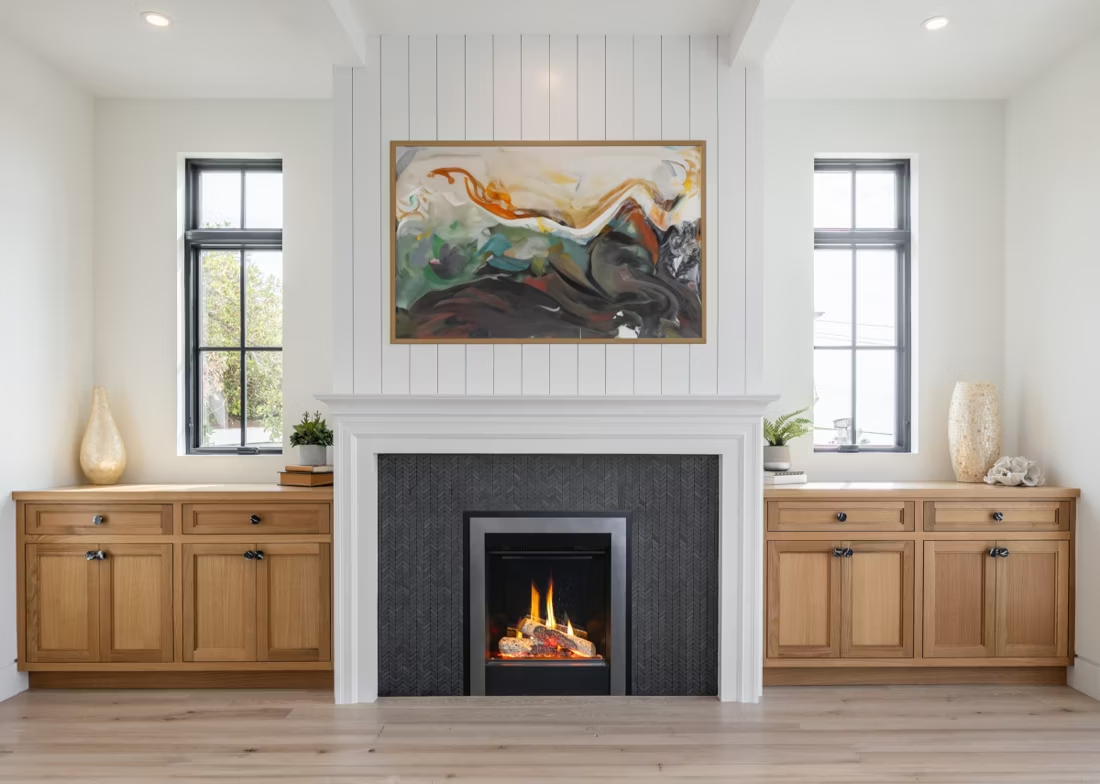
Four fuels. One honest answer for Nome County.
Three steps. No salesperson until you're ready.
Tell us about your project
Your zip code, your situation, and the fuel you're leaning toward—or let the answers point you to one.
See what's actually available
The brands dealers within 100 miles genuinely carry—real options, never a catalog mirage.
Get your dealer & Project Guide
A trusted local dealer, plus the free Project Guide & Parts List that names every component of the job.
Frequently Asked Questions
Which heating fuel makes the most sense in Nome County?
It depends on the home and how you get your fuel. Wood, mostly birch with spruce and cottonwood filling in, remains a mainstay because it can be self-cut under BLM permit or gathered on Native corporation land—a real cost advantage when everything else has to be barged or flown in. Propane is the convenience fuel, delivered by barge in summer or air cargo the rest of the year, and it keeps working through outages without a woodpile. Pellet stoves (Superior Pellet Fuels, Lignetics) split the difference—less labor than cordwood, but you're buying bagged fuel on a shipping schedule, so storage space matters. Electric is mostly supplemental here: the local utility generates power from diesel, which keeps electric rates high, so electric fireplaces tend to serve bedrooms and ambiance rather than whole-home heat. Most Nome County households lean on wood or propane as the primary heater, with electric or pellet filling secondary rooms.
Do I need a permit to install a fireplace or stove in Nome County?
Within Nome city limits, yes—the City of Nome requires permits for new wood stove, wood insert, and propane appliance installations, plus separate sign-off for any gas line work. In the outlying villages, formal building permitting is often handled informally through the village council or IRA office rather than a dedicated building department, so it's worth checking with your local council before installing. Regardless of location, an EPA 2020 NSPS-certified wood stove is worth choosing over an older uncertified unit—replacement gaskets, glass, and parts are far easier to source when you're waiting on the next barge or flight. Electrical work for hardwired electric fireplaces should go through a licensed electrician familiar with the local grid.
Are there wood-burning restrictions or air quality concerns in Nome County?
No—Nome County doesn't deal with the winter temperature inversions or non-attainment status that trap smoke in some interior Alaska valleys. Steady wind off the Bering Strait keeps the air moving. That said, with a heating season that stretches close to nine months and one of the heaviest winter heating loads anywhere in the country, a well-maintained EPA-certified stove burning seasoned birch will use noticeably less wood—and produce less visible smoke—than an old uncertified stove. Worth factoring in given how much wood a Nome winter actually burns.
Will one Nome dealer carry every fuel type I might want?
With a service population under 10,000 spread across a roadless region, Nome County doesn't support specialized single-fuel showrooms the way a larger market would. Most local retailers stock a mix of wood stoves, propane appliances, and pellet stoves, and order electric units direct from the manufacturer as needed. Expect to work from a catalog and a lead time rather than a walk-in showroom floor, and plan orders around the barge schedule—appliances ordered in winter may not physically arrive until the following summer's shipping season.
How does installation and service work if I live in one of the villages outside Nome?
Technicians based in Nome typically fly out to Teller, Brevig Mission, Golovin, White Mountain, Unalakleet, and the island communities of Savoonga and Gambell by small aircraft, weather permitting. Plan to schedule further ahead than you would in Nome proper, budget for the flight cost on top of labor, and build in flexibility—fog and wind regularly ground flights along the Seward Peninsula and Norton Sound coast. Many village households handle routine wood stove upkeep themselves and reserve a technician visit for propane line work or more complex repairs.
What does a fireplace or stove installation cost in Nome County?
Costs run well above Lower 48 averages because every appliance and every part ships in by barge or air freight. Wood stove or insert installs typically run $6,000–$13,000 including chimney and venting work. Propane fireplaces, inserts, or stoves run $6,500–$15,000 depending on tank setup and venting. Pellet stoves run $6,500–$11,000, reflecting freight costs on both the appliance and the bagged pellet fuel (Superior Pellet Fuels, Lignetics) that has to come in by barge. Electric fireplaces are the exception—units run $300–$4,000, with labor kept lower since most installs are plug-in rather than hardwired, though any wiring work should factor in the local utility's higher-than-average electric rates.
Does a fireplace add value to my home?
On average, a fireplace adds back to the home about the same amount you spent installing it. Add the monthly savings from heating the rooms you actually use instead of the whole house—often hundreds of dollars a year—and the value case is strong before you even count what a fire does for how your family uses the room.
How much should I budget for a fireplace?
For an average home—covering the fireplace, the vent pipe, and basic installation—a budget between $3,900 and $5,500 gives you a lot of options across wood, gas, and pellet. By the time you add finish work, gas line, and electrical, the average complete installation lands between $5,000 and $12,000 all-in. In a remodel or new build, a good rule is to put about 2.5% of the total project cost toward the fireplace.
Wood, gas, pellet, or electric—how do I choose?
Match the fuel to your life, not the other way around. Wood: lowest fuel cost and total power-outage independence, but you're hauling and stacking. Gas: press a button, set a thermostat, no maintenance to speak of. Pellet: wood economics with automatic feeding, in exchange for weekly cleaning and a need for electricity. Electric: plugs in anywhere with honest supplemental heat. Nobody regrets the fuel that fits how they actually live.
I know I want a fireplace—where do I actually start?
Do two things today: snap a photo of the wall or fireplace you want to transform, and take a tape measure to the space—width, height, depth. Those two artifacts answer most of a hearth professional's first questions. Then settle fuel (wood, gas, pellet, or electric) and set a realistic budget: $3,900–$5,500 covers fireplace, vent, and basic install for most homes.
Stove and Fireplace Dealers in Nome County
Listings include WhyFire partner dealers, dealers we have verified as authorized for the brands we recommend, and established local businesses that carry hearth products. Every listing shows which one it is. The ones marked Preferred run on WhyFire's software, so they can show you real pricing and book your appointment right here. No manufacturer pays for placement. How we verify dealers →
Get your Nome County heating project locked in before freeze-up.
Find My Fireplace matches you with a trusted Nome-area dealer and puts together a free Project Guide & Parts List—the exact parts, including the vent kit, and a local dealer who can actually get your wood, propane, pellet, or electric project installed before the barge season closes.
Find Your Fireplace →