
Warmth That Doesn't Wait on the Barge Schedule.
Ketchikan runs on propane, not pipeline natural gas, and the right fireplace or insert delivers steady heat through the island's long, damp heating season. Find the right unit and connect with a trusted local dealer.
Every Project Starts From One of These Five Situations
No gas pipeline reaches the island. Propane fills the gap.
Ketchikan sits on Revillagigedo Island in the Alaska Panhandle, reachable only by air or sea, with no road connection to the rest of the state or the Lower 48. Winters here are mild by Alaska standards, with an average low around 32°F, but the heating season is long and relentless—you'll want your fireplace running for the better part of the year, driven less by extreme cold than by the persistent, damp chill of one of the wettest cities in the country, with roughly 150 inches of rain annually.
There is no natural gas main serving Ketchikan Gateway Borough, so every gas fireplace, insert, or stove installed here runs on propane, delivered in bulk tanks that arrive by barge along with most of the island's other fuel and freight. Electric service through Ketchikan Public Utilities is comparatively affordable for Alaska—the borough's hydroelectric system at Silvis Lake and Beaver Falls keeps residential rates around 12.5 cents per kWh, well below the diesel-generated rates common in rural Alaska. Even so, propane fireplaces remain a popular choice for instant zone heat, dry warmth in a persistently damp climate, and backup heat when storm-driven power outages hit the line.
Three steps. No salesperson until you're ready.
Tell us about your project
Your zip code, your situation, and the fuel you're leaning toward—or let the answers point you to one.
See what's actually available
The brands dealers within 100 miles genuinely carry—real options, never a catalog mirage.
Get your dealer & Project Guide
A trusted local dealer, plus the free Project Guide & Parts List that names every component of the job.
Frequently Asked Questions
How much does a gas fireplace installation cost in Ketchikan?
A typical propane fireplace installation in Ketchikan runs $5,000 to $12,000, depending on the unit, whether a propane tank is already in place, and how much gas line and venting work is needed. Because most fireplace units, venting components, and tanks arrive by barge or air freight rather than by truck, expect somewhat higher costs than a comparable Lower 48 install, along with longer lead times—often a few extra weeks to get the specific model or parts on-island. A direct-vent insert into an existing masonry fireplace with a tank already on the property sits at the lower end; new gas line runs, a fresh propane tank install, and custom venting push toward the higher end.
Does Ketchikan have natural gas service, or is everything propane?
Everything is propane. There is no natural gas pipeline serving Ketchikan or anywhere in Ketchikan Gateway Borough, so every gas fireplace, range, or water heater on the island runs on propane delivered by bulk tank. Fuel typically arrives on regional fuel barges from distributors such as Petro Marine Services, common across Southeast Alaska, and is trucked to homes for tank fill-ups. Most residential setups use an above-ground 100- to 500-gallon tank sized to the home's total propane load, refilled on a regular delivery schedule rather than drawn from a utility main.
Will my gas fireplace still work during a power outage?
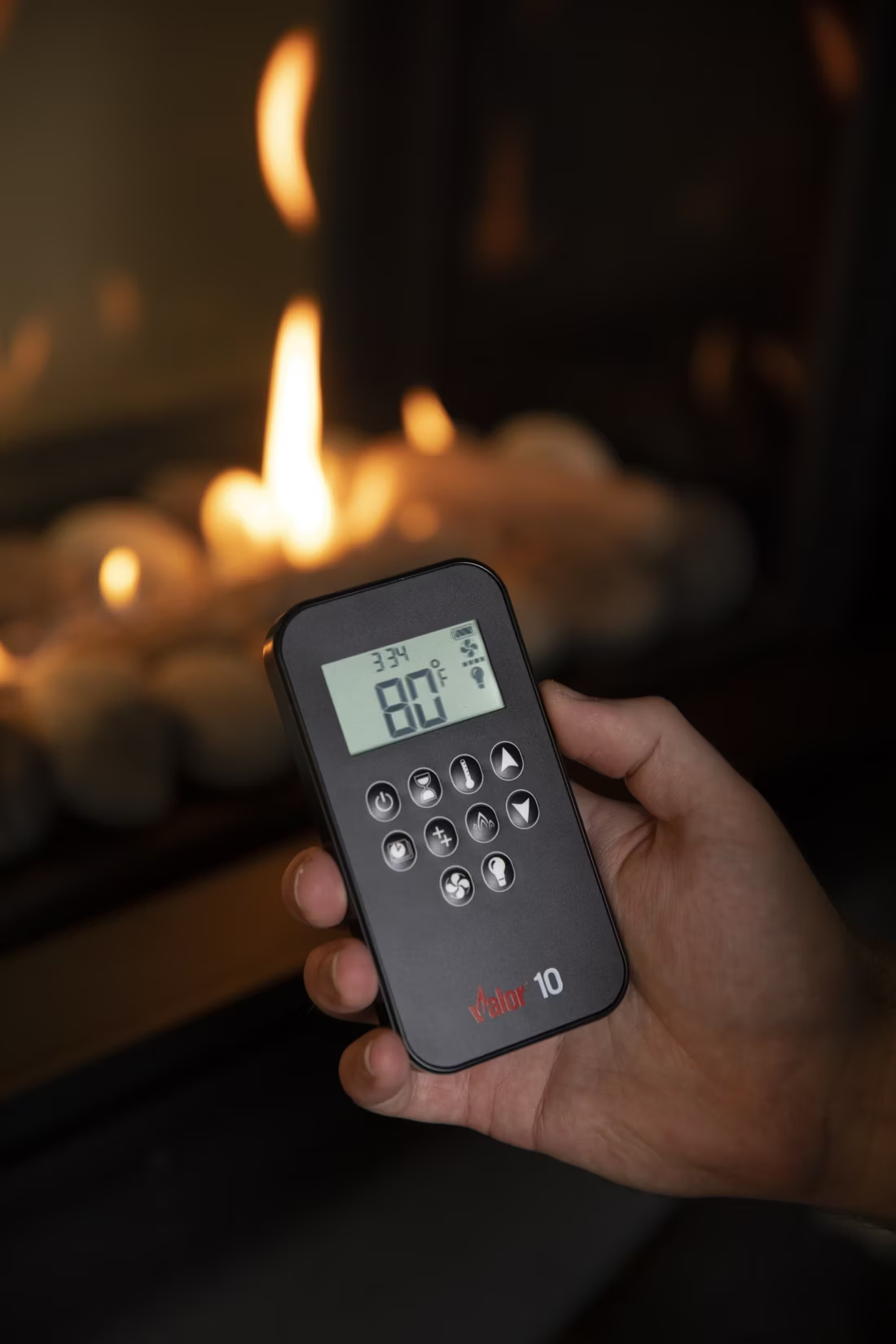
In most cases, yes. Fireplaces with IPI (intermittent pilot ignition) run on battery backup and light on demand even when the grid is down. Ketchikan Public Utilities' hydroelectric system is generally reliable, but fall and winter windstorms moving through Tongass Narrows and the surrounding channels do knock out lines occasionally, usually for a few hours at a time. Valor fireplaces take a different approach worth knowing about—their pilot generates its own electricity through the thermocouple, so there are no batteries to remember or replace. For an island where storm outages are a real possibility, that's a meaningful advantage.
What's the difference between a gas fireplace, insert, and stove for my Ketchikan home?
A gas fireplace is a fully built-in unit framed into a wall, best suited to new construction or a major remodel—common in newer homes out toward North Tongass Highway or Herring Cove. A gas insert drops into an existing masonry fireplace and uses that chimney as its vent path, which makes it a strong fit for the older homes near downtown and Creek Street that still have their original wood-burning fireplaces. A gas stove is a freestanding unit that sits on the floor like a wood stove but burns propane—a good option for a room without any existing hearth. Most local dealers will walk your specific layout before recommending one over another.
Do I need a permit to install a gas fireplace in Ketchikan?
Yes—the Ketchikan Gateway Borough Building Department requires a permit for new gas fireplace and propane line installations, and the gas line work itself should be done by a licensed gas fitter. Because parts, inspectors, and sometimes the technicians themselves are working around ferry and flight schedules to and from the island, it's worth building a few extra weeks into your project timeline compared to a mainland install. A reputable local dealer will handle the permitting and coordinate the gas fitter as part of the job.
Are vent-free (ventless) gas fireplaces a good fit for Ketchikan's climate?
Generally, no—direct-vent units are the better and more code-friendly choice here. Vent-free fireplaces release water vapor and combustion byproducts directly into the room, which is a tough match for a climate that already sees around 150 inches of rain a year and where indoor moisture and mold management are ongoing concerns in older, poorly ventilated homes. Direct-vent gas fireplaces exhaust combustion gases outside through a sealed system, keeping indoor air quality unaffected regardless of how wet it is outside. Most local installers steer Ketchikan homeowners toward vented units for this reason.
How often should my gas fireplace be serviced in Ketchikan?
Plan on an annual inspection, same as anywhere—a technician checks the burner, pilot assembly, venting, and gas connections, and cleans the glass and interior. The practical difference in Ketchikan is scheduling: with a population just over 8,000 and a limited number of certified hearth technicians serving the island, appointment slots can fill up heading into the fall rainy season when everyone's fireplace suddenly matters again. Booking service in late summer, before the heaviest rains and shorter days set in, is the easiest way to avoid a wait. Expect to pay somewhere in the $150–$250 range for a standard annual inspection.
Gas vs. wood—which is right for my Ketchikan home?
Wood heat has a real place here—birch, spruce, and cottonwood are all common locally, and cutting permits through the Tongass National Forest are free from May through September. The catch is seasoning: in a rainforest climate averaging around 150 inches of rain a year, firewood needs covered, well-ventilated storage and often a full season or more to dry properly before it burns clean. Propane sidesteps that problem entirely—no splitting, no covered woodpile, no moisture management, just consistent dry heat on demand. Many Ketchikan homes end up with both: a wood stove for backup heat and ambiance, and a propane fireplace or insert as the primary daily heat source.
Gas vs. electric heat—which makes more sense given Ketchikan's hydroelectric power?
Ketchikan is in an unusual position for Alaska: because Ketchikan Public Utilities runs largely on hydroelectric power from Silvis Lake and Beaver Falls, residential rates sit around 12.5 cents per kWh—far below the diesel-driven rates many rural Alaska communities pay. That makes electric fireplaces and space heaters a genuinely reasonable supplemental option here, which isn't true everywhere in the state. That said, propane still has an edge for real heat output and for keeping a room warm during the storm-related power outages that do happen on the island a few times a winter. Many homeowners use a propane fireplace as primary zone heat in the main living space and lean on inexpensive electric heat elsewhere in the house.
Why is my open fireplace making my house colder?
Open fireplaces suck—literally. As the fire burns, it consumes air your furnace already paid to heat and pulls it out through the chimney, so the house is actually colder after the fire goes out than before you lit it. An insert fixes this: it seals the chimney, puts fixed glass across the front, and turns that hole in your house into a real heat source.
Why is a fireplace insert so efficient?
An insert does two things: it seals the chimney completely, so you stop losing air you already paid to heat, and it radiates warmth into the room through the firebox and glass. Most add a heat-exchange fan that pulls cool room air underneath, wraps it around the hot firebox, and pushes it back out warm. Your home is more efficient before you've even lit the first fire.
How much should I budget for a fireplace?
For an average home—covering the fireplace, the vent pipe, and basic installation—a budget between $3,900 and $5,500 gives you a lot of options across wood, gas, and pellet. By the time you add finish work, gas line, and electrical, the average complete installation lands between $5,000 and $12,000 all-in. In a remodel or new build, a good rule is to put about 2.5% of the total project cost toward the fireplace.
Does a fireplace add value to my home?
On average, a fireplace adds back to the home about the same amount you spent installing it. Add the monthly savings from heating the rooms you actually use instead of the whole house—often hundreds of dollars a year—and the value case is strong before you even count what a fire does for how your family uses the room.
Nearby Dealers
Hearth shops serving Ketchikan and the surrounding area. Every listing shows whether it is a WhyFire partner, a dealer we have verified as authorized for the brands we recommend, or a local business carrying hearth products. No manufacturer pays for placement. How we verify dealers →
Bernie's Sales
Tyee Building Supplies Ltd
Find your gas fireplace in Ketchikan.
Tell us about your home and heating goals, and we'll match you with a trusted local Ketchikan dealer and send over your free Project Guide & Parts List—the exact parts, including the vent kit and propane tank sizing, needed for your install.
Find Your Fireplace →