
Reliable heat for a rainforest island, no barge delivery required.
Wood, gas, pellet, and electric fireplace resources for Ketchikan and every community around it in Ketchikan Gateway Borough—matched to a local dealer who knows what actually ships, installs, and holds up here.
Every Project Starts From One of These Five Situations
Marine climate heating in Southeast Alaska's panhandle.
Ketchikan Gateway Borough sits at the southern tip of the Alaska panhandle, wedged between the Tongass National Forest and the Inside Passage. The climate here is Zone 7 but mild by Alaska standards—average winter lows hover around 32°F, not the deep subzero cold of Fairbanks or the Interior. What drives heating demand instead is 6,476 heating degree days spread across a long, wet, gray season: heavy rain, persistent damp, and a heating season that runs nearly year-round for many households, similar in duration to Duluth, Minnesota, even if the lows aren't as severe. Birch, spruce, and cottonwood are the local wood species, much of it self-cut under Tongass National Forest permits or sourced from borough land.
Because Ketchikan is accessible only by air or ferry, not road, hearth product availability runs through a small number of local dealers and whatever comes in on the barge. That makes matching with the right retailer more important than it would be in a drive-anywhere market—a dealer who already stocks or can reliably order the parts for your install saves weeks of waiting. This hub covers wood, gas, pellet, and electric options for Ketchikan, Saxman, and the rest of the borough, with local retailers, technicians, and fuel suppliers below.
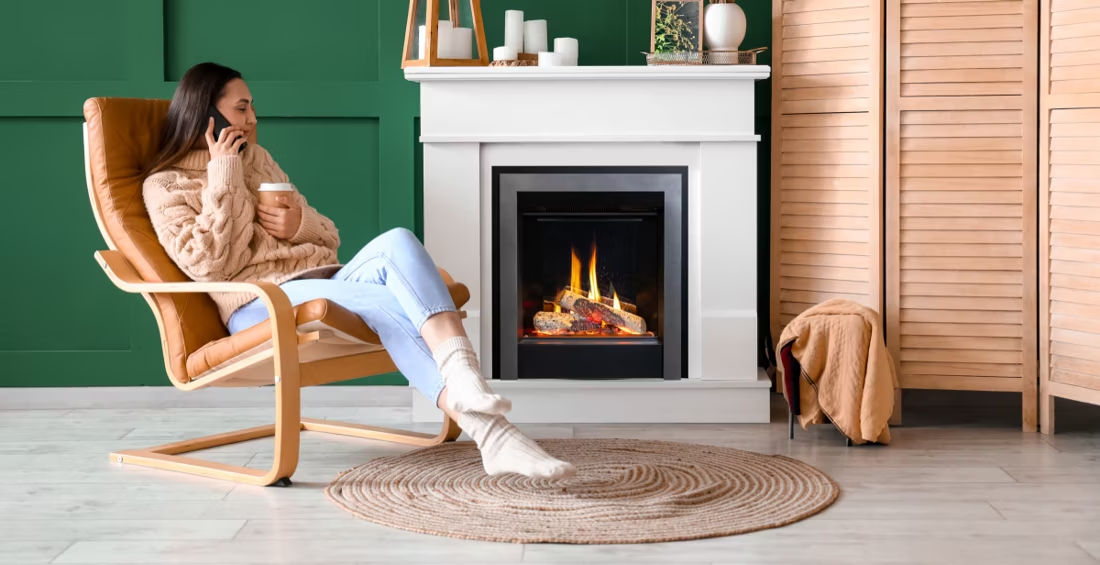
Four fuels. One honest answer for Ketchikan Gateway County.
Wood
12 models available near Ketchikan Gateway County.
Find your wood stove →Gas
See what's available near Ketchikan Gateway County.
Find your gas fireplace →Pellet
See what's available near Ketchikan Gateway County.
Find your pellet stove →Electric
See what's available near Ketchikan Gateway County.
Find your electric fireplace →Three steps. No salesperson until you're ready.
Tell us about your project
Your zip code, your situation, and the fuel you're leaning toward—or let the answers point you to one.
See what's actually available
The brands dealers within 100 miles genuinely carry—real options, never a catalog mirage.
Get your dealer & Project Guide
A trusted local dealer, plus the free Project Guide & Parts List that names every component of the job.
Frequently Asked Questions
Which fuel makes the most sense in Ketchikan Gateway Borough?
It depends on your home and your tolerance for barge-dependent supply chains. Wood is the traditional choice and still common—birch, spruce, and cottonwood are cut locally under Tongass National Forest permits, and wood heat keeps working if the ferry or barge schedule slips. Gas (almost entirely propane here, since there's no natural gas utility) is popular for its low-maintenance, instant-heat convenience, but propane tanks need refilling on a barge-dependent schedule, so many households keep a wood or pellet backup. Pellet stoves are a solid middle option—Superior Pellet Fuels and Lignetics both supply the region—but buying in bulk when barge shipments arrive matters more here than in a market with regular truck delivery. Electric fireplaces work well for supplemental heat and ambiance, especially given Ketchikan's hydro-based electric utility, but they're not typically the primary heat source through a wet 6,476-HDD season.
Do I need a permit to install a fireplace or stove in Ketchikan Gateway Borough?
Yes, in most cases. New wood stoves, wood inserts, gas appliances, gas inserts, and pellet stoves generally require a building permit, and gas installations need a separate permit and licensed gas-fitter for the propane connection. Within the City of Ketchikan, permits are handled through the city; outside city limits in the unincorporated borough, requirements can differ, so it's worth confirming with your installer before work starts. Electric fireplaces usually don't need a permit unless you're doing a built-in installation with new wiring. Most local retailers we match you with handle the permitting as part of the installation, which is one less thing to manage on an island where scheduling inspectors can take extra lead time.
Is wood burning restricted for air quality reasons in Ketchikan?
No—Ketchikan Gateway Borough has no formal air quality non-attainment designation or winter burn-ban program, unlike inversion-prone interior valleys elsewhere in the West. The borough's marine location means air tends to mix and clear rather than trap smoke the way a bowl-shaped inland basin might. That said, newer EPA-certified wood stoves still burn cleaner and more efficiently in the region's damp climate, which matters practically: seasoned, properly dried birch and spruce burn hotter and produce less visible smoke than the wetter wood common in a rainforest climate, so a well-designed stove and good fuel practices go a long way even without a regulatory mandate.
Can one local retailer handle all four fuel types in the borough?
Coverage varies more here than in larger mainland markets, simply because there are fewer dealers to begin with. Some Ketchikan-area retailers carry wood, gas, and pellet units and can special-order electric fireplaces; others specialize more narrowly, particularly around gas and propane appliance service given how common propane heat is on the island. Because inventory depends on what's already arrived by barge or what can be ordered on the next scheduled shipment, we match you with whichever local dealer actually has, or can get, the parts for your specific project rather than assuming any one shop stocks everything.
How does fireplace service work in the outlying parts of the borough?
Most technicians are based in Ketchikan itself and travel out along the North Tongass and South Tongass Highway corridors to reach homes outside city limits. Because the borough isn't connected to the mainland road network, there's no long-distance rural driving the way there might be in a larger Lower 48 county—but ferry schedules and weather can still affect service timing, especially in winter storms common to the Inside Passage. Booking chimney sweeps and gas inspections in late summer or early fall, before the wet season heating months, tends to be easier than trying to get emergency service scheduled mid-winter.
What does fireplace installation typically cost across fuel types in Ketchikan Gateway Borough?
Costs run somewhat higher here than in mainland markets with easy freight access, largely due to barge shipping on materials and parts. Wood stove or insert installation typically runs $5,000–$10,000, including chimney work. Gas (propane) fireplace, insert, or stove installation runs roughly $5,000–$12,000 depending on tank setup and venting. Pellet stove or insert installation typically runs $5,000–$8,000. Electric fireplace units run $200–$3,000 for the unit itself, plus $400–$1,200 in labor for anything beyond simple plug-and-play placement. Your matched local dealer can give you an exact figure once they've seen your home and confirmed what's currently available to order.
Can I install a fireplace myself?
If you're putting a fire in your house on purpose, it's best to work with an expert. Unless you're genuinely experienced in framing, gas line, vent pipe, and the national code on clearances to combustibles, have a professional do it—and ideally the same company that sells you the fireplace, so warranty, service, and liability all live under one roof.
Does a fireplace add value to my home?
On average, a fireplace adds back to the home about the same amount you spent installing it. Add the monthly savings from heating the rooms you actually use instead of the whole house—often hundreds of dollars a year—and the value case is strong before you even count what a fire does for how your family uses the room.
Wood, gas, pellet, or electric—how do I choose?
Match the fuel to your life, not the other way around. Wood: lowest fuel cost and total power-outage independence, but you're hauling and stacking. Gas: press a button, set a thermostat, no maintenance to speak of. Pellet: wood economics with automatic feeding, in exchange for weekly cleaning and a need for electricity. Electric: plugs in anywhere with honest supplemental heat. Nobody regrets the fuel that fits how they actually live.
Can a fireplace actually lower my heating bill?
Yes—by creating a comfort zone. A furnace heats every square foot of the house just to warm the one room you're in; a gas fireplace on low burns roughly a sixth of the gas a typical furnace does. Set the furnace around 55–60 degrees as a baseline, then heat the rooms your family actually uses. Families who heat this way commonly save $20–$60 a month.
Stove and Fireplace Dealers in Ketchikan Gateway County
Listings include WhyFire partner dealers, dealers we have verified as authorized for the brands we recommend, and established local businesses that carry hearth products. Every listing shows which one it is. The ones marked Preferred run on WhyFire's software, so they can show you real pricing and book your appointment right here. No manufacturer pays for placement. How we verify dealers →
Bernie's Sales
Tyee Building Supplies Ltd
Get your Project Guide & Parts List for Ketchikan Gateway Borough.
Tell us your fuel and your home, and we'll match you with a trusted local dealer and send a free Project Guide & Parts List—the exact parts, including the vent kit, and the dealer we recommend for your project in the borough.
Find Your Fireplace →