
Add clean, instant heat to your Ketchikan Gateway home.
No chimney, no barge-delivered fuel, no venting—just plug-in warmth for the long, damp heating season around Ketchikan, Saxman, and Ward Cove. Find the right unit and connect with a trusted local dealer.
Every Project Starts From One of These Five Situations
Reliable warmth, powered by Ketchikan's own hydro grid.
Ketchikan Gateway Borough sits wedged between the Tongass National Forest and the Inside Passage, and its climate reads differently than most of Alaska: winter lows average around 32°F, mild by any statewide comparison, but the heating season stretches on and on because the cold, wet weather never really lets go. Rain falls on more than 200 days a year here, and that persistent damp chill is what drives heating demand across Ketchikan, Saxman, Herring Cove, and the North Tongass Highway corridor—not deep-freeze cold, but a season that just won't quit.
Ketchikan Public Utilities runs one of the cleanest and most affordable electric grids in coastal Alaska, drawing power from local hydro sources at Silvis Lake and Beaver Falls along with interties to the Swan Lake-Tyee Lake system. That makes electric heat genuinely practical here—a real alternative to the barge-dependent propane and heating oil deliveries that many island and mainland communities in the borough rely on. An electric fireplace or insert needs no chimney, no fuel storage, and no delivery schedule; it plugs in or wires into a dedicated circuit and runs on power the borough already generates close to home.
Three steps. No salesperson until you're ready.
Tell us about your project
Your zip code, your situation, and the fuel you're leaning toward—or let the answers point you to one.
See what's actually available
The brands dealers within 100 miles genuinely carry—real options, never a catalog mirage.
Get your dealer & Project Guide
A trusted local dealer, plus the free Project Guide & Parts List that names every component of the job.
Frequently Asked Questions
How much does an electric fireplace installation cost in Ketchikan Gateway Borough?
Electric fireplaces are the least expensive hearth option to install in the borough, typically running $300 to $1,500 depending on whether you choose a plug-in insert that drops into an existing frame or a hardwired 240V built-in unit that needs a dedicated circuit. There's no chimney, no venting, and no gas line to run, which keeps labor minimal compared to wood or gas projects elsewhere around Ketchikan. A local electrician or hearth dealer can tell you within a few minutes whether your existing wiring supports a hardwired unit or whether a simple plug-in model is the more practical route.
Do I need a permit to install an electric fireplace in Ketchikan?
A standard plug-in electric fireplace or insert generally doesn't require a permit since it's no different than plugging in any other appliance. A hardwired built-in unit that needs a new 240V circuit typically does require an electrical permit, since it involves adding a circuit to your home's panel. Any licensed electrician working in Ketchikan Gateway Borough can pull that permit as part of the job—it's a quick step, not a hurdle, and most local dealers coordinate it directly with the installer.
Will an electric fireplace keep working during a power outage?
No—and this is worth being honest about. An electric fireplace runs entirely on grid power, so if a winter storm off the Inside Passage knocks out KPU service, the unit goes dark along with everything else. That's part of why so many homes around Ketchikan, Saxman, and Ward Cove keep a wood stove as backup heat, burning birch, spruce, or cottonwood cut under a free Tongass National Forest permit between May and September. If backup heat during outages matters to you, plan on an electric fireplace for daily comfort and ambiance, and a wood stove or heater for the nights the grid goes down.
What size electric fireplace or insert do I need?
Most electric fireplaces are built for supplemental zone heating rather than whole-home output, so sizing is less about square footage and more about the room. A compact insert (750–1,500 watts) comfortably takes the edge off a bedroom or den during the long damp season here, while larger built-in units (1,500 watts and up, often with dual heat settings) can noticeably supplement a living room alongside baseboard or forced-air heat. Given how many hours of heating the borough's 6,476 degree days actually demand, most homeowners here choose electric fireplaces to offset baseboard costs in the room they use most, not to replace whole-house heat.
Electric fireplace vs. baseboard heat—which is more efficient in Ketchikan?
Both convert nearly all their electricity to heat, so efficiency at the unit level is similar. The real difference is control and comfort: an electric fireplace heats the specific room you're in on demand, with visible flame effect, while whole-house baseboard heat runs continuously to maintain a set temperature everywhere. In a borough where KPU's hydro power keeps electric rates relatively favorable compared to fuel-oil heating, many homeowners use an electric fireplace to turn down baseboard heat in the room they're using and rely on the fireplace for the bulk of comfort there—cutting overall electric use without sacrificing warmth.
Does an electric fireplace need venting like a gas or wood unit?
No. Electric fireplaces produce no combustion byproducts, so there's no chimney, no flue, and no makeup air requirement—a major advantage in older Ketchikan homes where retrofitting venting can be difficult given the borough's steep, rain-soaked terrain. That's also why electric units install faster and cheaper than wood or gas alternatives: there's no masonry work, no Class A pipe, and no roof penetration to worry about.
What will an electric fireplace cost to run each month in Ketchikan?
Running cost depends on wattage and hours of use, but a typical 1,500-watt unit run for four to six hours an evening during the heating season adds roughly $15 to $30 a month to a KPU bill, thanks to the borough's hydro-based rates being lower than diesel-generated power common elsewhere in coastal Alaska. Running the same unit as a near-constant supplemental heat source in a single room costs more, but still comes in well below heating that same space with baseboard alone.
Electric vs. wood—which makes more sense for my home?
Wood offers real backup heat during power outages and taps into the abundant, free cutting permits available through the Tongass National Forest between May and September—birch, spruce, and cottonwood are all common locally. But wood also means chimney maintenance, ash cleanup, and fuel storage in a climate where dry, covered storage is a genuine challenge given how much it rains here. Electric offers zero fuel handling, instant on-off convenience, and pairs naturally with KPU's clean hydro grid—but it goes dark in an outage. Many households in the borough run both: electric for daily comfort and low-hassle warmth, wood as the fallback when the power goes out.
Is an electric fireplace a good fit for a rental or older home in Ketchikan?
Often, yes. Plug-in electric inserts are one of the few hearth upgrades that don't require any structural or venting changes, which matters in the borough's older housing stock and in rental units where landlords are hesitant to approve chimney or gas line work. A tenant or owner can add a plug-in electric fireplace to an existing fireplace opening or as a standalone unit without touching the building's structure at all, making it a practical option for the borough's many older homes around downtown Ketchikan and Saxman.
Can I put a TV above my fireplace?
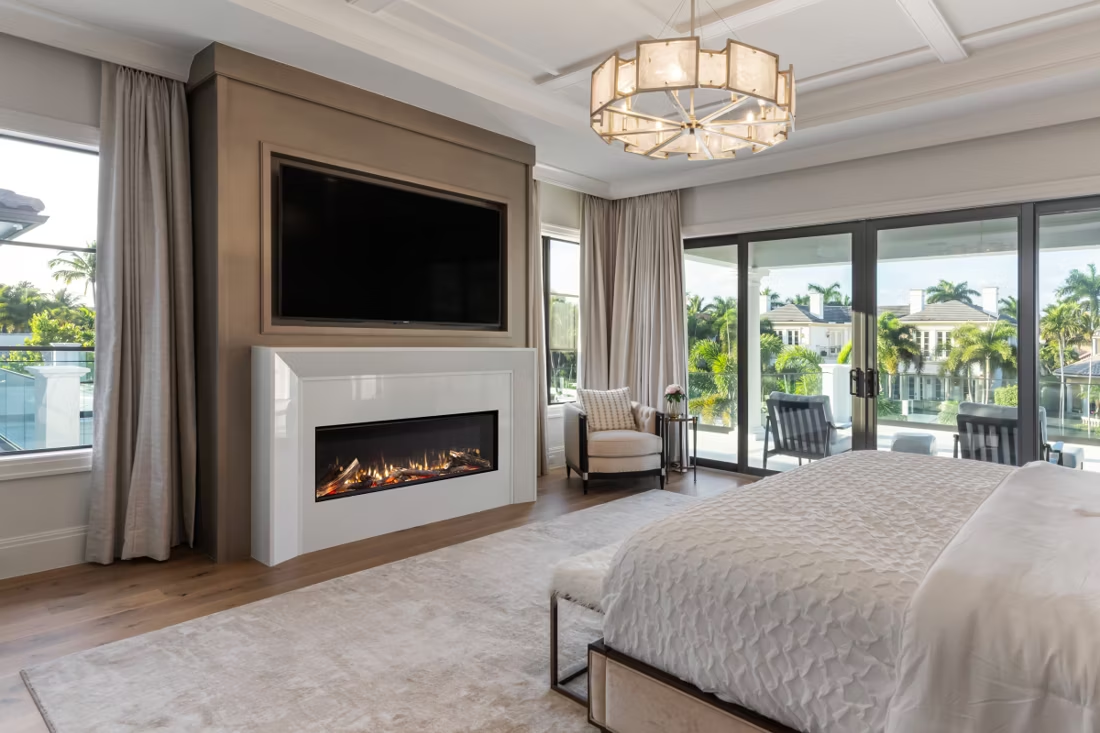
Yes—with an asterisk. Fireplaces are hot and TVs don't like heat. Either put a mantel between them to deflect rising warmth, or choose a fireplace with heat-management technology that creates a cool zone on the wall above—the wall stays around 125 degrees, barely warm, while the room still gets full heat. If you like clean lines and don't want a mantel, heat management is the answer.
How much does an electric fireplace cost to run?
With the heater on, a typical unit draws about 1,500 watts—at average electric rates that's roughly 20 cents an hour. Run the flame effect alone and it costs pennies; the flames are LED-driven and use about as much power as a light bulb. There's no pilot light, no fuel delivery, and essentially no maintenance.
How much should I budget for a fireplace?
For an average home—covering the fireplace, the vent pipe, and basic installation—a budget between $3,900 and $5,500 gives you a lot of options across wood, gas, and pellet. By the time you add finish work, gas line, and electrical, the average complete installation lands between $5,000 and $12,000 all-in. In a remodel or new build, a good rule is to put about 2.5% of the total project cost toward the fireplace.
What is an in-home preview and do I need one?
It's a visit where a hearth professional measures your space, confirms the model you picked actually works in your home, and walks the specs—framing, gas line, venting, finish work—before anything is ordered. Some details you just can't know until you see the house. Never make a down payment without one; it's the single most-skipped step that burns buyers.
Stove and Fireplace Dealers in Ketchikan Gateway County
Listings include WhyFire partner dealers, dealers we have verified as authorized for the brands we recommend, and established local businesses that carry hearth products. Every listing shows which one it is. The ones marked Preferred run on WhyFire's software, so they can show you real pricing and book your appointment right here. No manufacturer pays for placement. How we verify dealers →
Bernie's Sales
Tyee Building Supplies Ltd
Find your electric fireplace in Ketchikan Gateway.
Tell us a bit about your home and we'll put together a free Project Guide & Parts List for your electric fireplace project—matched with a trusted local dealer who knows Ketchikan Gateway Borough homes.
Find Your Fireplace →