
Keep Your Family Warm and Safe—No Matter What
With a long, demanding heating season lasting most of the year and Matanuska Electric Association rates near 23 cents per kWh, wood heat is a working necessity in the Mat-Su Valley, not a luxury. Find the right stove and connect with a trusted local dealer.
Every Project Starts From One of These Five Situations
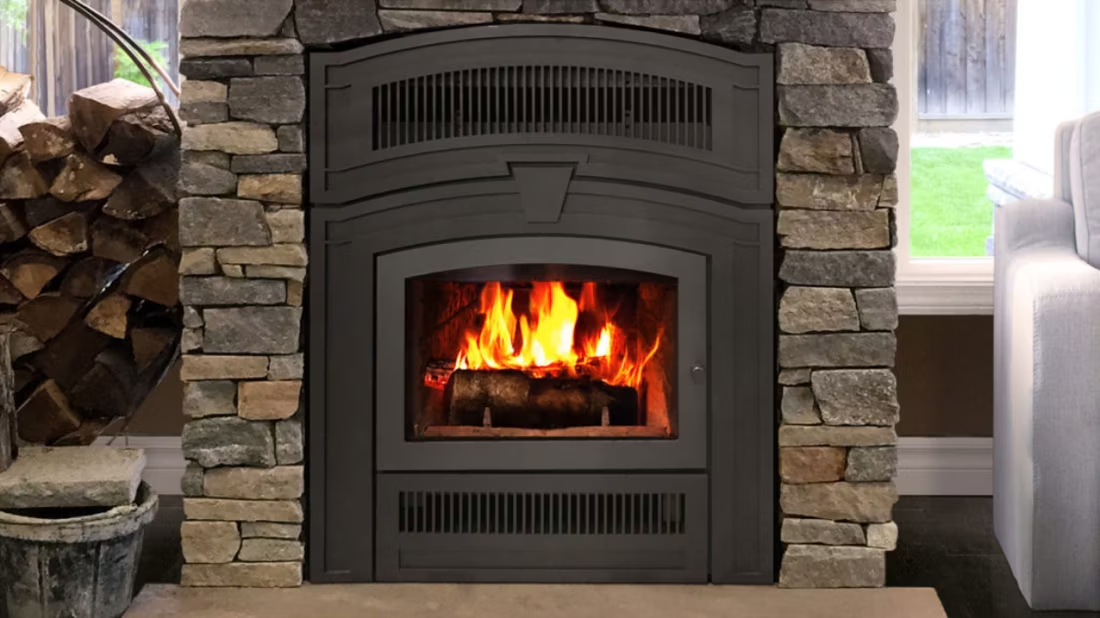
Wood is the backbone of heat in the Mat-Su Valley.
Farm Loop sits at 486 feet in the Matanuska-Susitna Borough, classified as Climate Zone 7 with an average winter low of 8°F and a long, punishing heating season—colder overall than a typical winter in International Falls, Minnesota. Burning season here stretches from September through May, and most homes in the Borough rely on wood, either as primary heat or as critical backup for the stretches when the grid or a furnace fails. Birch is the local favorite for its high BTU output and clean burn, spruce lights fast and works well for kindling and shoulder-season fires, and cottonwood fills in as a softer, quicker-burning option when it's what's available.
Matanuska Electric Association serves the area at a residential rate around 23.37 cents per kWh—nearly double the national average—which makes a well-sized wood stove one of the more cost-effective heat sources available locally, on top of its value as off-grid backup during winter power outages. Cutting your own firewood is genuinely inexpensive here: the Chugach National Forest issues cutting permits free of charge during the May-through-September season, though you'll want to plan ahead since permitted wood needs a full summer to season before it's ready to burn hot and clean the following winter.
Firewood Cutting Permits Near Farm Loop
Three steps. No salesperson until you're ready.
Tell us about your project
Your zip code, your situation, and the fuel you're leaning toward—or let the answers point you to one.
See what's actually available
The brands dealers within 100 miles genuinely carry—real options, never a catalog mirage.
Get your dealer & Project Guide
A trusted local dealer, plus the free Project Guide & Parts List that names every component of the job.
Frequently Asked Questions
How much does a wood stove installation cost in Farm Loop?
Expect a wood stove or insert installation in the Mat-Su Valley to run higher than Lower 48 averages—typically $6,000 to $14,000—mostly because stoves, Class A chimney pipe, and hearth materials all have to be freighted up to Southcentral Alaska, which adds to both material and labor cost. A straightforward freestanding stove install with an existing masonry chimney to reline sits toward the lower end; a full installation in new construction with roof penetration and Class A pipe run from scratch sits toward the higher end. Ask any local dealer for a firm quote after they've seen your home, since freight timing can shift pricing month to month.
What size wood stove do I need for a home in Farm Loop?
With a long, deep-cold heating season stretching well below zero most winters, undersizing is the bigger risk here compared to milder climates. A small stove rated for 1,000 square feet or less is really only appropriate for a cabin or single large room; most Farm Loop homes need a medium-to-large stove rated for 1,500 to 2,500+ square feet to keep up through a January cold snap, especially in older, less-insulated construction common to the Valley. A local dealer will size your stove based on square footage, ceiling height, and insulation level—don't rely on the manufacturer's generic square-footage rating alone, since those numbers assume much milder winters than what Farm Loop actually gets.
Where can I find a certified wood stove installer near Farm Loop?
Look for NFI (National Fireplace Institute) or CSIA-certified installers, and confirm they've done installs specifically in the Mat-Su Valley—venting a chimney through an Alaska roof assembly with deep snow load and ice-damming risk is different work than a Lower 48 install. Because parts and labor both come at a premium out here, most homeowners buy the stove and get it installed through the same local dealer, which keeps warranty coverage and code compliance simpler if something needs service down the road.
Do I need a permit to install a wood stove in Farm Loop?
Farm Loop is unincorporated, within the Matanuska-Susitna Borough, and permit enforcement for wood-burning appliances on rural parcels varies depending on whether you're inside an organized service area. Check with the Borough's permitting office before you install, since requirements differ from what's enforced inside cities like Palmer or Wasilla. Regardless of local permitting, buying an EPA-certified stove is worth doing on its own merits—modern EPA units burn 30-50% less wood for the same heat output, which matters a lot when every log has been freighted or hand-cut and seasoned yourself.
What's the best wood stove for Farm Loop's climate?
For homes relying on wood through a Mat-Su winter, catalytic stoves from Blaze King or Kuma Stoves (a Pacific Northwest brand well represented in Alaska) are worth prioritizing—catalytic combustion lets a stove hold a slow, steady burn for 12 to 20+ hours on a loading of dense birch, which matters when it's 20 below overnight and you don't want to be up at 3am reloading. Non-catalytic stoves from Pacific Energy or Lopi run hotter and simpler with less maintenance, and work fine as a secondary or supplemental unit. Ask your local dealer to size the firebox around birch specifically, since it burns hotter and longer than the spruce and cottonwood you'll also find locally.
Where do I get firewood in Farm Loop, and how much does it cost?
The Chugach National Forest issues personal-use cutting permits free of charge for the May-through-September season—the best deal available if you have a truck, a chainsaw, and time to season the wood over summer before burning it. If you'd rather buy split, seasoned firewood, local sellers around the Mat-Su Valley typically price birch at a premium over spruce or cottonwood given its higher BTU output and cleaner burn. Whichever route you take, plan for a full summer of seasoning—green birch cut in spring won't be ready to burn efficiently until the following winter.
How often should my chimney be inspected in Farm Loop?
With a burning season that can run seven months or more, an annual CSIA inspection before the season starts (ideally in August or early September, ahead of the September-through-May heating stretch) is the minimum. Homes that use wood as primary heat and burn several cords a winter should watch for creosote buildup more closely and consider a mid-season check, since heavy, near-continuous burning through an Alaska winter accumulates creosote faster than occasional supplemental use elsewhere.
Is wood or electric heat cheaper in Farm Loop?
At Matanuska Electric Association's residential rate of roughly 23.37 cents per kWh—well above the national average—electric resistance heat is one of the more expensive ways to heat a home in this climate zone, especially given how long and cold the heating season runs here. A well-sized, EPA-certified wood stove burning free or low-cost self-cut firewood is typically the cheaper option over a full winter, and it keeps working during the power outages that are a real consideration in a rural electric co-op service area. Electric heat still has its place for zone heating or backup, but most Farm Loop homeowners treat wood as the primary heat source and electric as the supplement, not the other way around.
Wood stove vs. pellet stove—which makes more sense in Farm Loop?
Wood stoves work without electricity, which is a real advantage during Mat-Su Valley power outages, and pair naturally with free Chugach National Forest cutting permits if you're willing to cut and season your own birch. Pellet stoves—using regional brands like Superior Pellet Fuels or Lignetics—are more convenient day to day and burn cleaner, but they require electricity to run the auger and blower, so they go dark exactly when a wood stove would keep running. For a primary heat source in a climate zone this cold with an electric grid that can go down in a storm, wood is generally the safer bet; pellet stoves make more sense as a secondary, lower-maintenance unit in a home that already has wood backup covered.
Why is a fireplace insert so efficient?
An insert does two things: it seals the chimney completely, so you stop losing air you already paid to heat, and it radiates warmth into the room through the firebox and glass. Most add a heat-exchange fan that pulls cool room air underneath, wraps it around the hot firebox, and pushes it back out warm. Your home is more efficient before you've even lit the first fire.
What's the difference between an insert and a zero-clearance fireplace?
An insert is a fireplace that slides into a pre-existing wood-burning fireplace—if you don't have one, there's nothing to insert it into. A zero-clearance fireplace is built into a framed wall, which makes it the answer for remodels and new construction. Simple test: existing masonry fireplace means insert; blank or framed wall means zero-clearance.
What is an in-home preview and do I need one?
It's a visit where a hearth professional measures your space, confirms the model you picked actually works in your home, and walks the specs—framing, gas line, venting, finish work—before anything is ordered. Some details you just can't know until you see the house. Never make a down payment without one; it's the single most-skipped step that burns buyers.
How much should I budget for a fireplace?
For an average home—covering the fireplace, the vent pipe, and basic installation—a budget between $3,900 and $5,500 gives you a lot of options across wood, gas, and pellet. By the time you add finish work, gas line, and electrical, the average complete installation lands between $5,000 and $12,000 all-in. In a remodel or new build, a good rule is to put about 2.5% of the total project cost toward the fireplace.
Nearby Dealers
Hearth shops serving Farm Loop and the surrounding area. Every listing shows whether it is a WhyFire partner, a dealer we have verified as authorized for the brands we recommend, or a local business carrying hearth products. No manufacturer pays for placement. How we verify dealers →
Find your wood stove in Farm Loop.
Tell us about your home and heating needs, and we'll match you with a trusted local Mat-Su Valley dealer and send over a free Project Guide & Parts List—sized for Farm Loop's climate, with the vent kit and parts spelled out.
Find Your Fireplace →