
Heat Your Dillingham Home Without Alaska's Sky-High Electric Rates.
With Nushagak Electric Coop billing residential power near $0.70 a kilowatt-hour, a lot of Bristol Bay homeowners are looking at pellet stoves as the more affordable way to heat through Dillingham's long, cold season.
Every Project Starts From One of These Five Situations
A practical alternative to $0.70-per-kWh electric baseboard heat.
Dillingham sits on Nushagak Bay with no road connection to Anchorage or the state highway system—everything here, including stoves, vent kits, and heating fuel, arrives by air cargo or by barge during the ice-free shipping season, roughly May through October. The region falls in IECC Climate Zone 8, the coldest designation in the country, shared with interior Alaska communities that see winters far more severe than places like International Falls, MN or Fargo, ND ever do. Between Alaska Village Electric Cooperative and Nushagak Electric Cooperative, residential electric rates run close to $0.6995 per kWh—among the highest in the nation—which makes electric resistance heat an expensive way to get through a Bristol Bay winter.
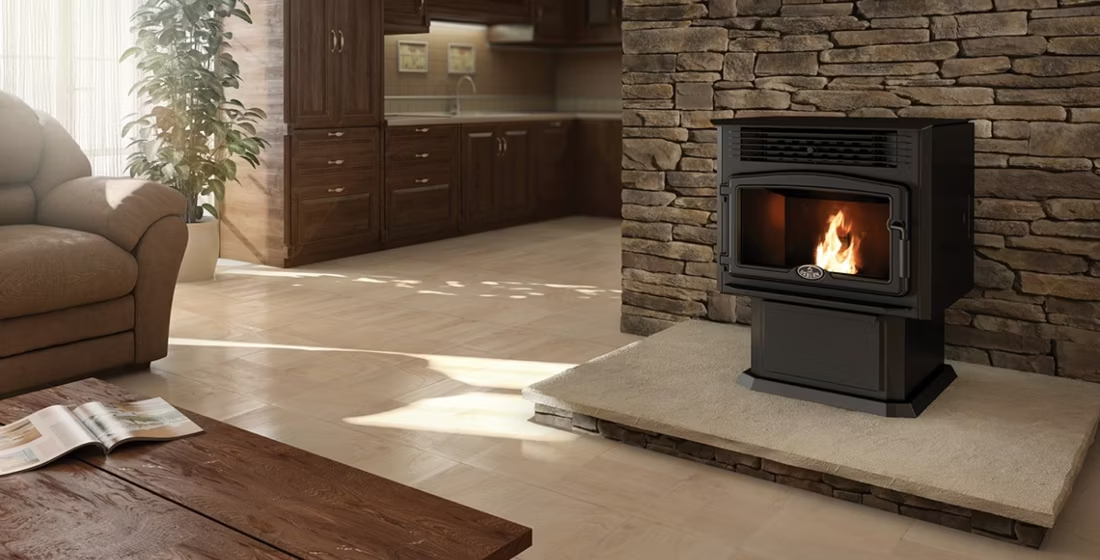
Pellet stoves give Dillingham homeowners a middle path between costly electric heat and the daily labor of a wood stove: automated feed, thermostatic control, and a cleaner burn than cordwood, using pellets from regional suppliers like Superior Pellet Fuels and Lignetics. The tradeoff is logistics—pellets have to come in by barge or plane just like everything else, so the households that do this well buy their season's supply during the summer shipping window rather than trying to source pellets in the middle of a January freeze-up. Even after freight is factored in, pellet heat typically costs a fraction of running electric baseboard around the clock at Bristol Bay rates.
Three steps. No salesperson until you're ready.
Tell us about your project
Your zip code, your situation, and the fuel you're leaning toward—or let the answers point you to one.
See what's actually available
The brands dealers within 100 miles genuinely carry—real options, never a catalog mirage.
Get your dealer & Project Guide
A trusted local dealer, plus the free Project Guide & Parts List that names every component of the job.
Frequently Asked Questions
How much does a pellet stove installation cost in Dillingham?
Installed cost is driven less by the stove itself and more by freight—getting the unit, vent kit, and hearth pad materials to Dillingham by air cargo or summer barge adds real cost compared to a Lower 48 install. Homeowners here should plan for the stove and venting components to run higher than typical national pricing once shipping is added, and for install timelines to depend on barge schedules if you're ordering outside the May–October shipping season. Local dealers who regularly ship to Southwest Alaska can quote a firm number once they know your home's layout and whether you need a hearth pad or wall protection.
Will a pellet stove actually save me money over electric heat?
For most Dillingham homes, yes, and often significantly. Running electric resistance heat continuously through a Bristol Bay winter at Nushagak Electric Coop or Alaska Village Electric Coop's roughly $0.70-per-kWh rate adds up fast during the coldest stretches. A pellet stove sized to your main living space and run on a timer or thermostat setting typically covers a much larger share of your heating load for less, even accounting for the added freight cost of getting bagged pellets to the region. Most homeowners here use the pellet stove as their primary heat for the living area and let electric backup handle the rest of the house.
How do I make sure I have enough pellets to get through the winter?
Because Dillingham has no road connection to the pellet mills and distributors that supply the rest of Alaska, timing matters. The practical approach is to order your season's supply—often multiple tons—during the May-through-October barge window when freight costs and availability are best, rather than waiting until cold weather hits and hoping for space on a cargo flight. Superior Pellet Fuels and Lignetics are the two regional brands most commonly available; ask your local dealer about ordering ahead for barge delivery and about dry, off-ground storage so the pellets stay usable through a wet coastal winter.
Pellet stove or wood stove—which makes more sense in Dillingham?
Both are common here, and the honest answer depends on how you weigh convenience against self-sufficiency. Birch, spruce, and cottonwood are all available locally, and a wood stove lets you rely on cut-and-split firewood rather than a fuel that has to arrive by plane or barge—a real advantage if a barge is delayed or an air cargo backlog hits during freeze-up. A pellet stove is far less labor—no splitting or hauling rounds—and gives you thermostatic, hands-off heat, but it depends entirely on a fuel supply chain that runs through the same limited shipping windows as everything else in Dillingham. Some households run a wood stove as backup specifically because it doesn't depend on freight schedules.
Do I need a permit to install a pellet stove in Dillingham?
Requirements here are less standardized than in an organized borough with a countywide building code—check directly with the City of Dillingham on permitting if your home is within city limits, since most of the surrounding Dillingham Census Area is unorganized and doesn't operate under a unified building code. Regardless of local permitting, the stove itself should still meet current EPA emissions certification, and venting should be sized and installed to the manufacturer's specifications—a local dealer who ships and installs regularly in Southwest Alaska will know what documentation, if any, applies to your specific location.
What happens to my pellet stove if the power goes out?
Pellet stoves need electricity to run the auger and combustion blower, so a standard unit stops working in an outage—worth knowing in a region served by Alaska Village Electric Cooperative and Nushagak Electric Coop, where winter storms can knock out power for stretches. Some homeowners pair a pellet stove with a small battery backup or generator sized just to keep the stove running, and others keep a wood stove or heating oil appliance as a no-electricity backup. If reliable heat during outages is a priority, tell your local dealer up front—they can steer you toward a pellet unit with lower power draw or help you think through backup options.
What size pellet stove do I need for a Dillingham home?
Climate Zone 8 means sizing on the generous end, especially for the older, less-insulated homes common in Bristol Bay villages. A stove rated for 1,500 to 2,000 square feet is a reasonable starting point for a typical single-family home used as primary heat, but drafty construction, high ceilings, or a large open floor plan can push that estimate up. Because freight makes exchanging an undersized unit a real hassle here, it's worth having a dealer walk through your home's square footage, insulation, and layout before you order rather than guessing.
Where can I buy pellets in Dillingham?
Superior Pellet Fuels and Lignetics are the two brands most commonly stocked or ordered by dealers serving the region. Because pellets ship in by air cargo or barge just like the stoves themselves, per-ton pricing runs higher than Lower 48 averages and can shift with freight costs—ask a local retailer for current pricing and, more importantly, for their recommended order timeline so you're not scrambling for pellets mid-winter.
Pellet vs. wood—which handles a Bristol Bay winter better?
Wood has the edge on resilience: birch, spruce, and cottonwood are all locally available, a wood stove doesn't need electricity to run, and it isn't dependent on a barge or cargo flight showing up on schedule. Pellet has the edge on convenience: no splitting or hauling, consistent thermostatic heat, and a cleaner burn—but it requires both electricity to operate and a fuel supply shipped in from outside the region. Many Dillingham households land on a mix—pellet for daily convenience, wood as the fallback when weather or freight timing doesn't cooperate.
Why is my open fireplace making my house colder?
Open fireplaces suck—literally. As the fire burns, it consumes air your furnace already paid to heat and pulls it out through the chimney, so the house is actually colder after the fire goes out than before you lit it. An insert fixes this: it seals the chimney, puts fixed glass across the front, and turns that hole in your house into a real heat source.
Why is a fireplace insert so efficient?
An insert does two things: it seals the chimney completely, so you stop losing air you already paid to heat, and it radiates warmth into the room through the firebox and glass. Most add a heat-exchange fan that pulls cool room air underneath, wraps it around the hot firebox, and pushes it back out warm. Your home is more efficient before you've even lit the first fire.
Does a fireplace add value to my home?
On average, a fireplace adds back to the home about the same amount you spent installing it. Add the monthly savings from heating the rooms you actually use instead of the whole house—often hundreds of dollars a year—and the value case is strong before you even count what a fire does for how your family uses the room.
Can I install a fireplace myself?
If you're putting a fire in your house on purpose, it's best to work with an expert. Unless you're genuinely experienced in framing, gas line, vent pipe, and the national code on clearances to combustibles, have a professional do it—and ideally the same company that sells you the fireplace, so warranty, service, and liability all live under one roof.
Nearby Dealers
Hearth shops serving Dillingham and the surrounding area. Every listing shows whether it is a WhyFire partner, a dealer we have verified as authorized for the brands we recommend, or a local business carrying hearth products. No manufacturer pays for placement. How we verify dealers →
Pellet Brands Stocked Around Dillingham
Manufacturers will point you to the nearest stocking dealer.
Find your pellet stove in Dillingham.
Tell us about your home and heating goals, and we'll match you with a local dealer experienced in shipping and installing pellet stoves in Southwest Alaska—plus a free Project Guide & Parts List for your specific setup.
Find Your Fireplace →