
Reliable heat for a town the road never reached.
Push-button propane warmth for Cordova homes, delivered by ferry and installed right—matched with a local dealer who knows how to build and permit here.
Every Project Starts From One of These Five Situations
Propane keeps burning when the ferry doesn't run.
Cordova sits at the mouth of the Copper River Delta on Prince William Sound, surrounded by the Chugach National Forest—and famously isn't connected to Alaska's road system at all. Everything that arrives in town, from groceries to propane tanks, comes in by state ferry on the Alaska Marine Highway or by small plane. The maritime climate keeps winter lows relatively mild for Alaska, averaging around 27°F, but the long, dark winters still rack up roughly 8,170 heating degree days a year—more than Duluth, Minnesota sees in a typical winter. That combination of a mild-but-persistent heating load and total dependence on marine shipping shapes nearly every heating decision in town.
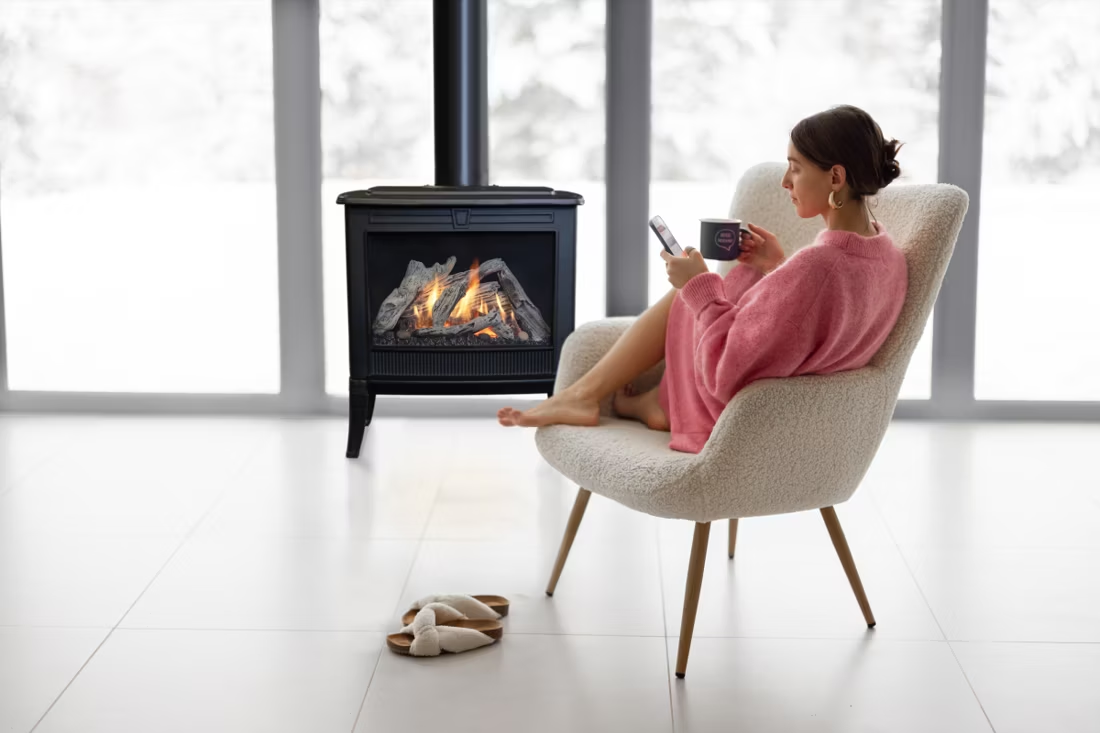
There's no natural gas pipeline serving Cordova, so when residents talk about a 'gas fireplace,' they mean propane—delivered by tank and, ultimately, by ferry. For fishing families who spend long stretches of the season on the water, a propane insert or freestanding stove that lights with the flip of a switch is a welcome contrast to splitting birch and spruce after a full day on a boat. Plenty of Cordova homes still lean on wood, too—birch, spruce, and cottonwood are all cut locally in the surrounding Chugach National Forest—but propane has become the practical choice for daily, hands-off heat in a town where storms can occasionally push back the next ferry run.
Three steps. No salesperson until you're ready.
Tell us about your project
Your zip code, your situation, and the fuel you're leaning toward—or let the answers point you to one.
See what's actually available
The brands dealers within 100 miles genuinely carry—real options, never a catalog mirage.
Get your dealer & Project Guide
A trusted local dealer, plus the free Project Guide & Parts List that names every component of the job.
Frequently Asked Questions
How much does a propane fireplace installation cost in Cordova?
Installing a gas (propane) fireplace or insert in Cordova typically costs more than the same job in Anchorage or the Lower 48, mainly because the unit, the propane tank, and the venting materials all have to travel in by state ferry or air cargo before a local installer ever touches them. Homeowners here should generally budget toward the higher end of what you'd see elsewhere in Southcentral Alaska—often $6,000 to $13,000 depending on whether you're fitting a direct-vent insert into an existing masonry fireplace or installing a new freestanding unit with fresh venting and a new propane tank. Ask any installer you're considering for a firm quote before committing, since freight costs move the numbers more than labor does.
Is natural gas available in Cordova, or is it all propane?
Cordova has no natural gas utility and no pipeline connection—there's no road out of town for a gas main to follow. Every 'gas' fireplace, insert, or stove installed here runs on propane, delivered by tank and refilled by a local propane supplier who brings product in on the same ferry runs that stock the grocery store. If you're comparing notes with family in Anchorage or Fairbanks who have natural gas hookups, know that the equipment itself works the same way—it's just the fuel source and the delivery logistics that differ in Cordova.
How does propane delivery and tank setup work in Cordova?
Most Cordova homes with a gas fireplace or stove have an above-ground propane tank sized to the appliance and household use, refilled on a schedule by a local propane supplier. Because product comes in on the Alaska Marine Highway ferry, it's worth asking your provider about their refill schedule before winter service gets reduced or weathered out—running low on propane in January is a much bigger problem here than in a town with daily truck delivery. Sizing the tank generously up front, rather than relying on frequent small refills, is the standard local approach.
Will my gas fireplace work if the power goes out?
Most direct-vent gas and propane fireplaces run on standing pilot or IPI (intermittent pilot ignition) with a battery backup, so they'll still light and heat the room during a power outage—a real consideration in a coastal town where winter storms can knock out electric service for hours at a stretch. Valor's propane fireplaces take it a step further: their pilot generates its own electricity through the thermocouple, so there's no battery to remember to swap. Ask your installer which ignition system is in the unit you're considering, especially if you want heat you can count on when the lights go out.
What's the difference between a gas fireplace, insert, and stove for a Cordova home?
A gas fireplace is a built-in unit framed into a wall—the right call for new construction or a remodel. A gas insert drops into an existing masonry fireplace and uses the chimney you already have, which suits many of Cordova's older homes built before propane heat was common. A gas stove is a freestanding, cabinet-style unit, often chosen for smaller homes and cabins around the harbor where a full fireplace enclosure isn't practical. Given the age and layout of a lot of housing in town, inserts are the most common retrofit, but a local installer can tell you which fits your structure.
Do I need a permit to install a gas fireplace in Cordova?
Yes—new gas or propane fireplace installations go through the City of Cordova Building Department, which requires a permit for both the appliance installation and any associated gas piping work. Because Cordova is small, plan for a bit more lead time than you might expect in a larger city; permitting and inspection scheduling can take longer when one inspector is covering the whole town. Any installer who regularly works in Cordova will already know the process and can walk you through it.
Should I choose a vented or vent-free gas fireplace in Cordova?
Vented, direct-vent units are the better fit for Cordova's climate and housing stock. They draw combustion air from outside and exhaust it back outside through sealed venting, which matters in a coastal town where homes are built tight against wind and salt air, and where indoor air quality shouldn't be competing with combustion byproducts. Vent-free units are technically legal in Alaska but require strict room-sizing and ventilation rules that are harder to guarantee in smaller, older Cordova homes, so local installers generally steer customers toward direct-vent models.
How often does a propane fireplace need to be serviced in Cordova?
An annual inspection is the standard recommendation for any gas or propane appliance, checking the burner, pilot assembly, venting, and gas connections. In a town Cordova's size, service techs are often the same people who sold and installed the unit, or they travel in periodically from Anchorage or Valdez—so it's worth scheduling your check-up in late summer or early fall, before fishing season winds down and before the first real cold snap, rather than trying to book one in the middle of winter.
Gas (propane) or wood—which makes more sense in Cordova?
Wood is still a strong option here—birch, spruce, and cottonwood are all available from the surrounding Chugach National Forest, and a wood stove keeps burning with zero dependence on the ferry schedule or the power grid, which matters during Cordova's occasional stretch of bad weather that closes both. Propane wins on convenience: no splitting or hauling, push-button heat that fits around long days on a fishing boat, and no ash to manage. Many Cordova households end up with both—propane for daily, hands-off heat, and a wood stove as backup for when a storm delays a barge or knocks out power for a few days.
Why is a fireplace insert so efficient?
An insert does two things: it seals the chimney completely, so you stop losing air you already paid to heat, and it radiates warmth into the room through the firebox and glass. Most add a heat-exchange fan that pulls cool room air underneath, wraps it around the hot firebox, and pushes it back out warm. Your home is more efficient before you've even lit the first fire.
Is my gas fireplace wasting gas?
If it was installed more than 15 years ago, probably. Older gas fireplaces keep a standing pilot light burning all the time, and that little flame can cost a couple hundred dollars a year. Newer models use pilot-on-demand ignition—the pilot lights only when you use the fireplace and goes out when you turn it off.
How much should I budget for a fireplace?
For an average home—covering the fireplace, the vent pipe, and basic installation—a budget between $3,900 and $5,500 gives you a lot of options across wood, gas, and pellet. By the time you add finish work, gas line, and electrical, the average complete installation lands between $5,000 and $12,000 all-in. In a remodel or new build, a good rule is to put about 2.5% of the total project cost toward the fireplace.
Can a fireplace actually lower my heating bill?
Yes—by creating a comfort zone. A furnace heats every square foot of the house just to warm the one room you're in; a gas fireplace on low burns roughly a sixth of the gas a typical furnace does. Set the furnace around 55–60 degrees as a baseline, then heat the rooms your family actually uses. Families who heat this way commonly save $20–$60 a month.
Nearby Dealers
Hearth shops serving Cordova and the surrounding area. Every listing shows whether it is a WhyFire partner, a dealer we have verified as authorized for the brands we recommend, or a local business carrying hearth products. No manufacturer pays for placement. How we verify dealers →
Alpine Garden & Hearth
Find your gas fireplace in Cordova.
Tell us a bit about your Cordova home and we'll match you with a trusted local dealer who can install a gas or propane fireplace, insert, or stove—plus a free Project Guide & Parts List with the exact parts, including the vent kit, for your project.
Find Your Fireplace →