
Instant Warmth for Winston County's Mild Winters.
No chimney, no gas line, no venting—just clean electric heat and real flame ambiance for homes, cabins, and lake houses from Double Springs to the shores of Lewis Smith Lake. Find the right unit and get matched with a trusted local dealer.
Every Project Starts From One of These Five Situations
Convenient heat for a county that doesn't need much of it.
Winston County—the old 'Free State of Winston' up in the hills of northern Alabama—sits in climate zone 3A with an average winter low around 33°F and roughly 2,996 heating degree days a year. That's a fraction of what a place like Duluth, MN or Burlington, VT sees each winter, which means most of the county's 7,863 residents lean on central heat pumps for the bulk of their comfort. A wood stove burning local oak, pine, or hickory is still common on rural properties near Bankhead National Forest, but for most homes an electric fireplace fills a different role entirely: supplemental warmth in a den or bonus room, and the look and feel of a real fire without the upkeep.
That's especially true around Lewis Smith Lake, where second homes and weekend cabins near Arley and Double Springs need heat that turns on with a remote and doesn't require anyone checking a flue between visits. It's also true for the manufactured and modular homes common throughout rural Winston County, where a plug-in electric insert or wall-mounted unit adds warmth and ambiance without the structural work a masonry fireplace or gas line would require. Whether you're served by Black Warrior EMC or another regional cooperative, an electric fireplace draws modest power and installs in a fraction of the time of a vented appliance—which is exactly why it fits a mild-winter county like this one so well.
Three steps. No salesperson until you're ready.
Tell us about your project
Your zip code, your situation, and the fuel you're leaning toward—or let the answers point you to one.
See what's actually available
The brands dealers within 100 miles genuinely carry—real options, never a catalog mirage.
Get your dealer & Project Guide
A trusted local dealer, plus the free Project Guide & Parts List that names every component of the job.
Frequently Asked Questions
How much does an electric fireplace installation cost in Winston County?
Most electric fireplace projects in Winston County run $400 to $2,500. A plug-in freestanding unit or a simple insert into an existing fireplace opening sits at the low end—it just needs a standard outlet. A built-in wall unit or a linear electric fireplace set into new framing costs more once you factor in a dedicated circuit, a licensed electrician, and any surround or mantel finish work. Lake houses and cabins around Smith Lake sometimes add a bit for custom trim work to match existing paneling or stone.
Is an electric fireplace enough heat for a Winston County home?
On its own, usually not as a primary heat source—and it's not really meant to be. With winter lows averaging around 33°F and only about 2,996 heating degree days a year, roughly a third of what a colder market like Duluth, MN sees, most Winston County homes rely on a central heat pump or the wood stove many rural properties already have. An electric fireplace is best used the way most local homeowners use it: zone heat for one room, or purely for the ambiance of a flame on a chilly evening without the smoke, ash, or chimney maintenance of a wood-burning unit.
Do I need a permit to install an electric fireplace in Winston County?
A plug-in freestanding or insert-style electric fireplace that runs off a standard outlet typically doesn't require a permit—there's no venting or gas line involved. A built-in unit wired to a dedicated circuit is electrical work, though, and that does need a permit and inspection through the Winston County Building Department in Double Springs, along with a licensed electrician to run the circuit. Local dealers who install built-in units usually coordinate this as part of the job.
Electric vs. wood—which makes more sense in Winston County?
Plenty of homes in Winston County still burn oak, pine, and hickory in a wood stove or fireplace, especially on rural acreage near Bankhead National Forest where firewood is close at hand and power outages during ice storms make wood a genuine backup heat source. But for lake houses around Smith Lake, in-town homes in Haleyville or Double Springs, or anyone who wants heat without tending a fire, electric wins on convenience and safety. A lot of local homeowners end up with both: wood for backup and character, electric for the room where you actually want the flame running every evening without a second thought.
Will an electric fireplace work in a manufactured or mobile home?
Yes, and it's a common fit—manufactured and modular homes make up a meaningful share of housing across rural Winston County. Electric fireplaces are a good match because there's no chimney, no venting, and no structural cutting required, just proper clearances and the right amperage circuit for a built-in model. A plug-in insert or freestanding unit is often the simplest option, since it avoids any wiring changes to the home altogether. A local dealer can confirm wall construction and clearance requirements specific to your unit.
How much does it cost to run an electric fireplace?
Most electric fireplaces draw around 1,500 watts on the heat setting, which typically works out to somewhere between 15 and 25 cents an hour depending on your electric cooperative's rate—Black Warrior EMC serves much of Winston County. Since these units are almost always used for supplemental heat or ambiance rather than whole-home heating, the added cost on a monthly bill is usually modest compared to running a wood stove's worth of BTUs would require from a furnace.
Built-in, insert, or freestanding—which electric fireplace should I choose?
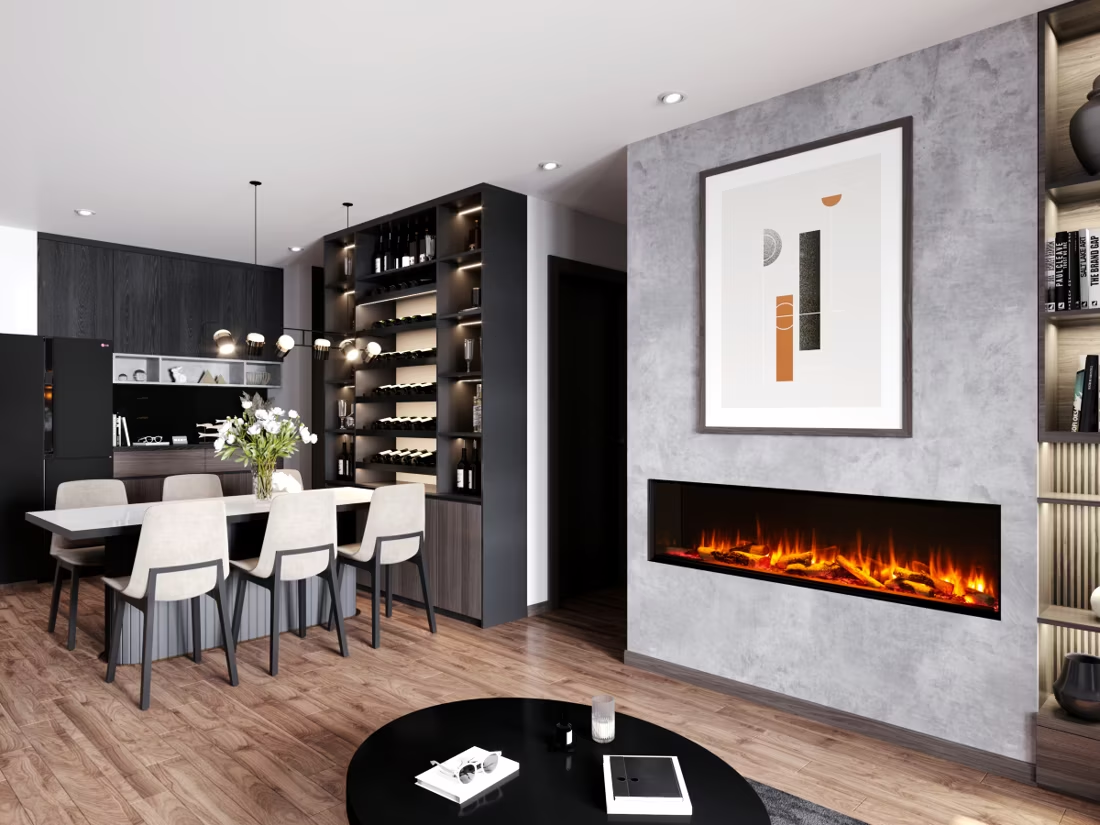
A freestanding electric fireplace is the easiest option—it plugs in and can be moved, which works well for renters or anyone not ready to commit to a permanent install. An insert fits into an existing fireplace opening, a good option for older homes in Double Springs or Haleyville with a masonry firebox that's no longer used for wood. A built-in wall unit, set into new framing with a dedicated circuit, gives the cleanest look and is popular in newer lake houses around Smith Lake where the fireplace is designed in from the start. A local dealer can walk through which fits your existing wall or opening.
Will my electric fireplace still work if the power goes out?
No—and that's worth being honest about. Electric fireplaces need power to run the heater, blower, and flame effect, so during an outage they won't provide any heat. Winston County does see occasional ice storms that knock out power for a stretch, which is part of why a lot of rural households in the county keep a wood stove burning local oak or hickory as backup heat, even if an electric fireplace handles daily comfort the rest of the winter. If backup heat during outages matters to you, it's worth pairing an electric unit with a wood-burning option elsewhere in the home.
Where can I buy an electric fireplace near Winston County?
Winston County's small population means there isn't a large hearth retail footprint inside the county itself—most residents end up shopping in nearby Cullman, Jasper, or Decatur for a dealer with electric fireplaces in stock and installers who know local wiring and code requirements. Rather than guessing which of those dealers actually serves your part of the county well, we match you with a trusted local dealer who covers Winston County and can size the right unit for your home or lake property.
Can I put a TV above my fireplace?
Yes—with an asterisk. Fireplaces are hot and TVs don't like heat. Either put a mantel between them to deflect rising warmth, or choose a fireplace with heat-management technology that creates a cool zone on the wall above—the wall stays around 125 degrees, barely warm, while the room still gets full heat. If you like clean lines and don't want a mantel, heat management is the answer.
Do electric fireplaces actually produce heat?
Yes—most put out around 4,800–5,000 BTUs from a standard outlet, which comfortably warms a bedroom, office, or den as a comfort-zone heater. What they won't do is carry a whole house the way wood, gas, or pellet can. Think of electric as ambiance-first with honest supplemental heat: flames on with no heat in July, flames plus warmth in January.
Can a fireplace actually lower my heating bill?
Yes—by creating a comfort zone. A furnace heats every square foot of the house just to warm the one room you're in; a gas fireplace on low burns roughly a sixth of the gas a typical furnace does. Set the furnace around 55–60 degrees as a baseline, then heat the rooms your family actually uses. Families who heat this way commonly save $20–$60 a month.
Does a fireplace add value to my home?
On average, a fireplace adds back to the home about the same amount you spent installing it. Add the monthly savings from heating the rooms you actually use instead of the whole house—often hundreds of dollars a year—and the value case is strong before you even count what a fire does for how your family uses the room.
Stove and Fireplace Dealers in Winston County
Listings include WhyFire partner dealers, dealers we have verified as authorized for the brands we recommend, and established local businesses that carry hearth products. Every listing shows which one it is. The ones marked Preferred run on WhyFire's software, so they can show you real pricing and book your appointment right here. No manufacturer pays for placement. How we verify dealers →
Jasper Feed & Seed Supply
Hawkins Heating & Air Conditioning
Thompson Gas
Vaughan Gas
Find your electric fireplace in Winston County.
Tell us a bit about your home and we'll match you with the right electric fireplace, insert, or built-in unit—plus a free Project Guide & Parts List with the exact parts and a trusted local dealer to install it.
Find Your Fireplace →