
Find the right hearth for your Winston County home.
Wood, gas, pellet, and electric fireplace resources for Double Springs, Haleyville, Addison, Arley, Lynn, Natural Bridge, and every community in Winston County. Connect with a trusted local hearth retailer who knows what actually works in this mild-winter, hardwood-rich corner of northwest Alabama.
Every Project Starts From One of These Five Situations
Mild winters, deep hardwoods: heating in Winston County, Alabama.
Winston County sits in the hill country of northwest Alabama, wrapped around the Bankhead National Forest and the Sipsey Wilderness—the kind of oak-hickory-pine terrain that's made this a wood-cutting county since it was known as the 'Free State of Winston.' The climate here (zone 3A, mixed-humid) is mild by national standards: winter lows average 33°F and the county has a heating season that's roughly a third as demanding as a place like Duluth, Minnesota sees. That means the heating season runs a few cool months, not six, and most households treat a fireplace or stove as a supplement to central heat rather than the only thing standing between them and a cold night. Still, with oak, pine, and hickory this abundant and this cheap to source locally, plenty of Winston County homes keep a wood stove going through December and January regardless.
This hub covers every fuel type and every community in the county—Double Springs (the county seat), Haleyville, Addison, Arley, Lynn, and Natural Bridge, plus the unincorporated pockets around the national forest. Pick your fuel below for local dealer listings, install costs, and unit recommendations specific to Winston County. Whether you're heating a farmhouse near Lynn with a wood stove or adding a propane fireplace insert in Haleyville, this is the starting point.
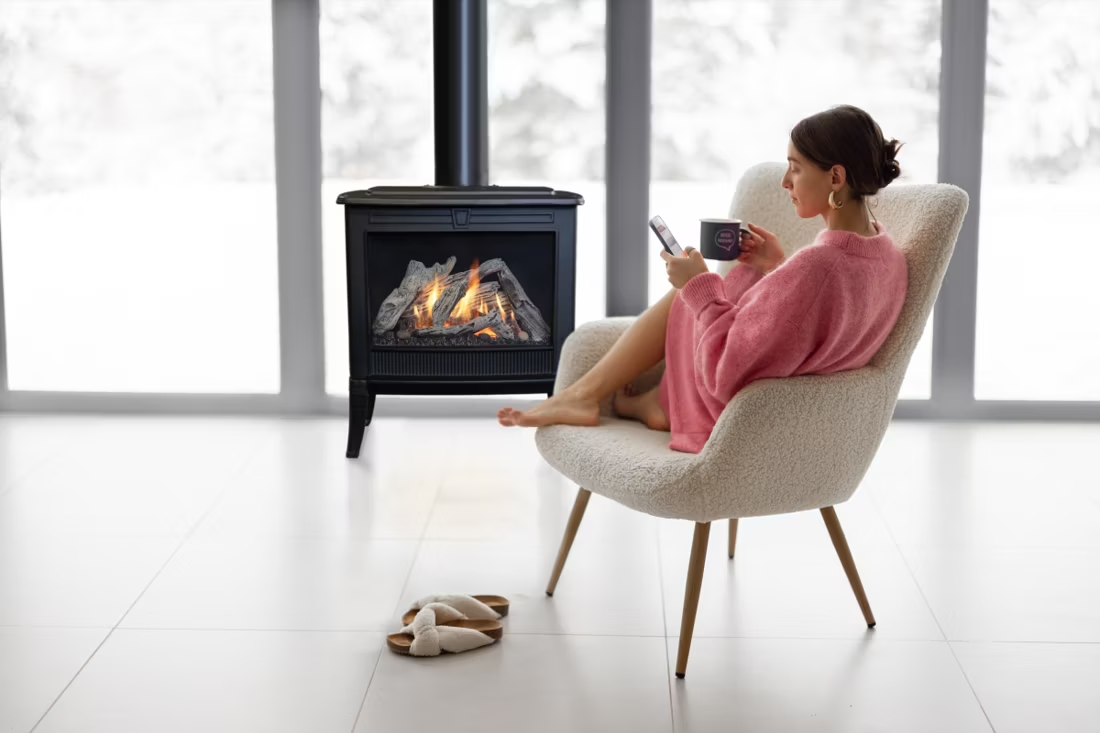
Four fuels. One honest answer for Winston County.
Three steps. No salesperson until you're ready.
Tell us about your project
Your zip code, your situation, and the fuel you're leaning toward—or let the answers point you to one.
See what's actually available
The brands dealers within 100 miles genuinely carry—real options, never a catalog mirage.
Get your dealer & Project Guide
A trusted local dealer, plus the free Project Guide & Parts List that names every component of the job.
Frequently Asked Questions
Which fireplace fuel works best in Winston County?
It depends on how you plan to use it. Wood is the traditional choice and still makes sense here—oak, hickory, and pine are abundant and inexpensive to source locally, and a lot of Winston County homes run a wood stove as a supplemental heat source through the coldest stretch of December and January. But with a heating season that's only a fraction as demanding as a place like Fargo, North Dakota logs, most households don't need wood heat to survive winter—it's closer to a cost-saver and a backup for power outages. Gas—almost always propane out here, since natural gas mains don't reach most of the county—is the low-maintenance option for a fireplace that comes on with a switch. Pellet stoves are a solid middle ground, and local supply is good: Hamer Pellet Fuel is produced right here in the county, alongside Lignetics and Greenway Renewable Energy. Electric fireplaces work fine as primary heat in secondary rooms given how mild the climate is—they're a realistic option here in a way they wouldn't be in a harsher climate.
Do I need a permit to install a fireplace or stove in Winston County?
It depends on where in the county you are. Like many rural Alabama counties, Winston County doesn't enforce a countywide residential building code in unincorporated areas, so a wood stove or insert installed outside city limits—say, near Lynn or Natural Bridge—often doesn't go through a formal county permitting process. Inside incorporated towns like Haleyville, Double Springs, or Addison, check with the town office, since municipal permitting requirements can apply even where the county doesn't require one. Gas work is the exception everywhere: propane line connections and tank setup should go through a licensed propane installer regardless of jurisdiction, both for safety and for insurance purposes. Most local hearth retailers can tell you exactly what applies to your address before you start.
Are there any air quality or burn restrictions in Winston County?
No—Winston County isn't in a non-attainment area and doesn't have winter inversion or wildfire smoke issues the way some Western counties do. There are no mandatory or voluntary burn curtailment programs here. That said, a properly seasoned load of oak or hickory (seasoned six to twelve months, split and covered) burns cleaner and produces less visible smoke than green wood, which matters more for being a good neighbor on a still, humid evening than for any regulatory reason.
Can one local retailer handle wood, gas, pellet, and electric?
Some can, but given the county's small population, not every dealer stocks all four. Retailers based in Haleyville and Double Springs typically carry two or three fuel types well—often wood and gas, or wood and pellet—and can special-order or point you toward a specialist for the rest. If you're comparing fuels side by side, it's worth checking whether a dealer in nearby Cullman or Jasper carries a broader lineup; several Winston County homeowners cross county lines for a wider selection, then have the install handled locally.
How does service work for homes near Bankhead National Forest or other remote parts of the county?
Most chimney sweeps and gas techs serving Winston County are based out of Haleyville or Double Springs and travel to outlying areas—Lynn, Natural Bridge, and the pockets of land bordering Bankhead National Forest and the Sipsey Wilderness. Roads back in those areas can be gravel or seasonal, so scheduling in late summer or early fall, before the first cold snap, tends to go smoother than trying to book a mid-December emergency visit. A small trip fee for the more remote addresses is common—worth asking about when you schedule.
What does fireplace installation cost in Winston County, across fuel types?
Wood stove or insert: typically $3,800-$7,500 installed, depending on chimney condition and whether new class-A pipe is needed. Propane fireplace, insert, or stove: roughly $4,000-$9,000, with tank setup and line work as the variable. Pellet stove or insert: usually $3,800-$6,500. Electric fireplace: $200-$2,500 for the unit itself, plus $300-$900 in labor unless it's a simple plug-and-play install. These are ballpark ranges—the county + fuel pages above break down local retailer pricing in more detail.
What is an in-home preview and do I need one?
It's a visit where a hearth professional measures your space, confirms the model you picked actually works in your home, and walks the specs—framing, gas line, venting, finish work—before anything is ordered. Some details you just can't know until you see the house. Never make a down payment without one; it's the single most-skipped step that burns buyers.
Wood, gas, pellet, or electric—how do I choose?
Match the fuel to your life, not the other way around. Wood: lowest fuel cost and total power-outage independence, but you're hauling and stacking. Gas: press a button, set a thermostat, no maintenance to speak of. Pellet: wood economics with automatic feeding, in exchange for weekly cleaning and a need for electricity. Electric: plugs in anywhere with honest supplemental heat. Nobody regrets the fuel that fits how they actually live.
Can I install a fireplace myself?
If you're putting a fire in your house on purpose, it's best to work with an expert. Unless you're genuinely experienced in framing, gas line, vent pipe, and the national code on clearances to combustibles, have a professional do it—and ideally the same company that sells you the fireplace, so warranty, service, and liability all live under one roof.
Can a fireplace actually lower my heating bill?
Yes—by creating a comfort zone. A furnace heats every square foot of the house just to warm the one room you're in; a gas fireplace on low burns roughly a sixth of the gas a typical furnace does. Set the furnace around 55–60 degrees as a baseline, then heat the rooms your family actually uses. Families who heat this way commonly save $20–$60 a month.
Stove and Fireplace Dealers in Winston County
Listings include WhyFire partner dealers, dealers we have verified as authorized for the brands we recommend, and established local businesses that carry hearth products. Every listing shows which one it is. The ones marked Preferred run on WhyFire's software, so they can show you real pricing and book your appointment right here. No manufacturer pays for placement. How we verify dealers →
Jasper Feed & Seed Supply
Hawkins Heating & Air Conditioning
Thompson Gas
Vaughan Gas
Find a Winston County hearth dealer.
Tell us about your project and we'll help you find a trusted local dealer and send a free Project Guide & Parts List—the exact parts, including the vent kit, for your fuel and your home in Winston County.
Find Your Fireplace →