
Add clean, flip-a-switch warmth to your Winfield, AL home.
No chimney, no gas line, no venting—just a real local dealer who can size, wire, and install the right electric unit for your space.
Every Project Starts From One of These Five Situations
Warm rooms without the chimney or gas line.
Winfield sits in climate zone 3A with mild winters—average lows hover around 30°F and the area logs roughly 3,183 heating degree days a year, a fraction of what a place like Duluth, MN or Burlington, VT sees in a single season. That milder heating load is exactly why electric fireplaces make sense here: most Marion County homes don't need a full-time primary heat source running all winter, they need supplemental warmth for a den, sunroom, or bonus room on the handful of genuinely cold nights, plus year-round ambiance the rest of the time.
Alabama Power Co and Tombigbee Electric Coop both serve the Winfield area, with residential rates running about $0.1677 per kWh. Because electric units don't burn fuel, there's no combustion byproduct, no chimney to sweep, and none of the air-quality permitting that comes with wood or gas—Marion County has no burn-ban or non-attainment restrictions to navigate either way. A plug-in insert or mantel unit is typically a same-day install; a built-in unit wired to its own circuit is a quick job for a licensed electrician, without the inspections a gas line or chimney liner would require.
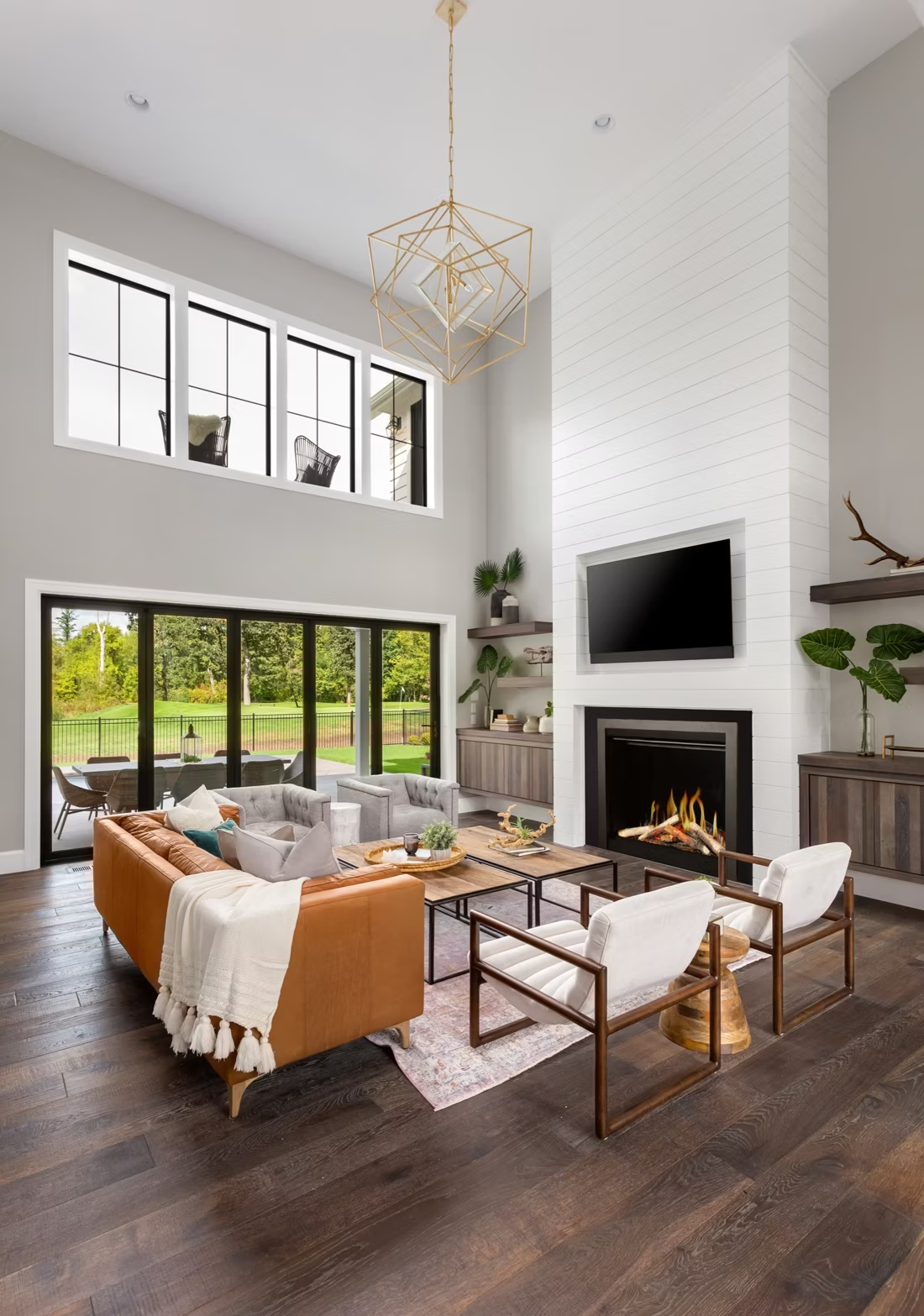
Three steps. No salesperson until you're ready.
Tell us about your project
Your zip code, your situation, and the fuel you're leaning toward—or let the answers point you to one.
See what's actually available
The brands dealers within 100 miles genuinely carry—real options, never a catalog mirage.
Get your dealer & Project Guide
A trusted local dealer, plus the free Project Guide & Parts List that names every component of the job.
Frequently Asked Questions
How much does an electric fireplace installation cost in Winfield?
Most electric fireplace projects in Winfield run $400 to $2,000 installed. A plug-in insert or wall-mount unit on an existing outlet sits at the low end and can often be handled in an afternoon. A built-in electric fireplace or a unit that needs a new dedicated circuit run by an electrician—common if you're adding one to a room without nearby outlets—lands closer to the higher end. Because there's no chimney or gas line involved, electric is consistently the least expensive fireplace fuel to install in Marion County.
What size electric fireplace do I need for my Winfield home?
Given Winfield's mild winters, most homeowners here are heating a single room rather than trying to replace central heat—a 750-1,500 watt unit comfortably supplements a den, bedroom, or sunroom of 300-400 square feet. Larger great rooms or open-concept living areas may call for a bigger insert or a unit paired with a second heat source. Because electric fireplaces here are usually doing supplemental duty rather than whole-home heating, a local dealer can size the unit to the room instead of the whole house—worth a quick in-home look before you buy.
Where can I find a qualified installer for an electric fireplace near me?
For a plug-in or freestanding unit, no special credential is required—it plugs into a standard outlet. For a built-in wired to a dedicated circuit, you want a licensed electrician familiar with Marion County residential code, and ideally one who's installed hearth products before so the unit sits level, vented for its own fan clearance, and wired to the right amperage. Local hearth dealers who carry electric lines typically coordinate this electrical work as part of the installation rather than leaving you to hire it separately.
What's the difference between an electric insert, a built-in, and a wall-mount unit?
An electric insert is sized to slide into an existing masonry or wood-burning firebox, giving an old fireplace new life without touching the chimney. A built-in electric fireplace is framed into a wall during a remodel, much like a gas fireplace would be, and becomes a permanent architectural feature. A wall-mount unit hangs flush against the wall like a flat-screen TV and needs only a nearby outlet or simple circuit. For Winfield homes with an existing but unused wood fireplace, an insert is usually the fastest upgrade; for new construction or a remodel, a built-in gives the cleanest look.
Do I need a permit to install an electric fireplace in Winfield?
Plug-in electric fireplaces generally don't require a permit since no new wiring, gas line, or venting is involved. If you're adding a built-in unit that needs a new dedicated circuit, that electrical work should be pulled through a licensed electrician and typically requires a standard electrical permit—far simpler than the building and mechanical permits a wood or gas installation involves. There's no combustion byproduct and no chimney, so none of Alabama's wood-stove emissions rules apply.
What's the best electric fireplace for a mild climate like Winfield's?
Since most Winfield homes are using electric heat as a supplement rather than a primary source, look for units with a strong secondary heater—brands like Dimplex and Napoleon build inserts and wall-mounts with 5,000+ BTU heaters that can genuinely warm a room, not just flicker for looks. If ambiance matters more than heat output—say, for a sunroom or a secondary living space—a lower-wattage unit with a realistic flame effect and no heater running at all is a reasonable, even cheaper, choice. A local dealer can walk you through both depending on how much you actually plan to run the heater.
How much does it cost to run an electric fireplace in Winfield?
At Alabama Power and Tombigbee Electric Coop's residential rate of about $0.1677 per kWh, a typical 1,500-watt electric fireplace heater costs roughly $0.25 an hour to run on high. Running it a few hours an evening through a mild Marion County winter adds up to a modest addition to your bill—nothing like the cost of heating a whole home electrically. Most units also let you run the flame effect alone with the heater off, which draws only a few watts.
Can an electric fireplace heat my whole house?
No—electric fireplaces are built for zone heating, not whole-home heating, and that's a good fit for Winfield's mild climate where central HVAC already handles most of the season. Most units are rated to comfortably heat 300-400 square feet. For the occasional hard freeze, they're a helpful supplement to central heat in the room you're actually using, and a genuinely useful backup if you lose power to a heat pump but still have grid electricity elsewhere in the house—though note an electric fireplace itself won't run without power.
Electric vs. gas—which is right for my Winfield home?
Gas fireplaces (running on propane in much of rural Marion County, since natural gas mains don't reach every part of Winfield) put out real, substantial heat and can serve as a legitimate backup during outages if paired with a battery-backed ignition. Electric fireplaces cost far less to install, need no fuel tank or gas line, and are simple to add to almost any room—but they only work when the power's on and are better suited to supplemental warmth than serious heat output. For Winfield's relatively mild winters, plenty of homeowners choose electric for a den or bonus room and skip the gas line work entirely, while others with drafty older homes still lean on gas or a heat pump for the coldest nights.
Can I put a TV above my fireplace?
Yes—with an asterisk. Fireplaces are hot and TVs don't like heat. Either put a mantel between them to deflect rising warmth, or choose a fireplace with heat-management technology that creates a cool zone on the wall above—the wall stays around 125 degrees, barely warm, while the room still gets full heat. If you like clean lines and don't want a mantel, heat management is the answer.
Do electric fireplaces actually produce heat?
Yes—most put out around 4,800–5,000 BTUs from a standard outlet, which comfortably warms a bedroom, office, or den as a comfort-zone heater. What they won't do is carry a whole house the way wood, gas, or pellet can. Think of electric as ambiance-first with honest supplemental heat: flames on with no heat in July, flames plus warmth in January.
Does a fireplace add value to my home?
On average, a fireplace adds back to the home about the same amount you spent installing it. Add the monthly savings from heating the rooms you actually use instead of the whole house—often hundreds of dollars a year—and the value case is strong before you even count what a fire does for how your family uses the room.
How much should I budget for a fireplace?
For an average home—covering the fireplace, the vent pipe, and basic installation—a budget between $3,900 and $5,500 gives you a lot of options across wood, gas, and pellet. By the time you add finish work, gas line, and electrical, the average complete installation lands between $5,000 and $12,000 all-in. In a remodel or new build, a good rule is to put about 2.5% of the total project cost toward the fireplace.
Nearby Dealers
Hearth shops serving Winfield and the surrounding area. Every listing shows whether it is a WhyFire partner, a dealer we have verified as authorized for the brands we recommend, or a local business carrying hearth products. No manufacturer pays for placement. How we verify dealers →
Jasper Feed & Seed Supply
Hawkins Heating & Air Conditioning
Thompson Gas
Vaughan Gas
The Fire Place
Energy Shop
Allgas, Inc. - Gardendale
Fireplace Creations By Bmc
Electric Service in Winfield
An electric fireplace's heater draws about 1,500 watts—pennies per hour at local rates.
Alabama Power Co
Tombigbee Electric Coop, Inc
Find your electric fireplace in Winfield.
Tell us a bit about your room and we'll match you with the right electric insert, built-in, or wall-mount unit—plus a free Project Guide & Parts List and a trusted local dealer to install it.
Find Your Fireplace →