
Find the right electric fireplace for your Marion County home.
Mild winters and no gas line to fuss with—electric fireplaces give Marion County homes real ambiance and supplemental warmth without any venting or permitting hassle. Get matched with a trusted local dealer.
Every Project Starts From One of These Five Situations
Ambiance and zone heat, without the chimney.
Marion County sits in climate zone 3A in northwest Alabama, with a winter low averaging 28 degrees and just 3,303 heating degree days a year—a fraction of what a place like Bozeman, Montana sees. That's a mild heating season by national standards, and it shapes what makes sense here. Plenty of Marion County households still burn oak, pine, and hickory for primary or supplemental warmth, but electric units have carved out a real role in living rooms, bonus rooms, and bedrooms across Hamilton, Guin, Winfield, and Bear Creek where a homeowner wants fire-like ambiance and a shot of heat on the county's rare cold nights, without adding a flue or running new gas.
There's no combustion, no venting, and no county building permit required for a plug-in or hardwired electric unit—which is a real advantage over wood or gas installs that require Marion County permitting and inspection. An electric insert can go into an existing masonry fireplace opening in an older Hamilton farmhouse, or a wall-mount unit can go into a new-construction bonus room in Winfield with nothing more than an outlet or a simple 120V/240V circuit run by an electrician. For homes that already lean on wood for the bulk of winter heat, electric is often the second unit—the one that runs in a bedroom or den on a 40-degree evening when building a fire in the main hearth isn't worth the effort.
Three steps. No salesperson until you're ready.
Tell us about your project
Your zip code, your situation, and the fuel you're leaning toward—or let the answers point you to one.
See what's actually available
The brands dealers within 100 miles genuinely carry—real options, never a catalog mirage.
Get your dealer & Project Guide
A trusted local dealer, plus the free Project Guide & Parts List that names every component of the job.
Frequently Asked Questions
How much does an electric fireplace installation cost in Marion County?
Most electric fireplace installations in Marion County run $400 to $1,200. A plug-in insert or wall-mount unit on the low end just needs a standard outlet and can often be handled without an electrician. Built-in units, or any model wired to a dedicated 240V circuit for higher heat output, run toward the higher end once electrical work is factored in. Because there's no chimney, no gas line, and no venting to install, electric is consistently the least expensive fireplace fuel type to install in the county, whether you're in Hamilton or out in a rural part of the county.
Do I need a permit to install an electric fireplace in Marion County?
In most cases, no. A plug-in or wall-mount electric fireplace that uses a standard outlet doesn't require a building permit through Marion County. If you're adding a new dedicated circuit or doing any electrical panel work to support a built-in unit, that portion of the job should be pulled by a licensed electrician, who will handle any required electrical permit. This is one of the simplest fireplace projects to get approved locally—there's no EPA certification, no chimney inspection, and no gas-fitter involved.
Will an electric fireplace actually heat my room, or is it just for looks?
Both, depending on the model. Most electric fireplaces sold for Marion County homes include a built-in heater rated around 4,600–5,000 BTU, enough to comfortably take the edge off a 300–400 square foot room on the county's cooler nights—useful given the mild 28-degree average winter low here. Higher-output 240V units can heat larger spaces. If you just want the flame effect without the heat, most units let you run the visual independently of the heater, which is common for homes that already have a wood stove or gas fireplace doing the real heavy lifting and just want a second unit for a bedroom or den.
What's the difference between an electric insert and an electric fireplace?
An electric insert is sized to slide into an existing masonry fireplace opening—a natural fit for older homes around Hamilton or Guin that have an unused wood-burning fireplace they want to convert without chimney work. A standalone or wall-mount electric fireplace doesn't need an existing opening at all; it can go into a stud wall in a new-construction bonus room or be set on a media console like a piece of furniture. For Marion County homeowners retiring an old masonry fireplace, an insert is usually the cleaner conversion; for new rooms or additions, a wall-mount or built-in unit is more flexible.
Can an electric fireplace run during a power outage?
No—electric fireplaces require power to operate, unlike a wood stove, which is why most Marion County homes that value backup heat during ice storms or outages pair an electric unit with a wood stove or gas fireplace as the primary source. Given the county's relatively mild winters and modest 3,303 heating degree days, this is less of a daily concern here than in a harder-heating climate, but it's still worth planning for if your area sees occasional winter outages.
Is an electric fireplace a good fit for Marion County's climate?
Yes, and arguably a better fit here than in a place with a genuinely harsh winter. With a winter low averaging 28 degrees and heating degree days well under half of what a cold northern climate sees, most Marion County homes don't need a fireplace to carry the full heating load—they need supplemental warmth and ambiance on the coldest nights. That's exactly what an electric unit is built for. Homeowners who want to actually offset a big chunk of their heating bill with wood—a real option here given the local oak, pine, and hickory supply—usually pair a wood stove in the main living space with an electric unit elsewhere in the house.
How much does it cost to run an electric fireplace?
A typical electric fireplace heater draws around 1,500 watts on the heat setting. Running it for a few hours a night through a mild Marion County winter typically adds somewhere in the range of $10 to $25 a month to your electric bill, depending on your local utility rate and how often you run the heater versus just the flame effect. That's substantially cheaper than running central HVAC to heat a whole house for the sake of warming one room.
Do electric fireplaces need any maintenance?
Very little. There's no chimney to sweep, no gas line to service, and no annual inspection required the way there is with wood or gas units. Occasional dusting of the unit and periodically checking that the fan and heating element are running smoothly is about the extent of it. LED light strips used for the flame effect in most modern units are rated for years of continuous use before needing replacement. This low-maintenance profile is part of why electric units are popular as a secondary fireplace in Marion County homes that already maintain a wood stove or gas insert as the primary heat source.
Electric vs. wood—which is right for my Marion County home?
Wood offers real heat output, works without electricity during outages, and is a practical primary heat source here given the local oak, pine, and hickory supply—but it requires a chimney, annual sweeping, and building permit work through the county. Electric offers instant on-off operation, zero venting or permitting, and the lowest install cost of any fuel type, but it won't function without power and isn't meant to be a primary heat source. Given Marion County's mild 3,303 heating degree days, many homeowners here use wood as the main event in the living room and add an electric unit in a bedroom or den for convenience and ambiance rather than choosing one fuel exclusively.
Can I put a TV above my fireplace?
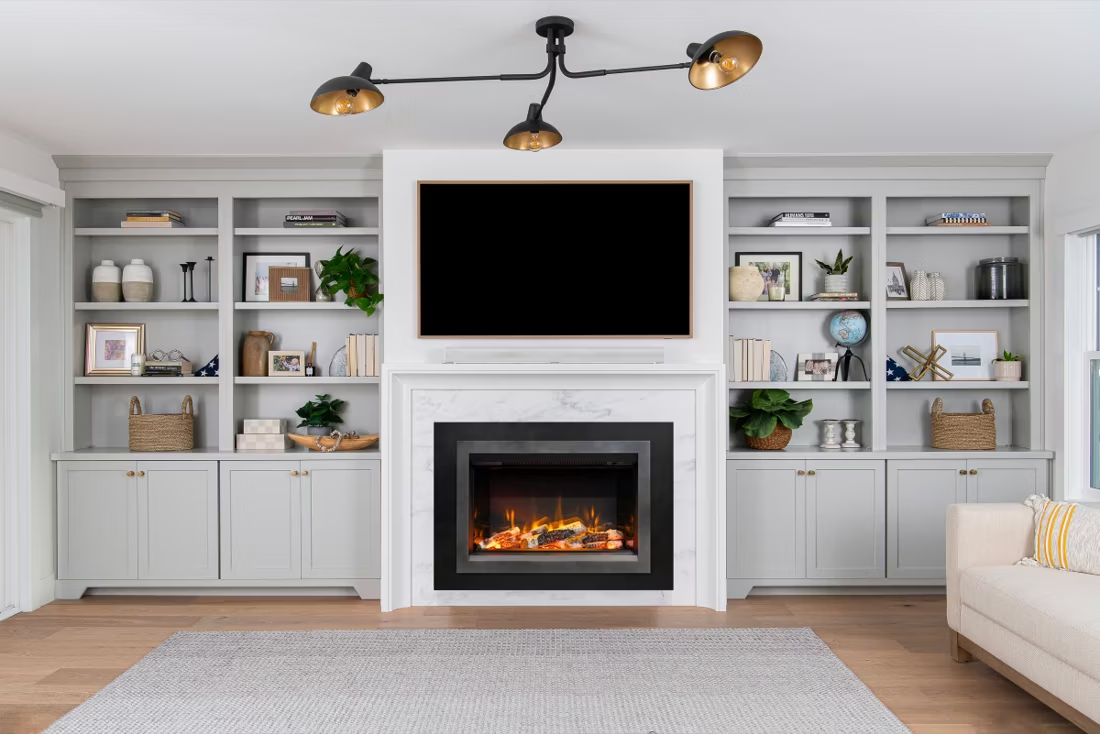
Yes—with an asterisk. Fireplaces are hot and TVs don't like heat. Either put a mantel between them to deflect rising warmth, or choose a fireplace with heat-management technology that creates a cool zone on the wall above—the wall stays around 125 degrees, barely warm, while the room still gets full heat. If you like clean lines and don't want a mantel, heat management is the answer.
Do electric fireplaces actually produce heat?
Yes—most put out around 4,800–5,000 BTUs from a standard outlet, which comfortably warms a bedroom, office, or den as a comfort-zone heater. What they won't do is carry a whole house the way wood, gas, or pellet can. Think of electric as ambiance-first with honest supplemental heat: flames on with no heat in July, flames plus warmth in January.
Can I install a fireplace myself?
If you're putting a fire in your house on purpose, it's best to work with an expert. Unless you're genuinely experienced in framing, gas line, vent pipe, and the national code on clearances to combustibles, have a professional do it—and ideally the same company that sells you the fireplace, so warranty, service, and liability all live under one roof.
How much should I budget for a fireplace?
For an average home—covering the fireplace, the vent pipe, and basic installation—a budget between $3,900 and $5,500 gives you a lot of options across wood, gas, and pellet. By the time you add finish work, gas line, and electrical, the average complete installation lands between $5,000 and $12,000 all-in. In a remodel or new build, a good rule is to put about 2.5% of the total project cost toward the fireplace.
Stove and Fireplace Dealers in Marion County
Listings include WhyFire partner dealers, dealers we have verified as authorized for the brands we recommend, and established local businesses that carry hearth products. Every listing shows which one it is. The ones marked Preferred run on WhyFire's software, so they can show you real pricing and book your appointment right here. No manufacturer pays for placement. How we verify dealers →
Jasper Feed & Seed Supply
Thompson Gas
Vaughan Gas
Hawkins Heating & Air Conditioning
Fireplace Creations By Bmc
Rogers Lp Gas LLC
Phoenix Sales
Lavastone Industries
Higdon Service, Inc.
Get matched with a Marion County electric fireplace dealer.
Tell us a bit about your home and we'll put together a free Project Guide & Parts List for your electric fireplace project—then connect you with a trusted local dealer to install it.
Find Your Fireplace →