
Keep Your Family Warm and Safe—No Matter What
Solid supplemental heat and storm-outage backup for homes in the Lookout Mountain foothills, built around the oak, hickory, and pine already growing on Etowah County land.
Every Project Starts From One of These Five Situations
Mild winters, dense hardwood forests, and a wood-burning habit that runs deep.
Whitesboro sits at just over 1,000 feet in the foothills of Lookout Mountain, in a climate zone (3A, mixed-humid) with a fairly short, mild heating season and an average winter low near 30°F. That's a fraction of what a place like Duluth, MN sees in a single season, which is why most Whitesboro homes treat wood heat as serious supplemental warmth and cold-snap backup rather than the sole way to survive January—plus a reliable way to stay warm when ice storms take down power lines in this part of Etowah County.
The wood itself isn't hard to come by. Oak, hickory, and pine cover much of the rural land around Whitesboro, and a lot of local firewood comes straight off private property—cleared timber, storm-downed trees, or land management cuts—rather than public-land permits, since there isn't much national forest acreage this close to town. There's also no non-attainment designation or winter inversion issue here, so burn curtailment periods that limit wood stove use in some Western cities simply aren't a factor in Whitesboro.
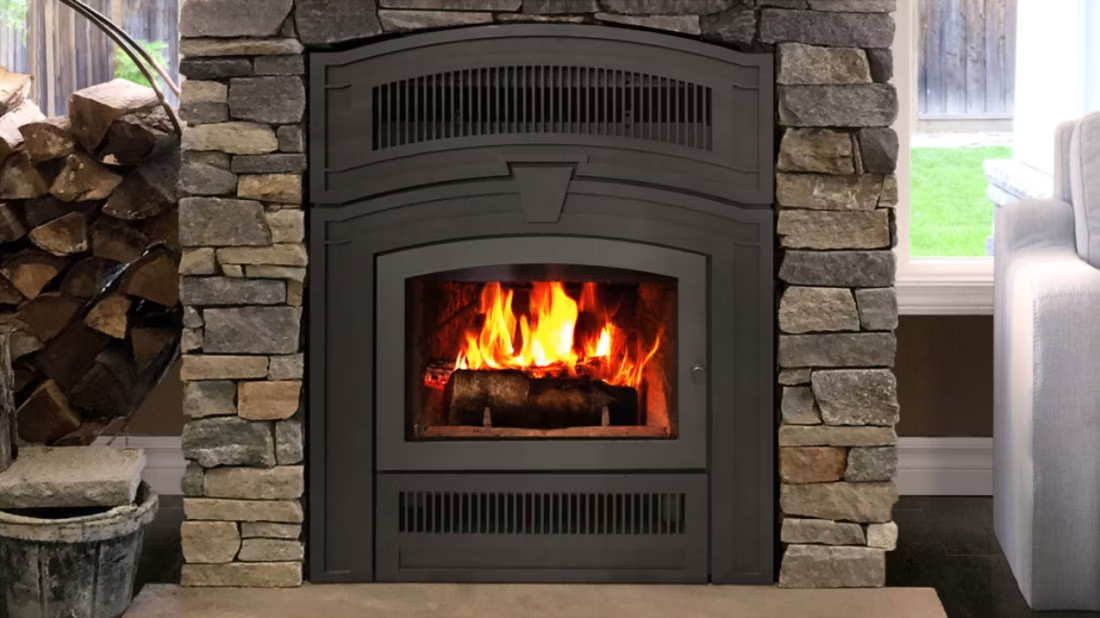
Three steps. No salesperson until you're ready.
Tell us about your project
Your zip code, your situation, and the fuel you're leaning toward—or let the answers point you to one.
See what's actually available
The brands dealers within 100 miles genuinely carry—real options, never a catalog mirage.
Get your dealer & Project Guide
A trusted local dealer, plus the free Project Guide & Parts List that names every component of the job.
Frequently Asked Questions
How much does a wood stove installation cost in Whitesboro?
For a rural Etowah County home, a typical wood stove or insert installation runs roughly $3,000 to $7,500, depending on the unit, whether you're venting through an existing masonry chimney or need new Class A pipe run through a wall or roof, and whether a hearth pad has to be built or upgraded to meet clearance codes. Homes without an existing chimney—common in newer construction around Whitesboro—sit toward the higher end once full venting is added. A local dealer will give you a firm number after seeing the space.
What size wood stove do I actually need in Whitesboro?
Because Whitesboro's winters are relatively mild—average lows around 30°F and a fairly short, mild heating season overall, well short of a harsh Upper Midwest winter—most homes here do fine with a small to medium stove rated for 1,000 to 2,000 square feet, even when it's providing a meaningful share of the home's heat. Going bigger than you need is the more common mistake in this climate: an oversized stove in a mild winter gets choked down and smolders, building creosote faster than it should. A local dealer can size it against your actual square footage and insulation.
Where do I find a certified wood stove installer near Whitesboro?
Whitesboro itself is a small town, so most homeowners end up working with an installer based in or near Gadsden, the Etowah County seat. Look for NFI (National Fireplace Institute) or CSIA (Chimney Safety Institute of America) certification—it's the clearest signal an installer knows proper clearances and venting for a wood-burning appliance, not just general contracting. A trusted local dealer will also handle the county building permit as part of the job.
Wood stove or wood insert—which fits my Whitesboro home?
If your home already has a working masonry fireplace—common in older houses around Whitesboro—a wood insert is usually the better move. It slides into the existing firebox, uses your current chimney with a stainless liner, and turns a heat-leaking open hearth into an actual heat source. A freestanding wood stove makes more sense for newer homes without an existing fireplace, or for outbuildings and workshops where you're starting from scratch on venting.
Do I need a permit to install a wood stove in Whitesboro?
Yes—new wood stove and insert installations typically require a building permit through Etowah County, and the stove needs to meet current EPA emissions standards. The good news for Whitesboro is that there's no non-attainment designation or winter inversion pattern here, so unlike parts of the West, you won't run into seasonal burn curtailment periods that restrict when you can use the stove. Most local dealers pull the permit for you as part of the installation.
What's the best wood stove for a Whitesboro climate?
Because winters here are moderate compared to the northern tier of the country, you generally don't need a 20-plus-hour catalytic stove built for sub-zero overnight lows. A solid mid-size non-catalytic stove from a brand like Pacific Energy or Vermont Castings will comfortably heat a main living area burning local oak or hickory, both of which put out strong, steady heat once seasoned. Pine burns hotter and faster and is useful for quick shoulder-season fires, but it's not what you want loaded up for an overnight burn.
How often should my chimney be inspected in a mixed-humid climate like this?
Once a year, ideally in late summer before burning season starts, per CSIA guidelines. Whitesboro's mixed-humid climate (zone 3A) means moisture is more often the enemy than in dry Western climates—a chimney with any moisture intrusion or improperly seasoned wood will build creosote faster. Burning well-seasoned oak or hickory (six months to a year of dry storage, minimum) rather than green or wet wood is the single biggest thing you can do to cut down on buildup between sweeps.
Where does firewood come from around Whitesboro?
Most firewood in this part of Etowah County comes from private land rather than public-land cutting permits—there's limited national forest acreage close to Whitesboro, so tree removal, land clearing, and storm-downed timber supply a lot of local wood. Oak and hickory split and season well and are the preferred choice for overnight burns; pine is common too and burns hot for a quick fire but produces more resin and creosote if burned unseasoned. Regional suppliers and neighbors selling by the cord are the norm here more than a formal permit system.
Wood stove vs. pellet stove—which makes more sense in Whitesboro?
Wood stoves work without electricity, which matters here given how ice storms occasionally take down power lines in the Lookout Mountain foothills, and they pair naturally with the oak, hickory, and pine already available locally. Pellet stoves are more hands-off—load the hopper, set it, and go—and burn cleaner, with bagged pellets from regional producers like Lignetics or Alabama-based Hamer Pellet Fuel readily available. The catch is that pellet stoves need electricity to run the auger and blower, so they won't help during an outage. For a lot of Whitesboro homes, wood ends up being the more resilient backup option, while pellet appeals to homeowners who want convenience over ritual.
What's the difference between an insert and a zero-clearance fireplace?
An insert is a fireplace that slides into a pre-existing wood-burning fireplace—if you don't have one, there's nothing to insert it into. A zero-clearance fireplace is built into a framed wall, which makes it the answer for remodels and new construction. Simple test: existing masonry fireplace means insert; blank or framed wall means zero-clearance.
What does it take to replace an existing fireplace?
Fireplaces are like icebergs—bigger behind the wall than in front of it. Replacement means removing the surrounding tile or stone (the finish material laps onto the fireplace face), pulling the old unit, setting the new one in the same enclosure, and re-finishing the wall. A hearth professional can determine what's behind your wall without demolition during an in-home preview.
Can a fireplace actually lower my heating bill?
Yes—by creating a comfort zone. A furnace heats every square foot of the house just to warm the one room you're in; a gas fireplace on low burns roughly a sixth of the gas a typical furnace does. Set the furnace around 55–60 degrees as a baseline, then heat the rooms your family actually uses. Families who heat this way commonly save $20–$60 a month.
How much should I budget for a fireplace?
For an average home—covering the fireplace, the vent pipe, and basic installation—a budget between $3,900 and $5,500 gives you a lot of options across wood, gas, and pellet. By the time you add finish work, gas line, and electrical, the average complete installation lands between $5,000 and $12,000 all-in. In a remodel or new build, a good rule is to put about 2.5% of the total project cost toward the fireplace.
Nearby Dealers
Hearth shops serving Whitesboro and the surrounding area. Every listing shows whether it is a WhyFire partner, a dealer we have verified as authorized for the brands we recommend, or a local business carrying hearth products. No manufacturer pays for placement. How we verify dealers →
Nomad Homestead Supply
Southern Fireplaces
Sand Mountain Brick
Allgas, Inc. - Gadsden
Discount Building Supply
Find your wood stove in Whitesboro.
Tell us about your home and heating goals, and we'll match you with a trusted local dealer plus a free Project Guide & Parts List—the stove, venting, and hearth parts your Whitesboro installation actually needs.
Find Your Fireplace →