
Keep Your Family Warm and Safe—No Matter What
Smoke Rise's mild winters mean most homes lean on electric heat pumps for day-to-day comfort. But for backup warmth during ice-storm outages, a workshop, or the simple pleasure of a real fire, a properly sized wood stove still earns its place. We'll connect you with a trusted local dealer who'll tell you honestly whether it fits your home.
Every Project Starts From One of These Five Situations
A mild climate means wood is rarely necessary—but not irrelevant.
Smoke Rise sits in Blount County at 815 feet elevation, in climate zone 3A—the mixed-humid belt that covers most of central Alabama. Winters here are short and mild by national standards: the average winter low sits around 30°F, and the town logs roughly 3,420 heating degree days a year, a fraction of what a place like Duluth, MN or Burlington, VT racks up in a single hard January. Most Smoke Rise homes get through the season on electric heat pumps served by Alabama Power, and central heating alone handles the bulk of the winter without much strain.
That doesn't mean wood is foreign to this part of Alabama. Oak, pine, and hickory all grow throughout Blount County, and plenty of longtime residents grew up with a wood-burning fireplace or stove somewhere on the property. In practice, most wood installations here today are supplemental—a small stove in a den, workshop, or hunting cabin for the handful of nights it dips into the 20s, or backup heat for the ice storms that knock out power in this part of the state more often than snow does. If that's the role you have in mind, a local dealer can size a unit for supplemental use rather than sell you more stove than a Smoke Rise winter will ever ask for.
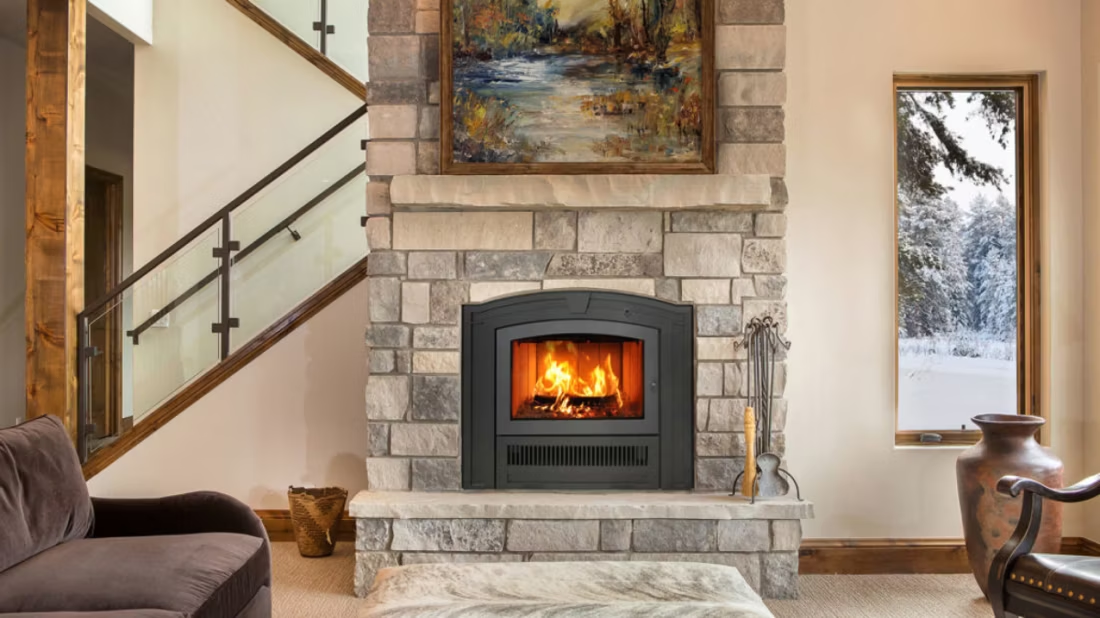
Three steps. No salesperson until you're ready.
Tell us about your project
Your zip code, your situation, and the fuel you're leaning toward—or let the answers point you to one.
See what's actually available
The brands dealers within 100 miles genuinely carry—real options, never a catalog mirage.
Get your dealer & Project Guide
A trusted local dealer, plus the free Project Guide & Parts List that names every component of the job.
Frequently Asked Questions
How much does a wood stove installation cost in Smoke Rise?
Expect somewhere between $3,500 and $8,000 for a full installation, though pricing here is less standardized than in colder markets simply because fewer installers specialize in it. The low end covers a freestanding stove going into a home with an existing masonry chimney; the high end covers new Class A chimney pipe run through a roof where no flue currently exists. Because wood isn't the default heating choice in Blount County, it's worth getting quotes from more than one installer—ask specifically about their experience with wood-burning appliances rather than just gas or electric.
Do I actually need a wood stove for heat in Smoke Rise, or is this just for ambiance?
For most homes here, no—with only about 3,420 heating degree days a year and winter lows averaging around 30°F, an electric heat pump through Alabama Power comfortably carries a typical household through the season. A wood stove in Smoke Rise is almost always a supplemental or lifestyle choice: extra warmth in a den or bonus room, heat for a detached workshop, or the atmosphere of a real fire on the handful of genuinely cold nights each winter. Be upfront with your dealer about which of these you're after—it changes both the stove size and the install approach.
Will a wood stove actually help during a power outage here?
Yes, and this is one of the more practical reasons Smoke Rise homeowners install one. Blount County sees more ice storms than heavy snow, and ice is what typically brings Alabama Power lines down for days at a time rather than hours. A wood-burning stove needs no electricity to operate, so it can keep one room genuinely warm—and let you cook or boil water—while an all-electric home goes cold. If backup power is your main motivation, tell your local dealer; it affects where they'll recommend placing the stove.
What firewood species are common around Smoke Rise?
Oak, pine, and hickory are the three you'll run into most in Blount County. Oak is dense and burns long but needs a full season or two of drying before it's ready; hickory burns hot and is a favorite for overnight coals; pine is more available and easier to split but burns faster and produces more resin buildup in the flue, so it calls for slightly more frequent chimney checks if it's your primary fuel. Most local dealers will talk through species and seasoning time as part of an install consultation, especially if this is your first wood stove.
Do I need a permit to install a wood stove in Smoke Rise?
Most new wood-burning installations require a building permit through the Blount County Building Department, and the unit itself should meet current EPA emissions standards. A licensed installer will typically pull this permit as part of the job. There's no air quality advisory system to work around here—Smoke Rise has no non-attainment status or winter inversion issues like some Western cities—so once it's installed, burning is straightforward.
Are there air quality restrictions on wood burning in Smoke Rise?
No. Smoke Rise has no listed air quality concerns, no non-attainment designation, and no winter temperature inversions that trap smoke the way they do in mountain-valley towns out West. That means no seasonal burn bans or curtailment periods to track—burning is regulated only by the building and fire codes tied to the installation itself, not by daily air quality alerts.
Wood stove vs. electric heat—which makes sense for my home?
For whole-home heating in Smoke Rise, electric usually wins on convenience: Alabama Power's residential rate runs about $0.17 per kWh, and a modern heat pump handles this mild climate without much fuss. Wood makes more sense as a second heat source—it keeps running without power, it's often cheaper per BTU if you're sourcing firewood locally rather than buying it split and delivered, and it adds real backup capacity for ice-storm season. Most Smoke Rise homes that install a stove keep electric as their primary system and use wood selectively.
Where can I get firewood in Smoke Rise?
Because most of Blount County is privately held rather than national forest, there's no Forest Service cutting permit desk to visit—firewood here typically comes from local tree services, landowners clearing property, or small seasonal firewood sellers who advertise by word of mouth or roadside signs. Expect to pay roughly $150 to $250 for a full cord depending on species and whether it's already seasoned; oak and hickory generally cost more than pine because they burn longer and hotter.
What size wood stove do I need for supplemental heat in Smoke Rise?
Given how mild winters are here, most Smoke Rise installations are smaller stoves rated for 1,000 to 1,500 square feet—enough to genuinely heat a den, bonus room, or workshop rather than the whole house. Sizing a bigger stove than that usually backfires: an oversized unit in a mild climate gets run low and smoldery to avoid overheating the room, which builds creosote faster and shortens the time between chimney cleanings. A local dealer can walk the space with you and size it for the specific room, not the whole home.
What's the difference between an insert and a zero-clearance fireplace?
An insert is a fireplace that slides into a pre-existing wood-burning fireplace—if you don't have one, there's nothing to insert it into. A zero-clearance fireplace is built into a framed wall, which makes it the answer for remodels and new construction. Simple test: existing masonry fireplace means insert; blank or framed wall means zero-clearance.
Why won't my new wood stove get going like my old one?
New wood stoves are 70%+ efficient, so far less heat goes up the flue—which also means less draft to get a fire established. The rule: build a genuinely hot fire for about 45 minutes before you choke it down. Skip that and you get smoke in the room, creosote in the chimney, and a fire that never takes off. Most performance complaints trace straight back to this.
Can a fireplace actually lower my heating bill?
Yes—by creating a comfort zone. A furnace heats every square foot of the house just to warm the one room you're in; a gas fireplace on low burns roughly a sixth of the gas a typical furnace does. Set the furnace around 55–60 degrees as a baseline, then heat the rooms your family actually uses. Families who heat this way commonly save $20–$60 a month.
Can I install a fireplace myself?
If you're putting a fire in your house on purpose, it's best to work with an expert. Unless you're genuinely experienced in framing, gas line, vent pipe, and the national code on clearances to combustibles, have a professional do it—and ideally the same company that sells you the fireplace, so warranty, service, and liability all live under one roof.
Nearby Dealers
Hearth shops serving Smoke Rise and the surrounding area. Every listing shows whether it is a WhyFire partner, a dealer we have verified as authorized for the brands we recommend, or a local business carrying hearth products. No manufacturer pays for placement. How we verify dealers →
Allgas, Inc. - Gardendale
Hawkins Heating & Air Conditioning
Jasper Feed & Seed Supply
Find your wood stove in Smoke Rise.
Tell us how you plan to use wood heat—backup power during ice storms, a workshop, or just a real fire on cool evenings—and we'll match you with a trusted local dealer and send a free Project Guide & Parts List with the exact parts, vent kit, and recommended installer for your Smoke Rise home.
Find Your Fireplace →