
Clean-Burning Heat, Sized for Smiths Station Winters.
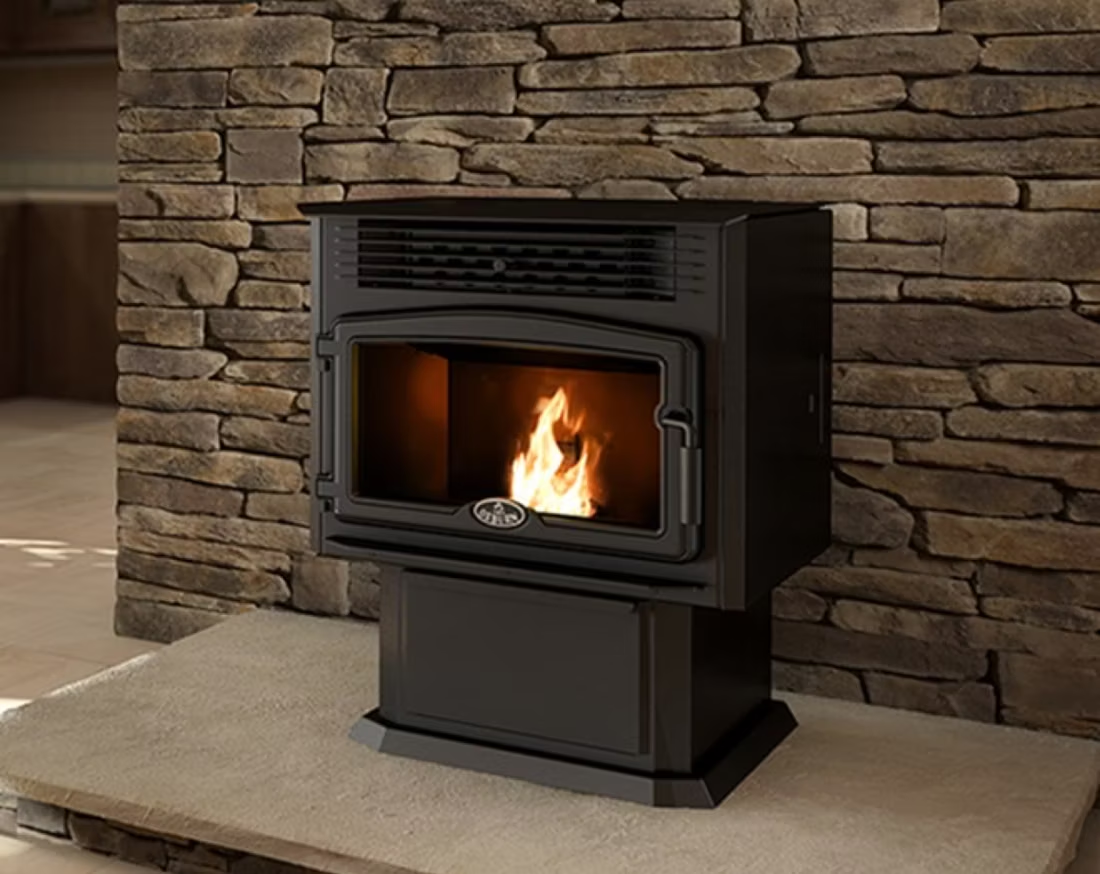
A hopper-fed pellet stove gives Lee County homes steady, low-maintenance warmth on the cold snaps that do roll through—without committing to a full wood-burning setup.
Every Project Starts From One of These Five Situations
A supplemental heat source built for short, mild winters.
Smiths Station sits at 467 feet in Lee County, just east of Auburn-Opelika, in climate zone 3A. Winters here are mild by national standards—the average winter low hovers around 34°F and the area logs roughly 2,275 heating degree days a year, a fraction of what a place like Duluth, MN sees in a single season. That means most homes don't need a whole-house wood or pellet system; they need something that can knock the chill off a living room or den on the handful of nights that actually get cold.
That's where pellet stoves earn their keep locally. They vent through a small wall pipe rather than a full masonry chimney, so they fit into homes that were never built with a fireplace. Pellet fuel is easy to source regionally too—Hamer Pellet Fuel is produced right here in Alabama, alongside national brands like Lignetics and Greenway Renewable Energy, so you're not depending on scarce or seasonal supply. The one thing worth planning around: pellet stoves need electricity to run the auger and combustion blower, and Alabama Power and Tallapoosa River Electric Cooperative territory sees its share of storm-driven outages—so a battery backup or small generator is worth discussing with your installer if you want the stove to keep working when the grid doesn't.
Three steps. No salesperson until you're ready.
Tell us about your project
Your zip code, your situation, and the fuel you're leaning toward—or let the answers point you to one.
See what's actually available
The brands dealers within 100 miles genuinely carry—real options, never a catalog mirage.
Get your dealer & Project Guide
A trusted local dealer, plus the free Project Guide & Parts List that names every component of the job.
Frequently Asked Questions
How much does a pellet stove installation cost in Smiths Station?
A freestanding pellet stove with a through-the-wall direct vent typically runs $3,000 to $5,500 installed in the Smiths Station area—on the lower end because most homes here don't have an existing masonry chimney to work around, which simplifies the job. A pellet insert into an existing fireplace, using a liner run up through the flue, tends to land closer to $4,500 to $7,000 depending on the chimney's condition and liner length. A local dealer can give you a firm number after seeing your home and hearth setup.
What size pellet stove do I actually need here?
Given the mild climate—winter lows averaging around 34°F and a short heating season—most Smiths Station homeowners are heating one room or an open living area, not the whole house. A small to mid-size pellet stove (rated for 1,000 to 1,800 square feet) is usually more than enough, and oversizing is a real risk: a stove rated for whole-house heat in a cold-climate market will run you out of the room on a 45-degree evening. A local dealer can size it based on your square footage and how open your floor plan is.
Where can I find a certified pellet stove installer near Smiths Station?
Look for installers with NFI (National Fireplace Institute) pellet-specialist certification, which covers the venting, clearance, and electrical requirements specific to pellet appliances—different from wood stove installation in some key ways. Because Smiths Station is a smaller community, most residents work with hearth dealers based in the greater Auburn-Opelika area who service Lee County. Ask any installer directly about their pellet-specific training rather than assuming a wood stove installer automatically covers pellet units.
Pellet stove or wood stove—which makes more sense in Smiths Station?
Wood is genuinely abundant here—oak, pine, and hickory are common locally and cheap or free if you're already clearing land. A wood stove also keeps working during a power outage, which matters given the area's exposure to summer storms. A pellet stove trades some of that self-sufficiency for real convenience: load the hopper, set the thermostat, and it modulates output automatically with far less ash and no chimney creosote buildup to manage. Since winters here are short, many homeowners find the lower-maintenance pellet stove suits an occasional-use pattern better than a wood stove does—but if outage-proof heat matters most to you, wood stays the safer bet unless you pair a pellet stove with battery backup.
Do I need a permit to install a pellet stove in Smiths Station?
Yes, a building permit is generally required for a new solid-fuel appliance installation, typically through the Lee County Building Department for homes outside city-managed permitting. Most local hearth dealers handle the permit application and inspection scheduling as part of the installation, so it's rarely something you manage yourself. Unlike parts of the country with winter air quality non-attainment status, Lee County has no listed air quality concerns or burn curtailment periods, so there's no seasonal restriction on when you can run the stove.
What's the best pellet stove for this climate?
Because Smiths Station doesn't see the extended sub-freezing stretches that push cold-climate markets toward maximum-BTU units, a mid-range pellet stove from a mainstream brand carried by local dealers is usually the right fit rather than a high-output cold-climate model. Prioritize a model with a reliable auger feed system and easy hopper access over raw BTU output—you'll get more comfortable, controllable heat for typical 30s-and-40s overnight lows than an oversized unit that cycles on and off constantly.
Where does pellet fuel come from around here, and what does it cost?
Hamer Pellet Fuel, based in Alabama, is one of the more direct regional sources, alongside Lignetics and Greenway Renewable Energy, both of which distribute through Southeast dealers and hardware retailers. Bagged pellets in this region generally run in the $220 to $280 per ton range, though pricing shifts with wood supply and season—buying a season's worth in late summer before demand picks up usually gets the better price. Most local hearth dealers can point you to the nearest stocked supplier once your stove is installed.
Will my pellet stove still work if the power goes out?
Not without backup power—pellet stoves rely on an electric auger to feed fuel and a blower to distribute heat, so a standard unit shuts down the moment the power does. This is worth thinking through in Smiths Station specifically, since Alabama Power and Tallapoosa River Electric Cooperative territory both see periodic outages from summer thunderstorms and occasional severe weather. Many homeowners pair their pellet stove with a small battery backup unit or a portable generator sized for the stove's low wattage draw, which keeps the appliance running through a multi-hour outage. Ask your installer about compatible backup options when you have the stove installed.
Pellet stove vs. electric space heater—which costs less to run?
At local electricity rates—16.77 cents per kWh from Alabama Power and 14.39 cents per kWh from Tallapoosa River Electric Cooperative, depending on which utility serves your address—a pellet stove is typically cheaper to run for sustained heating because the pellets, not electricity, provide the bulk of the BTU output; the stove only draws power for the auger and blower, a small fraction of a space heater's full electric-resistance draw. For occasional, single-room use on a mild night, a plug-in electric heater can still make sense simply for its lower upfront cost and zero installation. For homes that want to heat a living area through most of the winter, the pellet stove usually wins on operating cost over a season.
Why is my open fireplace making my house colder?
Open fireplaces suck—literally. As the fire burns, it consumes air your furnace already paid to heat and pulls it out through the chimney, so the house is actually colder after the fire goes out than before you lit it. An insert fixes this: it seals the chimney, puts fixed glass across the front, and turns that hole in your house into a real heat source.
How often does a pellet stove need cleaning?
A clean pellet stove is a happy pellet stove. Plan on cleaning the burn pot about once a week when you're burning regularly—ash and clinkers gum up the air holes just like a pellet barbecue. Most pellet stove problems trace back to skipped cleaning that nobody explained up front. Some designs make it easy with a trapdoor burn pot: pull a lever and the gunk drops into the ash pan.
What is an in-home preview and do I need one?
It's a visit where a hearth professional measures your space, confirms the model you picked actually works in your home, and walks the specs—framing, gas line, venting, finish work—before anything is ordered. Some details you just can't know until you see the house. Never make a down payment without one; it's the single most-skipped step that burns buyers.
How much should I budget for a fireplace?
For an average home—covering the fireplace, the vent pipe, and basic installation—a budget between $3,900 and $5,500 gives you a lot of options across wood, gas, and pellet. By the time you add finish work, gas line, and electrical, the average complete installation lands between $5,000 and $12,000 all-in. In a remodel or new build, a good rule is to put about 2.5% of the total project cost toward the fireplace.
Nearby Dealers
Hearth shops serving Smiths Station and the surrounding area. Every listing shows whether it is a WhyFire partner, a dealer we have verified as authorized for the brands we recommend, or a local business carrying hearth products. No manufacturer pays for placement. How we verify dealers →
Muse Kitchen And Bath Gallery
Professional Chimney Services
Blossman Gas And Appliance
Builder's Choice Enterprises
Pellet Brands Stocked Around Smiths Station
Manufacturers will point you to the nearest stocking dealer.
Find your pellet stove in Smiths Station.
Tell us about your home and we'll match you with a trusted local dealer and send over your free Project Guide & Parts List—sized to Smiths Station's mild winters, with the vent kit and parts already worked out.
Find Your Fireplace →