
Keep Your Family Warm and Safe—No Matter What
Wood heat isn't the norm in Selma's climate, but for the right home—a hunting camp, an old farmhouse, a backup plan for ice storms—it still makes sense. Get matched with a local dealer who'll tell you the truth about it.
Every Project Starts From One of These Five Situations
Wood isn't the default here—and that's fine.
Selma sits at just 117 feet of elevation in Alabama's Black Belt, where winters are short and mild—the average winter low is 36°F and the area logs only a light overall winter heating load each year. That's a fraction of what a place like Duluth, MN sees in a single hard winter, and it means almost no home in Dallas County is built around wood as a primary heat source. Central heat and air handle the job for most of the year, with maybe six to eight weeks where any supplemental heat is even useful.
That said, wood heat has a real place here. Dallas County sits in hardwood-and-pine timber country—oak, hickory, and pine are common on rural lots, and plenty of landowners already have a woodpile from clearing or thinning their own property. The homeowners who install a wood stove or fireplace in Selma are usually doing it for one of a few reasons: an older farmhouse without ductwork in every room, a hunting or river camp that needs heat without relying on the grid, or simply the ambiance of a real fire on the handful of genuinely cold nights each winter. It's a smaller, more deliberate category of buyer than you'd find in a cold-climate market—and a good local dealer will tell you plainly whether wood makes sense for your specific situation before selling you anything.
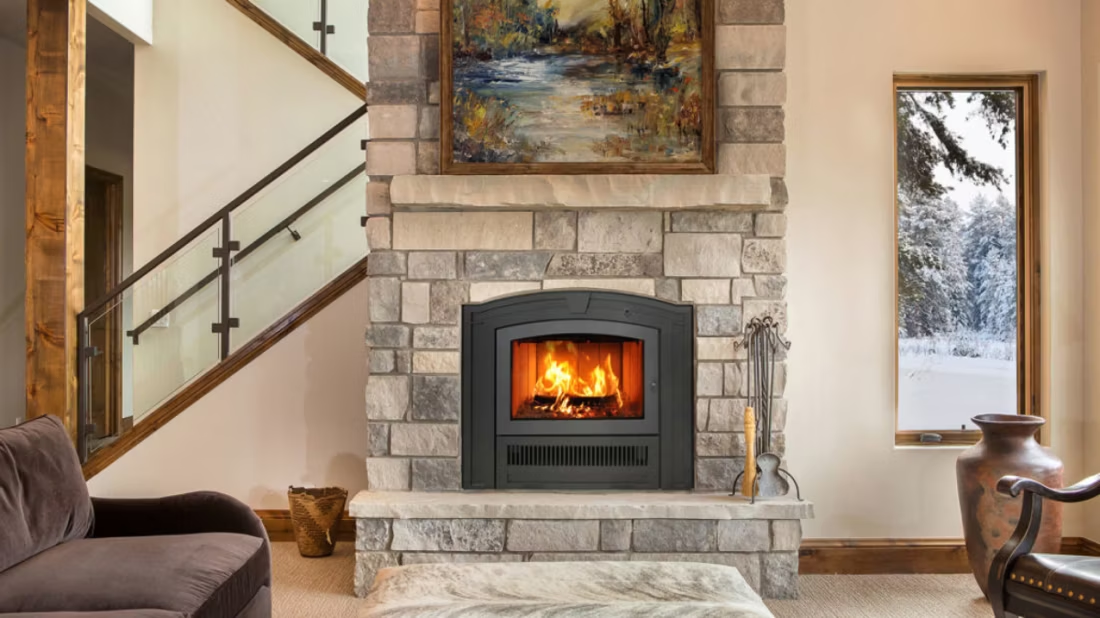
Three steps. No salesperson until you're ready.
Tell us about your project
Your zip code, your situation, and the fuel you're leaning toward—or let the answers point you to one.
See what's actually available
The brands dealers within 100 miles genuinely carry—real options, never a catalog mirage.
Get your dealer & Project Guide
A trusted local dealer, plus the free Project Guide & Parts List that names every component of the job.
Frequently Asked Questions
How much does a wood stove installation cost in Selma?
A basic wood stove installation in Selma typically runs $3,000 to $6,500, depending on the unit, whether you're venting through an existing masonry chimney or need a new Class A chimney run, and any hearth pad work required for clearances. Because wood heat is a niche request here compared to gas or electric, fewer local retailers stock a deep wood-stove lineup—some Selma-area homeowners end up working with a dealer who also serves Montgomery, which can add a bit to labor if a site visit is involved. Get a firm quote after an in-home consultation rather than assuming a national average applies.
Does wood heat actually make sense in Selma's climate?
Honestly, for most homes, wood is supplemental at best. With only a light overall winter heating load each year and winter lows averaging 36°F, Selma doesn't have the sustained cold that makes wood heat a practical primary strategy the way it is in places like Fargo, ND or Burlington, VT. Where it does make sense: homes with an existing masonry fireplace that just want the option, rural properties that already generate their own firewood, and anyone who wants a heat source that works when the power goes out during a winter ice storm—which does happen in the Black Belt a few times most winters. If your goal is whole-home heating, gas or electric will almost always be the more practical call here.
What wood species are available locally for burning?
Oak, hickory, and pine are the common species around Selma and Dallas County, and all three are workable firewood—oak and hickory burn hot and long and are well suited to overnight loads, while pine is more common as kindling or shoulder-season wood since it burns faster and leaves more resin buildup in a flue. Because this is timber country, a fair number of local wood-stove owners source their own firewood from family land or a neighbor's lot rather than buying by the cord, which is part of why wood heat persists here even though it isn't the mainstream heating choice.
Do I need a permit to install a wood stove in Selma?
Yes—any new wood-burning appliance install typically requires a building permit through the local building department covering the City of Selma or Dallas County, mainly to confirm clearances, chimney venting, and hearth protection meet code. Selma doesn't have the wintertime air-quality inversions or wood-smoke advisories you'd see in a mountain or valley town, so there are no burn-curtailment periods to plan around here—it's really just a standard construction permit, and a qualified installer will typically pull it as part of the job.
Wood stove or gas fireplace—which is the better fit for a Selma home?
For most Selma homeowners, gas wins on convenience: instant on-off operation, no ash or creosote to manage, and a cleaner look for a primary living space, and natural gas or propane service is broadly available across Dallas County. Wood wins in narrower situations—no gas line to the property, a desire for heat that works without any utility at all, or simply wanting a real fire in a home that already has the chimney for it. Because Selma's winters are short, many homeowners here who like the idea of a fire choose gas for daily use and skip wood's ongoing maintenance entirely.
Should I get a freestanding wood stove or a wood-burning insert?
If your Selma home already has an open masonry fireplace—common in the city's older homes near downtown—an insert is usually the better move: it slides into the existing firebox, uses the chimney you already have, and turns a heat-losing open hearth into something that actually throws warmth into the room. A freestanding stove makes more sense for a detached space like a workshop, camp, or a room with no existing chimney, since it can be placed almost anywhere clearances allow and vented independently.
How often should a wood-burning chimney be inspected in Selma?
Even with Selma's short burning season, an annual inspection before the first cold snap each fall is the standard recommendation from the Chimney Safety Institute of America, and it holds true here too—light seasonal use still allows creosote to build up, especially if the stove burns pine more often than the denser oak or hickory. A single annual sweep and inspection is typically enough for the handful of cords most local households burn each winter; homes using wood as a true daily heat source should plan on checking mid-season as well.
Where can I get firewood in the Selma area?
A good share of wood-stove owners around Selma and Dallas County cut their own from family land or a friend's timber lot, given how much oak, hickory, and pine grows locally. For those buying, local and regional sellers advertise by the cord (a stacked 4×4×8 foot pile), with seasoned hardwood typically priced higher than pine. If you're new to burning here, ask any local dealer for a supplier recommendation—they usually know who's reliably seasoning wood properly versus selling green wood that will smoke and creosote up a flue.
Is a wood stove a good backup heat option during a power outage in Selma?
Yes, and it's one of the more compelling reasons to have one even in a mild climate like Selma's. Electric service here comes through Alabama Power Co. or Central Alabama Electric Cooperative at roughly 16.6 to 16.8 cents per kWh, and while outages aren't frequent, ice storms have knocked out power across the Black Belt for days at a time in past winters. A wood stove needs no electricity to produce heat, which makes it a genuine hedge against a multi-day outage—something an all-electric heat pump system can't offer on its own.
Why is my open fireplace making my house colder?
Open fireplaces suck—literally. As the fire burns, it consumes air your furnace already paid to heat and pulls it out through the chimney, so the house is actually colder after the fire goes out than before you lit it. An insert fixes this: it seals the chimney, puts fixed glass across the front, and turns that hole in your house into a real heat source.
What's the difference between an insert and a zero-clearance fireplace?
An insert is a fireplace that slides into a pre-existing wood-burning fireplace—if you don't have one, there's nothing to insert it into. A zero-clearance fireplace is built into a framed wall, which makes it the answer for remodels and new construction. Simple test: existing masonry fireplace means insert; blank or framed wall means zero-clearance.
What is an in-home preview and do I need one?
It's a visit where a hearth professional measures your space, confirms the model you picked actually works in your home, and walks the specs—framing, gas line, venting, finish work—before anything is ordered. Some details you just can't know until you see the house. Never make a down payment without one; it's the single most-skipped step that burns buyers.
Should the dealer who sells my fireplace also install it?
Ideally, yes. A fireplace project involves vent pipe, gas line, electrical, and often tile or stone. Hire three or four separate trades and you own the liability and the game of telephone between them. One company selling and installing means one accountable party, start to finish—ask about factory training, on-time completion records, and what happens if an inspection fails.
Nearby Dealers
Hearth shops serving Selma and the surrounding area. Every listing shows whether it is a WhyFire partner, a dealer we have verified as authorized for the brands we recommend, or a local business carrying hearth products. No manufacturer pays for placement. How we verify dealers →
Allgas, Inc. - Montgomery
Apex Gas & Appliance
Brick Acquisition Company
South Alabama Gas
Energy Shop
Find your wood fireplace in Selma.
Tell us about your home and how you'd actually use a wood stove or insert, and we'll match you with a trusted local dealer and send over a free Project Guide & Parts List—the exact parts, including the vent kit, for your Selma project.
Find Your Fireplace →