
Mild-winter comfort for Roanoke, wired in, not chopped.
With average winter lows around 32°F and just 2,790 heating degree days, Roanoke doesn't demand a furnace-grade backup—it rewards a clean, simple electric fireplace. I'll match you with a trusted local dealer who knows what actually installs well here.
Every Project Starts From One of These Five Situations
A supplemental heat source for a genuinely mild climate.
Roanoke sits in climate zone 3A at 853 feet in east Alabama, and the numbers tell the real story: a 32°F average winter low and only 2,790 heating degree days put this county well outside the territory where homeowners need a primary wood or gas-fired backup heat source. Compare that to a place like Duluth or Fargo pulling 8,000-plus heating degree days and it's clear why so many Randolph County homes treat supplemental heat as a comfort and ambiance decision rather than a survival one—a working central HVAC system covers the actual cold snaps just fine.
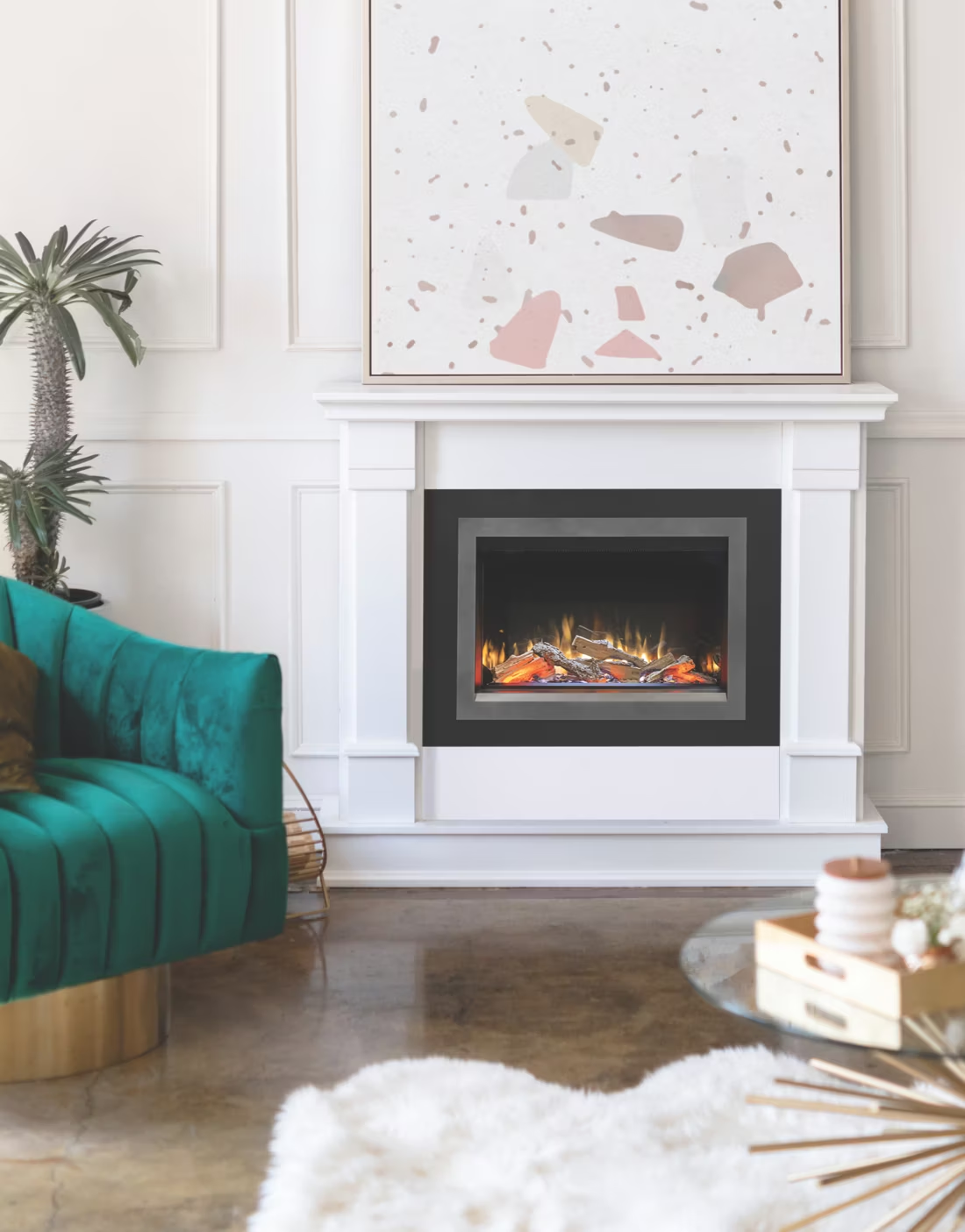
That's exactly the environment where electric fireplaces do their best work. There's no chimney to build, no cutting permit to chase for the oak, pine, and hickory that's plentiful in the surrounding woods, and no gas line to run. Plug it in or have it hardwired, and you're done—most units install for a few hundred dollars and heat a single room efficiently on the occasional 30-degree night. With Alabama Power and Tallapoosa River Electric Cooperative both serving the area at residential rates around 14-17 cents per kWh, running a 1,500-watt electric insert a few hours a night costs pennies compared to firing up whole-house heat for one cold room.
Three steps. No salesperson until you're ready.
Tell us about your project
Your zip code, your situation, and the fuel you're leaning toward—or let the answers point you to one.
See what's actually available
The brands dealers within 100 miles genuinely carry—real options, never a catalog mirage.
Get your dealer & Project Guide
A trusted local dealer, plus the free Project Guide & Parts List that names every component of the job.
Frequently Asked Questions
How much does an electric fireplace installation cost in Roanoke?
Most electric fireplace projects in Roanoke run $400 to $1,200. A plug-in insert or a wall-mounted unit on an existing outlet sits at the low end—often a weekend project with no electrician needed. If you want a built-in unit that requires a new dedicated circuit, or you're recessing it into an existing masonry firebox left over from an old wood-burning fireplace, expect an electrician's visit and a cost closer to the top of that range. Either way, there's no venting, no chimney work, and no gas line to factor in, which is a big part of why electric stays the cheapest fireplace fuel option in town.
Is an electric fireplace enough heat for a Roanoke winter?
For most homes here, yes—as supplemental heat, not a whole-house replacement. With winter lows averaging 32°F and only 2,790 heating degree days a year, Roanoke rarely sees the kind of sustained deep-cold stretch that would strain a 1,500-watt electric unit. Central HVAC handles the baseline load; an electric insert or stove in the main living area just takes the edge off on the coldest nights or lets you turn the thermostat down elsewhere in the house. It's a different math than in a place with a real six-month heating season—here, electric is about comfort and zone heating, not survival.
Do I need a permit to install an electric fireplace in Roanoke?
Usually not for a plug-in unit—those don't typically require a building permit since there's no venting or gas line involved. If you're having a dedicated 240-volt circuit run for a larger built-in electric fireplace, that electrical work should be done by a licensed electrician and may require an inspection through the City of Roanoke or Randolph County, depending on your address. Most local dealers can tell you upfront whether your chosen unit needs that step, and it's worth confirming before you buy rather than after.
How much does it cost to run an electric fireplace in Roanoke?
It depends on which utility serves your address. Alabama Power residential customers pay around 16.77 cents per kWh, while Tallapoosa River Electric Cooperative members pay closer to 14.39 cents. A typical 1,500-watt electric insert running on high draws about 1.5 kWh per hour, so running it for four hours a night costs roughly 85 cents to $1 depending on your provider—cheap enough that most Roanoke homeowners run theirs for ambiance on chilly evenings without worrying much about the bill.
What's the difference between an electric fireplace, insert, and stove?
An electric fireplace is typically a built-in or wall-mounted unit designed to look like a framed-in fireplace—popular in newer Roanoke builds and remodels where there's no existing masonry. An electric insert drops into an existing wood-burning firebox, which is a common move for older homes around town that have a fireplace that's gone unused for years. An electric stove is a freestanding cabinet-style unit that sits on the floor like a wood stove but plugs into a standard outlet—no hearth pad or clearance rules to worry about the way you would with real wood combustion.
Can I put an electric fireplace anywhere in my house?
Pretty much, which is the main advantage over wood or gas. Since there's no combustion, no venting, and no need for outside air, an electric unit can go in a bedroom, a basement den, or an interior wall of the living room—anywhere you have access to power. That flexibility matters in a lot of Roanoke's older housing stock, where retrofitting a chimney or running a new gas line to a room without existing service would be impractical or expensive. A local dealer can confirm your outlet or circuit can handle the unit's draw before installation.
Are electric fireplaces more efficient than wood or gas in Roanoke's climate?
For the way most Roanoke homes actually use supplemental heat—occasional evenings rather than months of continuous burning—electric is hard to beat on simplicity and near-100% point-of-use efficiency, since every watt goes to heat with no flue losses. Wood, using local oak, pine, or hickory, and gas both still make sense for homeowners who want a stronger heat source or enjoy tending a real fire, but given only 2,790 heating degree days here, a lot of residents find the operating simplicity of electric outweighs the ambiance tradeoff, especially for a secondary room.
What maintenance does an electric fireplace need?
Very little, which is part of the appeal in a mild climate like Roanoke's where the unit might only run on the coldest nights of the year. Dust the vents and glass front periodically, replace the LED ember bed bulbs if the unit uses them (usually rated for years of use), and check that the fan isn't struggling to move air. There's no annual chimney sweep, no gas line inspection, and no creosote to manage—a real difference from the upkeep a wood or gas system needs after a Randolph County winter.
Electric vs. gas—which makes more sense for a Roanoke home?
Gas gives you a stronger, more fireplace-like heat output and is worth considering if you want a unit that can genuinely warm a room on a rare 20-degree night, but it requires a gas line and venting that add real installation cost and complexity. Electric skips all of that—no gas service to arrange, no venting, and a $400-$1,200 install range instead of $4,500-plus. Given Roanoke's mild winters and modest 2,790 heating degree days, most homeowners here choosing between the two end up picking electric simply because the climate doesn't demand more, and the lower upfront cost is easy to justify for occasional-use heat.
Can I put a TV above my fireplace?
Yes—with an asterisk. Fireplaces are hot and TVs don't like heat. Either put a mantel between them to deflect rising warmth, or choose a fireplace with heat-management technology that creates a cool zone on the wall above—the wall stays around 125 degrees, barely warm, while the room still gets full heat. If you like clean lines and don't want a mantel, heat management is the answer.
What fireplace styles should I know before shopping?
Four cover most of the market: screen-front traditional (mesh front, open feel, fits craftsman homes), traditional door set (the classic look you grew up with), modern linear (wide, low, the statement piece for entertaining), and clean face contemporary (no trim—your tile or stone runs right to the fire's edge). Walk in knowing those four terms and you're ahead of most buyers.
Does a fireplace add value to my home?
On average, a fireplace adds back to the home about the same amount you spent installing it. Add the monthly savings from heating the rooms you actually use instead of the whole house—often hundreds of dollars a year—and the value case is strong before you even count what a fire does for how your family uses the room.
How much should I budget for a fireplace?
For an average home—covering the fireplace, the vent pipe, and basic installation—a budget between $3,900 and $5,500 gives you a lot of options across wood, gas, and pellet. By the time you add finish work, gas line, and electrical, the average complete installation lands between $5,000 and $12,000 all-in. In a remodel or new build, a good rule is to put about 2.5% of the total project cost toward the fireplace.
Nearby Dealers
Hearth shops serving Roanoke and the surrounding area. Every listing shows whether it is a WhyFire partner, a dealer we have verified as authorized for the brands we recommend, or a local business carrying hearth products. No manufacturer pays for placement. How we verify dealers →
Hall's Propane Gas Company, Inc.
Blossman Gas And Appliance
Southland Propane Services
Blossman Gas And Appliance
Electric Service in Roanoke
An electric fireplace's heater draws about 1,500 watts—pennies per hour at local rates.
Alabama Power Co
Tallapoosa River Elec Coop Inc
Get your free Project Guide & Parts List for an electric fireplace in Roanoke.
Tell me about your home and where you want the heat, and I'll match you with a trusted local dealer and send a free Project Guide & Parts List with the right unit and circuit requirements for your Roanoke project.
Find Your Fireplace →