
Warm up your Randolph County home without the wood pile.
Mild winters around Wedowee and Roanoke mean most homes need supplemental warmth, not a full heating overhaul. An electric fireplace delivers that—plus real ambiance—without a chimney, gas line, or firewood stack. Find the right unit and connect with a trusted local dealer.
Every Project Starts From One of These Five Situations
Mild winters, real ambiance—no chimney needed.
Randolph County sits in climate zone 3A along the Alabama-Georgia line, and winters here are genuinely mild—an average low around 32°F and roughly 2,790 heating degree days a year, a fraction of what a place like Duluth, Minnesota logs in a single hard winter. For homes around Wedowee, Roanoke, and Woodland, that means a wood-burning setup sized for cold-climate primary heat is often more than the county actually needs. Plenty of Randolph County households still burn oak, pine, and hickory for the ritual of it, but a growing number are adding electric fireplaces to living rooms, dens, and bedrooms where the goal is ambiance and quick supplemental warmth rather than heating the whole house through a hard freeze.
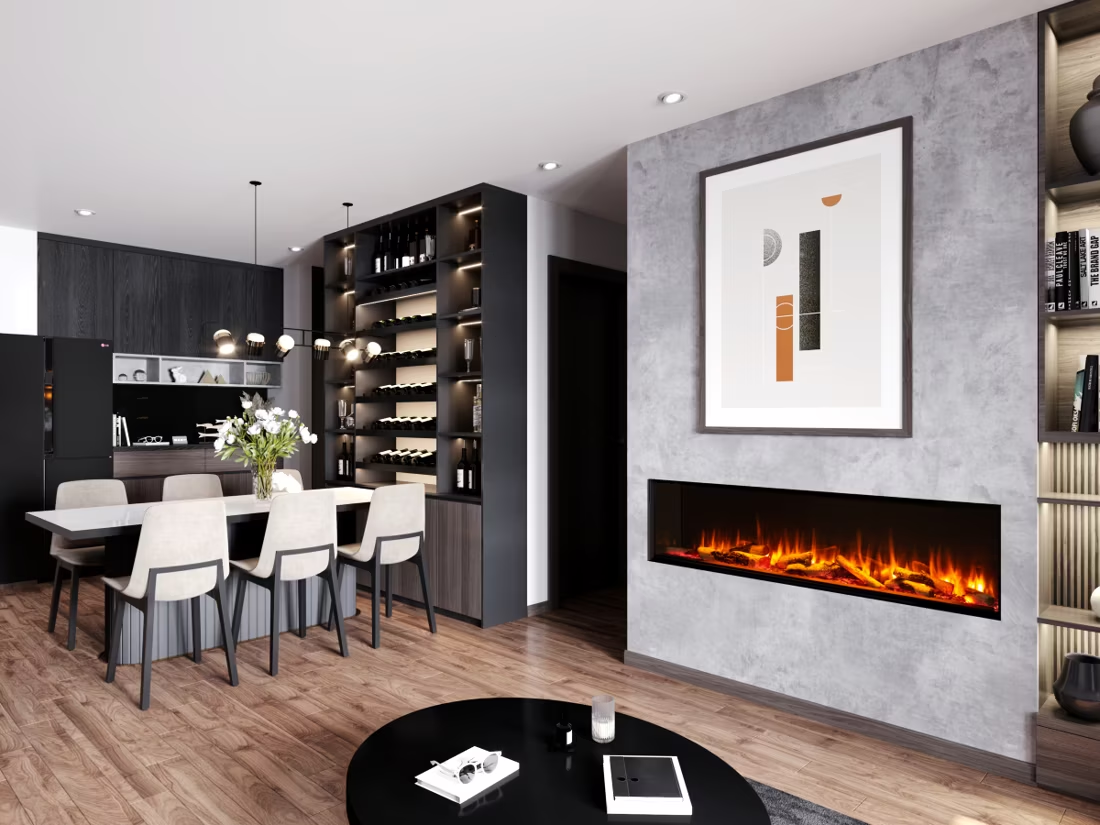
An electric fireplace also sidesteps the biggest hurdles of wood and gas installs in a rural county like this one—no Forest Service cutting permit, no chimney sweep, no propane tank or gas line run out to a rural property served by an electric cooperative like Tallapoosa River Electric Cooperative. Plug-in inserts need nothing more than a standard outlet; built-in wall units need a dedicated circuit, which is a job for a licensed electrician rather than a full construction permit. For a lake house on Lake Wedowee or a farmhouse outside Roanoke without an existing chimney, that simplicity is often the deciding factor.
Three steps. No salesperson until you're ready.
Tell us about your project
Your zip code, your situation, and the fuel you're leaning toward—or let the answers point you to one.
See what's actually available
The brands dealers within 100 miles genuinely carry—real options, never a catalog mirage.
Get your dealer & Project Guide
A trusted local dealer, plus the free Project Guide & Parts List that names every component of the job.
Frequently Asked Questions
How much does an electric fireplace installation cost in Randolph County?
Most electric fireplace projects in Randolph County run $400 to $1,500. A plug-in insert or freestanding stove that drops into an existing opening or simply sits against a wall is on the low end—no electrical work required beyond an outlet that's already there. A built-in wall unit, a linear fireplace set into new framing, or a mantel-and-surround package that needs a dedicated 120V or 240V circuit run by an electrician sits toward the higher end. Because there's no venting, flue, or gas line involved, electric installs are consistently the least expensive hearth project in the county.
Will an electric fireplace actually heat my Randolph County home?
It depends on what you're asking it to do. With an average winter low around 32°F and roughly 2,790 heating degree days, Randolph County doesn't see the sustained sub-zero stretches that make a whole-house electric strategy unrealistic. Most electric fireplaces put out 4,000-5,000 BTUs—plenty to comfortably heat a single room, take the chill off a den on a 30-degree morning, or supplement central heat during a cold snap. They're not a replacement for a furnace or heat pump on the coldest nights of the year, but for the mild winters typical here, a well-placed unit in the main living space covers a real share of your heating need.
Do I need an electrician to install an electric fireplace?
For a plug-in insert or freestanding stove, no—it plugs into a standard 120V outlet like any appliance. For a built-in wall unit or a linear fireplace wired into a dedicated circuit (often recommended for larger units so they're not sharing a circuit with other household loads), yes, a licensed electrician should handle that wiring. If your home is served by Tallapoosa River Electric Cooperative or another rural provider in the county and you're adding a higher-draw unit, it's worth a quick check that your panel has the capacity before installation day.
Do I need a permit to install an electric fireplace in Randolph County?
Electric fireplaces generally don't require the building permit that a wood stove or gas insert would in Randolph County, since there's no chimney, venting, or gas line to inspect. That said, if your installation includes new circuit wiring or panel work, that electrical work may still need to meet county code and could require a permit through the local building department—your electrician will typically handle that paperwork if it applies.
What's the difference between an electric insert, a wall-mounted unit, and a freestanding stove?
An electric insert is built to slide into an existing fireplace opening—a common upgrade for Randolph County homes with an old wood-burning fireplace that's rarely used anymore. A wall-mounted or built-in linear unit sits flush in new framing or a media wall, popular in remodels and new construction. A freestanding electric stove looks like a traditional cast-iron wood stove but plugs in, which works well for a room without any existing fireplace opening—a spare bedroom, a converted porch, or a cabin near Lake Wedowee.
How much does it cost to run an electric fireplace?
Most units cost roughly 10 to 20 cents per hour to run the flame effect alone, and closer to 30 to 50 cents per hour with the heater engaged, depending on your electric rate. For a Randolph County household running a unit a few hours most winter evenings, that typically adds $10 to $25 a month to the electric bill during the heating season—modest compared to running central heat, and far less hassle than sourcing and stacking firewood.
Electric vs. wood—which is right for my Randolph County home?
Wood offers a real flame, no electric bill for the fire itself, and the option to burn oak, pine, or hickory cut and split locally—a long tradition in this part of Alabama. Wood also keeps working during a power outage, which matters when a summer storm or ice event knocks out lines in rural parts of the county. Electric offers instant on-off convenience, zero ash or chimney maintenance, and the flexibility to install in rooms with no chimney at all. Given how mild Randolph County winters run, many homeowners here treat electric as the practical everyday choice for ambiance and quick warmth, while keeping a wood setup elsewhere for backup heat or tradition's sake.
Electric vs. gas—which should I choose?
Gas fireplaces put out more heat and give you a more authentic flame, but they require either a natural gas line or a propane tank, plus venting work and periodic gas appliance service. Electric requires none of that—just power, which every home in the county already has. For a lower-cost, low-maintenance project, especially in a room where running gas line isn't practical, electric is usually the simpler answer. For homeowners who want a fireplace that can genuinely heat a room on a cold Randolph County night and don't mind the added installation complexity, gas is worth comparing.
Can an electric fireplace go anywhere in my house?
Pretty much, which is one of the biggest advantages over wood or gas. Because there's no venting or combustion byproducts, electric units are approved for bedrooms, apartments, and even some manufactured homes—a real consideration in a county where a number of homes outside Wedowee and Roanoke are manufactured or modular. The main constraints are electrical: making sure the circuit can handle the load, and, for built-in units, having a wall cavity or framing that can accommodate the unit's depth.
Can I put a TV above my fireplace?
Yes—with an asterisk. Fireplaces are hot and TVs don't like heat. Either put a mantel between them to deflect rising warmth, or choose a fireplace with heat-management technology that creates a cool zone on the wall above—the wall stays around 125 degrees, barely warm, while the room still gets full heat. If you like clean lines and don't want a mantel, heat management is the answer.
Do electric fireplaces actually produce heat?
Yes—most put out around 4,800–5,000 BTUs from a standard outlet, which comfortably warms a bedroom, office, or den as a comfort-zone heater. What they won't do is carry a whole house the way wood, gas, or pellet can. Think of electric as ambiance-first with honest supplemental heat: flames on with no heat in July, flames plus warmth in January.
Should the dealer who sells my fireplace also install it?
Ideally, yes. A fireplace project involves vent pipe, gas line, electrical, and often tile or stone. Hire three or four separate trades and you own the liability and the game of telephone between them. One company selling and installing means one accountable party, start to finish—ask about factory training, on-time completion records, and what happens if an inspection fails.
Does a fireplace add value to my home?
On average, a fireplace adds back to the home about the same amount you spent installing it. Add the monthly savings from heating the rooms you actually use instead of the whole house—often hundreds of dollars a year—and the value case is strong before you even count what a fire does for how your family uses the room.
Stove and Fireplace Dealers in Randolph County
Listings include WhyFire partner dealers, dealers we have verified as authorized for the brands we recommend, and established local businesses that carry hearth products. Every listing shows which one it is. The ones marked Preferred run on WhyFire's software, so they can show you real pricing and book your appointment right here. No manufacturer pays for placement. How we verify dealers →
Hall's Propane Gas Company, Inc.
Blossman Gas And Appliance
Southland Propane Services
Blossman Gas And Appliance
Find your electric fireplace in Randolph County.
Tell us a bit about your home and we'll put together a free Project Guide & Parts List—the right electric fireplace or insert for your space, the parts needed, and a trusted local dealer in Randolph County to install it.
Find Your Fireplace →