
Effortless Warmth for Malvern's Mild Winters.
No venting, no gas line, no chimney—just plug in or wire up and enjoy real ambiance and supplemental heat through Geneva County's short heating season. Find the right unit and connect with a trusted local dealer.
Every Project Starts From One of These Five Situations
The right fit for Wiregrass winters.
Malvern sits in Geneva County in Alabama's Wiregrass region, where winter lows average around 40 degrees and the heating season is short—just a light winter heating load each year, a fraction of what a place like Fargo, ND or Burlington, VT sees. Wood and pellet stoves are essentially unnecessary here; most Malvern homes lean on a central heat pump for the handful of genuinely cold nights each winter, with a fireplace serving more of a supplemental or ambiance role than a primary heat source.
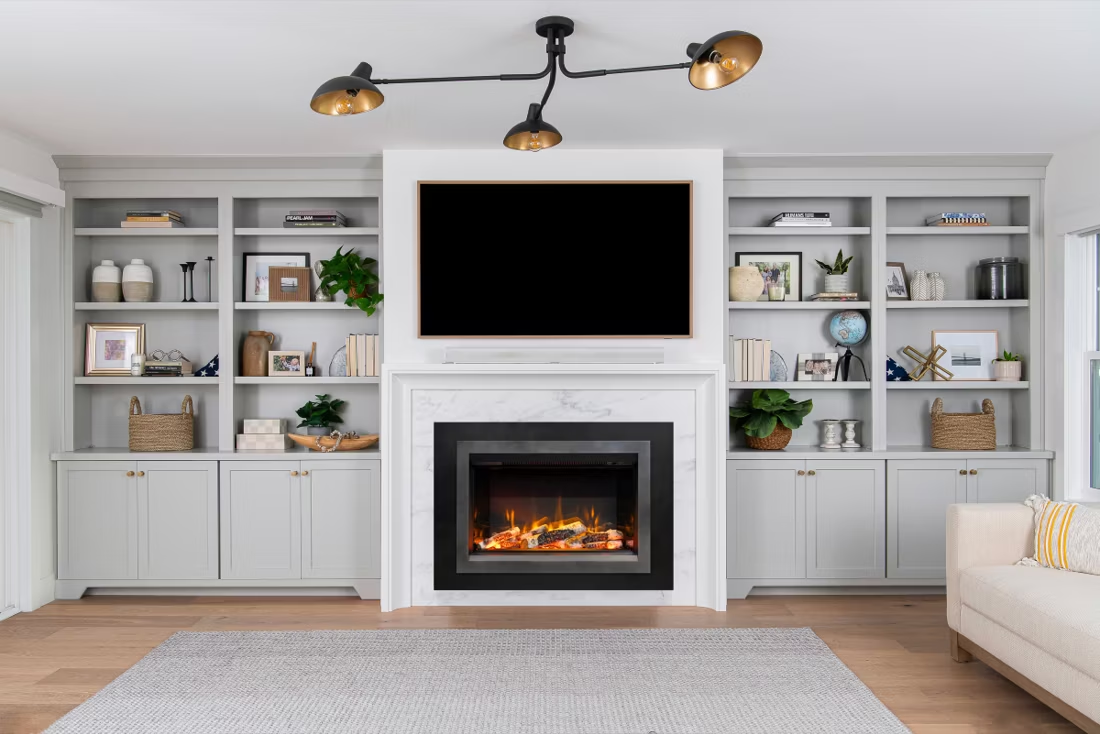
That's exactly the scenario where electric fireplaces earn their keep. A plug-in insert or wall-mount unit needs no chimney, no gas line, and no combustion venting—it can go into an existing mantel opening, a bedroom, or a den in an afternoon. With Alabama Power and Wiregrass Electric Cooperative both serving the area at residential rates in the 15-to-17-cent range, running a 1,500-watt unit costs roughly 23 to 25 cents an hour—cheap enough to leave on for evening ambiance without worrying about the bill.
Three steps. No salesperson until you're ready.
Tell us about your project
Your zip code, your situation, and the fuel you're leaning toward—or let the answers point you to one.
See what's actually available
The brands dealers within 100 miles genuinely carry—real options, never a catalog mirage.
Get your dealer & Project Guide
A trusted local dealer, plus the free Project Guide & Parts List that names every component of the job.
Frequently Asked Questions
How much does it cost to install an electric fireplace in Malvern?
Because there's no chimney, gas line, or venting involved, electric fireplaces are the least expensive hearth option available in Geneva County. A basic plug-in insert or freestanding stove typically runs $200 to $1,500 for the unit itself and can be self-installed or set up by a local electrician in under a day. A built-in wall unit or mantel package that requires a dedicated 120-volt or 240-volt circuit usually lands in the $800 to $3,000 range installed, depending on the unit size and whether new wiring needs to be run. Ask the local dealer you're matched with for a firm quote once they've seen your space.
What will it cost to run an electric fireplace with local electric rates?
Malvern homes are served by either Alabama Power (about 16.8 cents per kWh) or Wiregrass Electric Cooperative (about 15.5 cents per kWh), depending on where you're located. A typical electric fireplace heater draws around 1,500 watts on its highest heat setting, which works out to roughly 23 to 25 cents an hour to run. Most owners use the heat setting occasionally on the handful of genuinely cold nights each winter and run the flame effect alone—which draws only a few watts—the rest of the time for ambiance.
Do I need a permit to install an electric fireplace in Malvern?
In most cases, no. A plug-in electric insert or freestanding stove doesn't touch gas lines or venting, so it typically doesn't trigger a building permit. If you're having an electrician add a new dedicated circuit or a 240-volt line for a larger built-in unit, that electrical work may need a permit through Geneva County, and it should always be done by a licensed electrician rather than a DIY wiring job. Your local dealer can tell you whether your specific installation crosses that line.
Is an electric fireplace enough heat for a Malvern winter?
For most homes here, yes—as supplemental heat. Geneva County only sees a light winter heating load each year, and winter lows average around 40 degrees, so the coldest stretches are short compared to almost anywhere outside the Deep South. Most electric fireplaces put out 4,600 to 5,000 BTUs, enough to comfortably heat a single room or take the chill off a den on a cold snap night, while the home's central heat pump handles the rest of the season. Very few Malvern homes rely on a fireplace of any fuel type as their sole heat source.
Why aren't wood or pellet stoves common in Malvern?
Malvern's mild Wiregrass climate—winter lows averaging 40 degrees and a short heating season—just doesn't generate the sustained cold that makes wood or pellet heat worth the investment for most homeowners. You'll still find the occasional wood-burning fireplace in older farmhouses around Geneva County, often kept for atmosphere on the coldest nights rather than as a heat source, and species like oak, pine, and hickory are locally available if someone wants to burn. But for new installations, gas and electric fireplaces are far more common choices in this area.
What types of electric fireplaces are available for a Malvern home?
The main categories are inserts (which slide into an existing fireplace opening or mantel surround), wall-mount units (which hang flush like a flat-screen TV and need a nearby outlet or dedicated circuit), freestanding stoves (which sit anywhere in a room, no fireplace required), and mantel packages that bundle a surround with a built-in electric firebox. For a Malvern home without an existing fireplace, a wall-mount or freestanding stove is usually the simplest path. For a home with an old, rarely-used masonry fireplace, an insert is a quick way to bring it back into everyday use.
Will my electric fireplace work if the power goes out?
No—electric fireplaces require power to run both the heater and the flame effect, so they'll go dark along with everything else in a power outage. That matters in Geneva County given the tropical storms and occasional hurricane remnants that move up from the Gulf and knock out power across the Wiregrass region. If backup heat during outages is a priority, a gas fireplace with battery-backed ignition is worth considering alongside or instead of an electric unit—many Malvern homes end up with an electric fireplace in one room for everyday ambiance and a gas or propane appliance elsewhere for storm resilience.
Electric vs. gas fireplace—which is right for my Malvern home?
Gas fireplaces put out more real heat and can serve as backup heat during a power outage (with battery-backed ignition), which matters given the Gulf storm season in southern Alabama. Electric fireplaces cost far less to install since there's no gas line or venting, run on either Alabama Power or Wiregrass Electric Cooperative service already in your home, and are simple to relocate or replace down the road. For a room that just needs ambiance and light supplemental warmth, electric is usually the more practical and affordable choice. For a home that wants a real heat source with storm-outage backup, gas is worth the extra investment. A local dealer can walk through both options for your specific space.
What size electric fireplace do I need?
For ambiance alone, sizing is mostly about the visual scale of your wall or mantel opening—a 40 to 50 inch unit fits most standard living rooms. If you want the heater function to actually take the chill off a room on a cold night, look at the BTU rating: most units in the 4,600 to 5,000 BTU range will heat 400 to 600 square feet, which covers a typical den or bedroom in a Malvern home. Because Geneva County's heating needs are modest, oversizing isn't a real concern the way it is with wood stoves further north—the bigger consideration is just matching the unit's width to your space.
Does an electric fireplace need a vent or chimney?
No—that's its superpower. An electric fireplace needs a wall and an outlet, period. No vent pipe, no gas line, no clearances to design around, which is why it works in bedrooms, offices, apartments, and walls where venting a gas or wood unit would be impractical or impossible. Installation is typically the simplest and least expensive of any fireplace type.
Can I put a TV above my fireplace?
Yes—with an asterisk. Fireplaces are hot and TVs don't like heat. Either put a mantel between them to deflect rising warmth, or choose a fireplace with heat-management technology that creates a cool zone on the wall above—the wall stays around 125 degrees, barely warm, while the room still gets full heat. If you like clean lines and don't want a mantel, heat management is the answer.
Can a fireplace actually lower my heating bill?
Yes—by creating a comfort zone. A furnace heats every square foot of the house just to warm the one room you're in; a gas fireplace on low burns roughly a sixth of the gas a typical furnace does. Set the furnace around 55–60 degrees as a baseline, then heat the rooms your family actually uses. Families who heat this way commonly save $20–$60 a month.
What is an in-home preview and do I need one?
It's a visit where a hearth professional measures your space, confirms the model you picked actually works in your home, and walks the specs—framing, gas line, venting, finish work—before anything is ordered. Some details you just can't know until you see the house. Never make a down payment without one; it's the single most-skipped step that burns buyers.
Nearby Dealers
Hearth shops serving Malvern and the surrounding area. Every listing shows whether it is a WhyFire partner, a dealer we have verified as authorized for the brands we recommend, or a local business carrying hearth products. No manufacturer pays for placement. How we verify dealers →
Geneva County Gas District
Gas Pro
Electric Service in Malvern
An electric fireplace's heater draws about 1,500 watts—pennies per hour at local rates.
Alabama Power Co
Wiregrass Electric Coop, Inc
Find your electric fireplace in Malvern.
Tell us a bit about your home and we'll match you with the right electric fireplace, insert, or wall unit—plus a free Project Guide & Parts List with the exact parts and your recommended local dealer.
Find Your Fireplace →