
Find the right electric fireplace for Geneva County's mild winters.
With winter lows averaging 35°F and just over 2,000 heating degree days a year, Geneva County homes rarely need a furnace-grade heat source—they need clean, reliable ambiance with a heat boost on the coldest nights. We match you with a trusted local dealer who can size and install the right unit.
Every Project Starts From One of These Five Situations
A climate built for supplemental heat, not survival heat.
Geneva County sits in the far southeastern corner of Alabama, in climate zone 3A, where winter lows average around 35°F and the heating season is short compared to most of the country—about 2,038 heating degree days a year, a fraction of what a place like Duluth, MN sees in a single winter. Cold snaps happen, but they're brief, and most Geneva County homes are built around central HVAC as the primary heat source. That's exactly the environment where electric fireplaces make the most sense: they add real, usable warmth to a den or bedroom on the handful of nights that dip into the 20s, without the homeowner taking on a wood-burning appliance or a gas line they'll rarely need at full capacity.
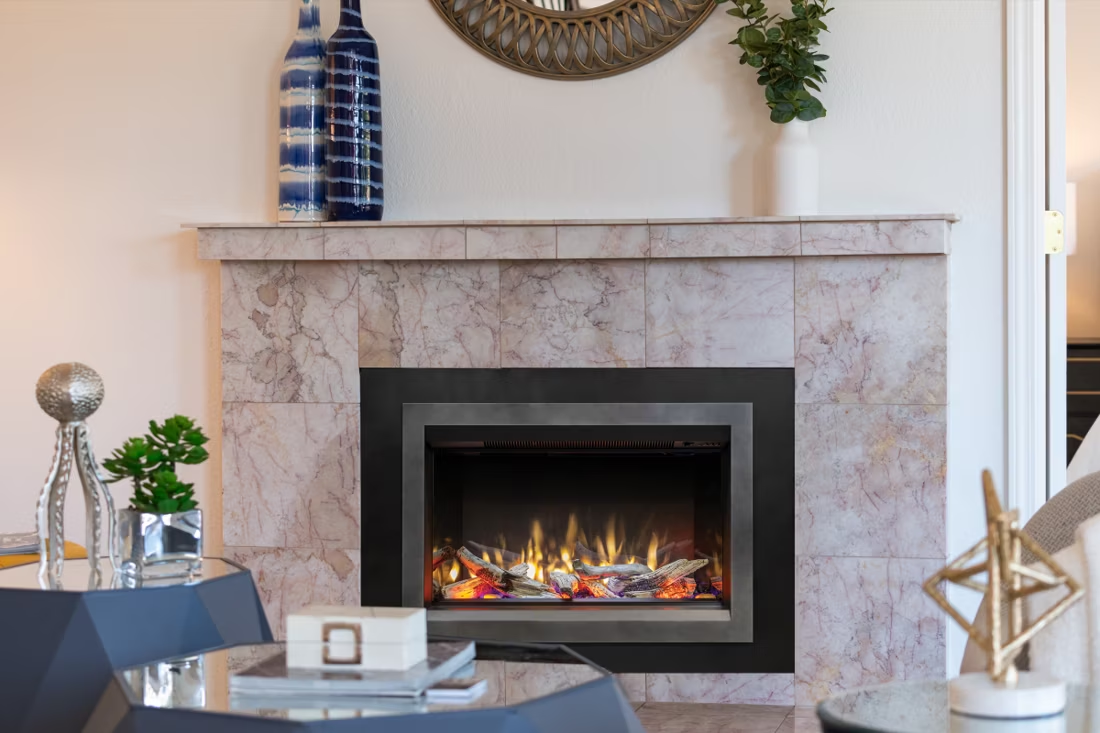
There's no building permit or chimney to think about with most electric units—no venting, no clearance-to-combustible calculations, no annual sweep. For a county where oak, pine, and hickory are the common local firewood species but wood-burning isn't the daily necessity it is farther north, electric fits the way people actually live here: an insert in an existing fireplace opening, a wall-mount in a living room, or a mantel unit that runs off a standard outlet. The tradeoff is real too—electric fireplaces are ambiance-and-supplement, not a backup heat source during a power outage, and that's worth planning around if storm-related outages are a concern in your part of the county.
Three steps. No salesperson until you're ready.
Tell us about your project
Your zip code, your situation, and the fuel you're leaning toward—or let the answers point you to one.
See what's actually available
The brands dealers within 100 miles genuinely carry—real options, never a catalog mirage.
Get your dealer & Project Guide
A trusted local dealer, plus the free Project Guide & Parts List that names every component of the job.
Frequently Asked Questions
How much does an electric fireplace installation cost in Geneva County?
Most electric fireplace installations in Geneva County run $400 to $1,200, and a large share of that range comes down to whether it's a plug-in unit (lowest cost, no electrician needed) or a built-in insert requiring a dedicated circuit or minor wall framing. A wall-mount or mantel-style unit that plugs into an existing outlet is on the low end. An insert that replaces the firebox in an existing masonry or gas fireplace opening, or a built-in unit requiring new electrical work, runs toward the higher end. Local dealers will confirm exact pricing after seeing your space and existing wiring.
Do I need a permit to install an electric fireplace in Geneva County?
In most cases, no—a plug-in electric fireplace that uses an existing outlet doesn't require a permit. If your installation involves new electrical wiring, a dedicated circuit, or built-in construction (framing a niche or mantel surround), a licensed electrician may need to pull an electrical permit through your local building department, and that work should always be done by a licensed electrician rather than a general handyman. Your local dealer can tell you whether your specific installation crosses that line.
Will an electric fireplace actually heat my Geneva County home?
It depends on what you're asking it to do. Most electric fireplaces put out 4,000 to 5,000 BTUs—plenty to warm a bedroom, den, or open living area, and more than enough for the occasional cold snap Geneva County sees given its mild 2,038-degree-day heating season. What an electric unit won't do is replace your central HVAC as whole-home heat, and it won't run during a power outage. For a county where winters rarely demand serious heating capacity, that tradeoff works for most homeowners—electric covers the ambiance and the occasional chilly evening, and the HVAC system handles everything else.
What's the difference between an electric fireplace, insert, and stove?
An electric fireplace is typically a built-in or wall-mounted unit designed to look like a framed fireplace, often installed into a niche or surround. An electric insert is sized to slide into an existing fireplace opening—masonry, wood, or gas—giving an old or unused fireplace a second life without any venting work. An electric stove is a freestanding, stove-shaped unit that sits on the floor, popular for homes without an existing fireplace opening. For Geneva County homes with an existing hearth that's sitting unused, an insert is usually the simplest upgrade; for homes without one, a stove or wall-mount fireplace is more common.
Are electric fireplaces cheaper to run than gas or wood in Geneva County?
For occasional supplemental use, electric fireplaces are generally inexpensive to run—most units cost a few cents per hour on the heat setting, and pennies per hour running the flame effect alone without heat. Given Geneva County's short, mild heating season, most homeowners aren't running one for hours a day all winter the way someone in a colder climate zone might, which keeps overall electric fireplace operating costs low compared to installing and maintaining a wood or gas system for the same occasional use. Wood remains cheaper per BTU if you're already cutting or buying firewood locally (oak and hickory both burn well), but that only pays off if you're using it regularly.
Can I put an electric fireplace anywhere in my house?
Almost—that's one of the main advantages over wood or gas. Since there's no venting or combustion involved, electric fireplaces can go in bedrooms, condos, apartments, and interior rooms where a wood stove or gas fireplace wouldn't be allowed or practical. The main requirement is access to a standard outlet (or a dedicated circuit for larger built-ins) and enough clearance for the unit's heat output, which your local dealer will confirm during an in-home look.
How long do electric fireplaces last?
Most quality electric fireplaces last 10 to 15 years with normal use, and the moving parts most likely to need attention are the heater fan and the LED components that create the flame effect—both are generally serviceable or replaceable rather than requiring a full unit swap. Because there's no chimney, no creosote, and no combustion byproducts to manage, electric units have a much lower maintenance burden than wood or gas appliances, which matters if you want a low-fuss option for a secondary living space or guest room in your Geneva County home.
Electric vs. gas fireplace—which is right for my Geneva County home?
Gas fireplaces put out real, sustained heat (typically 20,000+ BTUs for a direct-vent unit) and can serve as a genuine secondary heat source, including during some power outages if equipped with battery-backup ignition—but they require venting, a gas line or propane tank, and a bigger installation budget. Electric fireplaces install almost anywhere with no venting, cost far less upfront, and are simpler to maintain, but they max out around 5,000 BTUs and won't run without power. In a climate as mild as Geneva County's, where the heating season is short and central HVAC carries the real load, many homeowners choose electric for the ambiance and flexibility, reserving gas for households that want a stronger backup-heat option.
Do electric fireplaces work well in older Geneva County homes?
Yes, often better than wood or gas retrofits. Many older homes in Geneva County have an existing but unused masonry fireplace, and an electric insert is one of the simplest ways to bring that space back into use without chimney repairs, relining, or venting work that an aging flue might require. It's a common project for farmhouse-style homes around Geneva, Hartford, and Samson where the original chimney is structurally fine but not something the owner wants to run a live wood fire through anymore.
Do electric fireplaces actually produce heat?
Yes—most put out around 4,800–5,000 BTUs from a standard outlet, which comfortably warms a bedroom, office, or den as a comfort-zone heater. What they won't do is carry a whole house the way wood, gas, or pellet can. Think of electric as ambiance-first with honest supplemental heat: flames on with no heat in July, flames plus warmth in January.
Can I put a TV above my fireplace?
Yes—with an asterisk. Fireplaces are hot and TVs don't like heat. Either put a mantel between them to deflect rising warmth, or choose a fireplace with heat-management technology that creates a cool zone on the wall above—the wall stays around 125 degrees, barely warm, while the room still gets full heat. If you like clean lines and don't want a mantel, heat management is the answer.
Can a fireplace actually lower my heating bill?
Yes—by creating a comfort zone. A furnace heats every square foot of the house just to warm the one room you're in; a gas fireplace on low burns roughly a sixth of the gas a typical furnace does. Set the furnace around 55–60 degrees as a baseline, then heat the rooms your family actually uses. Families who heat this way commonly save $20–$60 a month.
How much should I budget for a fireplace?
For an average home—covering the fireplace, the vent pipe, and basic installation—a budget between $3,900 and $5,500 gives you a lot of options across wood, gas, and pellet. By the time you add finish work, gas line, and electrical, the average complete installation lands between $5,000 and $12,000 all-in. In a remodel or new build, a good rule is to put about 2.5% of the total project cost toward the fireplace.
Stove and Fireplace Dealers in Geneva County
Listings include WhyFire partner dealers, dealers we have verified as authorized for the brands we recommend, and established local businesses that carry hearth products. Every listing shows which one it is. The ones marked Preferred run on WhyFire's software, so they can show you real pricing and book your appointment right here. No manufacturer pays for placement. How we verify dealers →
Geneva County Gas District
Gas Pro
Get your Geneva County electric fireplace Project Guide & Parts List.
Tell us about your home and we'll match you with a trusted local Geneva County dealer and send a free Project Guide & Parts List—the right unit, the exact parts, and a plan built for your space.
Find Your Fireplace →