
Pellet Heat in Lillian—A Rare Choice for a Mild Climate.
With winter lows averaging 42°F on Perdido Bay, Lillian rarely needs the kind of sustained heat output a pellet stove is built for. If you still want one, here's what actually applies to your home.
Every Project Starts From One of These Five Situations
A mild climate that rarely needs supplemental heat.
Lillian sits at essentially sea level on Perdido Bay in Baldwin County, in climate zone 2A—hot and humid, with only a light winter heating load, adding up to a short, mild cold season each year. Compare that to a true pellet-stove market like International Falls, Minnesota, which racks up a winter heating load more than six times as heavy most winters, and the picture is clear: Lillian's average winter low of 42°F almost never drops into territory where a home needs a dedicated, always-on heat source. Most winters here bring a handful of nights near freezing, not weeks of sustained cold.
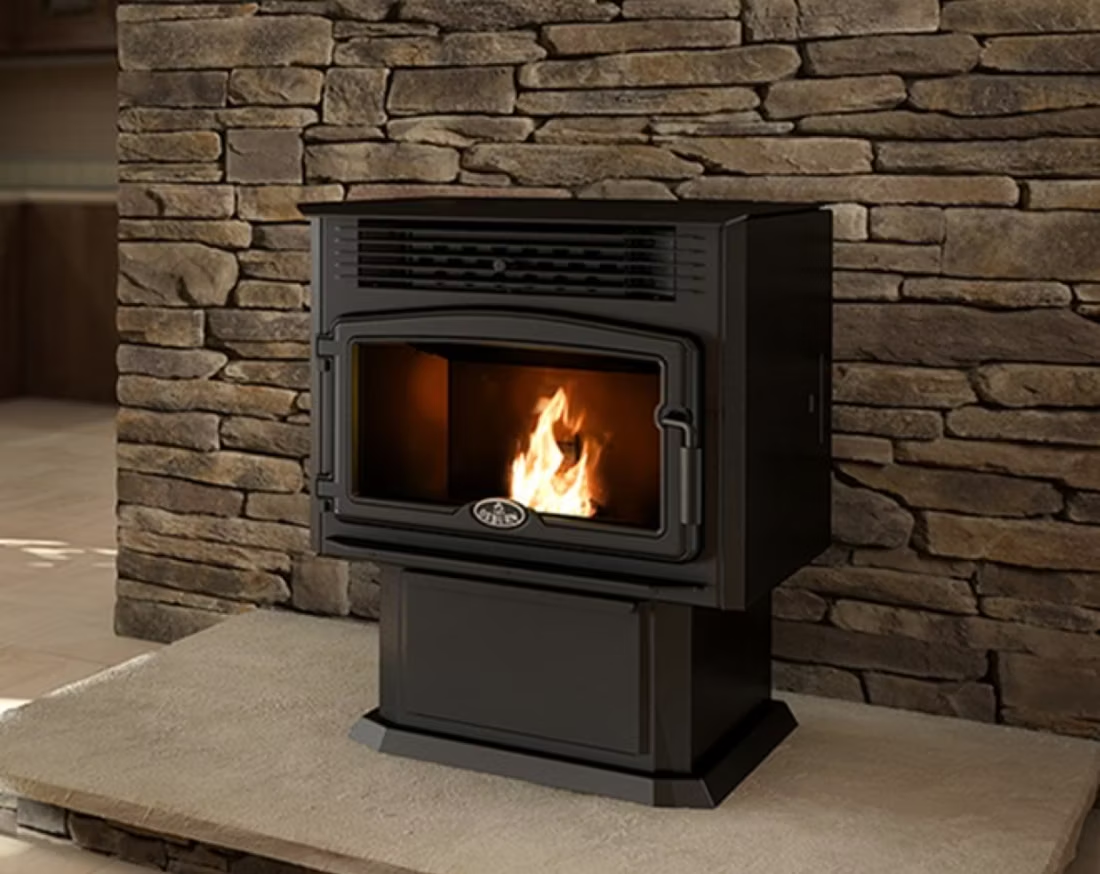
That's why pellet stoves land as not-applicable for most Lillian homes—the demand simply isn't there the way it is farther north. Gas (propane, since natural gas infrastructure is limited this far into rural Baldwin County) and electric heat, through Alabama Power at roughly $0.1677/kWh, cover the occasional cold snap just fine. That said, a small number of homeowners here still install pellet stoves—for the look and feel of a real flame in a den or sunroom, for a hunting camp or fish camp along the bay, or for a vacation property up north. If that's you, brands like Lignetics, Hamer Pellet Fuel (an Alabama company), and Greenway Renewable Energy are all available regionally, typically through hearth dealers in Mobile, Pensacola, or Daphne rather than in Lillian itself.
Three steps. No salesperson until you're ready.
Tell us about your project
Your zip code, your situation, and the fuel you're leaning toward—or let the answers point you to one.
See what's actually available
The brands dealers within 100 miles genuinely carry—real options, never a catalog mirage.
Get your dealer & Project Guide
A trusted local dealer, plus the free Project Guide & Parts List that names every component of the job.
Frequently Asked Questions
How much does a pellet stove installation cost in Lillian?
Because pellet stoves aren't a standard install in Baldwin County, there isn't a deep local cost history to draw on the way there would be in a colder market. Nationally, a typical pellet stove installation—unit, venting, and hearth pad—runs roughly $3,000 to $6,000, and that range holds up reasonably well here too. The bigger variable in Lillian is finding an installer at all; most Gulf Coast hearth dealers focus their inventory on gas fireplaces and electric units, so you may need to work with a dealer based in Mobile or Pensacola who's willing to travel for the install.
Why aren't pellet stoves common in Lillian?
It comes down to how much winter heating a home actually needs. Lillian logs a light, short cold season each year, versus a winter heating load five to six times heavier or more in places like Duluth, Minnesota or Fargo, North Dakota, where pellet stoves are genuinely load-bearing appliances that run most of the winter. Here, with an average winter low around 42°F, most homes never need supplemental heat beyond a central HVAC system's heat-pump mode. A pellet stove sized for real cold-climate output would be dramatically underused in a Lillian living room most winters.
Where can I buy pellet fuel near Lillian?
You won't find pellet fuel stocked at every hardware store the way you would in the Midwest or Northeast, but it's not unavailable—Hamer Pellet Fuel is produced right here in Alabama and is typically the easiest to source locally through farm and feed stores or building supply outlets in Baldwin and Mobile counties. Lignetics and Greenway Renewable Energy pellets are also sold regionally, often through the same hearth dealers who'd sell you the stove. Buying a full pallet at once (usually 50 bags) is worth it if you're committed, since per-bag pricing at small retailers tends to run higher than in pellet-heavy markets.
What heating options make more sense for a Lillian home?
For year-round comfort in this climate, most Lillian homes do best with a heat pump running on Alabama Power's grid or a propane system for backup and supplemental heat—both handle the occasional 30s-and-40s night without the upkeep of a hopper-fed appliance. Gas fireplaces and inserts are also popular for the ambiance factor without the fuel-hauling: propane is common here since natural gas lines don't reach much of rural Baldwin County. If warmth on demand with zero maintenance is the goal, that's usually the better fit than a pellet stove in this zip code.
If I still want a pellet stove for ambiance, what should I know?
The main thing to plan around is electricity dependence. Pellet stoves need power to run the auger and combustion blower—no power, no fire. That matters on the Gulf Coast, where hurricane season regularly knocks out power in Baldwin County for days at a time, sometimes longer after a major storm. A pellet stove won't serve as emergency heat during an outage the way a vented propane appliance or a generator-backed system can, so if resilience during storm season is part of your reasoning for wanting supplemental heat, a pellet stove is the wrong tool for that particular job.
Does Gulf Coast humidity affect pellet fuel storage?
Yes, and it's a real consideration here that doesn't come up in drier climates. Lillian's humidity—this is zone 2A, hot and humid nearly year-round—can cause bagged pellets to absorb moisture, swell, and crumble into sawdust if they're stored in a garage, shed, or under a carport without a vapor barrier. If you do buy in bulk, keep pellets stacked on pallets off a concrete floor, in a dry interior space if possible, and avoid breaking bags open until you're ready to burn them. Compromised pellets burn poorly and can gum up the auger.
Are there local dealers who install pellet stoves near Lillian?
Given the population here—under 2,000 people—Lillian doesn't support a dedicated hearth retailer on its own. Most homeowners end up working with a dealer based in Mobile, Pensacola, Daphne, or Fairhope who covers the wider Baldwin County and Gulf Coast area. These dealers are used to occasional pellet stove requests even though gas and electric fireplaces make up the bulk of their business, and they can size a unit correctly and handle the venting and clearances.
What about hunting camps or cabins near Perdido Bay—does pellet make sense there?
It can, depending on how the property is used. Camps and cabins around Perdido Bay and the Styx River that see occasional overnight use during hunting season sometimes add a pellet stove or insert for controllable, thermostat-set heat without tending a wood fire all night. The tradeoff is the same electricity dependency—if the camp doesn't have reliable power (or a generator), a propane heater or a simple wood stove burning local oak or hickory is usually the more practical backup.
Pellet vs. gas or electric—which is right for my Lillian home?
Gas (propane, most likely, given limited natural gas coverage this far into Baldwin County) and electric heat through Alabama Power both start instantly, need no fuel storage, and handle Lillian's mild, short cold spells without any extra planning. Pellet stoves offer real-flame ambiance and decent supplemental heat, but they need a fuel supply chain that isn't well established this far south, they depend on electricity to run at all, and they're overbuilt for a climate with barely any real winter heating load to speak of. For the overwhelming majority of Lillian homes, gas or electric is the more sensible choice—pellet only makes sense if ambiance or a specific secondary property is the actual goal.
What do I measure to size a fireplace insert?
Four numbers tell you what fits: the front width, the front height, the back width, and the overall depth of your existing fireplace opening. Grab a tape measure, jot those down, and snap a photo of the wall—those two things do more to move your project forward than anything else you can do today.
What's the difference between an insert and a zero-clearance fireplace?
An insert is a fireplace that slides into a pre-existing wood-burning fireplace—if you don't have one, there's nothing to insert it into. A zero-clearance fireplace is built into a framed wall, which makes it the answer for remodels and new construction. Simple test: existing masonry fireplace means insert; blank or framed wall means zero-clearance.
What is an in-home preview and do I need one?
It's a visit where a hearth professional measures your space, confirms the model you picked actually works in your home, and walks the specs—framing, gas line, venting, finish work—before anything is ordered. Some details you just can't know until you see the house. Never make a down payment without one; it's the single most-skipped step that burns buyers.
Can I install a fireplace myself?
If you're putting a fire in your house on purpose, it's best to work with an expert. Unless you're genuinely experienced in framing, gas line, vent pipe, and the national code on clearances to combustibles, have a professional do it—and ideally the same company that sells you the fireplace, so warranty, service, and liability all live under one roof.
Nearby Dealers
Hearth shops serving Lillian and the surrounding area. Every listing shows whether it is a WhyFire partner, a dealer we have verified as authorized for the brands we recommend, or a local business carrying hearth products. No manufacturer pays for placement. How we verify dealers →
Fireplace Concepts, Inc
Hood's Discount Home Center
Street'S Exquisite Plants
Patio Specialists
Pellet Brands Stocked Around Lillian
Manufacturers will point you to the nearest stocking dealer.
Find your pellet stove match near Lillian.
Tell us about your home and what you're after, and we'll be straight with you about whether a pellet stove is the right call in this climate—then match you with a trusted local dealer and a free Project Guide & Parts List covering the exact unit, venting, and hearth setup for your project.
Find Your Fireplace →