
Keep Your Family Warm and Safe—No Matter What
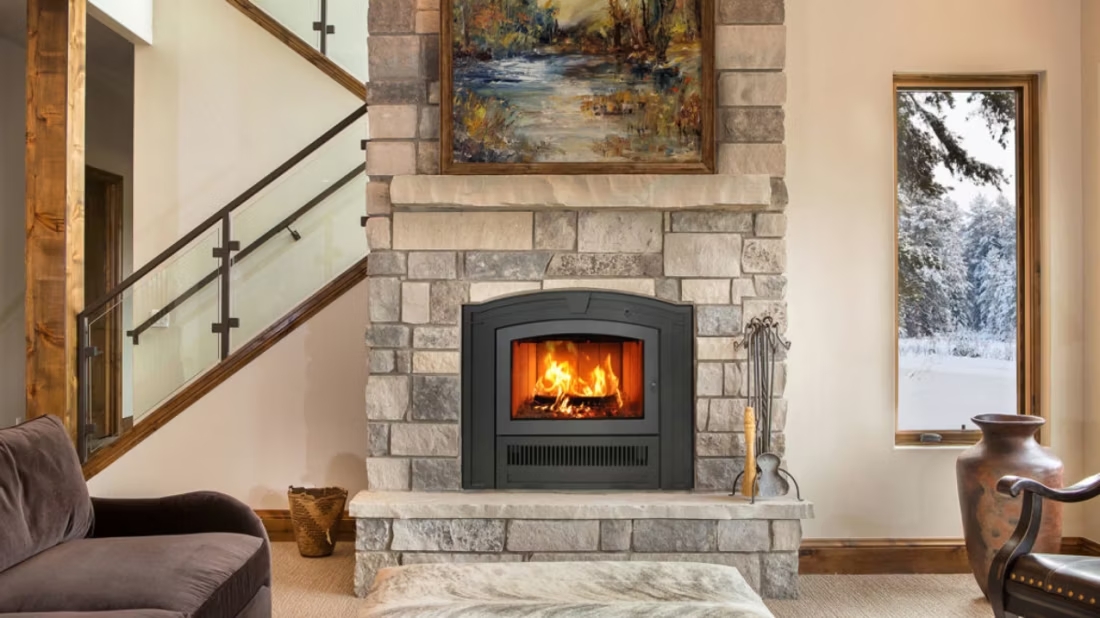
Wood isn't the default heat source in Morgan County—most Hartselle homes run on gas or electric—but a well-chosen stove or insert still earns its place for backup warmth and a real fire in the room.
Every Project Starts From One of These Five Situations
Why some Hartselle homeowners still choose wood heat.
Hartselle sits in USDA climate zone 3A with about 3,048 heating degree days a year and an average winter low near 31°F. That's a mild heating season—compare it to Duluth, Minnesota, which racks up more than 9,000 heating degree days, or Burlington, Vermont, where wood stoves genuinely carry the load all winter. In Hartselle, gas and electric service (from Joe Wheeler EMC and the City of Hartselle at roughly 12-14 cents per kWh) handle the vast majority of home heating, and that's reflected in how few homes here are built around a wood-burning system as primary heat.
That said, wood hasn't disappeared from the picture. North Alabama gets its share of winter ice storms that knock out power for days, and a wood stove or insert is one of the few heat sources that keeps working when the grid doesn't. Local oak, hickory, and pine—all common firewood species in Morgan County—burn hot and are easy to source from area tree services. For homeowners who want a real fire for ambiance on the handful of genuinely cold nights each winter, or a reliable backup for the next ice storm, a properly sized wood stove or insert still makes sense—it's just a secondary system here, not the backbone of home heating it is farther north.
Three steps. No salesperson until you're ready.
Tell us about your project
Your zip code, your situation, and the fuel you're leaning toward—or let the answers point you to one.
See what's actually available
The brands dealers within 100 miles genuinely carry—real options, never a catalog mirage.
Get your dealer & Project Guide
A trusted local dealer, plus the free Project Guide & Parts List that names every component of the job.
Frequently Asked Questions
Is a wood-burning fireplace a good fit for a Hartselle home?
It depends on what you want it to do. With around 3,048 heating degree days and winter lows averaging 31°F, Hartselle doesn't have the sustained cold that makes wood heat a primary necessity—most homes here rely on gas or electric systems from Joe Wheeler EMC or the City of Hartselle. But a wood stove or insert is still a reasonable choice as a secondary heat source, especially given how often North Alabama ice storms take down power lines for days at a time. If you're after backup heat, ambiance, or the character of a real fire, wood still works well here—it just won't be your only heat source.
How much does a wood stove installation cost in Hartselle?
Nationally, a wood stove or insert installation typically runs $3,000 to $7,500, depending on the unit, whether an existing chimney can be reused, and whether new Class A chimney pipe needs to be run. Because wood systems are less common in Morgan County than gas or electric, fewer local dealers stock a deep inventory of stoves, so pricing can vary more than it would in a colder market. A local hearth dealer can give you a firm number after seeing your home and existing chimney, if any.
What size wood stove do I need for a Hartselle home?
Given Hartselle's mild winter lows, most homes here don't need a large-capacity stove built for round-the-clock, sub-zero burning. A small to mid-size stove—the kind rated for 1,000 to 1,800 square feet—is usually enough to supplement a room or serve as backup heat during an outage, rather than heat an entire home continuously. Oversizing is a common mistake in milder climates like this one: a stove that's too big for the space will get damped down constantly, which leads to smoldering fires and creosote buildup. A local dealer can size it correctly based on your square footage and how you plan to use it.
Where can I find certified wood stove installers near Hartselle?
Look for installers with NFI (National Fireplace Institute) or CSIA (Chimney Safety Institute of America) certification. Because wood systems are less common around Hartselle than gas or electric, it's worth asking specifically about a dealer's wood-burning install experience rather than assuming every hearth retailer in the Decatur-Huntsville area handles it regularly. A dealer who installs wood stoves as a routine part of their business—not an occasional add-on—will get the clearances, venting, and hearth pad sizing right the first time.
What's the difference between a wood stove and a wood insert?
A wood stove is a freestanding unit on its own hearth pad, vented through a new or existing chimney—it can go almost anywhere in the home with the right clearances. A wood insert is built to slide into an existing masonry fireplace, turning an old open hearth into a much more efficient heat source using the chimney you already have. Since older homes in and around Hartselle sometimes have a original masonry fireplace that's rarely used, an insert can be the more cost-effective route if you already have one. Newer homes without an existing fireplace are usually better suited to a freestanding stove.
Do I need a permit to install a wood stove in Hartselle?
New wood-burning installations typically require a building permit through the City of Hartselle or Morgan County, depending on where your home falls. Most hearth dealers handle the permit paperwork as part of the installation, so it's rarely something homeowners have to navigate on their own. There are no air quality restrictions or burn curtailment periods in this part of Alabama, unlike some Western states—so once installed and permitted, you can burn without worrying about seasonal advisories.
What's the best wood stove for Hartselle's mild winters?
Since Hartselle doesn't see the extended sub-zero stretches that demand a 20-plus-hour catalytic burn, a mid-size non-catalytic stove from a brand like Pacific Energy or Lopi is usually plenty—easier to operate, less maintenance than a catalytic unit, and well matched to occasional or backup use. If you're planning to lean on the stove more heavily during winter storm outages, a catalytic model will stretch a load of local oak or hickory further overnight, which is worth the extra cost if reliability during outages is the priority.
How often should my chimney be inspected?
The CSIA recommends an annual inspection for any wood-burning appliance, even one used occasionally. For a Hartselle home where the stove sees light-to-moderate use rather than daily winter burning, an inspection every year before the first cold snap is still the right call—creosote buildup happens even with infrequent use, and a stove that sits unused for months benefits from a check before you fire it up again. A Level 1 inspection and sweep is usually sufficient for lighter-use setups like most in this area.
Wood stove vs. gas fireplace—which is right for a Hartselle home?
Gas is the more natural fit for most Hartselle homes: it lights instantly, requires no wood handling, and pairs easily with the gas service many homes already have for water heating or cooking. Wood, on the other hand, keeps working when the power goes out—a real advantage during North Alabama's periodic winter ice storms—and gives you the option to burn local oak, hickory, or pine at low fuel cost. If your priority is everyday convenience, gas wins. If you want a heat source that doesn't depend on the grid, or you simply like the feel of a real wood fire, a stove or insert still has a place even in this milder climate.
What's the difference between an insert and a zero-clearance fireplace?
An insert is a fireplace that slides into a pre-existing wood-burning fireplace—if you don't have one, there's nothing to insert it into. A zero-clearance fireplace is built into a framed wall, which makes it the answer for remodels and new construction. Simple test: existing masonry fireplace means insert; blank or framed wall means zero-clearance.
Why won't my new wood stove get going like my old one?
New wood stoves are 70%+ efficient, so far less heat goes up the flue—which also means less draft to get a fire established. The rule: build a genuinely hot fire for about 45 minutes before you choke it down. Skip that and you get smoke in the room, creosote in the chimney, and a fire that never takes off. Most performance complaints trace straight back to this.
Does a fireplace add value to my home?
On average, a fireplace adds back to the home about the same amount you spent installing it. Add the monthly savings from heating the rooms you actually use instead of the whole house—often hundreds of dollars a year—and the value case is strong before you even count what a fire does for how your family uses the room.
Can I install a fireplace myself?
If you're putting a fire in your house on purpose, it's best to work with an expert. Unless you're genuinely experienced in framing, gas line, vent pipe, and the national code on clearances to combustibles, have a professional do it—and ideally the same company that sells you the fireplace, so warranty, service, and liability all live under one roof.
Nearby Dealers
Hearth shops serving Hartselle and the surrounding area. Every listing shows whether it is a WhyFire partner, a dealer we have verified as authorized for the brands we recommend, or a local business carrying hearth products. No manufacturer pays for placement. How we verify dealers →
Higdon Service, Inc.
Alabama Fireplace & Construction Specialties
Allgas, Inc. - Arab
Hawkins Heating & Air Conditioning
Allgas, Inc.
Atnip Design & Supply Center
Discount Building Supply
Find your wood fireplace in Hartselle.
Tell us about your home and how you plan to use it, and we'll match you with a trusted local dealer who can tell you honestly whether wood makes sense for your space—plus a free Project Guide & Parts List for your project in Hartselle.
Find Your Fireplace →