
Keep Your Family Warm and Safe—No Matter What
With winter lows averaging 32°F and a fairly light winter heating load overall, most DeKalb County homes run on gas or electric heat. A wood stove or insert isn't the default here—but for supplemental warmth, cabin properties on Lookout Mountain, or backup heat during ice storms, it can still make sense. We'll connect you with a vetted local dealer who'll tell you honestly whether it's worth it.
Every Project Starts From One of These Five Situations
A foothills climate that rarely demands it.
Fort Payne sits at about 1,082 feet in the Appalachian foothills between Lookout Mountain and Sand Mountain. Winters here are mild by comparison to true cold-climate markets—average lows hover around 32°F, and the area has a winter heating load that's less than half of what a place like Duluth, MN sees in a typical winter. In that kind of climate, propane, natural gas, and electric heat pumps handle nearly all of DeKalb County's home heating, and wood is rarely anyone's primary or even secondary heat source.
That said, oak, hickory, and pine are abundant in the surrounding forestland, and a modest number of Fort Payne homeowners still install a wood stove or insert—for ambiance, for backup heat during winter ice storms that occasionally knock out power, or for cabins and second homes tucked into the Little River Canyon area. If that's your situation, the goal is getting it sized and vented correctly by someone who actually installs wood-burning equipment regularly, rather than treating it as an afterthought.
Firewood Cutting Permits Near Fort Payne
Three steps. No salesperson until you're ready.
Tell us about your project
Your zip code, your situation, and the fuel you're leaning toward—or let the answers point you to one.
See what's actually available
The brands dealers within 100 miles genuinely carry—real options, never a catalog mirage.
Get your dealer & Project Guide
A trusted local dealer, plus the free Project Guide & Parts List that names every component of the job.
Frequently Asked Questions
Does a wood stove make sense in a climate as mild as Fort Payne's?
For most Fort Payne homes, no—not as a primary heat source. With average winter lows around 32°F and a heating season that's short and mild, the climate here is nowhere near genuinely cold-climate towns like Burlington, VT or Bozeman, MT. Where a wood stove earns its keep locally is as supplemental heat for a drafty room, backup warmth during ice-storm power outages (which do happen on Sand Mountain and along Lookout Mountain), or ambiance in a den or cabin. If your goal is lowering a heating bill that's already small, the payback period on a wood stove will be long.
What does a wood stove installation cost in Fort Payne?
There isn't a large local market to benchmark against—wood stove installs are far less common here than in colder states—but based on regional pricing you should expect somewhere in the $3,000 to $7,000 range for a stove, hearth pad, and Class A chimney venting through an exterior wall or existing masonry flue. Because fewer DeKalb County installers specialize in solid-fuel systems compared to gas or HVAC work, it's worth getting two or three quotes rather than assuming a single big-box estimate reflects the real cost of proper venting and clearances.
What size wood stove do I need if I'm only using it for supplemental heat?
Most Fort Payne installations lean small to medium—a stove rated for 1,000 to 1,500 square feet is usually plenty for a single living area, den, or cabin, since you're topping off a home that's already heated by gas or electric equipment rather than carrying the whole load. Oversizing a stove for supplemental use is a common mistake: a stove that's too big for the room will run hot and force you to burn small, smoldering fires just to avoid overheating the space, which builds creosote faster. A local dealer can size this correctly during a quick walkthrough of the room.
Can I cut my own firewood near Fort Payne?
Yes. Permits for cutting on national forest land are available through the Cherokee National Forest office, and they're inexpensive—around $20 per cord—with a cutting season that typically runs May through October. Oak and hickory, both common in the area, split and season well and burn hot with a long coal bed, while pine is more common for kindling or shoulder-season fires since it burns fast and leaves more resin buildup in the flue. Whatever you cut, plan to season it at least six months to a year before burning, since green oak in particular holds moisture stubbornly.
Wood stove or wood insert—which fits a Fort Payne home better?
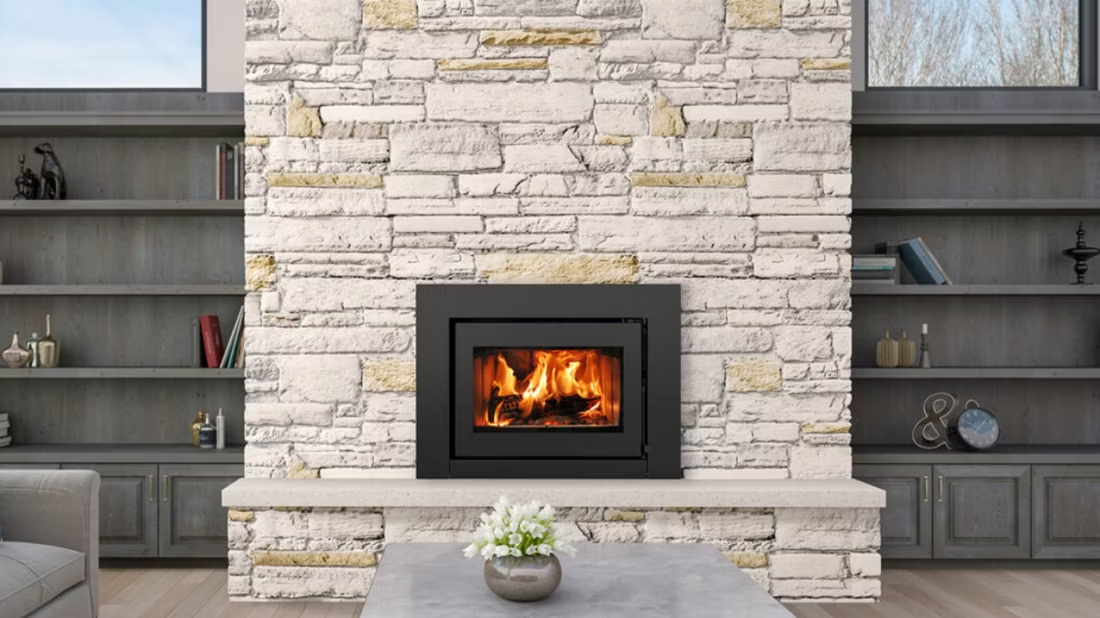
If your home already has a masonry fireplace—common in older homes around downtown Fort Payne and in the surrounding county—an insert is usually the better call. It uses the chimney you already have, seals up the heat loss of an open hearth, and turns an inefficient fireplace into something that actually throws useful heat. A freestanding stove makes more sense if you're adding wood heat to a room with no existing chimney, like a den addition or a cabin, since it can vent straight up through a wall or roof with new Class A pipe.
Do I need a permit to install a wood stove in DeKalb County?
Most jurisdictions require a building permit for a new solid-fuel appliance installation, covering the hearth pad clearances and chimney penetration through the roof or wall, and Fort Payne and unincorporated DeKalb County are no exception. Because wood stove installs are relatively rare here, it's worth confirming directly with whichever installer you choose that they're pulling the permit as part of the job rather than assuming it's optional—a lot of local installers are used to gas and HVAC permitting and may need reminding for a wood job.
Are there burn restrictions or air quality rules in Fort Payne?
No—Fort Payne and DeKalb County don't have the winter inversion or non-attainment issues that trigger burn curtailment days in some western markets. There's no local equivalent of a Yellow Curtailment Period restricting when you can run a wood stove. That said, a properly sized, EPA-certified stove will still burn cleaner and use less wood than an old smoke-dragon unit, so it's worth asking about current EPA 2020 NSPS-certified models even without a local mandate requiring it.
How often should a wood stove be inspected if it's only used occasionally?
Even light or seasonal use warrants an annual inspection before burning season, typically in early fall. A stove used only a handful of times a month for supplemental heat or ambiance builds creosote more slowly than a primary-heat setup burning around the clock, but slower isn't the same as never—and a chimney that only gets used occasionally is also one that's easy to forget about. A quick Level 1 sweep and inspection each year catches animal nests, cracked flue liners, and creosote buildup before they become a chimney fire risk.
Wood stove vs. relying on electric heat—which makes more sense in Fort Payne?
For most homes here, electric heat from Sand Mountain Electric Cooperative or Fort Payne Improvement Authority already covers the bulk of a mild heating season affordably—residential rates run around 12 to 12.5 cents per kWh, which is reasonable, and there's no wood-handling or chimney maintenance involved. A wood stove earns its place alongside that as backup heat during winter storm outages, when electric heat simply stops working, or as a supplemental source for a chilly room. Very few Fort Payne homes are heating primarily with wood, and that's the honest, climate-driven reason why.
What's the difference between an insert and a zero-clearance fireplace?
An insert is a fireplace that slides into a pre-existing wood-burning fireplace—if you don't have one, there's nothing to insert it into. A zero-clearance fireplace is built into a framed wall, which makes it the answer for remodels and new construction. Simple test: existing masonry fireplace means insert; blank or framed wall means zero-clearance.
Why is my open fireplace making my house colder?
Open fireplaces suck—literally. As the fire burns, it consumes air your furnace already paid to heat and pulls it out through the chimney, so the house is actually colder after the fire goes out than before you lit it. An insert fixes this: it seals the chimney, puts fixed glass across the front, and turns that hole in your house into a real heat source.
Can I install a fireplace myself?
If you're putting a fire in your house on purpose, it's best to work with an expert. Unless you're genuinely experienced in framing, gas line, vent pipe, and the national code on clearances to combustibles, have a professional do it—and ideally the same company that sells you the fireplace, so warranty, service, and liability all live under one roof.
How much should I budget for a fireplace?
For an average home—covering the fireplace, the vent pipe, and basic installation—a budget between $3,900 and $5,500 gives you a lot of options across wood, gas, and pellet. By the time you add finish work, gas line, and electrical, the average complete installation lands between $5,000 and $12,000 all-in. In a remodel or new build, a good rule is to put about 2.5% of the total project cost toward the fireplace.
Nearby Dealers
Hearth shops serving Fort Payne and the surrounding area. Every listing shows whether it is a WhyFire partner, a dealer we have verified as authorized for the brands we recommend, or a local business carrying hearth products. No manufacturer pays for placement. How we verify dealers →
Allgas, Inc. - Ider
Allgas, Inc. - Boaz
See if wood heat makes sense for your Fort Payne home.
Tell us about your home and your reason for wanting wood heat—supplemental warmth, storm backup, or a cabin retreat—and we'll connect you with a trusted local dealer plus a free Project Guide & Parts List spelling out the stove, venting, and hearth specs for your specific project in Fort Payne.
Find Your Fireplace →