
Keep Your Family Warm and Safe—No Matter What
With winter lows averaging 38°F and a light overall winter heating load, Enterprise doesn't demand wood heat the way northern climates do. But plenty of homeowners here still want the look, the crackle, and the backup warmth a real fireplace or small stove provides.
Every Project Starts From One of These Five Situations
Wood heat plays a supporting role, not a leading one.
Enterprise sits at just 304 feet elevation in Alabama's Wiregrass region, in climate zone 3A, where winters are short and mild—average lows around 38°F and a light overall winter heating load. Compare that to a true wood-heat market like Duluth, MN, which has a winter heating load more than five times as heavy most winters, and it's clear why wood stoves are flagged as not-applicable for most Coffee County homes. Central heat pumps and gas systems handle the vast majority of heating load here.
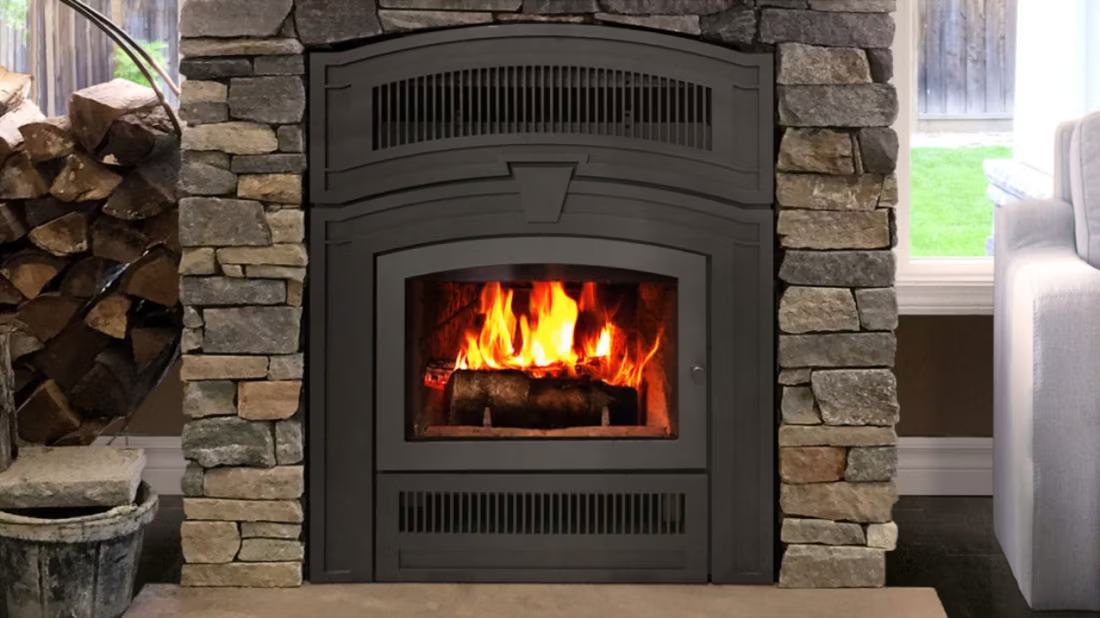
That said, Coffee County sits in the middle of Alabama's timber country—oak, pine, and hickory are all abundant and locally available—and a fireplace or small wood stove still shows up in older farmhouses, hunting cabins, and homes that want a backup heat source for ice storms or the occasional tropical-system outage that knocks out Alabama Power service for a few days. If you're one of the homeowners in Enterprise who wants a real wood fire, Find My Fireplace matches you with a trusted local dealer who can size the unit correctly, handle venting, and tell you honestly whether it makes sense for your home.
Three steps. No salesperson until you're ready.
Tell us about your project
Your zip code, your situation, and the fuel you're leaning toward—or let the answers point you to one.
See what's actually available
The brands dealers within 100 miles genuinely carry—real options, never a catalog mirage.
Get your dealer & Project Guide
A trusted local dealer, plus the free Project Guide & Parts List that names every component of the job.
Frequently Asked Questions
Are wood stoves and fireplaces common in Enterprise, AL?
Not really—and it would be dishonest to say otherwise. With mild winters and only a light overall winter heating load, most homes in Enterprise heat with electric heat pumps or gas. Wood-burning fireplaces and stoves show up mostly in older homes with existing masonry fireplaces, on rural properties with land to cut from, or as a deliberate backup heat source for the occasional ice storm or hurricane-related power outage. If that's your situation, local dealers can still help—they just don't see this request as often as they would gas or electric inserts.
What does a wood stove or fireplace installation cost in Enterprise?
Because wood installs are infrequent locally, there isn't a well-established Enterprise-specific price benchmark the way there is for gas or electric. In general, a basic freestanding wood stove with Class A chimney venting runs several thousand dollars installed, with costs climbing if you need new hearth pad work or a full chimney chase built from scratch. Given how few local dealers stock wood units regularly, get a firm, in-home quote before assuming a number—availability and labor can vary more here than in markets where wood heat is standard.
What firewood is available locally in Coffee County?
Oak, pine, and hickory are the three species you'll most commonly find around Enterprise, reflecting the mixed pine-hardwood timberland that covers much of the Wiregrass region. Pine is easy to find and lights fast but burns quicker and leaves more resin buildup in a flue; oak and hickory are denser, burn longer, and are the better choice if you want a fireplace that can actually hold heat overnight. Most firewood here comes from local tree services and small seasonal sellers rather than the National Forest permit system you'd see out West—there's no significant public land cutting program in this part of Alabama.
Do I need a permit to install a wood stove in Enterprise?
Most municipalities in Alabama, including Enterprise, require a building permit for a new wood-burning appliance installation, particularly if it involves new chimney construction or a change to an existing masonry fireplace. Because this is an uncommon request locally, it's worth confirming directly with the City of Enterprise building department before work starts rather than assuming your installer will automatically pull the right permit—some general contractors here have limited experience with wood-specific code requirements simply because so few jobs come through.
Does a wood stove make sense as backup heat in Enterprise?
It can, and this is actually one of the better reasons to consider one here. Enterprise is inland enough to avoid direct hurricane landfall, but remnant tropical systems and occasional winter ice events do knock out Alabama Power service for a day or more. A wood stove or fireplace with dry oak or hickory on hand keeps a room warm with zero dependence on the grid—something a gas insert with electronic ignition or an electric unit can't fully promise. If backup power resilience is your main driver, a small, EPA-certified stove sized for one or two rooms is usually the practical answer rather than trying to heat the whole house.
What's the difference between a wood fireplace and a wood insert?
A traditional open wood fireplace is mostly for ambiance and loses a lot of heat up the chimney—fine for the look, not efficient. A wood insert drops into an existing masonry fireplace opening and turns it into a sealed, much more efficient heat source, often putting out several times the usable heat from the same amount of wood. For Enterprise homeowners with an older house that already has a fireplace, an insert is usually the better upgrade if you actually want functional heat rather than just the visual and smell of a fire.
What size wood stove makes sense in a mild climate like Enterprise?
Given how few days a year actually call for heavy heat, most Enterprise homeowners are better served by a small to mid-size stove rated for a single room or open living area rather than a large whole-home unit sized for northern winters. At Alabama Power's residential rate of roughly 16.8 cents per kWh, running electric heat for the bulk of the season and reserving wood for supplemental warmth or outages is often the more sensible split than trying to make wood your primary heat source.
Should I get a wood stove, or is gas or electric a better fit in Enterprise?
For most Enterprise homes, gas or electric is the more practical everyday choice—both are considered standard fuel options locally, with reliable service from Alabama Power and straightforward installs. Wood only tends to make sense if you specifically want the ambiance of a real fire, have access to free or cheap firewood, or want a heat source that works without electricity during storms. If your goal is efficient daily heating, it's worth comparing a gas or electric option side by side with wood before deciding—a local dealer can walk through the real trade-offs for your specific house.
How often does a wood-burning chimney need to be inspected in a mild climate?
Even with light seasonal use, the Chimney Safety Institute of America recommends an annual inspection for any wood-burning appliance—creosote and animal nesting can build up in a flue that only sees occasional fires just as easily as one used daily. In Enterprise, the practical move is to schedule a sweep and inspection in early fall, before the handful of genuinely cold nights each winter, especially if the fireplace sat unused all summer.
What's the difference between an insert and a zero-clearance fireplace?
An insert is a fireplace that slides into a pre-existing wood-burning fireplace—if you don't have one, there's nothing to insert it into. A zero-clearance fireplace is built into a framed wall, which makes it the answer for remodels and new construction. Simple test: existing masonry fireplace means insert; blank or framed wall means zero-clearance.
Why is a fireplace insert so efficient?
An insert does two things: it seals the chimney completely, so you stop losing air you already paid to heat, and it radiates warmth into the room through the firebox and glass. Most add a heat-exchange fan that pulls cool room air underneath, wraps it around the hot firebox, and pushes it back out warm. Your home is more efficient before you've even lit the first fire.
Can I install a fireplace myself?
If you're putting a fire in your house on purpose, it's best to work with an expert. Unless you're genuinely experienced in framing, gas line, vent pipe, and the national code on clearances to combustibles, have a professional do it—and ideally the same company that sells you the fireplace, so warranty, service, and liability all live under one roof.
How much should I budget for a fireplace?
For an average home—covering the fireplace, the vent pipe, and basic installation—a budget between $3,900 and $5,500 gives you a lot of options across wood, gas, and pellet. By the time you add finish work, gas line, and electrical, the average complete installation lands between $5,000 and $12,000 all-in. In a remodel or new build, a good rule is to put about 2.5% of the total project cost toward the fireplace.
Nearby Dealers
Hearth shops serving Enterprise and the surrounding area. Every listing shows whether it is a WhyFire partner, a dealer we have verified as authorized for the brands we recommend, or a local business carrying hearth products. No manufacturer pays for placement. How we verify dealers →
Geneva County Gas District
Gas Pro
Find your wood fireplace in Enterprise.
Tell us a bit about your home and whether you're after ambiance, backup heat, or both—we'll match you with a trusted local dealer and send over a free Project Guide & Parts List built for your Enterprise home.
Find Your Fireplace →