
In Daphne, pellet stoves are the exception, not the rule.
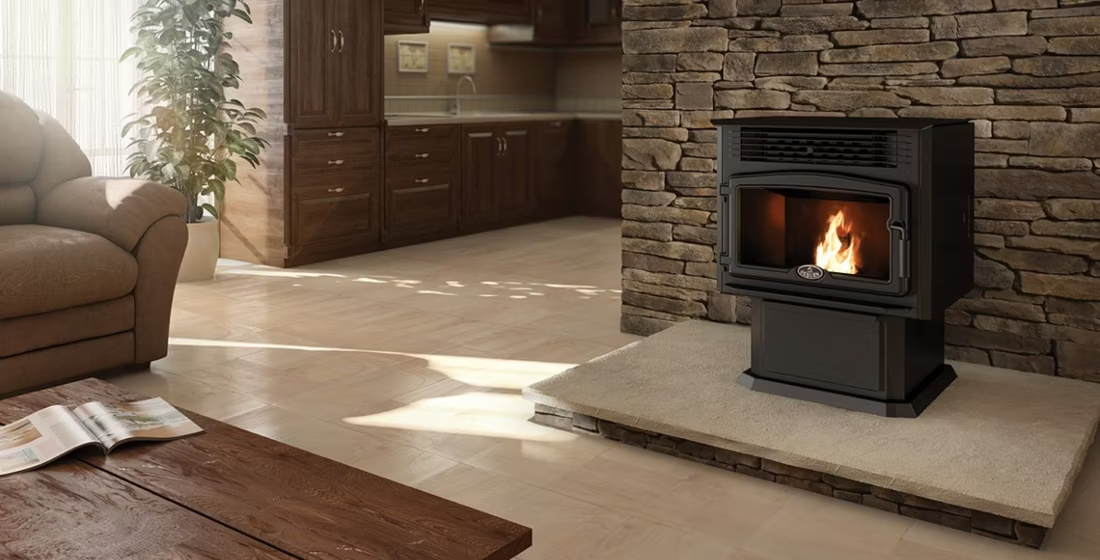
Daphne's mild Gulf Coast winters rarely call for supplemental wood-pellet heat. But if you want one—for a workshop, a camp house, or backup warmth—I'll match you with a local dealer who can get it installed correctly.
Every Project Starts From One of These Five Situations
Daphne winters don't ask much of a heating appliance.
Daphne sits at just 81 feet of elevation on the eastern shore of Mobile Bay, in climate zone 2A, with an average winter low around 39°F and a mild, short winter heating season. Compare that to a place like Duluth, MN, which has a long, brutally cold winter heating season, and it's clear why pellet stoves—built to deliver sustained, high-output heat over long cold seasons—just don't have much of a job to do here. Most Daphne homes rely on a heat pump for the handful of genuinely chilly nights each winter, and that's usually plenty.
There's also a practical wrinkle specific to this part of Baldwin County: pellet stoves depend on electricity to run the auger, igniter, and blower, and Daphne is squarely in hurricane territory. When Hurricane Sally came ashore near Gulf Shores in 2020, parts of Baldwin County lost power for a week or more—exactly the scenario where a pellet stove goes dark unless you've got a generator running. Gulf Coast humidity is another factor: pellets stored without a tightly sealed, dry space can absorb moisture, swell, and jam an auger. None of this means a pellet stove is a bad idea for every Daphne property—it means the fit is narrower here than in colder, drier climates, and it's worth going in with clear eyes about when it makes sense.
Three steps. No salesperson until you're ready.
Tell us about your project
Your zip code, your situation, and the fuel you're leaning toward—or let the answers point you to one.
See what's actually available
The brands dealers within 100 miles genuinely carry—real options, never a catalog mirage.
Get your dealer & Project Guide
A trusted local dealer, plus the free Project Guide & Parts List that names every component of the job.
Frequently Asked Questions
Are pellet stoves common in Daphne?
Not really, and it's worth saying plainly. With a mild, short winter heating season and winter lows averaging 39°F, Daphne just doesn't have the sustained cold that pellet stoves are built for. Most of the pellet stove interest I see in Baldwin County comes from homeowners heating a detached workshop, a hunting camp further inland, or a she-shed—not a primary living space. If you're looking for whole-home heat in Daphne, a heat pump or gas system will almost always make more sense.
Why don't more Daphne homeowners install pellet stoves?
Two main reasons. First, the climate doesn't demand it—Daphne's mild winters mean the electric heat pumps already in most homes handle the job fine, so there's little incentive to add a second heating appliance. Second, pellet stoves need continuous electricity to operate the auger and blower, and Baldwin County is hurricane country. After storms like Hurricane Sally in 2020, parts of the area went without power for a week or more—precisely when a pellet stove without a generator backup is useless. Homeowners here who want storm-ready backup heat usually look at gas instead.
If I still want a pellet stove in Daphne, what should I expect to pay?
Pellet stove installations nationally typically run $3,000 to $6,000 depending on the unit and venting requirements, and Daphne isn't likely to be dramatically different—but because so few get installed here, pricing is less standardized than in pellet-heavy regions, and you may need to ask a local hearth dealer to special-order the unit. Regional pellet fuel brands like Lignetics, Hamer Pellet Fuel, and Greenway Renewable Energy do serve the Southeast, so fuel supply isn't the obstacle—it's more that few local retailers stock pellet appliances on the showroom floor the way they would in Minnesota or Vermont.
Will a pellet stove keep my house warm if a hurricane knocks out power?
No—and this is the single biggest reason pellet stoves aren't a great fit for Daphne. The auger, igniter, and combustion blower all run on household electricity, so without a generator, a pellet stove goes cold the moment the grid does. Given Baldwin County's exposure to storms like Hurricane Sally, most homeowners here who want real backup heat choose a direct-vent gas fireplace with an IPI (intermittent pilot ignition) system and battery backup, which can keep running through an extended outage. If backup heat during storm season is your goal, gas is the more reliable answer.
Where can I buy pellet fuel near Daphne?
Regional brands including Lignetics, Hamer Pellet Fuel, and Greenway Renewable Energy distribute through the Southeast and can typically be sourced through hearth retailers or farm and feed supply stores in the Mobile-Baldwin County corridor. Because demand is lower here than in colder regions, it's worth buying your season's supply in early fall rather than assuming you can pick up bags on short notice mid-winter, and storing them somewhere dry—Gulf Coast humidity can degrade pellet quality if they're kept in a garage or shed without a sealed container.
What's a more practical heating option for a Daphne home—gas or electric?
For most Daphne homes, gas and electric are both far more practical than pellet. Electric heat pumps already handle the bulk of heating and cooling here, served by Alabama Power, Baldwin County Electric Membership Corporation, or the City of Fairhope depending on your address, at residential rates generally between $0.139 and $0.168 per kWh. A gas fireplace or insert adds instant supplemental heat and ambiance without relying on an electric auger—and with battery-backup ignition, it keeps working through the power outages that follow Gulf Coast storms. Either fits Daphne's climate better than pellet in most cases.
Are there any situations where a pellet stove actually makes sense in Daphne?
Yes, a few. A detached workshop or garage without central HVAC is a reasonable candidate, since a pellet stove can heat that space efficiently on the occasional cold snap. Hunting camps and cabins further inland in Baldwin County, away from the immediate coast, sometimes see enough winter chill to justify one. And homeowners who relocated from a colder climate and already own a pellet stove sometimes install it purely for the ambiance and familiarity, understanding it won't be doing much heavy lifting most winters. In all these cases, a local dealer can help you size the unit honestly rather than oversell you on heat output you won't need.
Do I need a permit to install a pellet stove in Daphne?
Most likely, yes. Any vented solid-fuel appliance typically requires a building permit, and you'll want to check with the City of Daphne Building Department or Baldwin County's permitting office depending on whether your property is inside city limits. Because pellet installs are infrequent here, it's worth confirming permit requirements directly rather than assuming—a local hearth dealer who's pulled permits in the area before can usually walk you through it.
Pellet vs. gas—which should I choose for my Daphne home?
For nearly all Daphne homeowners, gas comes out ahead. It doesn't depend on electricity to run an auger, which matters in a county that regularly deals with storm-related outages. It isn't affected by Gulf Coast humidity the way bagged pellets stored in a garage can be. And with natural gas or propane both available in the area, it's simply a more established, better-supported option locally, with more dealers, more service technicians, and more parts availability. Pellet still has a place for detached spaces or homeowners who specifically want that appliance, but if you're choosing between the two for a main living space, gas is the more practical call here.
What's the difference between an insert and a zero-clearance fireplace?
An insert is a fireplace that slides into a pre-existing wood-burning fireplace—if you don't have one, there's nothing to insert it into. A zero-clearance fireplace is built into a framed wall, which makes it the answer for remodels and new construction. Simple test: existing masonry fireplace means insert; blank or framed wall means zero-clearance.
What do I measure to size a fireplace insert?
Four numbers tell you what fits: the front width, the front height, the back width, and the overall depth of your existing fireplace opening. Grab a tape measure, jot those down, and snap a photo of the wall—those two things do more to move your project forward than anything else you can do today.
Can a fireplace actually lower my heating bill?
Yes—by creating a comfort zone. A furnace heats every square foot of the house just to warm the one room you're in; a gas fireplace on low burns roughly a sixth of the gas a typical furnace does. Set the furnace around 55–60 degrees as a baseline, then heat the rooms your family actually uses. Families who heat this way commonly save $20–$60 a month.
How much should I budget for a fireplace?
For an average home—covering the fireplace, the vent pipe, and basic installation—a budget between $3,900 and $5,500 gives you a lot of options across wood, gas, and pellet. By the time you add finish work, gas line, and electrical, the average complete installation lands between $5,000 and $12,000 all-in. In a remodel or new build, a good rule is to put about 2.5% of the total project cost toward the fireplace.
Nearby Dealers
Hearth shops serving Daphne and the surrounding area. Every listing shows whether it is a WhyFire partner, a dealer we have verified as authorized for the brands we recommend, or a local business carrying hearth products. No manufacturer pays for placement. How we verify dealers →
Street'S Exquisite Plants
Hood's Discount Home Center
Sullivan Insullation Company
Blossman Gas - Mobile
Pellet Brands Stocked Around Daphne
Manufacturers will point you to the nearest stocking dealer.
Find your pellet stove option in Daphne.
Tell me about your space—whether it's a workshop, a camp house, or a main living area—and I'll match you with a trusted local dealer and send over a free Project Guide & Parts List covering the right unit, venting, and installation for your Daphne property.
Find Your Fireplace →