
Steady, clean heat for Dallas County's short winters.
Selma and the rest of Dallas County see mild, humid winters—but a pellet stove still earns its keep on the cold snaps that roll through the Black Belt. Find the right unit and connect with a trusted local dealer.
Every Project Starts From One of These Five Situations
A clean, efficient option in the Black Belt.
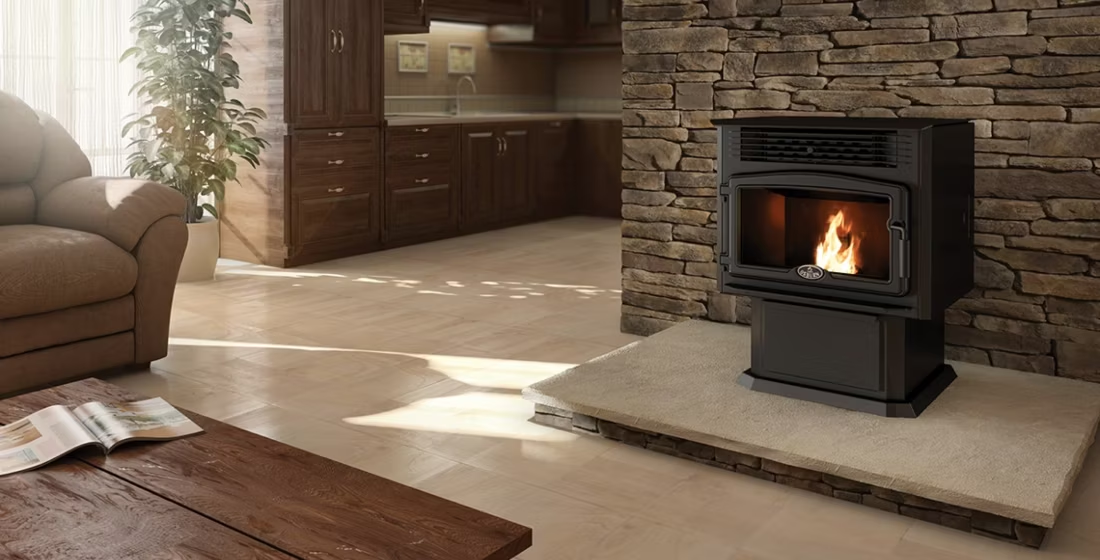
Dallas County sits in Alabama's Black Belt prairie, anchored by Selma on the Alabama River, and its winters look nothing like the cold-climate markets where wood and pellet heat are a survival necessity. Climate zone 3A, an average winter low near 36 degrees, and just 2,113 heating degree days a year—compare that to a place like Duluth, Minnesota, which racks up close to 10,000—mean most Dallas County homes only need real heat output for a handful of weeks each winter. That's exactly the profile where pellet stoves shine: a shorter burn season doesn't waste the convenience of thermostatic control, and homeowners aren't hauling and splitting cordwood for months on end just to stay warm.
Alabama's timber economy runs on the same oak, pine, and hickory stands that shade Dallas County's back roads, and the state is one of the country's largest wood pellet producers—much of it Southern Yellow Pine pellets milled and bagged for both export and local use. That regional supply chain shows up on hardware store shelves here through brands like Lignetics, Hamer Pellet Fuel, and Greenway Renewable Energy, so fuel availability isn't a concern the way it can be in areas without a pellet industry nearby. For a county where natural gas lines don't reach every rural stretch, a pellet stove gives homeowners a clean-burning, low-maintenance alternative to propane or a full wood-burning setup—no ash-heavy creosote buildup, no cutting permits, just a hopper to fill and a thermostat to set.
Three steps. No salesperson until you're ready.
Tell us about your project
Your zip code, your situation, and the fuel you're leaning toward—or let the answers point you to one.
See what's actually available
The brands dealers within 100 miles genuinely carry—real options, never a catalog mirage.
Get your dealer & Project Guide
A trusted local dealer, plus the free Project Guide & Parts List that names every component of the job.
Frequently Asked Questions
How much does a pellet stove installation cost in Dallas County?
A freestanding pellet stove installation in Dallas County typically runs $3,000 to $6,000, depending on the unit, whether you need a new dedicated electrical outlet, and the venting path—most pellet stoves vent through an exterior wall rather than requiring a full masonry chimney, which keeps costs down compared to wood-burning installs. Converting an existing fireplace with a pellet insert runs a bit higher, often $3,500 to $6,500, since the installer has to route venting through the chimney and confirm the liner and hearth meet clearance requirements. Because Dallas County's mild winters mean most homes only need supplemental heat rather than a whole-house solution, many homeowners here size down to a smaller, less expensive unit than they might in a colder climate—worth discussing with a local dealer before you buy.
What size pellet stove do I need for my home?
With Dallas County's average winter low sitting around 36 degrees and just over 2,000 heating degree days a year, most homes here don't need a large-capacity stove built for round-the-clock heating. A small to mid-size pellet stove—rated for 1,000 to 1,800 square feet—comfortably heats a main living area or an open floor plan in a typical Selma-area home, and often runs well below its maximum burn rate most of the season. Larger, older homes with high ceilings or less insulation, common in some of the historic housing stock around Selma, may want a mid-size unit even if the square footage is modest, since heat loss matters more than raw floor area. A local dealer can walk through your home's layout and insulation to right-size the stove rather than guessing from square footage alone.
Where can I find certified pellet stove installers near me?
Look for installers with NFI (National Fireplace Institute) pellet-specialist certification, which covers the electrical, venting, and clearance requirements specific to pellet appliances—different from what's required for a wood stove or gas unit. Certified dealers serving Dallas County typically cover Selma, Valley Grande, and Orrville, with some willing to travel out to Marion Junction and other rural parts of the county for a modest trip charge. Because pellet stoves rely on an auger, blower, and control board, installation quality also affects long-term reliability—a poorly wired unit or undersized outlet circuit is a common source of nuisance shutdowns. Working with a dealer who sells and services the brand they install means warranty issues get handled by someone who already knows the unit.
What's the difference between a pellet stove and a pellet insert?
A pellet stove is a freestanding unit that sits on a hearth pad and vents through an exterior wall or existing chimney—it can go almost anywhere in the home with a nearby outlet and a clear path to the outside. A pellet insert is built to slide into an existing masonry fireplace opening, using a stainless liner run up the chimney for venting. For Dallas County homes with an existing wood-burning fireplace that rarely gets used, an insert is often the more practical upgrade—it keeps the mantel and hearth look while adding real, efficient heat output. Homes without an existing fireplace, or newer construction, are usually better matched to a freestanding stove.
Do I need a permit to install a pellet stove in Dallas County?
Most pellet stove installations require a building permit, and within city limits that typically means going through the City of Selma's building inspections office, while unincorporated parts of Dallas County fall under the county building department. The permit review generally covers the electrical circuit for the stove's auger and blower motor, hearth clearance, and the wall or chimney venting path. Most established local dealers include the permit paperwork as part of the installation quote, so it's rarely something a homeowner has to chase down separately. Unlike a wood stove, there's no EPA certification hurdle to clear in most jurisdictions since pellet appliances already burn cleanly by design.
What's the best pellet stove for Dallas County's climate?
Because Dallas County's heating season is short and mild, homeowners here have more flexibility than colder-climate buyers to prioritize convenience features over maximum BTU output—automatic ignition, larger hopper capacity for less frequent refilling, and multi-stage thermostat control matter more day-to-day than raw heat output. Widely serviced brands like Harman, Englander, and US Stove show up regularly with dealers in this part of Alabama, and pairing any of them with locally available Southern Yellow Pine pellets—the kind bagged by Lignetics, Hamer Pellet Fuel, and Greenway Renewable Energy—keeps fuel costs predictable without relying on out-of-state shipping. A local dealer can also advise on pellet quality; softwood pellets burn a bit hotter and cleaner than hardwood blends, which matters for stove longevity over a season of regular use.
How often does a pellet stove need to be serviced?
Plan on a professional service and full cleaning once a year, ideally before the fall cool-down, along with weekly ash removal from the burn pot during regular use—pellet stoves produce far less ash than wood stoves, but the burn pot still needs to stay clear for consistent ignition. The exhaust venting and auger mechanism should also be checked annually for wear, since those are the parts most likely to cause performance issues if neglected. Given Dallas County's shorter burn season, many stoves here see lighter annual use than in colder climates, but that doesn't eliminate the need for a yearly check—components can still degrade from humidity and disuse between seasons.
Where can I buy pellets in Dallas County?
Bagged pellets from regional producers like Lignetics, Hamer Pellet Fuel, and Greenway Renewable Energy are typically available through local hardware and farm supply stores serving Selma and the surrounding area, with prices commonly running in the $230 to $300 per ton range for premium softwood blends—often sold in 40-pound bags by the pallet. Because Alabama has a substantial in-state pellet manufacturing base, supply tends to be more stable here than in regions that rely on pellets shipped in from out of state, which can help keep prices steadier through the winter months. Buying a season's worth in early fall, before demand picks up, is a common way local homeowners avoid any late-season price bump.
Pellet stove vs. wood stove—which is right for my home?
Wood stoves run on cordwood cut from the oak, pine, and hickory that are common throughout Dallas County, work without electricity, and offer the lowest fuel cost if you're willing to cut, split, and stack your own wood. Pellet stoves are more convenient—load the hopper, set the thermostat, and let the auger and igniter handle the rest—but they depend on electricity to run the blower and feed system, so they won't provide heat during a power outage unless paired with a battery backup or generator. That trade-off matters in a county that sees its share of severe spring storms and occasional ice events; some homeowners here keep a wood-burning option as backup even after switching to pellet for daily convenience. For most Dallas County homes prioritizing easy operation and consistent heat output over a short winter season, pellet is the simpler day-to-day choice.
Why is my open fireplace making my house colder?
Open fireplaces suck—literally. As the fire burns, it consumes air your furnace already paid to heat and pulls it out through the chimney, so the house is actually colder after the fire goes out than before you lit it. An insert fixes this: it seals the chimney, puts fixed glass across the front, and turns that hole in your house into a real heat source.
What's the difference between an insert and a zero-clearance fireplace?
An insert is a fireplace that slides into a pre-existing wood-burning fireplace—if you don't have one, there's nothing to insert it into. A zero-clearance fireplace is built into a framed wall, which makes it the answer for remodels and new construction. Simple test: existing masonry fireplace means insert; blank or framed wall means zero-clearance.
Does a fireplace add value to my home?
On average, a fireplace adds back to the home about the same amount you spent installing it. Add the monthly savings from heating the rooms you actually use instead of the whole house—often hundreds of dollars a year—and the value case is strong before you even count what a fire does for how your family uses the room.
What is an in-home preview and do I need one?
It's a visit where a hearth professional measures your space, confirms the model you picked actually works in your home, and walks the specs—framing, gas line, venting, finish work—before anything is ordered. Some details you just can't know until you see the house. Never make a down payment without one; it's the single most-skipped step that burns buyers.
Stove and Fireplace Dealers in Dallas County
Listings include WhyFire partner dealers, dealers we have verified as authorized for the brands we recommend, and established local businesses that carry hearth products. Every listing shows which one it is. The ones marked Preferred run on WhyFire's software, so they can show you real pricing and book your appointment right here. No manufacturer pays for placement. How we verify dealers →
Apex Gas & Appliance
Allgas, Inc. - Montgomery
Brick Acquisition Company
South Alabama Gas
Energy Shop
Pellet Brands Stocked Around Dallas County
Manufacturers will point you to the nearest stocking dealer.
Find your pellet stove in Dallas County.
Tell us a bit about your home and we'll match you with the right pellet stove or insert, plus a free Project Guide & Parts List—the exact parts, including the vent kit, and a trusted local Dallas County dealer to install it.
Find Your Fireplace →