
Clean Gas Heat for Sand Mountain Homes.
Instant, low-maintenance warmth for Crossville's mild winters—sized right for your home and matched with a local dealer who knows propane service in DeKalb County.
Every Project Starts From One of These Five Situations
Convenient heat for mild Alabama winters.
Crossville sits atop Sand Mountain in DeKalb County at about 1,132 feet, in climate zone 3A. Winter lows average around 30°F and the area has a fairly short, mild heating season—mild compared to places like Duluth MN or Burlington VT, but cold enough on winter nights that a gas fireplace earns its keep. Most homes here run gas as zone heat for the living room or den, letting the central system idle while the fireplace does the work in the rooms people actually use.
There's no natural gas utility line running through Crossville—electric service comes from Cherokee Electric Cooperative and Marshall-DeKalb Electric Cooperative, but gas piping isn't part of the local infrastructure. That makes propane the standard fuel for a 'gas' fireplace here, delivered and stored in a tank set by a local propane supplier. It's a different install path than a natural-gas hookup, but the fireplaces themselves—and the comfort they deliver—work the same way.
Three steps. No salesperson until you're ready.
Tell us about your project
Your zip code, your situation, and the fuel you're leaning toward—or let the answers point you to one.
See what's actually available
The brands dealers within 100 miles genuinely carry—real options, never a catalog mirage.
Get your dealer & Project Guide
A trusted local dealer, plus the free Project Guide & Parts List that names every component of the job.
Frequently Asked Questions
How much does a gas fireplace installation cost in Crossville?
Since Crossville runs on propane rather than piped natural gas, expect a typical installation—unit, venting, and gas line from the tank—to run somewhere in the $3,500 to $8,500 range depending on the model and whether you're converting an existing masonry fireplace or starting from scratch. If you don't already have a propane tank on the property, add the cost of a tank lease or purchase from a local propane supplier, which is usually handled separately from the fireplace install itself. A local dealer will walk the site and give you a firm number.
Do I need natural gas, or does propane work fine in Crossville?
Propane is the standard choice here—Crossville and most of rural DeKalb County aren't served by a natural gas utility line, so there's no piped natural gas option to plumb into. Propane fireplaces perform identically to natural gas units; the only real difference is the fuel source and the orifice sizing inside the appliance. Your installer will set the unit up for propane and coordinate with a local propane company on tank placement and the fuel line running to the fireplace.
What size gas fireplace do I need for my home?
With Crossville's relatively mild winters—30°F average lows and a fairly short, mild heating season—most homes don't need a gas fireplace to carry the whole heating load. A mid-size direct-vent fireplace or insert (25,000 to 35,000 BTU) is plenty to heat a living room or den as zone heat while your central system handles the rest of the house. Smaller vent-free units in the 10,000 to 20,000 BTU range work well for a single room or as supplemental warmth on the coldest nights. A local dealer can size it to your actual square footage during a walk-through.
Will my gas fireplace still work if the power goes out?
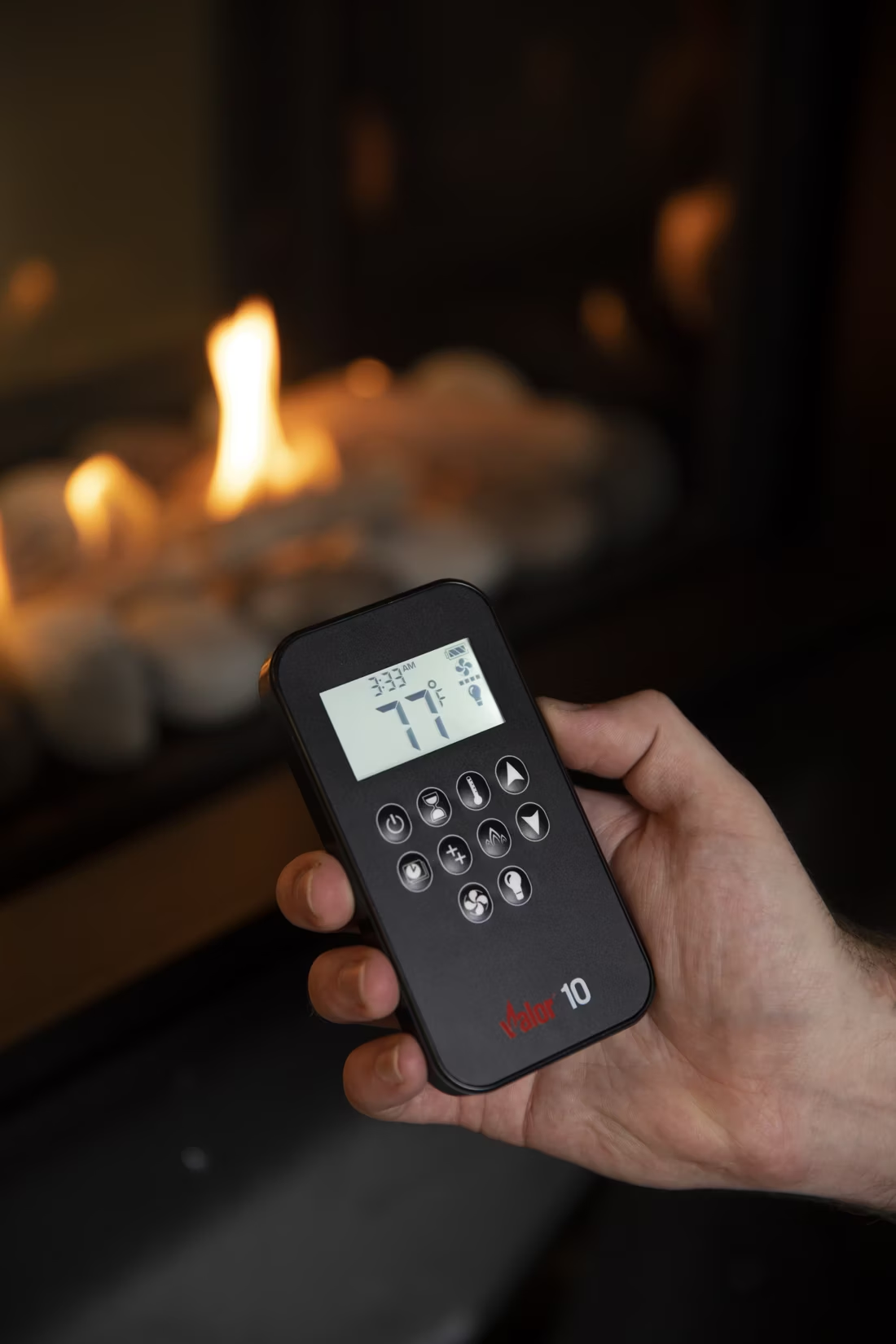
Most gas fireplaces with an IPI (intermittent pilot ignition) system run on a small battery backup that kicks in automatically when the power drops—useful during the ice storms that occasionally knock out power on Sand Mountain. Valor fireplaces take a slightly different approach: their pilot generates its own electricity through the thermocouple, so there are no batteries to remember at all. Either way, ask your installer which ignition system is on the model you're considering if outage backup matters to you.
What's the difference between a gas fireplace, gas insert, and gas stove?
A gas fireplace is a built-in unit installed into a framed wall opening—common in newer Crossville homes. A gas insert drops into an existing masonry fireplace, which is a common upgrade for the older farmhouses and brick-hearth homes scattered around DeKalb County, using the existing chimney chase as the venting path. A gas stove is a freestanding cabinet-style unit that sits on the floor like a wood stove but burns propane. If you've already got a masonry fireplace that doesn't throw much heat, an insert is usually the simplest and most cost-effective upgrade.
Do I need a permit to install a gas fireplace in Crossville?
Yes—a building permit through DeKalb County is required for new gas fireplace installations, and the propane line work needs to be done by a licensed gas-fitter. Because you're working with a propane tank rather than a utility gas main, there are also setback requirements for how far the tank sits from the house and property lines, which your propane supplier will confirm before delivery. Most local hearth dealers coordinate the permit, the gas-fitter, and the propane company together so you're not juggling three separate calls.
Are vent-free (ventless) gas fireplaces allowed in Crossville?
Yes—Alabama permits vent-free propane fireplaces, and they're a common choice in this part of DeKalb County for supplemental heat in a den or bonus room where running a vent isn't practical. Vent-free units burn fuel directly into the room, so they come with strict room-sizing rules and require an oxygen depletion sensor. Vented (direct-vent) units are still the more universally recommended option—they exhaust combustion byproducts outside and don't carry the same indoor air quality tradeoffs. A local dealer can walk you through which makes sense for your specific room.
How often should my gas fireplace be serviced?
Plan on an annual inspection, ideally before the first cold snap in late fall. A technician checks the burner, pilot assembly, propane line connections, and venting, and cleans the glass and interior. This runs about $125 to $200 in most cases, and it's a smaller job than wood chimney sweeping—but skipping it is still the most common cause of ignition problems and soot buildup on the glass. Local propane service companies typically handle this alongside their regular tank deliveries.
Gas vs. wood—which makes more sense for a Crossville home?
DeKalb County has plenty of local oak, hickory, and pine, and wood heat remains common on Sand Mountain for its low fuel cost and the fact that it works with the power out. Gas—in Crossville's case, propane—offers instant on-off heat, no wood splitting or ash cleanup, and steadier output for everyday use in the room where your family actually spends evenings. Given the area's mild winters, a lot of local homes use gas as the everyday convenience option in the main living space and keep a wood stove or fireplace elsewhere for backup heat or cooler nights on the porch side of the house.
Why is my open fireplace making my house colder?
Open fireplaces suck—literally. As the fire burns, it consumes air your furnace already paid to heat and pulls it out through the chimney, so the house is actually colder after the fire goes out than before you lit it. An insert fixes this: it seals the chimney, puts fixed glass across the front, and turns that hole in your house into a real heat source.
Can I put a TV above my fireplace?
Yes—with an asterisk. Fireplaces are hot and TVs don't like heat. Either put a mantel between them to deflect rising warmth, or choose a fireplace with heat-management technology that creates a cool zone on the wall above—the wall stays around 125 degrees, barely warm, while the room still gets full heat. If you like clean lines and don't want a mantel, heat management is the answer.
Does a fireplace add value to my home?
On average, a fireplace adds back to the home about the same amount you spent installing it. Add the monthly savings from heating the rooms you actually use instead of the whole house—often hundreds of dollars a year—and the value case is strong before you even count what a fire does for how your family uses the room.
Can a fireplace actually lower my heating bill?
Yes—by creating a comfort zone. A furnace heats every square foot of the house just to warm the one room you're in; a gas fireplace on low burns roughly a sixth of the gas a typical furnace does. Set the furnace around 55–60 degrees as a baseline, then heat the rooms your family actually uses. Families who heat this way commonly save $20–$60 a month.
Nearby Dealers
Hearth shops serving Crossville and the surrounding area. Every listing shows whether it is a WhyFire partner, a dealer we have verified as authorized for the brands we recommend, or a local business carrying hearth products. No manufacturer pays for placement. How we verify dealers →
Sand Mountain Brick
Nomad Homestead Supply
Southern Fireplaces
Discount Building Supply
Allgas, Inc. - Gadsden
Allgas, Inc. - Ider
Find your gas fireplace in Crossville.
Tell us about your home and we'll match you with a trusted local dealer and send over a free Project Guide & Parts List—the exact fireplace or insert, vent kit, and propane setup recommended for your Crossville project.
Find Your Fireplace →