
Comfort That Plugs In, Right Here on Sand Mountain.
Crossville winters rarely demand a full heating overhaul—electric fireplaces give DeKalb County homes instant, no-vent warmth in the rooms that need it. Find the right unit and connect with a trusted local dealer.
Every Project Starts From One of These Five Situations
Mild winters call for straightforward heat.
Crossville sits at roughly 1,132 feet on Sand Mountain in DeKalb County, where winter lows average around 30°F and the area logs about 3,451 heating degree days a year. That's a fraction of what a place like Duluth, MN or Fargo, ND racks up, which means most Crossville homes don't need a heavy-duty primary heat source—they need something that takes the chill off a den, sunroom, or bonus room without touching the HVAC system. Electric fireplaces fit that role well, and it's why they're a standard, widely-installed option here rather than a niche one.
Both Cherokee Electric Cooperative and Marshall-DeKalb Electric Cooperative serve the Crossville area, and at roughly 12.49 cents per kWh, running a 1,500-watt electric fireplace costs well under a quarter an hour in most cases. There's no chimney to sweep, no gas line to run, and no combustion byproducts to vent—which also makes electric units a practical fit for the manufactured and mobile homes common throughout rural DeKalb County. Plenty of local homes still burn oak, hickory, and pine cut under Cherokee National Forest permits for cost-effective heat, but electric fireplaces are usually the answer when the goal is ambiance and supplemental warmth in a specific room, with zero mess.
Three steps. No salesperson until you're ready.
Tell us about your project
Your zip code, your situation, and the fuel you're leaning toward—or let the answers point you to one.
See what's actually available
The brands dealers within 100 miles genuinely carry—real options, never a catalog mirage.
Get your dealer & Project Guide
A trusted local dealer, plus the free Project Guide & Parts List that names every component of the job.
Frequently Asked Questions
How much does an electric fireplace installation cost in Crossville?
Costs vary a lot by unit type. A plug-in electric insert or freestanding stove that drops into an existing opening typically runs $300 to $1,200 installed, since there's no venting to add—just a standard outlet, which most rooms already have. A built-in wall unit or linear electric fireplace with a custom mantel surround and a new dedicated circuit runs higher, often $1,500 to $3,500, mostly driven by carpentry and electrical work rather than the appliance itself. Local dealers can walk your specific room and give you a firm number in one visit.
Do I need a permit to install an electric fireplace in Crossville?
In most cases, no. A plug-in electric insert or mantel package that uses an existing standard outlet doesn't require a building permit. If your project involves adding a new dedicated 240-volt circuit for a larger built-in unit, or if you're modifying a wall or framing to recess the unit, DeKalb County's permitting requirements can apply to that electrical and structural work specifically—not the fireplace itself. A licensed electrician handling the circuit work will typically know whether a permit is needed for your particular setup.
What size electric fireplace do I need for my room?
Electric fireplaces are rated by square footage of heating coverage, not whole-home BTU output the way a wood stove is. Most 1,500-watt units comfortably heat 400 to 1,000 square feet, which covers a typical living room, den, or bonus room in a Crossville home. If you're heating a larger open-concept space, look at units with a higher wattage rating or plan on it as supplemental heat alongside your existing HVAC rather than a stand-alone solution. A local retailer can measure your room and confirm the right model.
Is an electric fireplace enough heat for Crossville winters, or should I look at wood or gas?
For most of the year, yes—Crossville's winter lows average around 30°F, and electric fireplaces are commonly used here as supplemental or ambiance heat for a specific room rather than whole-home heating. If you want backup heat that keeps working during an ice storm or downed power line—which does happen with rural co-op service in DeKalb County—a wood stove burning local oak or hickory is worth considering as a second heat source, since it doesn't depend on electricity. Many local homes run electric in the main living area for daily convenience and keep a wood stove or insert available for backup.
Will an electric fireplace raise my power bill much?
Not dramatically for most households. Both Cherokee Electric Cooperative and Marshall-DeKalb Electric Cooperative bill residential customers around 12.49 cents per kWh in the Crossville area, so a 1,500-watt electric fireplace run on high for an hour costs roughly 18 to 19 cents. Run a few hours a night in a den or bedroom during the cooler months, that adds up to a modest monthly increase—far less than running central heat harder to cover the same room. Most units also let you run the flame effect with the heater off, so you get the look without the electrical draw when you don't need the warmth.
What types of electric fireplaces are available?
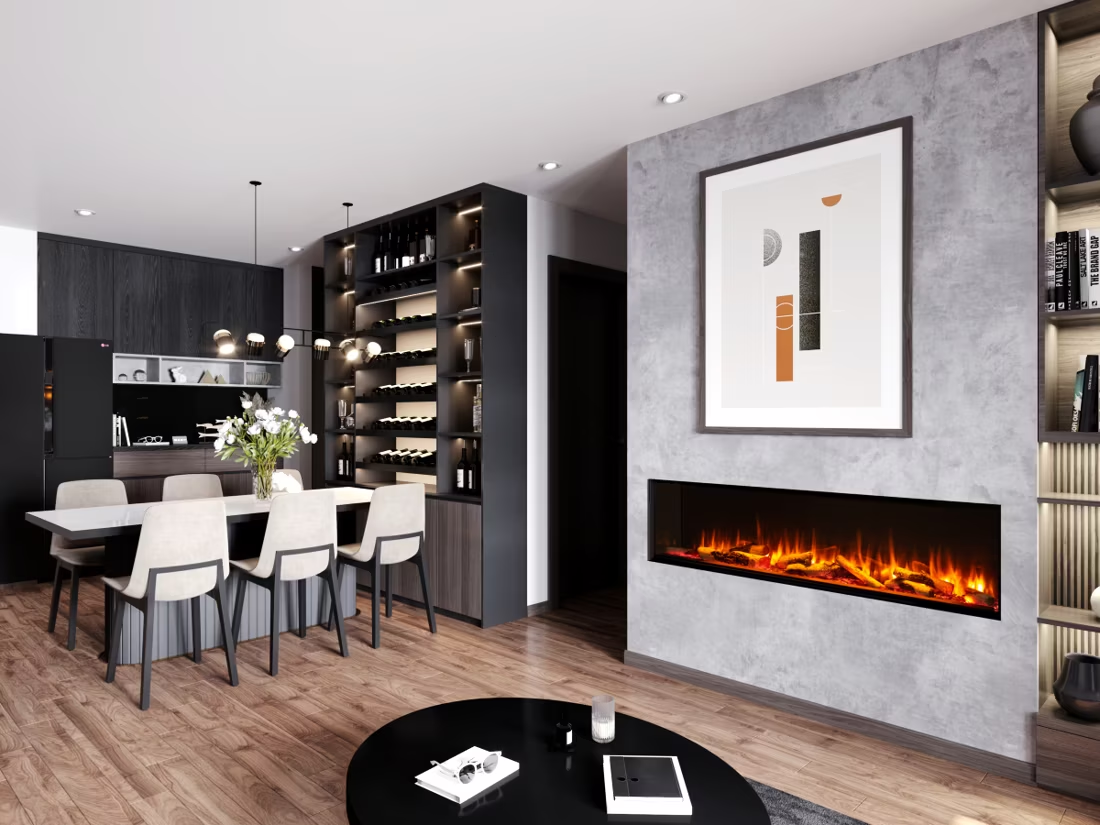
There are a few common formats: plug-in inserts that slide into an existing fireplace opening or mantel surround, freestanding stoves that mimic a wood stove's look, wall-mount linear units that hang like a flat-screen TV for a modern look, and built-in units recessed into new framing with a custom mantel. For Crossville homes with an existing masonry or prefab fireplace opening, an insert is usually the simplest and least expensive route. For a new build or remodel, a linear wall-mount or built-in gives more design flexibility. A local dealer can show you options that fit your specific opening or wall.
Will my electric fireplace still work if the power goes out?
No—electric fireplaces require power to run, so they won't operate during an outage, which is worth planning around given that rural cooperative lines in DeKalb County can go down during ice storms or severe weather. If backup heat during outages matters to you, a wood stove burning locally available oak, hickory, or pine—cuttable under a Cherokee National Forest permit for about $20 per cord during the May-through-October season—is the more reliable fallback. Many homeowners run electric for daily convenience and keep a wood-burning option in reserve for exactly this reason.
Are electric fireplaces a good fit for manufactured or mobile homes?
Yes, and it's one of the more common installs in this part of DeKalb County given how many manufactured and mobile homes are in the Crossville area. Because there's no venting, no chimney, and no gas line required, electric fireplaces sidestep the structural and clearance challenges that wood or gas units can run into in manufactured housing. A plug-in insert or a properly secured wall-mount unit is usually straightforward to add, though it's worth confirming wall construction and electrical capacity with a local installer before mounting anything heavier than a basic insert.
Electric vs. gas—which makes more sense for a Crossville home?
Gas fireplaces need either a natural gas line or a propane tank and typically involve venting and a gas-fitter for installation, which adds cost and complexity in a rural area like Crossville where natural gas service isn't widely built out. Electric fireplaces skip all of that—plug it in and you're running, with no fuel deliveries or tank rentals to manage. The tradeoff is heat output: gas units generally produce more sustained warmth for larger spaces, while electric is better suited to supplemental heat in a single room. For most Crossville homeowners adding a fireplace to a den, bedroom, or bonus room, electric is the simpler and less expensive path.
Can I put a TV above my fireplace?
Yes—with an asterisk. Fireplaces are hot and TVs don't like heat. Either put a mantel between them to deflect rising warmth, or choose a fireplace with heat-management technology that creates a cool zone on the wall above—the wall stays around 125 degrees, barely warm, while the room still gets full heat. If you like clean lines and don't want a mantel, heat management is the answer.
Do electric fireplaces actually produce heat?
Yes—most put out around 4,800–5,000 BTUs from a standard outlet, which comfortably warms a bedroom, office, or den as a comfort-zone heater. What they won't do is carry a whole house the way wood, gas, or pellet can. Think of electric as ambiance-first with honest supplemental heat: flames on with no heat in July, flames plus warmth in January.
What is an in-home preview and do I need one?
It's a visit where a hearth professional measures your space, confirms the model you picked actually works in your home, and walks the specs—framing, gas line, venting, finish work—before anything is ordered. Some details you just can't know until you see the house. Never make a down payment without one; it's the single most-skipped step that burns buyers.
Does a fireplace add value to my home?
On average, a fireplace adds back to the home about the same amount you spent installing it. Add the monthly savings from heating the rooms you actually use instead of the whole house—often hundreds of dollars a year—and the value case is strong before you even count what a fire does for how your family uses the room.
Nearby Dealers
Hearth shops serving Crossville and the surrounding area. Every listing shows whether it is a WhyFire partner, a dealer we have verified as authorized for the brands we recommend, or a local business carrying hearth products. No manufacturer pays for placement. How we verify dealers →
Sand Mountain Brick
Nomad Homestead Supply
Southern Fireplaces
Discount Building Supply
Allgas, Inc. - Gadsden
Allgas, Inc. - Ider
Electric Service in Crossville
An electric fireplace's heater draws about 1,500 watts—pennies per hour at local rates.
Cherokee Electric Coop
Marshall-De Kalb Electric Coop
Find your electric fireplace in Crossville.
Tell us a bit about your home and room, and we'll match you with the right electric fireplace or insert—plus a free Project Guide & Parts List and a trusted local dealer to install it.
Find Your Fireplace →